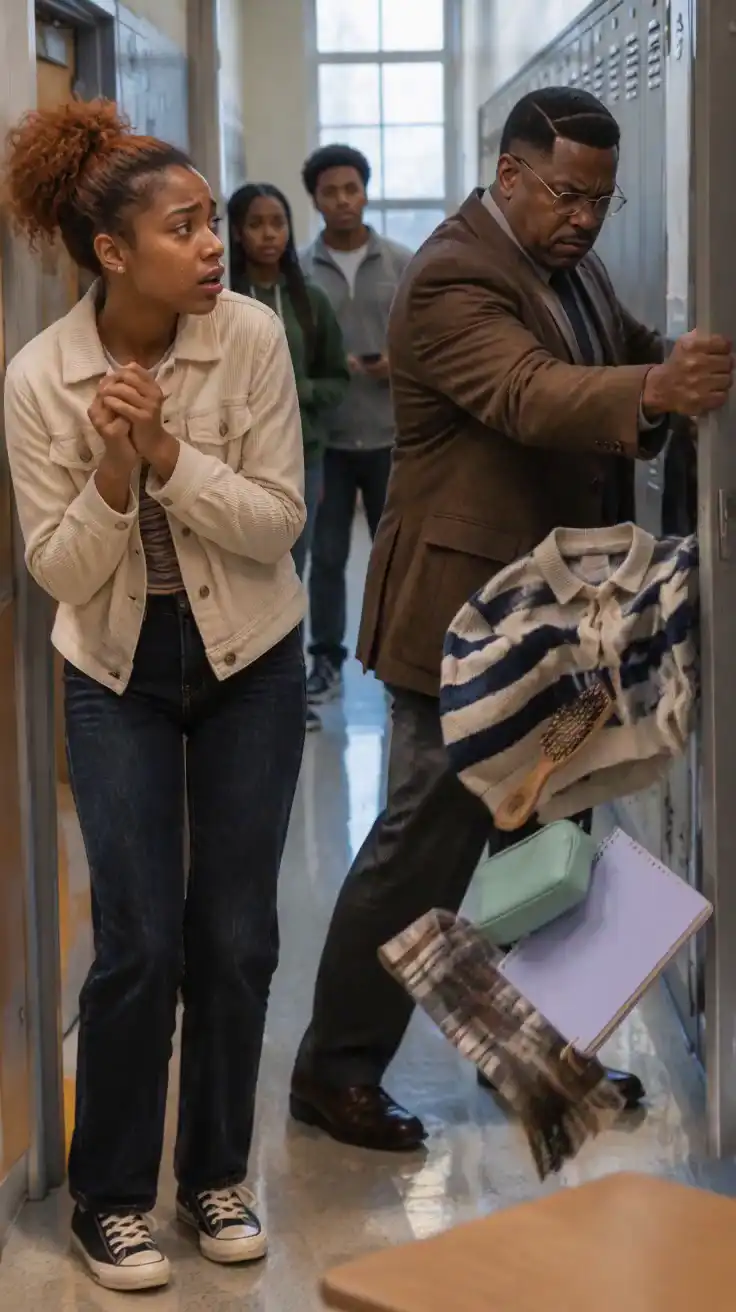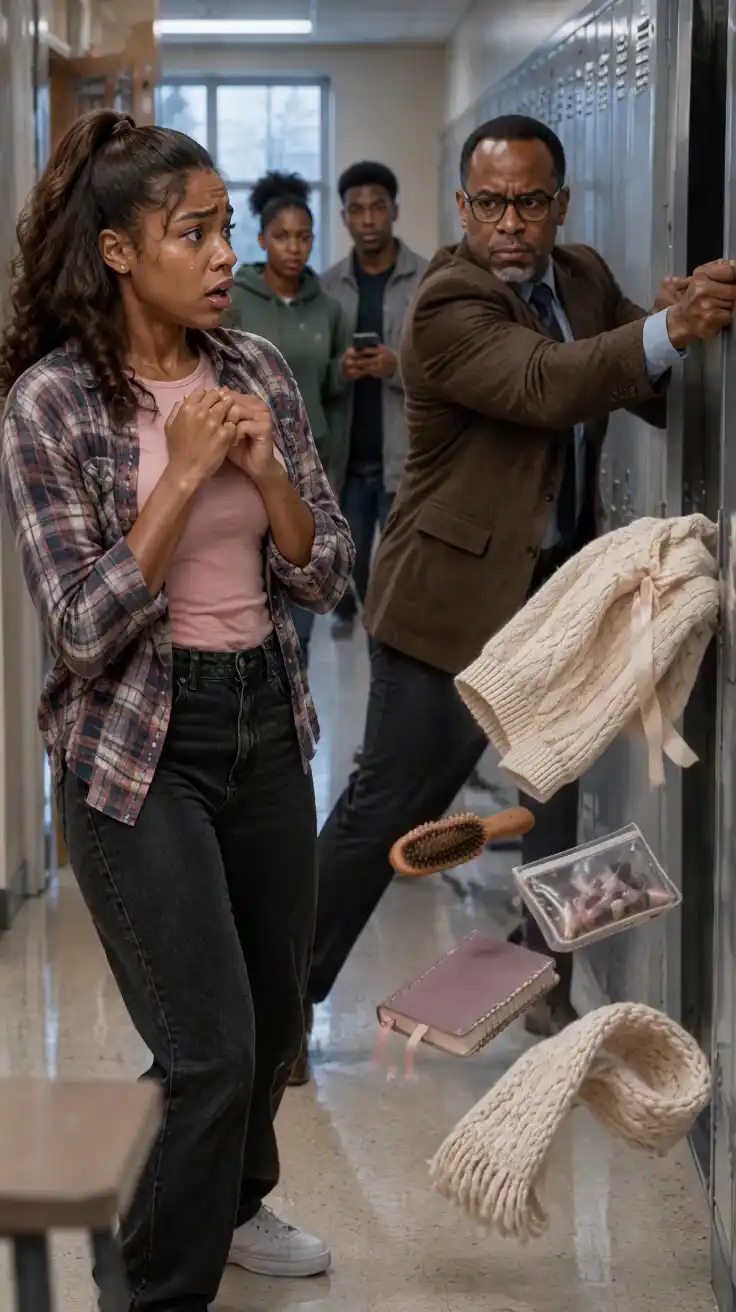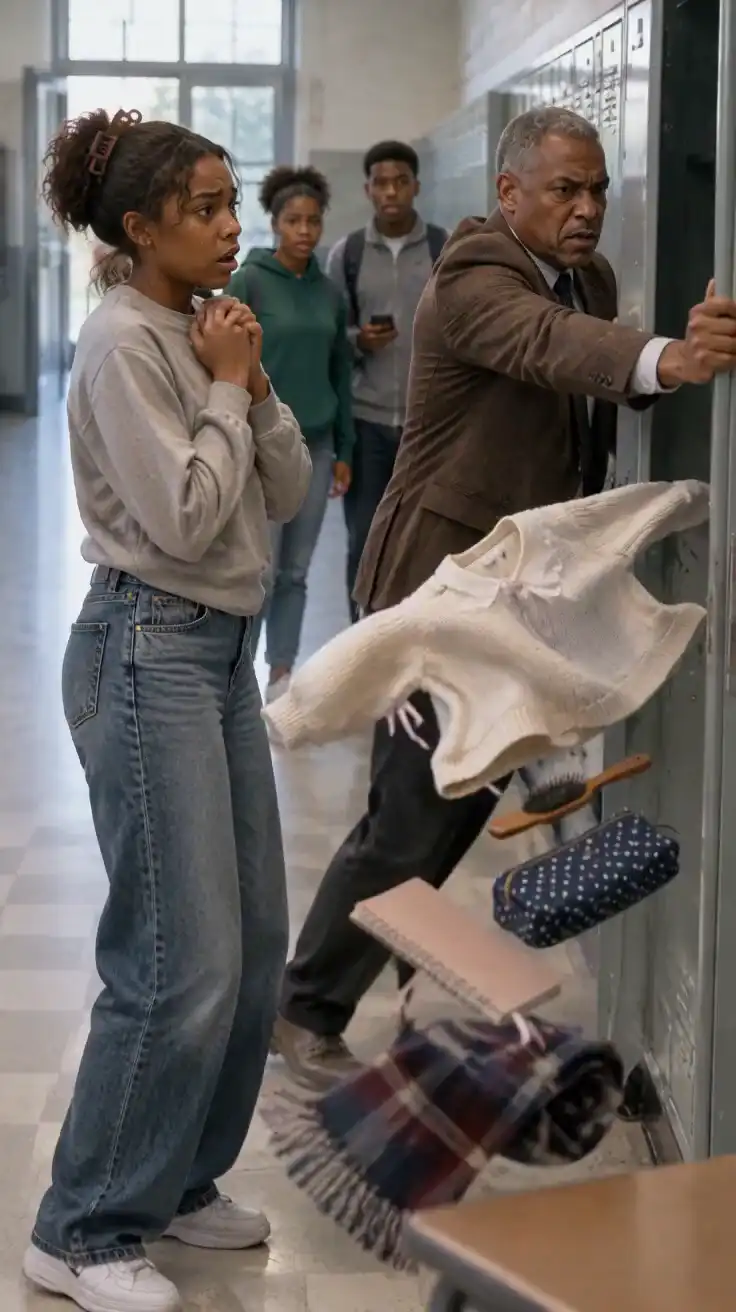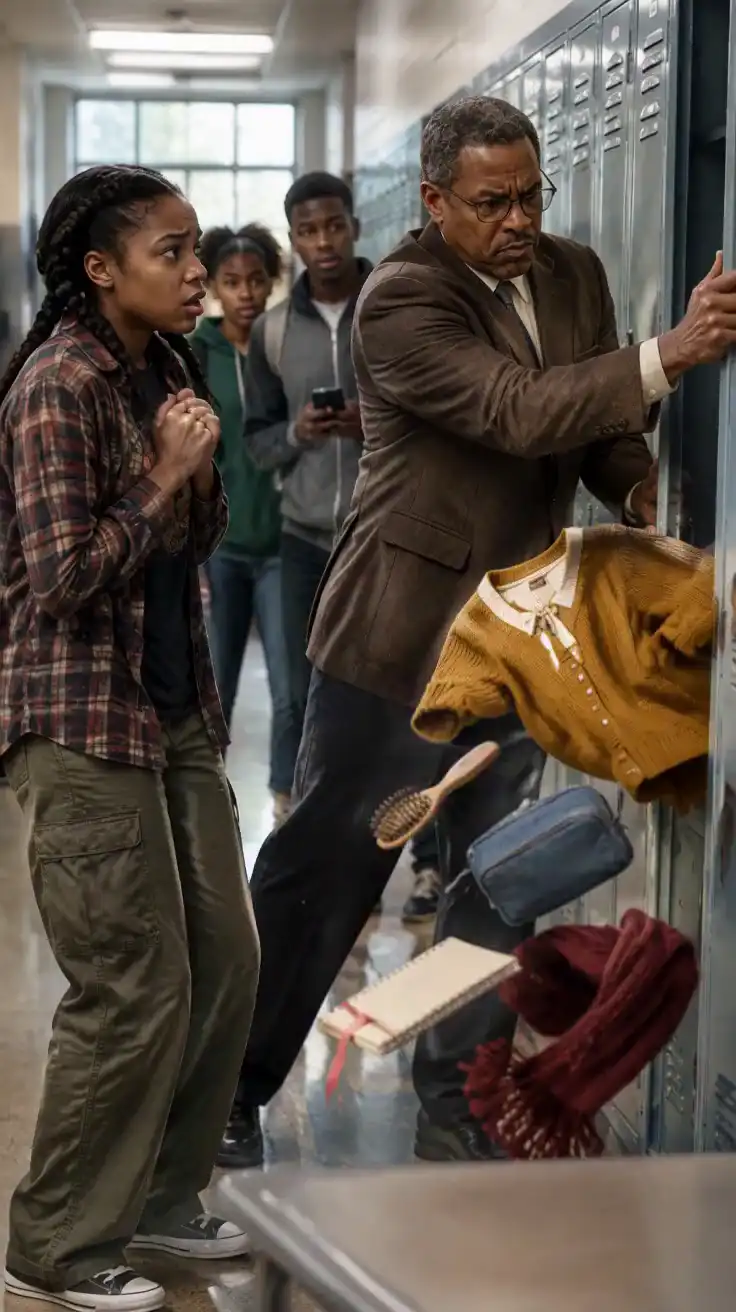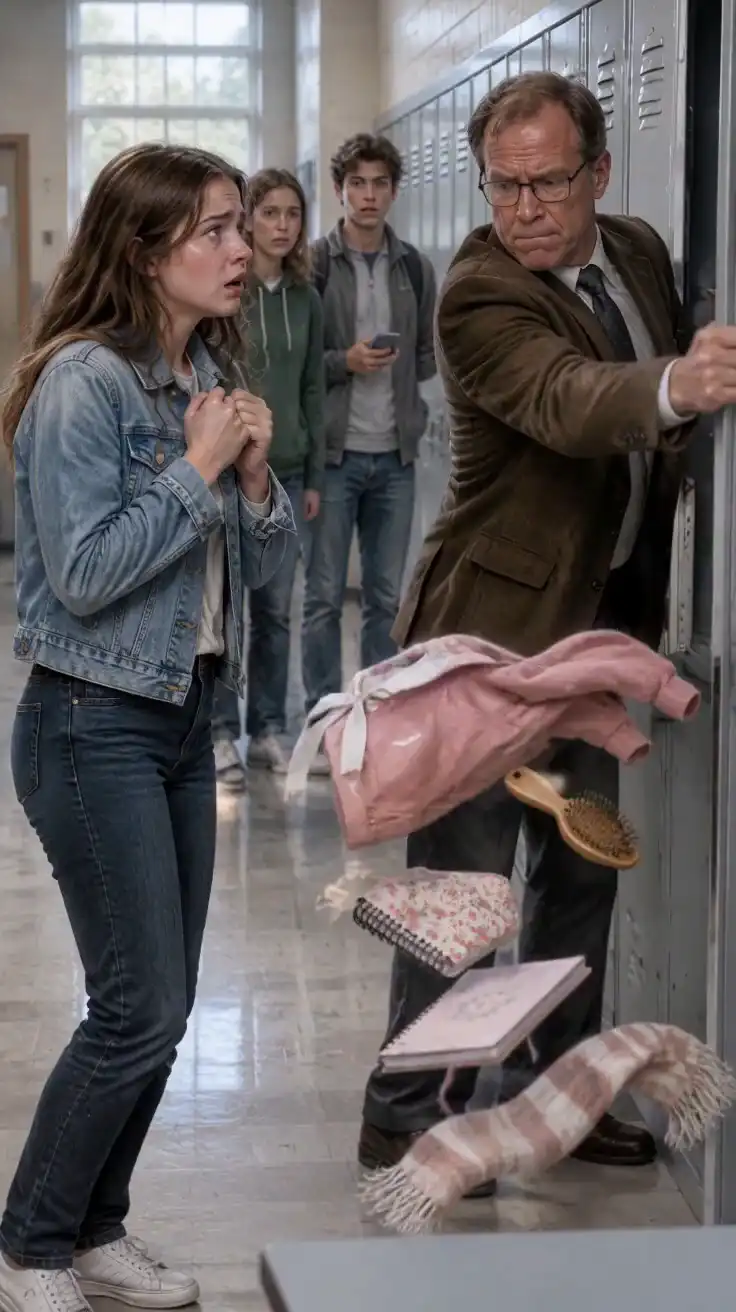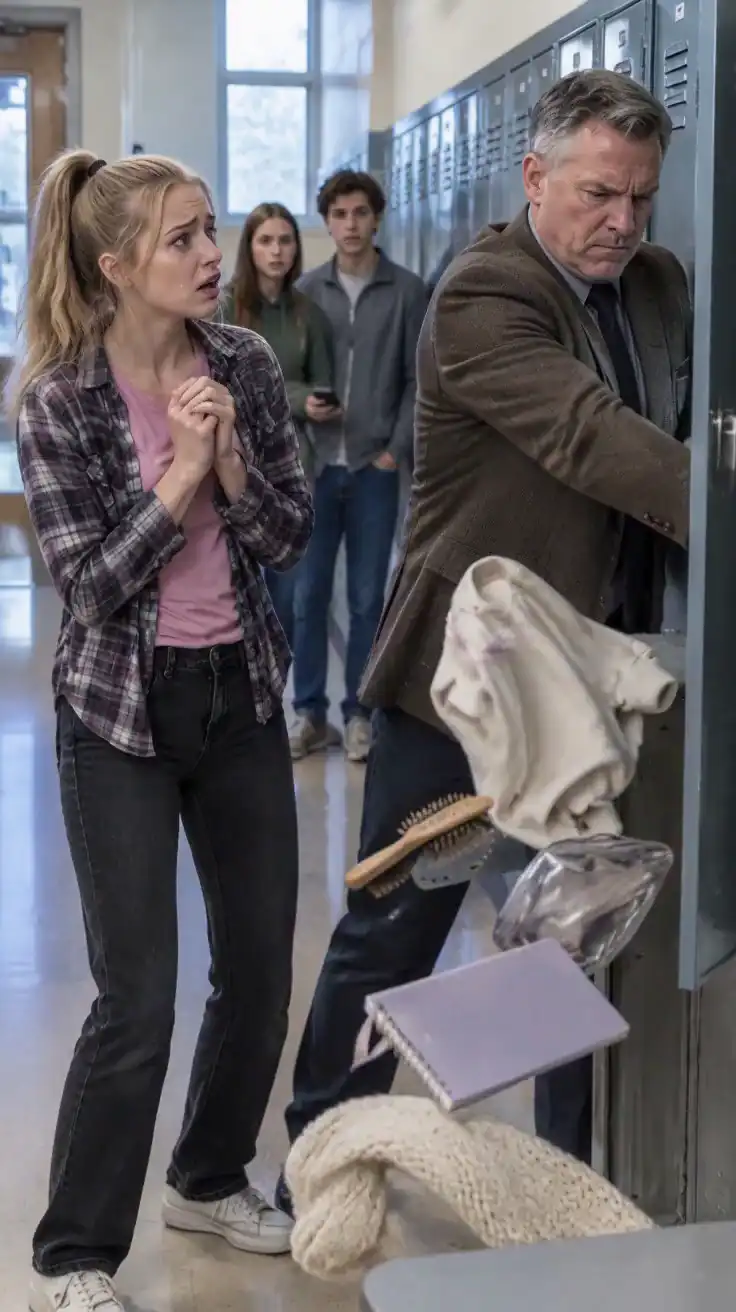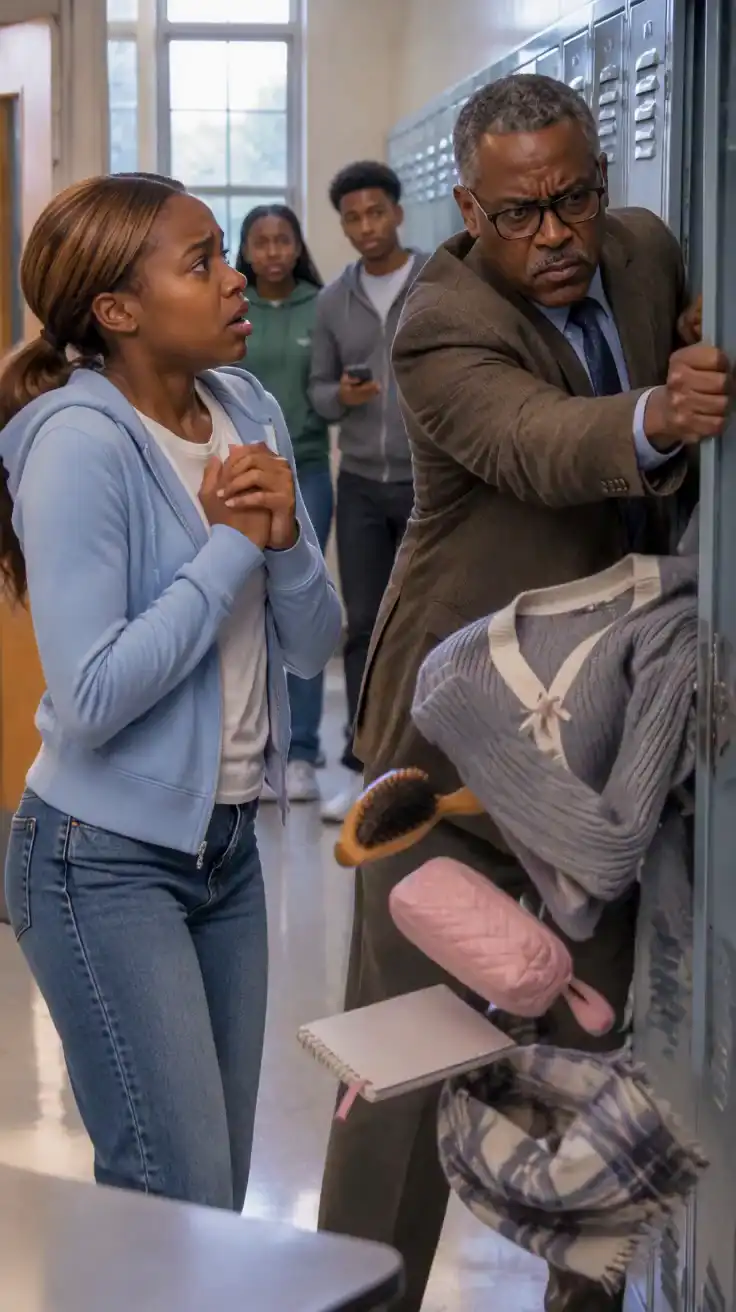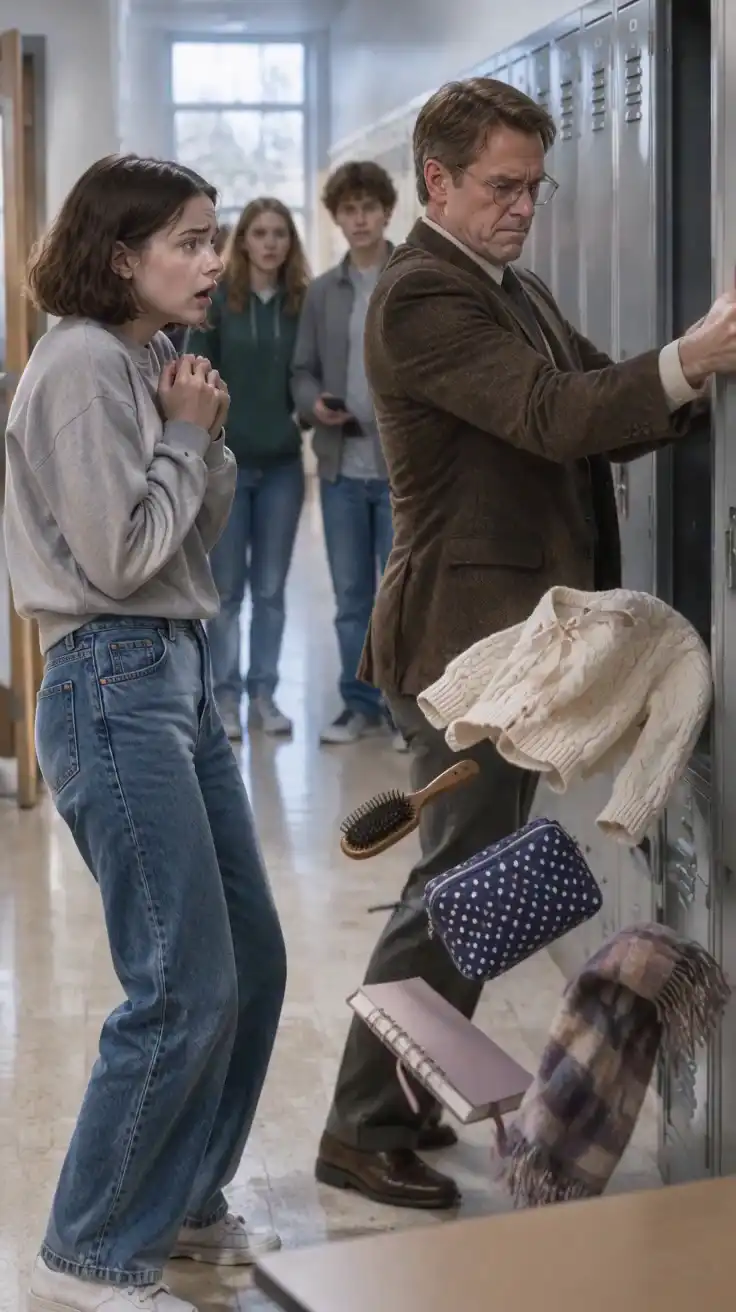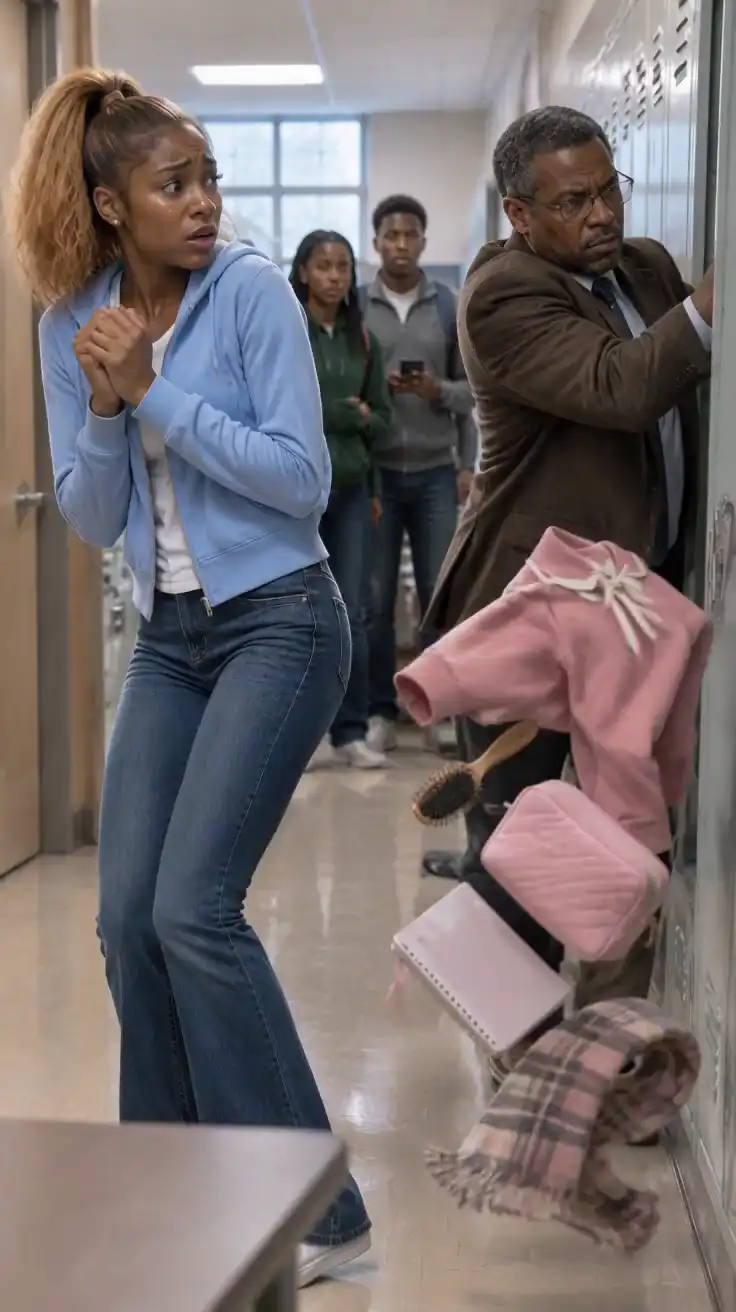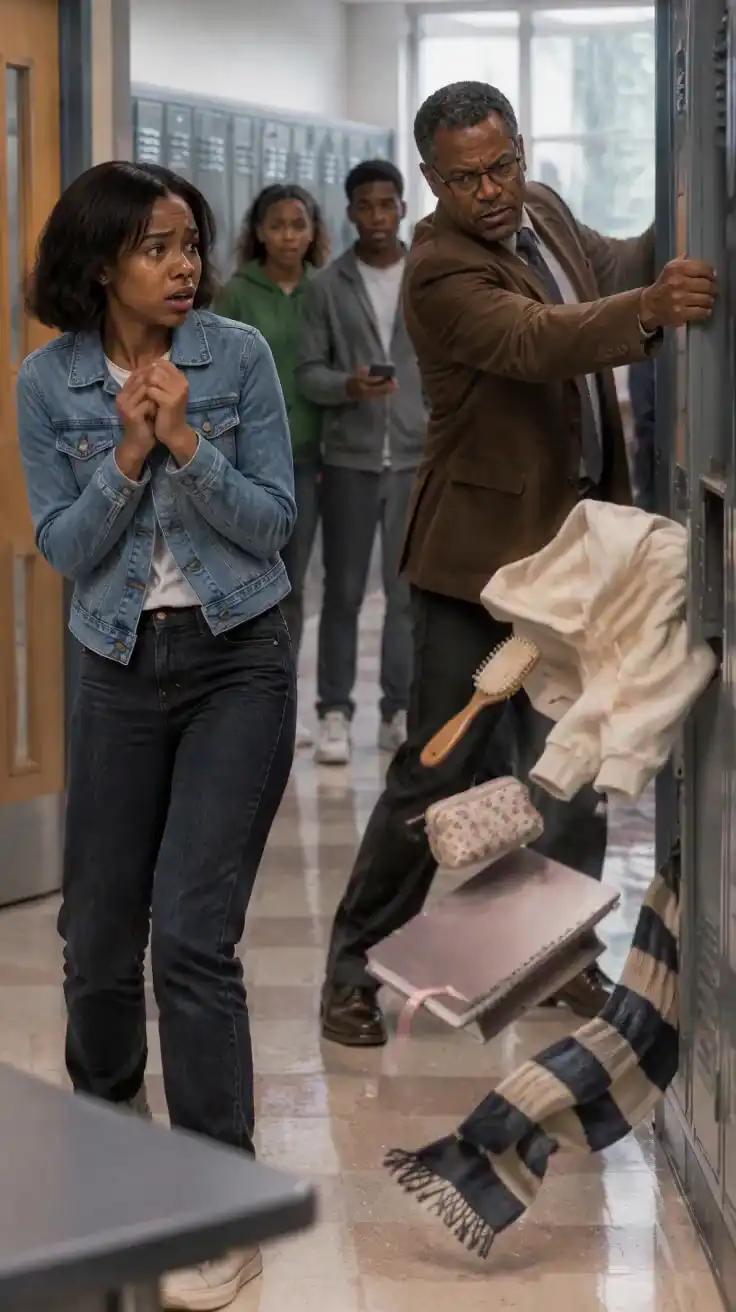
The first thing I heard after Dean Mercer looked at Simone was my daughter saying, “That’s Aaliyah’s.”
Not, “That’s mine.” Not, “She planted it.” Just that.
I was still in the parking lot, halfway out of my car, when the video ended.
The call from the school had come while I was stocking shelves at the grocery store. My supervisor, Mr. Alvarez, was standing beside me with a box of canned peaches in his arms when my phone buzzed against my hip. The number on the screen belonged to the school, and I knew before I answered that a school did not call a mother in the middle of a shift to tell her something good.
“Ms. Brooks?” a woman said. “This is the front office. We need you to come in.”
“What happened?”
“There was an incident involving Nia.”
“Is she hurt?”
“She’s safe. But Dean Mercer would like to speak with you.”
I asked the question again. “Is my daughter hurt?”
A pause. I could hear papers being moved on the other end. “She says she’s not.”
That was when I put down the box of peaches.
Mr. Alvarez said, “Go. I’ll cover your aisle.”
I drove across town with my hands at ten and two like I was taking a test. At the red light on Carlisle, I called Nia. She didn’t answer. I called again. Nothing. I tried to convince myself that she had her phone in her locker, or that the dean had taken it, or that she was sitting with the counselor and couldn’t pick up. I gave each possibility a few seconds before throwing it away.
When I pulled into the school lot, there were students outside the east doors even though lunch had ended. They were standing in small groups, heads bent together, looking at their phones. One girl recognized me and looked down. I parked crooked, left my purse in the car, and went straight inside.
The front desk secretary knew me. She had watched Nia come through those doors since sixth grade, first with two pigtails and a purple lunchbox, then with a growth spurt and a knee brace, and finally in her high school warm-up jacket. She had also watched me bring in the required forms when Nia made the varsity track team, because it took three visits to get the medical clearance entered correctly.
“Where is she?” I asked.
“Conference room B,” she said.
“Is she hurt?”
The secretary’s expression changed. “No. Not physically.”
The words made my stomach tighten. I was about to ask what she meant when a girl came out of the hall wearing a gray hoodie with the sleeves pulled over her hands. Simone Pike. She had been in my kitchen so many times over the years that I used to keep the strawberry yogurt she liked in the refrigerator. She had done homework at our table, slept on our couch after late meets, and borrowed my black umbrella without ever bringing it back.
That day, she did not look at me.
She walked past as if I were not there.
“Simone,” I said.
She stopped, but only because the secretary was watching. When she turned, there were tears in her eyes. It took me half a second to notice she wasn’t crying. Her eyes were wet and her face was dry, and she had the tight, careful look people get when they are trying to appear upset without letting the expression ruin whatever story they have chosen.
“I didn’t know,” she said.
“Didn’t know what?”
She lowered her gaze. “I’m sorry.”
“For what?”
The secretary stood up. “Ms. Brooks, Dean Mercer is waiting.”
I didn’t let Simone go just yet. “What happened to my daughter?”
“I said I’m sorry.”
Then she pulled the hood up and kept walking.
I found Nia in conference room B with her backpack beside her chair and her warm-up jacket folded across her lap. Her hair had come loose around her temples. There was dust on one knee of her jeans. She had her arms crossed over her stomach, and when she saw me, she stood so fast the chair scraped.
I went to her.
“Are you hurt?”
“No.”
“Look at me.”
She looked.
I checked her face, her hands, her wrists. She let me, though I could see how much she hated being examined in front of the dean and the vice principal. When I reached for the back of her head, she pulled away.
“Mom. I’m okay.”
“Did he touch you?”
Dean Mercer cleared his throat. He was standing behind the conference table, holding the video on his phone. “I did not touch her.”
I turned to him. “Then why is my child’s jacket on this table?”
“We were investigating a report of a stolen bracelet.”
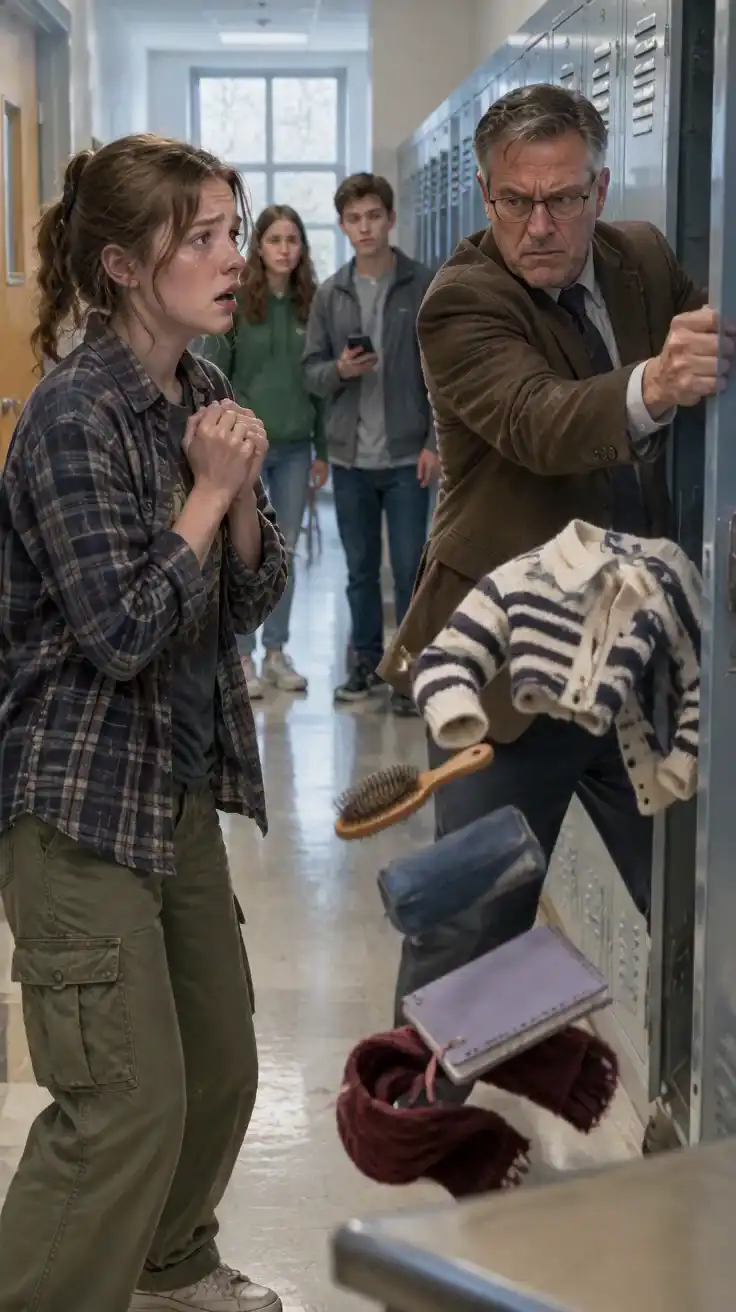
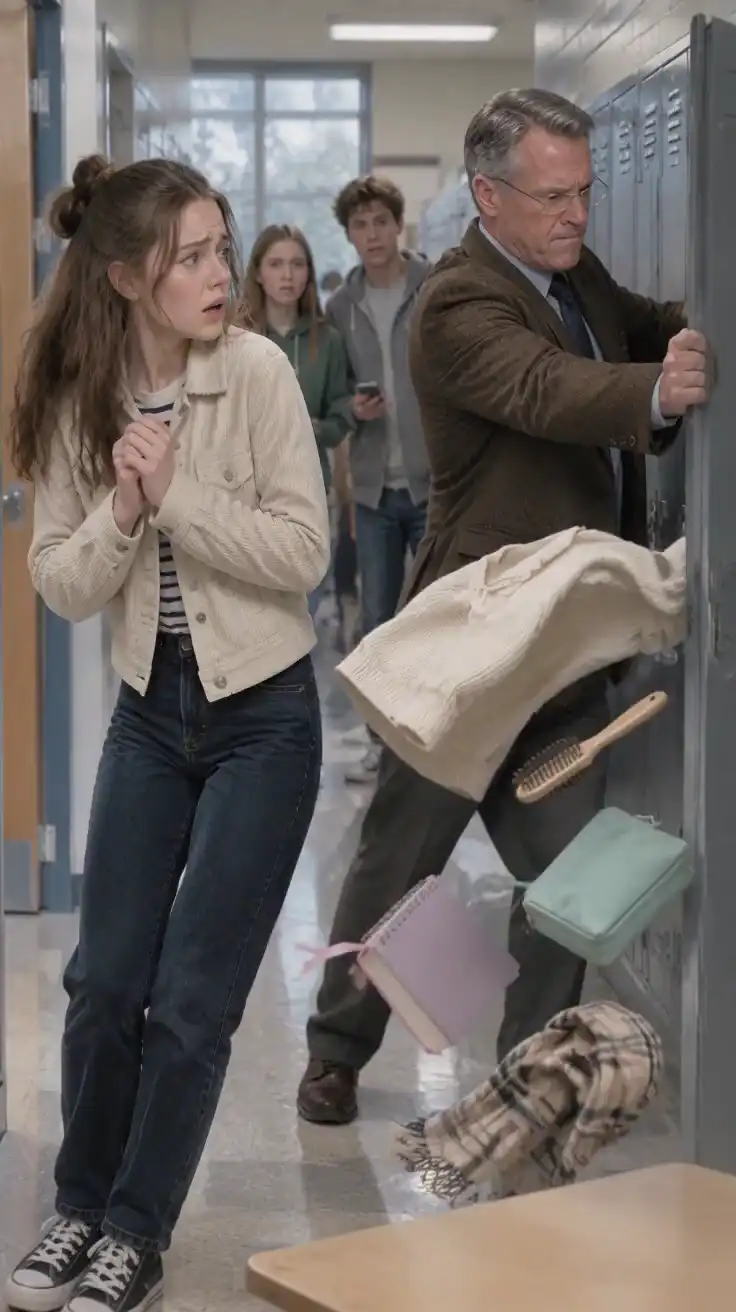
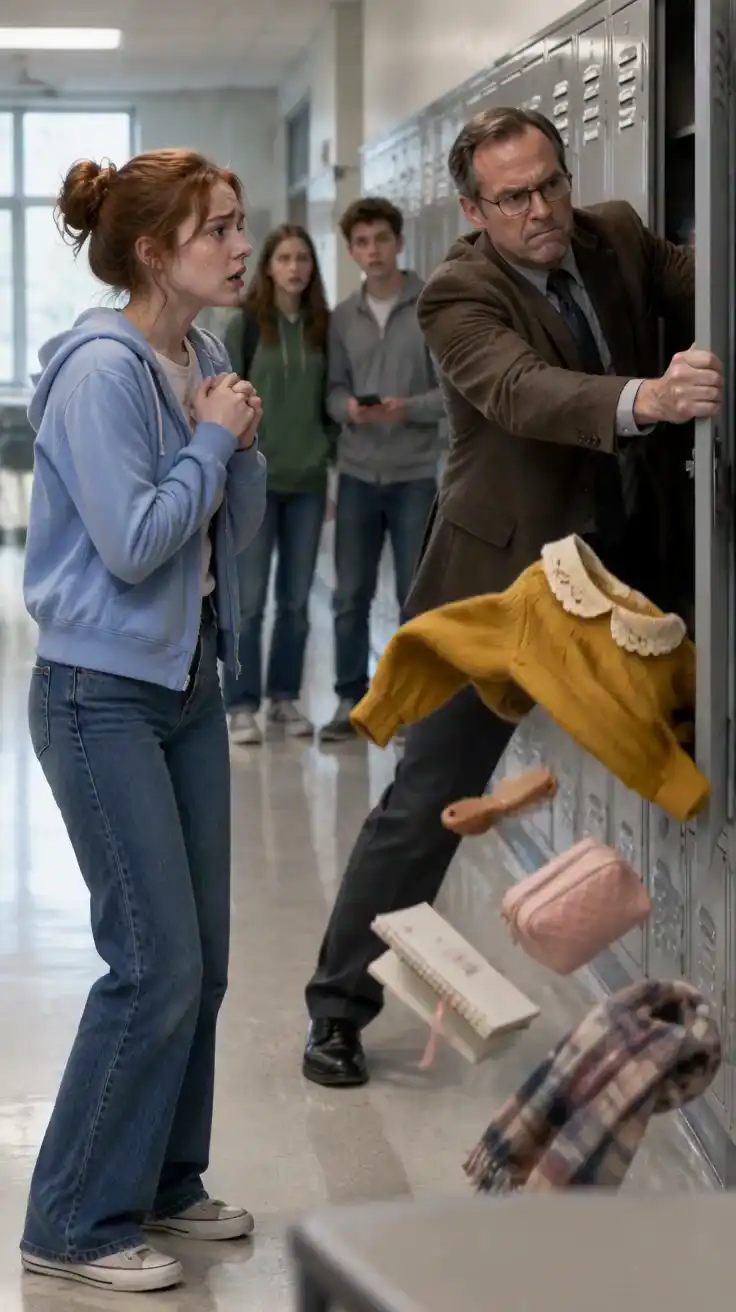
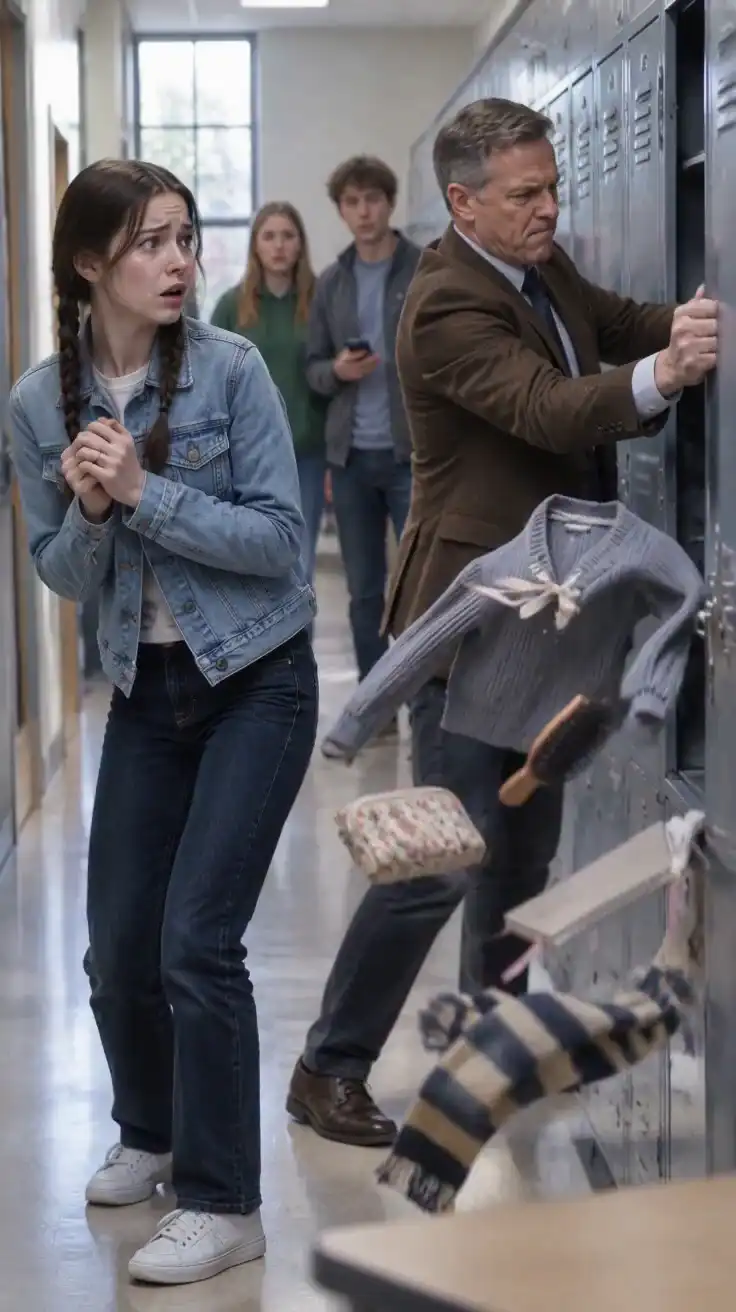
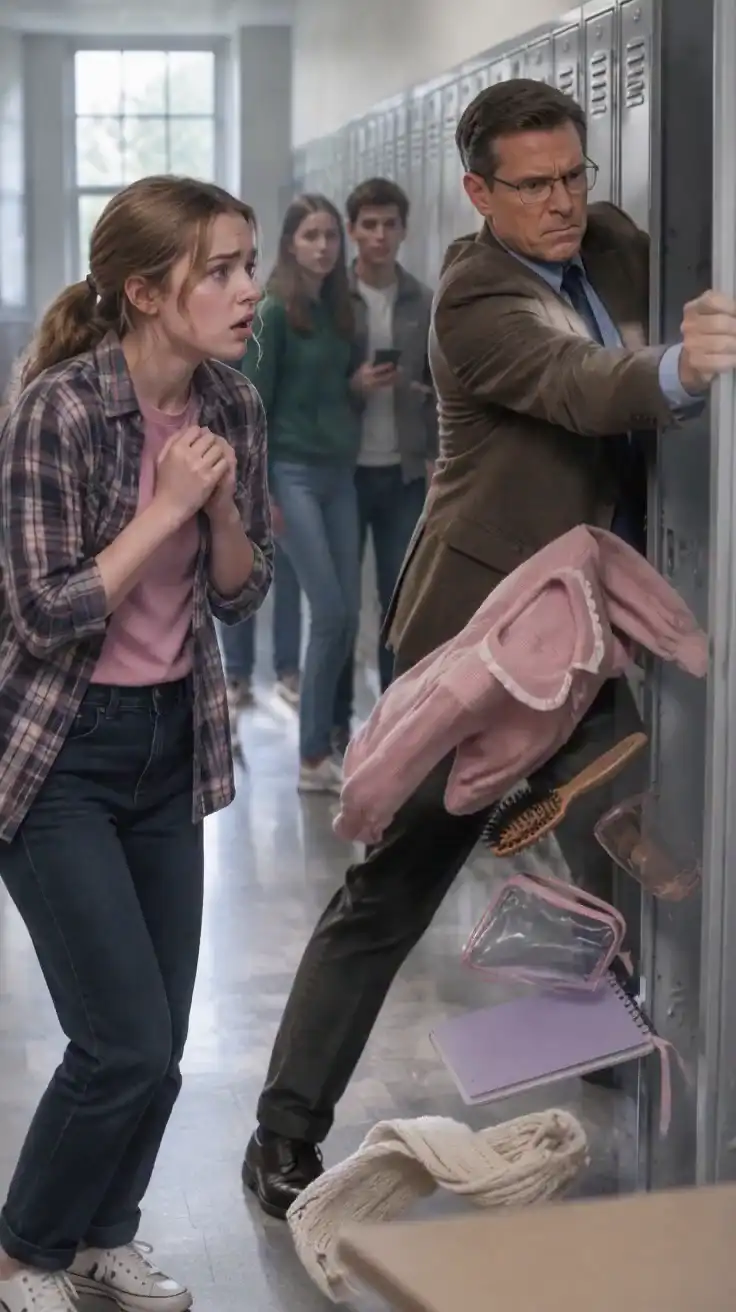
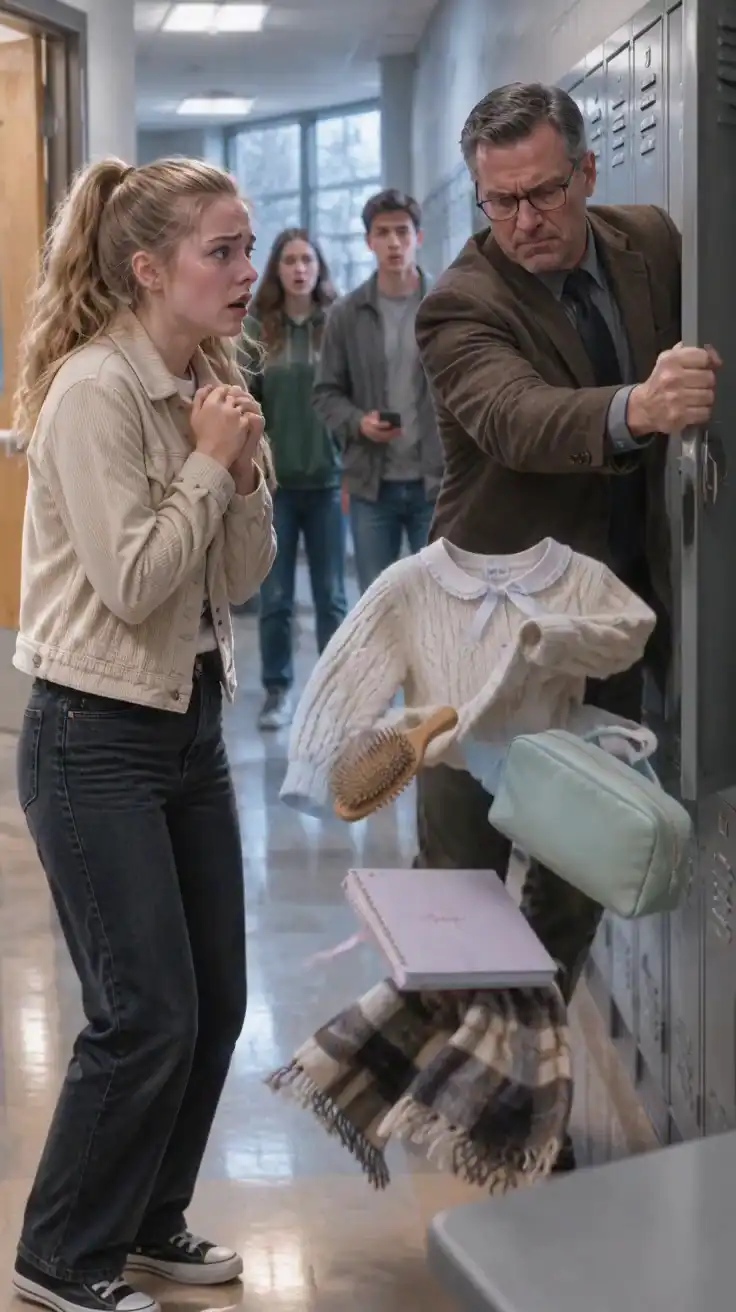
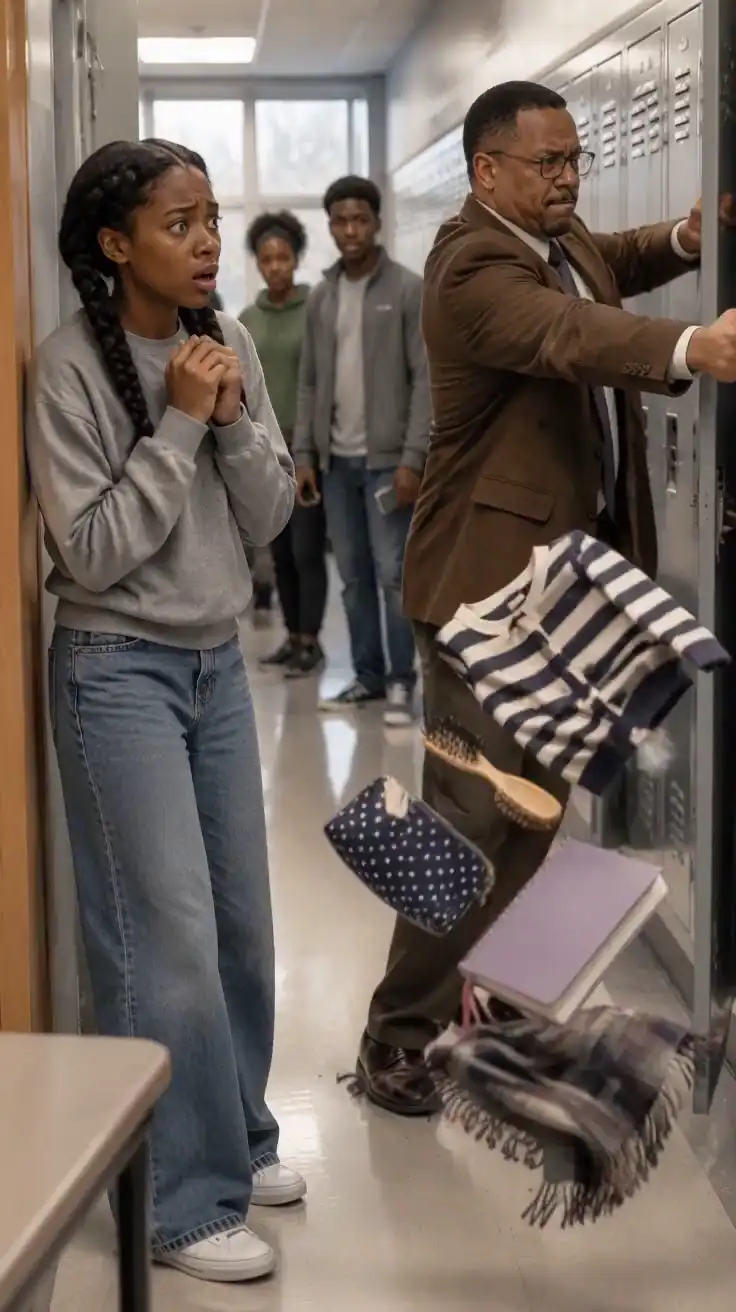
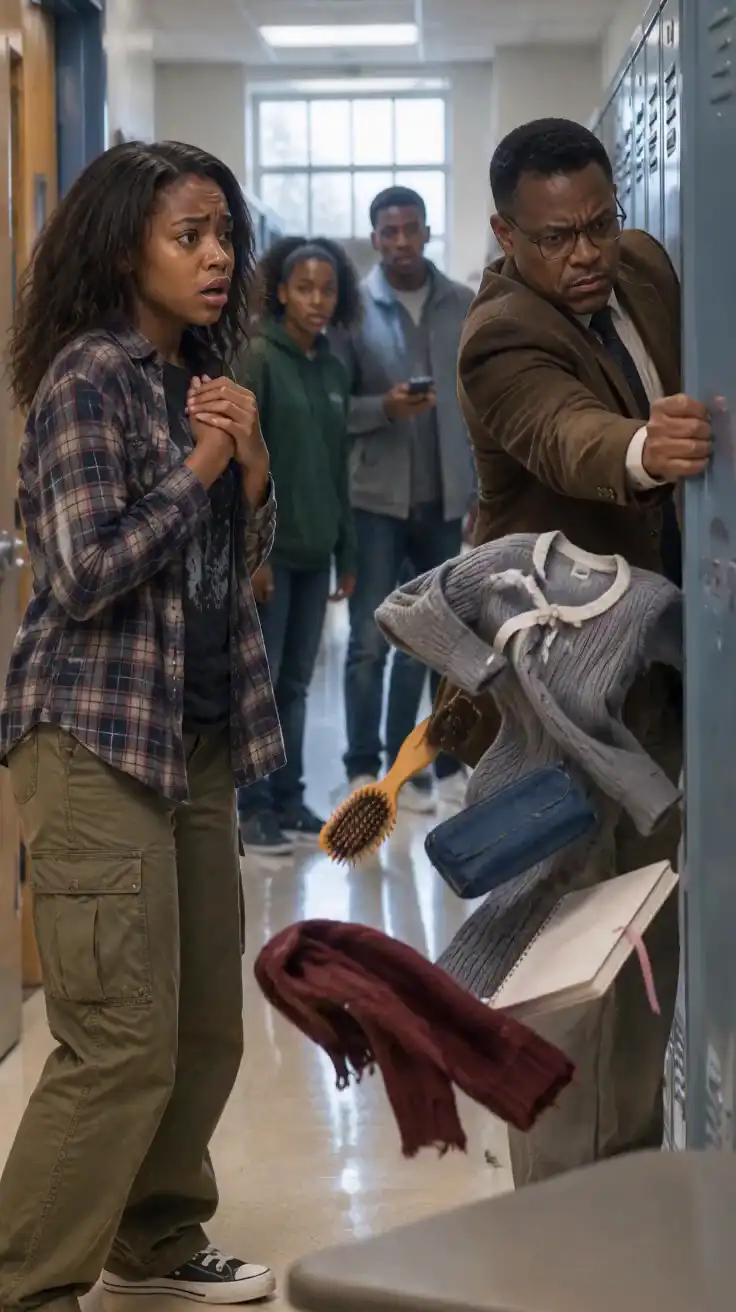
“You were investigating it by putting her on the floor?”
“Nia agreed to show me the contents of her bag.”
Nia gave a short, disbelieving laugh. “I didn’t agree. You told me if I didn’t cooperate, you’d call the police.”
The vice principal, Mrs. Park, looked down at her notes.
Dean Mercer said, “I did not say that.”
“You said you’d have to take it further.”
“That is not the same thing.”
“It sounds the same when you’re sitting on the floor and everybody is watching.”
I put one hand on the back of the chair beside her. “What was reported?”
“Simone said her bracelet had been stolen from her locker,” Dean Mercer replied. “She said Nia had taken it.”
“Was it Simone’s bracelet?”
He hesitated.
“Dean,” Mrs. Park said quietly.
“I was told it belonged to her family.”
Nia said, “It belonged to Aaliyah.”
That was when the room changed. The vice principal stopped writing. Dean Mercer lowered the phone. The little wall clock kept ticking, but for a second it was the only sound.
I looked at my daughter. “What do you mean?”
Nia’s mouth tightened. “The bracelet she was wearing the day Aaliyah fell.”
I did not know there was a bracelet. I knew Aaliyah had been shoved down the auditorium stairs. I knew she had broken a bone in her wrist and needed seven stitches at her hairline. I knew she had told the police she remembered a red sleeve, a hand, and a gold bracelet with something broken at the clasp. I knew she had been afraid to say Simone’s name at first, because Simone had been her friend too.
I did not know my daughter had seen the bracelet.
I sat down. “Tell me everything.”
Nia looked at Dean Mercer.
He said, “Perhaps we should continue this with the school resource officer present.”
“No,” I said. “You can start by telling me why my daughter was searched without me.”
“Ms. Brooks, there was a theft allegation.”
“Then you call me. You do not empty her bag in a hallway and tell her to kneel.”
“I understand this is upsetting.”
“No, you understand that I’m upset. That is not the same thing.”
Mrs. Park stood up. “I think we should all take a breath.”
“I am breathing.”
Nia put her hand over mine. Her fingers were cold.
Then she told me about the auditorium.
Aaliyah had been leaving the spring concert rehearsal with a stack of sheet music. Simone had come up behind her, said something Nia couldn’t hear, and taken hold of Aaliyah’s sleeve. Aaliyah turned. They argued. Simone had wanted Aaliyah to say she saw Nia break a practice-room window. She hadn’t. Aaliyah said she would tell Coach Bell that Simone had been skipping conditioning and signing Nia’s initials on the attendance sheet. Simone shoved her. Aaliyah fell backward, hit the edge of a step, and slid down the rest of the stairs.
“She said she didn’t mean to push her,” Nia told me. “She said it was an accident. But she didn’t call for help. She ran.”
“And the bracelet?”
“Aaliyah grabbed her wrist before she fell. The clasp was already broken. It caught on her sleeve. She remembered it.”
“How did you see it?”
“I didn’t. Not that day. Aaliyah told me the description after she got home. Then Simone came to school the next morning wearing it. I recognized the red thread on the clasp.”
“Did you tell anyone?”
“I told Coach Bell.”
“And?”
“She said we shouldn’t accuse anybody without proof.”
“So you came to me.”
Nia shook her head. “I thought if I got the bracelet, that would be proof.”
I looked at her. “You thought you could take it?”
“I thought I could ask her for it.”
“That is not what you did.”
“I know.”
“Do you?”
Her eyes filled, but she did not cry. “I know now.”
She told me she had tried to speak to Simone after practice. Simone told her the bracelet was her grandmother’s, and that Aaliyah had mistaken it for something else. Nia said the clasp had been broken in the same place, with the same red thread tied through the gap. Simone laughed and asked what Nia was going to do, search her pockets?
Then, a week later, the nationals roster was scheduled to go up.
Nia and Simone had been running together since freshman year. They had shared a locker because the athletic wing was short on space and Coach Bell thought the arrangement would be practical. They had put their names on strips of masking tape inside the door. Nia’s tape was blue. Simone’s was yellow. They had tucked spare hair ties into the top shelf and stashed safety pins behind the lock. They had learned each other’s combinations because they switched jackets after practice and forgot whose bag was whose.
When I first met Simone, she was a skinny girl with a scraped chin and one shoe untied. Her mother, Denise, was standing in the school gym trying to get a paper form signed while keeping one eye on her younger son, who was crawling under the bleachers. I offered to take the boy so she could write. She looked so relieved that I did it before she asked.
After that, our lives overlapped. I gave Simone rides when Denise’s shift at the clinic ran late. Denise sent over plates of baked chicken when she knew I had worked a double. The girls studied together, ran together, and complained about Coach Bell together. They argued about music and made up before practice was over. There were years when Simone was in my house more than some relatives.
Nia said the first change came when Coach Bell began talking about nationals.
The girls’ relay team had placed second at regionals the year before, and the coach had told them the top four runners at the spring trials would travel. There were only four seats on the roster. The trip had a small stipend for food and lodging, and a college recruiter had promised to watch the 4-by-400. Nia had been training for it since winter. Simone had been training too.
At the first set of trials, Nia ran the fastest split. Simone came in fifth.
She said there was still time for another chance. She asked Nia for help with her starts. Nia showed her. They practiced after school, sometimes alone, sometimes with Coach Bell watching. Nia says she tried to make it fair. If Simone was losing time at the handoff, Nia ran the handoff with her. If Simone was getting tight in the final stretch, Nia told her to loosen her shoulders and breathe.
The second trial was on the Monday before the list went up.
Simone ran a strong race. She still came in fifth.
“Did you know she was angry?” I asked.
“I knew she was disappointed.”
“That’s not the same.”
Nia stared at the table. “She told me I could give her my place.”
I thought I had misunderstood. “What?”
“She said I could tell Coach I had a shin injury. She said I could let her have the spot because I’d have another year.”
“What did you say?”
“I said no.”
“Why didn’t you tell me?”
“Because I thought she’d calm down.”
“And did she?”
Nia looked at me without answering.
At noon that day, Coach Bell had posted the roster outside the gym. Nia was on it. Simone was not. There was a picture in the school’s athletics group chat, taken at 12:03. Nia saw the names between classes. She called me after practice and said, “I made it.” I was on break in the stockroom, and I told her I was proud. She sounded happy, but tired. I told her we would celebrate with pancakes.
I did not know Simone had been standing at the end of the hall when Nia called me. I did not know she had gone to her locker and waited.
I did not know what was in Nia’s jacket pocket either.
The pawn ticket had been folded in half, then in half again. It was for Grandma Laverne’s gold chain. I knew the chain was gone, but I thought it was in the little wooden box in my dresser. I hadn’t opened that box since the winter. I had worn the chain to my mother’s memorial service and then put it away, afraid I would lose it.
The ticket had the name of the pawnshop, the loan amount, and the date. Nia had taken the chain from my room three weeks earlier. She had pawned it for enough to cover the difference between the electric bill and the rent I had already paid late. I had not asked her to do that. I had not even told her the full amount I owed. But she had heard me on the phone with the electric company, asking if they could give me until Friday.
She had also heard me tell her aunt that I could not afford to send her to the away meet.
The money had not been enough for everything. The lights stayed on. The rent was still late.
Nia planned to get the chain back when the travel stipend came through. She had kept the ticket in her jacket because she was going to the pawnshop after practice. She had intended to tell me then, or perhaps never. She had not decided.
That afternoon, Simone was looking for the ticket, though neither of us knew it yet.
When the office conversation broke up, Dean Mercer said he needed to speak with each girl separately. I said Nia was not going anywhere without me. Mrs. Park asked us to wait in her office while they called Simone’s mother.
I took Nia to the restroom first. She washed her hands even though there was nothing on them, rubbing her palms together under the water. I turned the tap off.
“What did you have in the jacket pocket?”
“Nothing.”
“Nia.”
She looked at herself in the mirror.
“I’m not trying to trap you,” I said. “I need to know what he might have seen.”
She did not answer.
I lowered my voice. “Is it about the chain?”
Her face crumpled for one second, then became still again.
“Where is it?”
“Mom—”
“Where is the chain?”
“In a pawnshop.”
I leaned against the sink.
“I was going to get it back,” she said. “I was going to tell you.”
“When?”
“After the meet.”
“What meet?”
“Nationals.”
I stared at her reflection. “You pawned my mother’s chain to pay our bills?”
“I didn’t want the electricity to get shut off.”
“That was not yours to decide.”
“I know.”
“Do you?”
“I know now.”
She started crying then, silently, with her mouth pressed closed. I wanted to hold her. I also wanted to shake her. I did neither. I stood beside her while the hand dryer roared in the next stall, and watched water run from her fingertips into the basin.
“I was proud of you this morning,” I said.
“I’m still me.”
“That’s not an answer.”
“I’m sorry.”
“So am I.”
She looked up. “You’re sorry?”
“I’m sorry you thought you had to fix my problems alone.”
The school called us back to the conference room. The resource officer had arrived, and Simone’s mother was sitting in the chair beside the door. Denise looked smaller than I remembered her. She had her clinic uniform under a long cardigan and a folded sheet of paper in her hand. When she saw me, she stood.
“Renee,” she said.
“Denise.”
“I’m sorry this happened.”
“Which part?”
Her eyes flickered toward Simone.
“Your daughter being accused,” she said. “The way it was handled.”
“That’s a start.”
Simone was sitting at the far end of the table. She had put her hands flat on it, fingers spread. The hoodie sleeves were still over her wrists.
Dean Mercer played the hallway video again. This time we watched it all the way through. I saw Nia’s shoulders hunch when he reached for her jacket. I saw her open the bag’s front pocket, then the side pocket, then the small zipper pouch where she kept a spare inhaler. I saw students gather around. I saw Simone move into the frame, point, and shout.
When the bracelet came out of her sleeve, it hit the tile and spun.
The video did not have sound for the first several seconds, but the audio picked up as Simone said, “Check there! She put it there!”
Then it captured the little metal ring of the clasp rolling across the floor.
Nia had been standing between the dean and her jacket. She turned when she heard the sound. In the video, her hands remained at her sides. She did not reach for the bracelet. She did not look surprised.
Instead, she said, “That’s Aaliyah’s.”
Simone made a small movement toward it, as if she intended to pick it up. Dean Mercer stepped between her and the bracelet.
“Don’t touch it,” he said.
“I didn’t put it there.”
“You were wearing it.”
“I wasn’t.”
“I saw it come from your sleeve.”
“You can’t tell from the video.”
“I can see it.”
The resource officer stopped the recording. “Is there anything you want to tell us about the bracelet?”
Simone’s mother turned toward her. “Simone.”
Simone folded her arms. “It’s mine.”
“Your grandmother’s?” I asked.
She did not answer.
“Or your mother’s?”
Denise’s face went pale.
The bracelet had come from a pawnshop on Mercer Street, not from Aaliyah’s jewelry box or Simone’s grandmother’s dresser. It had a small stamp inside the band, a maker’s mark and a scratched number. The pawn ticket, as we learned later, had been issued to Denise’s mother years earlier, when she was trying to cover a hospital bill. The bracelet was one of two pieces she had pawned. Denise’s father had redeemed it before his death. It had passed to Denise, who gave it to Simone when she turned fourteen.
The family had never been rich. Denise had spent years moving from one overdue bill to the next, making choices that looked simple from the outside and were never simple when the envelope was open on the kitchen counter. When her younger son needed dental work, she had pawned the bracelet again. She had not told Simone. She was trying to get it back before her daughter found out.
But Simone had found the pawn ticket in her mother’s purse. She had gone to the shop with money saved from her weekend job and redeemed the bracelet herself.
She did it because she wanted it back. She did it because it was one of the few things her mother had given her that felt like it belonged only to her. She did it because she was tired of seeing her family’s life converted into numbers on paper. And she did it without telling Denise, using the money Denise had been saving for the gas bill.
When Denise found out, the argument was loud enough for the neighbors to hear.
“That’s why you hid it?” I asked Simone.
She stared at the table. “I didn’t hide it.”
“You had it in your sleeve.”
“I was wearing it.”
“Why was it in your sleeve?”
She gave a small shrug. “It was cold.”
“It was warm in the hallway.”
Her mother said, “Simone, tell the truth.”
Simone’s jaw tightened. “I was going to put it in Nia’s bag.”
Denise shut her eyes.
The room went quiet.
Simone said it again, more softly. “I was going to put it in her bag.”
“Why?” the resource officer asked.
“Because she took something from me.”
“What?”
“My place.”
“That is not something she took,” Coach Bell said from the doorway.
I had not seen Coach come in. She was still wearing her whistle around her neck, her face red from running down the hall.
Simone looked at her. “You picked her.”
“I picked the four runners with the best times.”
“You knew she had a head start.”
“I knew she had put in more work.”
“Because she could afford to stay late.”
“Simone, she stayed late because you asked her to.”
“That’s not what happened.”
Nia shifted in her seat. “I asked you to train with me too.”
“No, you didn’t.”
“I did.”
“You knew what you were doing.”
“What was I doing?”
“Making everybody think you were helping me.”
Nia looked at her for a long moment. “I thought I was helping you.”
That seemed to make Simone angrier than if Nia had shouted.
“You got the spot,” she said. “You got the stipend. You get to go. Your mother gets to be proud. I get to go home and hear about how there’s no money for anything.”
There was no triumph in Nia’s face. Only hurt.
“I didn’t make the roster to hurt you.”
“You don’t have to mean it.”
I could see that Denise wanted to reach for her daughter, but she kept her hands in her lap. Maybe she was afraid Simone would pull away. Maybe she was afraid the room would mistake comfort for agreement.
The resource officer asked Simone whether she had put the bracelet in Nia’s locker.
“No.”
“Did you take it out of your own property and try to place it in her bag?”
“I was going to.”
“Why didn’t you?”
“I saw him searching.”
“You shouted that she had put it there.”
“I wanted them to check.”
“You were accusing her of stealing it.”
Simone’s eyes went to Nia. “She was going to tell.”
“Tell what?” I asked.
“That I pushed Aaliyah.”
The words landed heavily. Denise covered her mouth.
I looked at Simone. “Did you push her?”
She did not answer.
“Did you?”
“I didn’t mean for her to fall.”
“That wasn’t what I asked.”
Simone leaned back in her chair. “She was standing too close to the stairs. I told her to move. She grabbed my arm. I pulled away.”
“You pushed her.”
“I pulled away.”
“Did she fall?”
“Yes.”
“Did you call for help?”
“No.”
“Why not?”
“I panicked.”
“And then you let your aunt take her to the emergency room.”
“I didn’t know what else to do.”
“You knew what else to do,” I said. “You could have stayed.”
The resource officer told me to let him ask the questions. I sat back. Nia’s hand found mine under the table. She was trembling.
Simone had not originally planned to frame Nia for hurting Aaliyah. The plan was smaller, meaner, and more desperate. She wanted to make Nia look like a thief. She wanted Coach Bell and the school to question her character before the nationals trip. She wanted the roster reconsidered. She wanted Nia to lose a place she believed should have been hers.
The bracelet had become useful because it connected Simone to the stairwell and, in her mind, could be turned into a story about Nia’s jealousy. If she planted it, she could claim Nia had taken it. If the school believed that, she could say Nia had been trying to silence her because of the fall. It was not a clever plan. It did not need to be clever to hurt my daughter. It only needed adults to assume the first accusation was true.
Simone’s sleeve was where she had tucked the bracelet because she had intended to slide it into Nia’s jacket pocket when the dean pulled the bag apart. She had seen Nia’s bag open. She had seen the jacket lying over it. She had not expected the dean to tell Nia to kneel. She had not expected Nia to keep looking at the jacket pocket. She panicked, pointed, and the bracelet slipped out.
The pawn ticket in Nia’s pocket complicated the story in a way Simone had not anticipated. Simone had not been searching for the bracelet anymore; she was looking for anything she could use to keep Nia under suspicion. She had noticed Nia protect the inside pocket of her jacket. She thought there was something there, and she was right, although not in the way she imagined.
When Dean Mercer asked to see the ticket, I said no.
He looked surprised. “It may be relevant to the investigation.”
“It is not relevant to whether she stole Simone’s bracelet.”
“If there is an item in the pocket—”
“You are not going through her clothing again.”
Nia’s face was red. “Mom, it’s okay.”
“No, it isn’t.”
I did not want her secret exposed. I also did not want to teach her that embarrassment was the price of asking to be treated with dignity. I took her jacket from the table and held it against my chest.
The resource officer said he would not search the jacket. He asked whether Nia had the bracelet. She said no. He asked whether she had ever taken it from Simone. She said no. He asked whether she had seen Simone wearing it. She said yes.
He asked whether she believed the bracelet belonged to Aaliyah. Nia said Aaliyah had described it before she saw Simone wearing it.
Then he asked me if Aaliyah’s family could confirm that. I called my sister in the hallway. She was at work, but she put Aaliyah on speaker. Aaliyah’s voice sounded thin and tired.
“Is it the bracelet with the red thread?” Nia asked.
“Yes,” Aaliyah said.
“Did you see it that day?”
“I saw it on her wrist when she came up behind me.”
“Are you sure?”
“I know what I saw.”
“Why didn’t you tell the police?”
There was a pause.
“I did,” Aaliyah said. “They asked me if I knew who it was. I said I thought it was Simone’s, but I wasn’t sure. I didn’t want to get it wrong.”
“And after?”
“Her mom came to the hospital. She told me Simone was sorry and that she didn’t mean to hurt me. She said she was going to make Simone apologize when everyone calmed down.”
Aaliyah took a breath. “Nobody ever asked me again.”
I had to turn away from the office doorway.
When I got back inside, Denise was crying quietly. Simone had gone rigid in her chair.
“Your mother came to the hospital?” I asked.
Denise looked at me. “I did. I didn’t know the police were still investigating. I thought the school had handled it.”
“The school didn’t handle it.”
“I know that now.”
“Did you know Simone had pushed her?”
“No.”
“Did you know she ran?”
“No.”
Denise pressed the folded paper on the table between her hands. She had brought it to show the school, she said. It was a copy of the pawn receipt. She wanted to prove the bracelet was a family heirloom if anyone questioned where it came from. She had only looked at the video in the office. Before that, she thought the school had found the bracelet in Nia’s bag.
“I was scared,” Denise said. “I thought if they believed it was stolen, they’d call the police. I thought Simone would get arrested. I thought the bracelet would be taken. I thought all of it was going to come down on us at once.”
“I understand being scared,” I said. “I don’t understand letting them search a child you’ve known for years without asking what actually happened.”
Denise nodded. She did not argue.
Dean Mercer had gone quiet. He had watched the video twice. He had heard the resource officer’s questions. He had heard Aaliyah say she recognized the bracelet. He had heard Nia tell the truth about the locker. He had heard Simone admit she meant to put the bracelet in the bag.
Then he looked at Nia and said, “I’m sorry.”
It was the first apology he had offered.
Nia looked at the floor.
I said, “That is not enough.”
“I understand.”
“No, you don’t. She was frightened. You made her take her things out in front of a crowd. You told her to kneel. You reached into her jacket after she asked you not to. You had no reason to believe the bracelet was in her bag except what Simone said.”
“I was trying to recover property.”
“You were trying to recover property from a child while making her perform innocence for the hallway.”
“I made a mistake.”
“You did.”
He looked toward the vice principal, as if waiting for her to step in. She didn’t.
I told him the apology needed to happen where the harm had happened. He stared at me, and for one second I thought he would refuse. I thought he would tell me that he had already apologized, that he was an administrator, that he could not be expected to repeat it in front of students.
Instead, Mrs. Park said, “You should do it.”
The hallway had mostly cleared by then, but there were still students near the office. A few had stayed because they had seen the search. Others had been called back by the secretary. Nia stood beside me, shoulders straight, her jacket folded over one arm. Dean Mercer stood in front of her.
He said, “Nia, I am sorry I made you kneel and emptied your bag in the hallway. I should have called your mother before questioning you. I should not have reached for your jacket after you asked me not to. What I did was wrong.”
He was clear. He used the words I wanted him to use. It did not make my daughter stop shaking.
“Thank you,” she said.
It was not forgiveness. It was not a promise that she would forget. It was the small courtesy she could afford him in that moment.
A student near the office lowered her phone.
Dean Mercer turned toward the others who had gathered. “The accusation against Nia was not substantiated. The property was not found in her possession. The search was handled improperly, and I apologize for allowing it to happen in front of you.”
I watched the students’ faces. Some looked ashamed. Some looked curious. A few looked as if they were already deciding what the story would become once it reached their phones.
“Can we go?” Nia asked.
“Yes,” I said.
I carried her backpack. She carried the jacket.
In the car, she leaned her head against the window. I didn’t turn on the radio. At the first stoplight, she said, “I’m sorry about the chain.”
“I know.”
“You worked hard for it.”
“So did your grandmother.”
“I thought I could get it back.”
“You can’t solve every problem by taking something from me and hoping I won’t notice.”
“I didn’t want you to be upset.”
“I was already upset.”
“I know.”
“I don’t want to punish you for trying to help me. But I need you to understand that you scared me.”
“I know.”
“No, Nia. You do not know what it felt like to open that video and see you on the floor.”
She closed her eyes. “I’m sorry.”
I reached across the console and squeezed her hand.
That night, I put dinner on the stove and neither of us ate much. Nia sat at the table with her track bag at her feet. I sat across from her with the pawn ticket between us.
She had taken the chain to Mercer Street Pawn on a Friday after school. The man behind the counter had weighed it and offered her less than she expected. She said she was embarrassed to bargain. She signed her name on the line and walked out with the money in her pocket, feeling both powerful and sick.
The ticket listed a redemption date. The chain could still be retrieved if we paid the loan and fees. I asked her how much she had spent on the electric bill.
“Most of it.”
“How much is left?”
“Thirty-two dollars.”
“Where is that?”
“In my pencil case.”
“Why didn’t you tell me before you did it?”
She picked at the edge of the ticket. “You’ve been working all the time. You fell asleep in your clothes twice last week.”
“I am an adult.”
“I know.”
“I am allowed to be tired.”
“I know.”
“I am allowed to have a bill come due.”
“I know.”
“And you are allowed to be my daughter. You do not have to be the person who keeps this whole house standing.”
She looked up at me. “You do it.”
“I’m your mother.”
“That’s not fair.”
“No. It isn’t. But it’s still my job.”
We agreed I would call the pawnshop the next morning. We agreed she would not use the travel stipend to redeem the chain without talking to me. The stipend was not meant to repair every emergency in our lives. I also told her she had to accept that the chain was gone for now. We could not borrow money we did not have just because the chain mattered.
She said she understood.
I did not fully trust that she did. I had spent enough years being broke to know that love and bad decisions often arrived together. Sometimes you did something reckless because you loved someone. Sometimes you told yourself you had done it for love because that was easier than admitting you were scared.
The following morning, Coach Bell called before school.
“I’m sorry,” she said. “I should have asked Aaliyah directly what she remembered.”
“You should have.”
“I thought I was keeping things from getting worse.”
“It got worse anyway.”
“I know.”
“Did Simone tell you Nia had been threatening her?”
“No. She said they had a disagreement. I didn’t understand she was accusing Nia of taking the bracelet.”
“Did you know the girls had shared a locker?”
“I did.”
“Did you know Simone knew Nia’s combination?”
“Yes.”
I sat at the kitchen table and looked at the empty spot where the chain box used to sit on my dresser. “Then you knew Simone could get into Nia’s things.”
“I didn’t think she would.”
“That’s not the same as not being able to.”
“No,” Coach Bell said. “It isn’t.”
She told me the school had paused the nationals roster until the investigation was complete. The relay team was still practicing, but Nia and Simone had separate lockers now. The coach had asked the girls not to contact one another while the school reviewed the incident.
“Is Nia still going?” I asked.
“I don’t know yet.”
“Her name was on the roster.”
“I know.”
“Her time earned it.”
“I know that too.”
“Then don’t let this turn into a punishment for her.”
“I won’t.”
After the call, Nia came down the stairs in her uniform. She had heard enough to know.
“Am I still going?”
“I don’t know.”
“Coach?”
“I’m not sure.”
She sat down across from me. “If I don’t go, Simone wins.”
“That is not what this is about.”
“It’s exactly what it’s about.”
“No. It’s about what happened to you and what happened to Aaliyah. The roster is part of it, but it cannot be the whole thing.”
“It’s the only part they can take back.”
I wanted to tell her that running was not everything. But I knew it had become more than running. Nia had been working toward nationals through ice on the sidewalks, through the flu, through weeks when my car would not start and she ran home with her backpack bouncing against her spine. She had missed birthday parties and one school dance because Coach Bell scheduled extra practice. Her name on the roster had meant that all those hours had become something she could point to.
“I won’t let them remove you without a reason,” I said.
“What about the pawn ticket?”
“I’m not going to let them use that against you either.”
“What if they ask?”
“Then we tell the truth.”
She looked down.
“You don’t have to tell everybody every private thing about us,” I said. “But if someone asks directly, we don’t make another lie to cover the first one.”
She nodded.
At school, the video had already traveled further than I could reach. It was on three students’ phones by lunch and in a private group chat before the final bell. There were comments under it, most of them useless. Some said Nia must have stolen the bracelet because she was searching her bag. Some said Simone had planted it. Some asked why the dean had made her kneel. One person posted that the whole thing looked staged. Another wrote that Nia was getting special treatment because she ran track.
Nia did not read the comments, she told me. I did. I read each one until the words lost their shape. I wanted to answer every stranger. I wanted to tell them that my child had been trying to protect her cousin and had also been hiding a mistake from me, and that those two truths could exist in the same person without making her a thief.
I wanted to say that the chain did not make her greedy. It made her a scared girl who believed there was a price attached to every problem in the house and that she could pay it if she tried hard enough.
I wanted to tell them that the bracelet did not make Simone innocent because it was a family heirloom, and it did not make her guilty simply because she had a pawn ticket. It was what she did after she found it that mattered.
I didn’t post anything.
My sister called me that evening. Aaliyah wanted to speak to Nia. I handed her the phone.
“I’m sorry I didn’t tell you everything,” Aaliyah said.
“You were hurt,” Nia answered.
“I was scared.”
“I know.”
“I should have said Simone’s name.”
“Only if you were sure.”
“I was sure. I just didn’t want to be.”
Nia sat at the kitchen table and twisted a paper napkin between her fingers. “I should have told Mom I had the bracelet before the school did.”
“I thought the school had it.”
“I thought I could get it from Simone.”
“You can’t get answers from people by taking things.”
“I know.”
Aaliyah was quiet for a moment. “Are you still going to nationals?”
“We don’t know.”
“You should.”
“I don’t want to go if everybody thinks I stole.”
“Everybody doesn’t think that.”
“Some people do.”
“Some people thought I fell because I was clumsy. It doesn’t make it true.”
Nia didn’t answer.
Aaliyah told her she was going to come to the next practice, even if she had to use crutches. Her doctor had said she could put more weight on the leg, though the stairs were still hard. She said she wanted to be there when the coach made a decision.
The school held a meeting two days later with me, Denise, Coach Bell, Mrs. Park, Dean Mercer, and the resource officer. Aaliyah came with my sister. She was pale and slow-moving, but she had put on earrings and a clean sweater. Her hair was gathered in a scarf because the cut at her temple was still healing.
The school had done its own review of the hallway footage. They had interviewed students who saw the search. They had checked the locker log. They had spoken with Aaliyah. They had confirmed that the broken clasp matched the description she gave the police the day of the fall.
The resource officer said there was enough to refer the stairwell incident to the school’s discipline process, but no criminal charge was being considered at that time. Aaliyah had told the officer she did not want Simone arrested. She did want the school to recognize that she had been pushed and that Simone had left her there.
“I don’t want her ruined,” Aaliyah said. “I want her to stop saying it was nothing.”
Simone sat with her mother. Her cheeks were red, but she did not cry.
The school found that Simone had attempted to plant the bracelet in Nia’s bag and made a false theft accusation. They suspended her from the team for the rest of the season. She was also required to meet with the counselor and participate in a restorative conference if Aaliyah agreed. The school did not remove her from classes. She was allowed to return after a short suspension, but she was moved out of the athletic wing locker area and assigned a locker by the main office.
Dean Mercer was given a written reprimand. He had to complete additional training on student searches and had to provide the same apology to the school board at its next closed session. I asked what would happen to him if he did it again.
Mrs. Park said, “There will be further consequences.”
I told her that was not an answer.
It was the only one she gave.
Nia remained on the nationals roster.
The decision came at the end of the meeting. Coach Bell said the times had not changed, the selection criteria had been met, and there was no athletic reason to remove her. She said Simone would not travel because she was suspended from the team, and that another runner would take the open relay position.
Nia nodded. She didn’t smile.
Outside the meeting room, Simone’s mother asked me if we could speak.
Denise stood near the water fountain, rubbing her thumb over the edge of her folded papers. She said she was sorry for the first time without adding a reason.
“I should have asked what happened before I accepted the accusation,” she said. “I should have been thinking about Nia, not just about keeping Simone from trouble.”
“I appreciate you saying that.”
“I’m not asking you to forgive my daughter.”
“Good.”
“I don’t expect you to let the girls be friends again.”
“I’m not deciding that for Nia.”
Denise nodded. “I know.”
She told me about the bracelet. Not the part I already knew, but the part underneath it. Her father had given it to her when she graduated from high school. It was the only piece of jewelry he had ever bought her. When she pawned it the first time, she told herself she would get it back before anyone noticed. Then he died, and the debt stayed. When she pawned it again, she told herself it was only metal. Simone found out and redeemed it with the money she had been saving to buy a used phone.
“I was furious,” Denise said. “Not because she wanted the bracelet. Because she did exactly what I had done and pretended it was different.”
I understood that more than I wanted to.
“You both had a reason,” I said. “That doesn’t make the choice harmless.”
“No.”
“What are you going to do now?”
“Tell her the truth about the bills. Not every detail. But enough that she doesn’t have to imagine it’s worse than it is.”
“Good.”
“And I’m going to tell her that being scared doesn’t give her permission to hurt somebody else.”
I believed Denise meant it. I did not know whether Simone would hear her.
The restorative meeting took place the week before nationals. I did not want Nia to go. I had read about the process, asked questions, and talked to the counselor. Nia said she wanted to tell Simone what the fall had done to Aaliyah and what the accusation had done to her. Aaliyah wanted to attend. She was cleared to sit in a chair without the brace, though she still walked with a stiff, careful step.
We sat in a circle in the counseling room. Nobody had a table between them. I found that harder than I expected. The absence of furniture made it feel as if we were all supposed to be open in a way I did not trust.
The counselor asked Simone to explain what she had done.
“I pushed Aaliyah,” Simone said. “I left her on the stairs. I tried to make people think Nia stole my bracelet. I was going to put it in her bag.”
She spoke in a flat voice, but she didn’t look away.
The counselor asked why.
Simone said she was angry about the roster. She said she had been afraid Nia would tell people about the fall. She said she wanted the school to think Nia was untrustworthy before Nia could tell anyone else.
The counselor asked Nia how the accusation affected her.
Nia stared at her hands. “I felt like you were making everybody watch me prove I hadn’t done something.”
Simone said, “I didn’t know he’d make you kneel.”
“You still pointed at me.”
“I know.”
“You saw him dumping my things.”
“I know.”
“You told him to check the blue pouch.”
“I thought the bracelet was there.”
“You put it in your sleeve.”
Simone’s eyes lowered. “I know.”
“You knew I kept my inhaler in that pouch.”
“I know.”
“You knew I didn’t want him going through my jacket.”
Simone said nothing.
Nia looked up. “You knew me.”
The counselor let the silence sit for a while.
Then Aaliyah spoke. “I want to know why you left me.”
Simone’s face changed. It was the first time she looked frightened.
“I panicked.”
“You could have called for help.”
“I know.”
“You could have told someone.”
“I know.”
“You could have stayed with me.”
“I know.”
“You keep saying that. Do you know what it felt like when I woke up in the hospital and didn’t know if my leg was broken? I thought I heard you running away. I kept asking if anybody saw who did it.”
“I’m sorry.”
“I used to think you were coming back.”
Simone started to cry, but this time her face changed with it. She did not hide behind her sleeves. Her shoulders shook. Denise reached toward her, then stopped herself.
Aaliyah continued, “I don’t want you in jail. I don’t want everybody calling you a monster. I want you to say what you did without making it an accident.”
“I pushed you,” Simone said. “I should have stayed. I’m sorry.”
Aaliyah nodded once. “I heard you.”
That did not restore the friendship. It did not return the weeks Aaliyah spent learning to climb the stairs slowly. It did not give Nia back the sense that the locker was a safe place. It did not erase the video. But it was the first time Simone said what happened without asking the people she hurt to make it easier for her.
After the meeting, Nia walked ahead of me down the hall. Aaliyah had to stop at the office, so I waited with my sister. Simone came out with Denise.
She and Nia stood several feet apart.
“I’m sorry,” Simone said.
Nia looked at her. “I heard you.”
“I hope you do well at nationals.”
“Thank you.”
Simone nodded. Nia turned away.
On the drive home, Nia asked if I thought they would ever be friends again.
“I don’t know.”
“That’s not very comforting.”
“It’s the truth.”
“What if she really changes?”
“Then she changes.”
“What if I still don’t trust her?”
“Then you don’t.”
She looked out the window. “I miss her.”
“I know.”
“I hate that I miss her.”
“You’re allowed to miss who she was to you.”
She was quiet for a while. “I thought the bracelet would make it simple.”
“Proof doesn’t make things simple.”
“It proves something.”
“Yes. Sometimes it proves one thing and complicates everything else.”
The nationals trip was scheduled for Friday morning. We found out the travel stipend would cover the hotel and meals, but not the uniform fee. I had been quietly saving what I could, though it was not enough to cover the whole amount. I called my sister, and she offered to pay half. I told her I would pay her back. She said, “You can pay me back when you can.” I knew she meant it, and I still wrote the amount in my notebook.
On Thursday evening, we went to Mercer Street Pawn.
The man behind the counter had a mustache that looked drawn on with a marker. He remembered Nia because she had brought in the chain herself. He brought it out of a gray envelope and put it on the counter.
The chain was smaller than I remembered. Or maybe I had been holding it in my mind as something larger because of what it meant. The links were warm from his hand. The little flat clasp had a scratch near the hinge where my grandmother had once repaired it with a jeweler’s file.
Nia stood beside me. She didn’t reach for it.
The price to redeem it was more than the original loan. I had to take money from the envelope I had saved for the car registration. I put the bills on the counter.
The man counted them and slid the chain toward me.
I picked it up.
Nia said, “I’m sorry.”
“I know.”
“I should have asked you.”
“Yes.”
“I was trying to help.”
“I know that too.”
“I don’t want you to think I did it because I didn’t care what it meant.”
“I don’t think that.”
She swallowed. “You’re sure?”
“I’m sure you cared. I’m also sure you made a choice you had no right to make.”
She nodded.
I put the chain back in its box. I did not put it around my neck. The next morning, when I drove her to the bus, I wore it under my blouse. Nia noticed before we reached the school.
“Grandma would be mad,” she said.
“Grandma would have been mad at both of us.”
“You didn’t pawn it.”
“You hid the ticket.”
“That’s true.”
“We are a family. We are allowed to be wrong without making each other into villains.”
She looked at me, then nodded.
At the bus, Coach Bell was checking names on a clipboard. Nia stepped toward the line with her duffel bag. The rest of the relay team was there, talking too loudly in the brittle way kids talk when they are trying to pretend they are not nervous.
Aaliyah came with my sister to see her off. She was wearing a brace and carrying a paper cup of coffee. She hugged Nia carefully.
“Bring back something,” she said.
“Like what?”
“Medal.”
“I’ll try.”
“Or a T-shirt. Those are easier.”
Nia laughed.
That was the first unguarded laugh I had heard from her since the video.
Denise and Simone were not there. I did not know whether they had decided not to come or whether the distance was too much. Later, Nia told me Simone had sent her a text the night before. It said, I hope you run well. I’m sorry again.
Nia answered, Thank you.
She did not add anything else.
At nationals, the team finished third. Nia ran the second leg. Her split was faster than her trial time, and she came off the track with her mouth open, sucking air, her hair stuck to her forehead. Coach Bell hugged her. The girls shouted. I heard my own voice somewhere in it.
The medal they gave her was bronze, light enough to swing on a ribbon. She wore it on the ride home and fell asleep against the bus window.
When she got back, the school had posted a short statement. It said an allegation of theft had been found to be unsubstantiated. It did not name Nia or Simone. It said the school had reviewed its procedures for student searches. Dean Mercer’s apology was on the district website for a week, then taken down when the public-comment period ended.
People kept talking about the video for a while. Then another video appeared, a fight near the cafeteria, and the school found a new subject.
Nia stopped wearing the warm-up jacket for a month. She carried her inhaler in her pocket instead of the blue pouch. She asked Coach Bell to assign her a new locker and a new combination. Coach did. No one else had access to it.
The injury to her trust took longer to heal than the dust on her jeans. It showed in small ways. She stopped asking Simone for a ride. She did not sit with her at lunch. If someone mentioned the bracelet, she went quiet. When I asked whether she wanted to talk, she said no. I learned to accept that answer without asking three more times.
Simone was gone from the track team for the rest of the season. She returned to practice in the fall, but she did not get the same place in the relay. Coach Bell told her she could try out again the next year if she met the standards. She did. She made the team, but not the travel roster.
Denise told me later that the family’s debt had not vanished. The gas bill had gone late, and they were behind on a payment plan for the dental work. She had picked up extra shifts. Simone started working weekends at a bakery. The bracelet stayed in a small locked box at Denise’s house. Her mother had wanted to wear it to a family reunion, but Simone asked her not to.
The counselor recommended that the family make a plan for bills that did not depend on Simone finding receipts or Denise hiding them. Denise said that was harder than it sounded. I believed her. Families do not become honest just because a counselor asks a question. They become honest in awkward pieces, over kitchen tables and past-due notices, after the first person risks saying, I’m afraid.
Nia and Simone did not become friends again. Not in high school. They could stand beside each other at assemblies. They could answer a coach’s question without turning it into an argument. Once, I saw Simone hold the door for Nia after practice. Nia said thanks. That was all.
Aaliyah healed slowly. She had trouble with stairs for months and missed the end of the school year. She returned to the auditorium the following spring, but she did not go near the stairwell. She said she wanted to hear the band, not be reminded of falling. My sister took her. I went too.
The gold bracelet was not there.
It was in Denise’s house, she told me. Simone had given it to her after the restorative meeting. She said she didn’t want to wear something that reminded her of what she had done. Denise had accepted it, though she did not know if she would ever put it on.
I did not tell her what I thought she should do with it. I had learned by then that heirlooms can carry more than one story, and you cannot force a person to keep the story you prefer.
The chain came back to my dresser. For a while, I left the pawn ticket in the box with it. I thought that might remind me to be more careful. Then I realized the ticket was not a warning. It was evidence of a different kind: evidence that a child had been listening when she should have been allowed not to listen, and had tried to fix something she could not fix.
I tore it in half after a month. The chain stayed.
Nia still runs. She is older now, and her body has changed in all the ways a body changes when it has been trained hard and then given time to rest. She has a scar on one shin from a hurdle and a small line across the palm of her hand from falling on the track. She knows how to pace herself. She knows when to push and when to stop. She is learning that those are not the same lesson.
She also knows that a person can make a terrible choice for a reason that is understandable and still be responsible for what it does. She knows that the person who hurt you may have been loved by you first. She knows that a public accusation does not become true because an adult believes it. She knows that an apology has to name the act, not just the discomfort of the person who caused it.
And she knows that needing help is not a debt.
I wish I could say I taught her that before she took the chain. I wish I could say the school knew it before Dean Mercer gave an order in a hallway. I wish I could say the girls understood it before the roster went up.
I can’t.
At the end of the year, I found the blue pouch in the bottom of her track bag. The zipper was caught on a thread. I set it on her bed while she was in the shower.
When she came out, she picked it up and ran her thumb along the seam.
“I haven’t used this since,” she said.
“You can throw it out if you want.”
“I don’t know.”
“You don’t have to decide now.”
She put it on her dresser beside the chain box.
Then she sat down on the edge of the bed and said, “Do you think Simone knew it would come out of her sleeve?”
“I don’t know.”
“I think she did.”
“Maybe.”
“She could have dropped it in my jacket. She had the chance.”
“Maybe she was afraid.”
“Of getting caught?”
“Of what would happen when it was over.”
Nia looked at the pouch. “I was afraid too.”
“I know.”
“I should have told you about the chain.”
“Yes.”
“I should have told the truth about the locker.”
“Yes.”
“But I didn’t deserve that.”
“No,” I said. “You didn’t.”
She leaned against me. I put my arm around her. Her hair was damp, and the room smelled like her shampoo and the rubber soles of her shoes.
It had taken me a long time to understand that two things could be true at once. Nia had hidden something from me. She had also been humiliated. Simone had been carrying an heirloom that belonged to her family. She had also tried to use it as a weapon. Dean Mercer had believed he was solving a problem. He had also made a child kneel in front of a crowd. The chain mattered because it had been passed down. The ticket mattered because it showed what pressure had done inside our home.
None of those truths canceled the others.
That day in the hallway, everybody was waiting to see what the bracelet proved. They thought there would be one answer, something simple enough to point at and say, There. That is who did it. That is who lied. That is who deserves to lose.
The bracelet proved Simone had been close to the stairs. It proved she had tried to put it in Nia’s bag. It did not prove why she was angry, or what her mother had pawned, or what Nia had been trying to save. It did not prove that a friendship was over. It did not prove that an apology could repair one.
It did, however, stop the search.
That was enough for that afternoon.
The rest took longer.