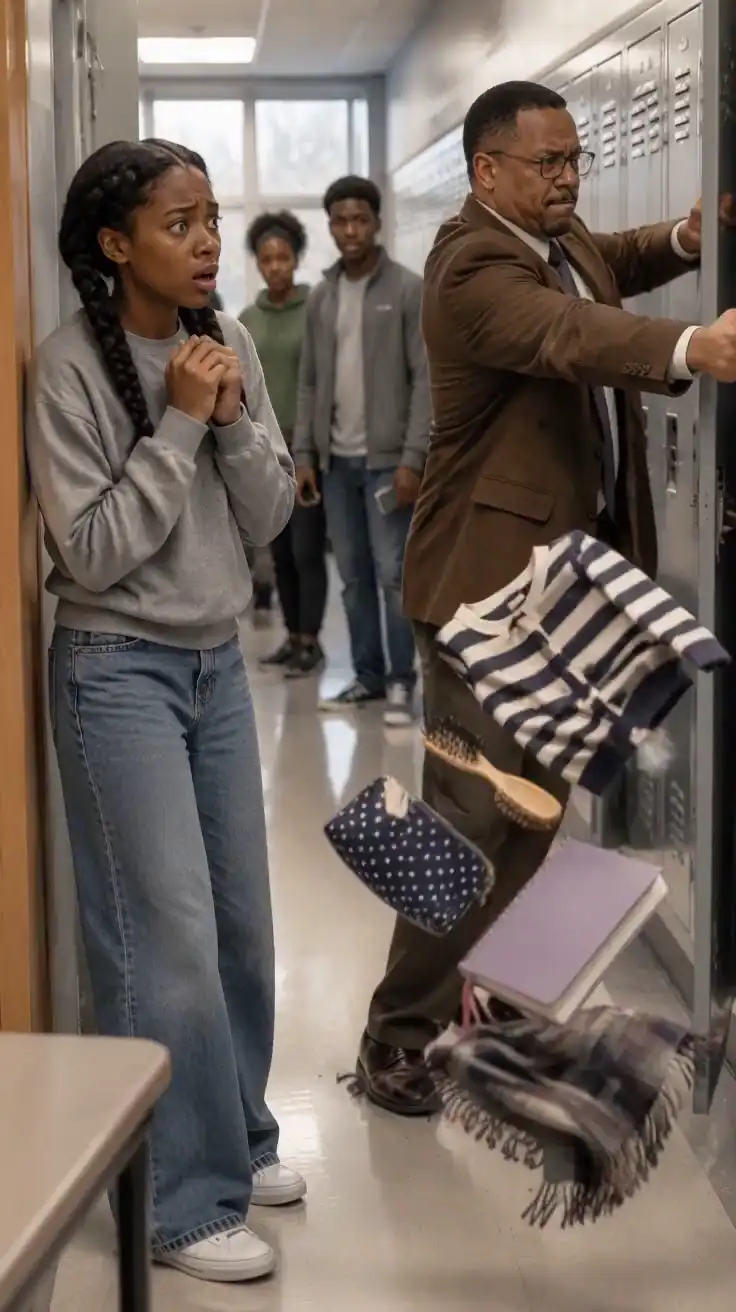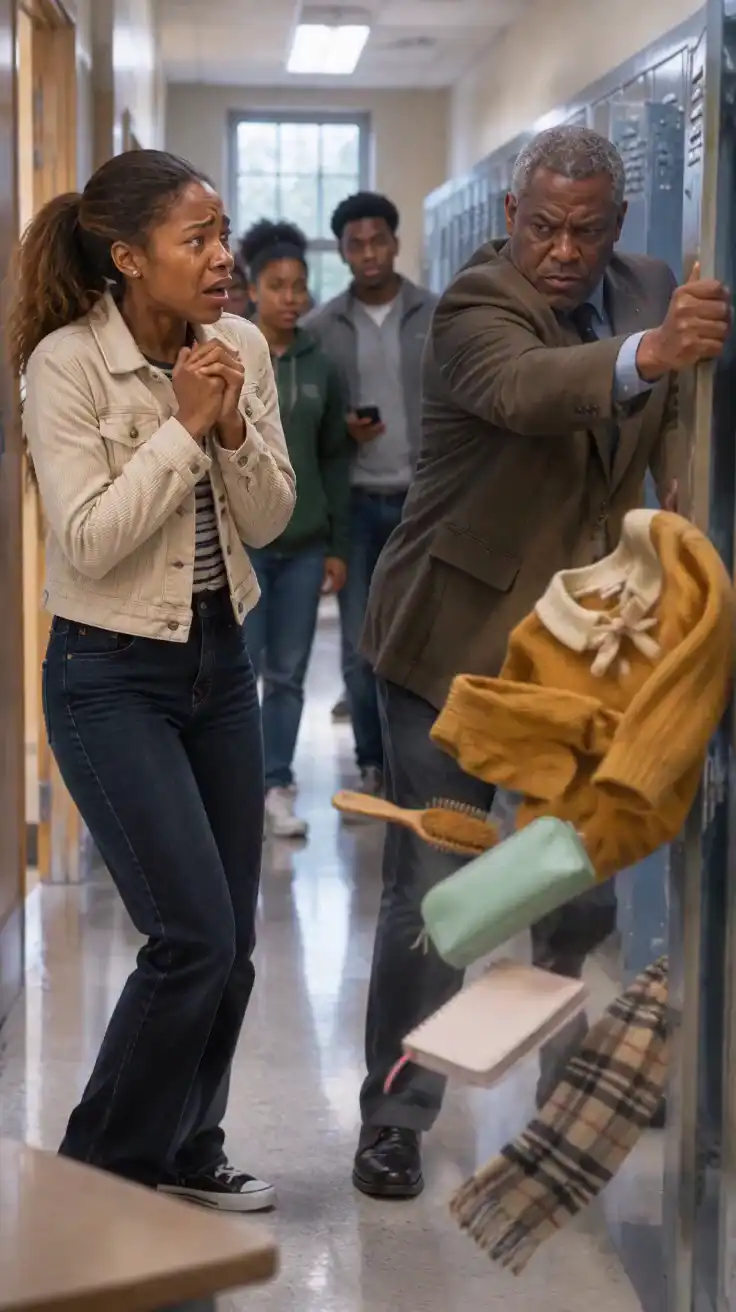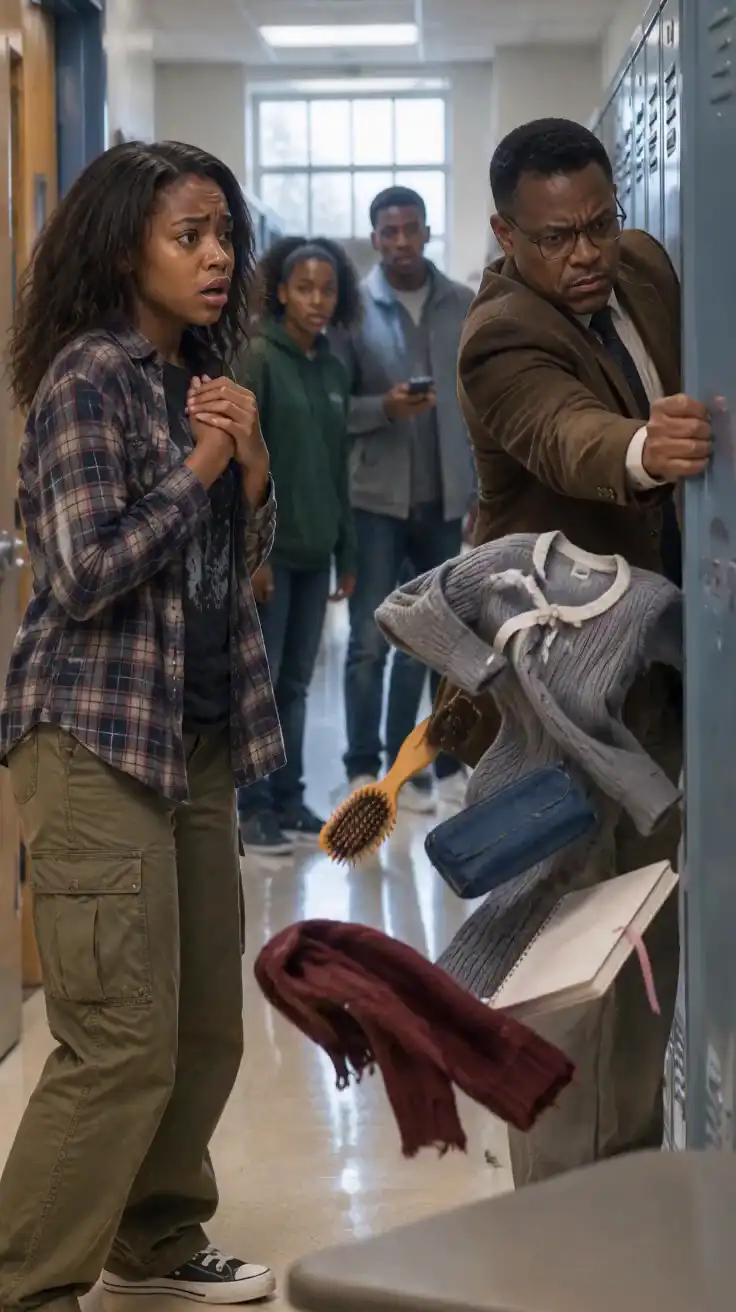
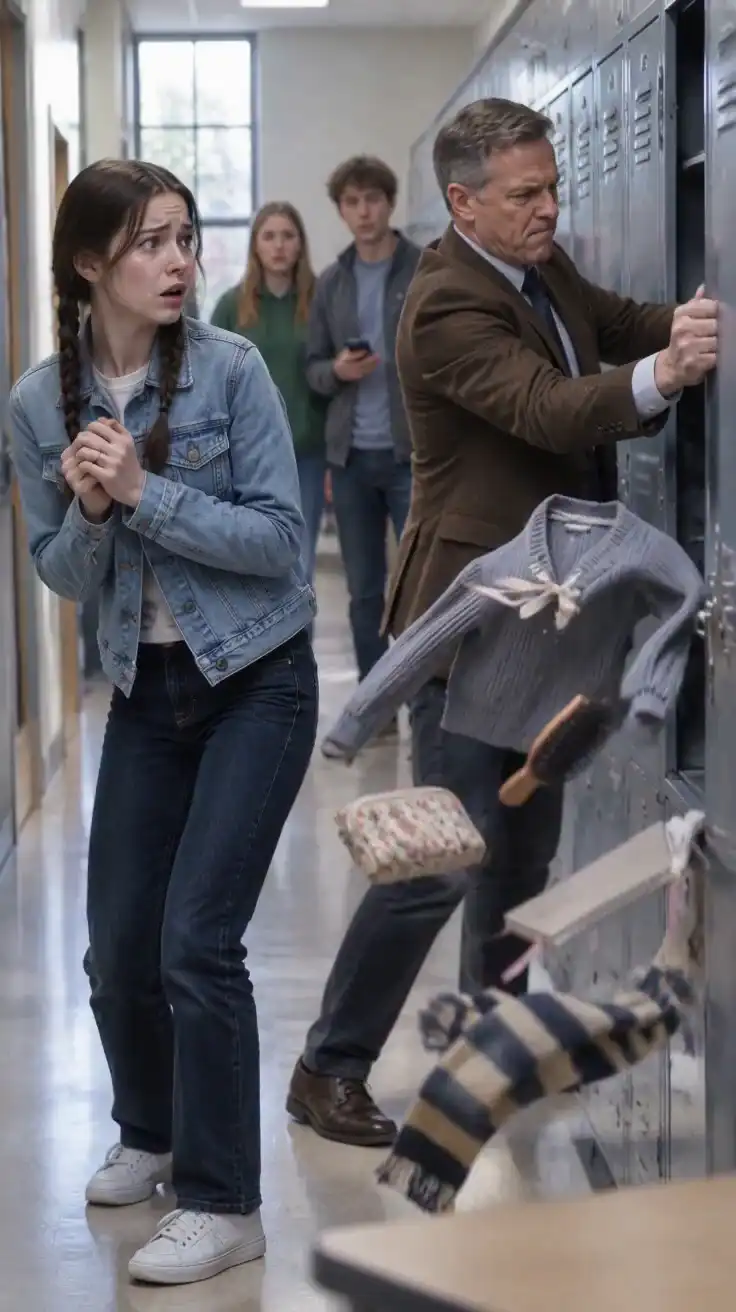
That was the moment the video stopped being a story about my daughter and became a story about the girl standing across from her.
The dean’s name was Martin Alvarez. He had been at Westbridge High for six years, long enough that parents knew him as the person who could settle a cafeteria fight, find a missing phone, or explain why a student had been removed from a sports team. I had spoken to him twice before the day of the video. Once at freshman orientation, when he told us the school valued “restorative accountability,” and once when Claire missed three days after her brother’s placement hearing.
On the phone, he sounded different.
“Mrs. Bennett,” he said, “I need you to come to the school.”
“I’m on my way.”
“There’s been an incident involving Claire.”
“I saw the video.”
There was a pause. Not long, but long enough for me to hear someone talking in the background on his end.
“You saw the video?”
“Yes.”
“I understand how it looks.”
“No,” I said. “You don’t get to start with how it looks. Tell me what happened.”
He breathed out slowly. “A student reported a missing bracelet. She identified Claire as the person who took it. We were attempting to locate the item.”
“By emptying her locker in front of a crowd?”
“We were trying to resolve the matter quickly.”
“You made my daughter kneel on the floor.”
“Mrs. Bennett—”
“You made my daughter kneel on the floor while another student screamed at her.”
“I’m asking you to come in so we can discuss this in person.”
“I’m coming.”
I hung up before he could say anything else.
I was still in my work clothes. I had on black slacks, a white blouse, and the cardigan I kept over the back of my desk chair because the office was always too cold. My hands were shaking so badly that I dropped my keys twice before I got out the front door.
The video had been sent to me by a number I didn’t recognize. The text said, I’m sorry. You need to see this before the school calls you.
There was no name. I later found out it was from a junior named Marcus Hill, who had been standing near the vending machines when everything happened. He recorded the whole thing because he thought the dean was about to search someone’s bag illegally. He sent it to his older sister, and she found me through the parent group for Claire’s grade.
At the time, I didn’t know any of that. I only knew that my child had been publicly accused of stealing and that nobody in the hallway had stopped it.
I drove to Westbridge with both hands locked around the steering wheel. The school was twelve minutes from my office, but I hit every red light. At the second one, I called Claire.
She didn’t answer.
I called again.
This time, the call went to voicemail. I could hear my own voice in the recording from months earlier, telling her to leave a message.
I called my husband, Daniel. He was at the county family services office with our attorney, trying to get an update on our son’s placement.
He answered on the first ring.
“Hey,” he said. “We’re just walking out.”
“Where are you?”
“At the office. What’s wrong?”
“It’s Claire.”
His voice changed immediately. “What happened?”
“She was accused of stealing a bracelet. The dean searched her locker in the hallway.”
“What?”
“I have a video.”
“Is she hurt?”
“I don’t know. She isn’t answering.”
“Where are you?”
“Driving to the school.”
“I’ll meet you there.”
“You’re with Ms. Patel.”
“I’ll call her from the car.”
“Daniel, don’t get pulled over.”
“I’m not going to get pulled over.”
“You say that every time you’re angry.”
“I’m not angry.”
“You are.”
“I’m scared.”
That stopped both of us for a second.
We had been scared for months. Fear had become the background noise of our house. It was there when we woke up, when we checked email, when we sat in the waiting room outside a hearing room, when we signed another form explaining our family to people who had never eaten dinner with us.
Our son, Owen, was eight. He had been placed with a licensed foster family in December after an incident at school led to a report against us. The report was not as simple as people imagined, but the facts were not simple either. Owen had been having panic attacks since our mother died, and during one of them he ran out of the house in the middle of the night. A neighbor found him three blocks away without shoes. The school counselor had already called child services twice because he had started falling asleep in class and flinching whenever adults raised their voices.
We had asked for help. We had accepted help. We had followed every instruction.
That did not stop Owen from being removed while the investigation continued.
The placement was supposed to be temporary. Temporary had turned into months.
Claire had taken it hardest. She loved Owen with a kind of fierce patience that made me ache to watch. She packed his favorite stuffed fox in his overnight bag. She sat in the back seat during visits and let him choose the music. She helped him with his reading while we waited for our caseworker. She had stopped asking when he was coming home because every answer disappointed her.
The family services office had called us that morning to say the judge would review our progress next week. Our attorney thought we had a good chance of beginning a transition plan.
That was what was at stake when the dean opened Claire’s locker.
Not just her reputation. Not just a suspension or a mark in her school file. Claire was already being evaluated as part of the family court process. Our attorney had explained that every report mattered. Any allegation of theft, dishonesty, aggression, or instability could be mentioned in a placement review. It could be used to argue that Claire needed supervision, that our household was not ready for Owen to return, that the children in our care were not safe.
It was absurd and unfair, but family court does not require a thing to be fair before it becomes important.
I pulled into the school parking lot and saw Daniel’s truck coming in behind me. We parked crookedly in spaces near the front entrance and went inside together.
The receptionist looked up, saw us, and immediately stood.
“Mrs. Bennett, Mr. Bennett, Dean Alvarez is expecting you.”
“Where is Claire?” I asked.
“She’s in the counseling office.”
“Is she alone?”
“She’s with Ms. Whitaker.”
“Take us to her.”
The receptionist glanced toward the hallway. “Dean Alvarez asked that you come to his office first.”
“My daughter was searched in front of students,” I said. “I’m going to my daughter.”
Daniel put his hand lightly against my elbow. It was not to stop me. It was to remind me he was there.
The receptionist picked up the phone and called the counseling office. “They’re here,” she said. Then she listened. “Yes. I’ll bring them.”
The school had become too quiet. The hallway in the video had been crowded, but now classes were in session and the students had disappeared behind closed doors. There were still a few people watching us. A teacher at the end of the hall pretended to read something on a clipboard. Two boys near the stairwell stopped talking as we passed.
I could feel the video moving ahead of us, faster than we were.
Ms. Whitaker met us outside the counseling office. She was the school social worker, a small woman with silver hair and an expression that made her look permanently tired.
“Claire’s inside,” she said.
“Is she okay?”
“She’s shaken.”
“Was she injured?”
“No.”
“Did anyone touch her?”
Ms. Whitaker hesitated.
That was enough for me.
“Who touched her?”
“The dean placed a hand on her shoulder when he asked her to kneel.”
“Did she consent?”
“Mrs. Bennett, I wasn’t present when the search began.”
“Then why are you telling me she wasn’t injured?”
“Because she says she wasn’t.”
Daniel opened the door.
Claire was sitting on a couch beneath a bulletin board covered in college pennants. Her backpack was beside her, zipped shut. Her hair was pulled into a low ponytail, but several strands had come loose around her face. She looked younger than sixteen.
When she saw us, she stood quickly.
“Mom.”
I crossed the room and held her. She pressed her face against my shoulder, but she didn’t cry. Claire had become very good at not crying in front of adults.
Daniel put his arms around both of us.
For a few seconds, nobody said anything.
Then Claire whispered, “I didn’t take it.”
“I know.”
“I didn’t.”
“I know.”
“They said I did.”
“I know.”
She pulled away and looked at me. “You saw?”
“Yes.”
Her face tightened. “I didn’t want you to see that.”
“I’m sorry.”
“I kept telling him to call you.”
“Who?”
“Dean Alvarez.”
“Why didn’t he?”
“He said we needed to resolve it before involving parents.”
I looked at Ms. Whitaker.
She lowered her eyes.
Claire sat back down. “Paige kept saying I took it. She said I was jealous because she got it from her grandmother.”
“Who is Paige?” Daniel asked.
“Paige Holloway,” I said. “Claire’s friend.”
Claire looked at me.
“Former friend,” she said.
I knew the name. I had heard it dozens of times during freshman year. Paige had been in our kitchen, on our couch, in the passenger seat of my car. She had slept over twice. I had driven both girls to the mall, to a school dance, and once to a frozen yogurt place where they spent forty minutes arguing about whether a topping counted as fruit.
I had not seen Paige in our home since spring.
“What bracelet?” I asked.
Claire shook her head. “I don’t know. I’ve never seen it.”
“It’s a thin gold chain,” she said. “With a little blue stone.”
“Did Paige say when you supposedly took it?”
“She said yesterday. Then she said last Friday. Then she said maybe last week.”
“Where did she say you took it from?”
“Her locker.”
“Was it in your locker?”
“No.”
“Did the dean ask you questions before opening it?”
Claire looked toward the door.
“He asked if I had it. I said no. Then he told me to open my locker.”
“Did you?”
“He had the combination.”
That was the part that stayed with me later. Not the bracelet hitting the floor. Not even Paige’s face.
The dean had the combination to my daughter’s locker.
He had opened it while students stood around, and he had known exactly where to look because the school had required Claire to register it at the beginning of the year. He knew he could access the private things inside it, and he knew she had no way to stop him without appearing guilty.
“Where is Paige now?” I asked.
“In Dean Alvarez’s office,” Ms. Whitaker said.
“She was there when the bracelet fell out of her sleeve?”
Ms. Whitaker looked at Claire.
Claire nodded. “They took her in there after.”
“Did the dean say anything?”
“He said, ‘Paige, empty your pockets.’”
“And?”
“She started crying.”
“Did she admit she stole it?”
“No.”
“What happened to the bracelet?”
“I think they gave it back to the girl who owns it.”
I stared at her. “Who owns it?”
“Her name is Elena Ruiz.”
I knew Elena too, though only by sight. She was a junior who had been in Claire’s biology class last year. She was quiet, always wore round glasses, and had a habit of drawing tiny flowers in the margins of her assignments.
“Where is she?”
“I don’t know.”
Daniel sat beside Claire. “Did Paige put the bracelet in your locker?”
“No.”
“Are you sure?”
Claire’s eyes flashed. “I would know if she did.”
“I’m not accusing you.”
“You asked.”
“I’m trying to understand.”
“I didn’t take it, and she didn’t put it in my locker. She just had it.”
That was the first time I understood that Paige had not planted the bracelet on Claire. She had simply chosen a story she thought would survive long enough to make my daughter suffer.
The dean entered the room before I could ask anything else.
Martin Alvarez was in his early fifties, with a closely trimmed gray beard and a navy tie. He carried a folder under one arm. When he saw the four of us, he stopped in the doorway.
“Mrs. Bennett, Mr. Bennett. I’m sorry this has become so upsetting.”
I stood.
“Why did you search my daughter’s locker in front of students?”
“We believed there was an immediate need to locate stolen property.”
“Why did you make her kneel?”
“She was asked to assist in looking through the contents.”
“You dumped her things onto the floor.”
“We were trying to establish whether the bracelet was there.”
“You didn’t ask her to assist. You ordered her to kneel.”
He looked at Claire. “Claire, did I order you to kneel?”
Claire’s mouth opened, then closed.
I said, “Don’t put her in the position of correcting you.”
“I’m not.”
“You are.”
He held up one hand. “I understand that the scene was not handled as well as it should have been.”
“Not handled as well as it should have been?”
Daniel’s voice was quiet, which was always worse than when he raised it.
Mr. Alvarez looked at him. “I’m acknowledging that the public nature of the search was unfortunate.”
“Unfortunate is a flat tire,” Daniel said. “You humiliated our daughter.”
“I agree that the situation was humiliating.”
“You were the situation.”
The dean’s jaw tightened. “We had a student reporting a theft. The student was upset, the item was believed to be on campus, and Claire was identified as the person who had taken it.”
“By Paige,” Claire said.
“Yes.”
“Did you ask Elena?” I said.
“We did not know at that point that Elena was the owner.”
“You didn’t know who owned the bracelet, but you accepted Paige’s accusation?”
“Paige said it had been given to her by a relative.”
“She said it was hers?”
“She said it was hers and that Claire had taken it.”
“Then why was it in Paige’s sleeve?”
He didn’t answer immediately.
That was when I realized the video had already changed the balance in the room. Before the bracelet fell, he could have described the search as a reasonable response to a report. After it fell, the explanation became much harder.
Finally, he said, “The situation is under review.”
“Is Paige suspended?”
“We are determining the appropriate disciplinary response.”
“She accused my daughter of theft, caused a public search, and was found carrying the stolen item. Is she suspended?”
“Mrs. Bennett—”
“Is she suspended?”
He looked down at the folder.
“Yes,” he said. “Paige has been suspended effective immediately, pending an investigation.”
Claire let out a breath that sounded almost like a laugh, but there was no humor in it.
“Until when?” I asked.
“Five school days initially.”
“Five days?”
“The suspension may be extended depending on the findings.”
“Was my daughter suspended?”
“No.”
“Was she ever going to be?”
“We were going to wait until we reviewed the evidence.”
“The evidence being what? The bracelet falling out of Paige’s sleeve?”
“We are not making a final finding today.”
“You made one about Claire in the hallway.”
He looked at Claire again. “Claire, I owe you an apology.”
She did not respond.
“I should not have conducted the search in a public area,” he continued. “I should have contacted your parents before proceeding.”
“You should have believed me,” Claire said.
His expression shifted.
“I did not say you were guilty,” he replied.
“You didn’t have to. Everybody saw.”
There was a knock on the door. A woman stepped in, followed by a teenage girl with dark hair pulled into a bun.
Elena Ruiz was holding a small evidence envelope.
She looked at Claire first, then at me.
“I’m sorry,” she said.
Claire frowned. “For what?”
“It was my bracelet.”
“We know,” I said.
Elena glanced at the dean. “I told them this morning it was missing.”
“Tell us what happened,” I said.
Mr. Alvarez said, “Mrs. Bennett, we can discuss the investigation privately.”
“No. You made it public when you searched my daughter in front of the school. If there’s an explanation, we’re hearing it.”
Elena swallowed.
“My grandmother gave me the bracelet for my quinceañera,” she said. “It has a blue stone because blue was her favorite color. I wore it yesterday in gym, then took it off before volleyball because I didn’t want it to break. I put it in the side pocket of my bag.”
“Was your bag locked?”
“No. We were in the locker room.”
“Who was there?”
“Everyone on the team. Paige was there.”
Claire’s face went still.
Elena looked at her. “I didn’t know who took it. I told Dean Alvarez this morning. Paige came to me during first period and said Claire had told her she saw it in my bag.”
“I never said that,” Claire replied.
“I know that now,” Elena said. “At the time, Paige said you were mad at me because I didn’t invite you to the study group.”
Claire shook her head. “I haven’t talked to you since last year.”
“I know.”
“Why did you believe her?”
Elena’s eyes filled. “I didn’t. Not completely. I just didn’t know what else to do.”
That sentence landed heavily because it was the same sentence people used when they wanted to explain why they had failed to act.
I didn’t know what else to do.
The students in the hallway had not known what else to do. Ms. Whitaker had not known what else to do. The school had not known what else to do except search the easiest person to accuse.
Elena opened the envelope. “The bracelet was in Paige’s sleeve. She gave it back after Dean Alvarez found it.”
“Did she admit taking it?” Daniel asked.
“She said she found it.”
“Where?”
“She kept changing the answer.”
Mr. Alvarez’s face hardened. “Paige initially said Elena had given it to her. Then she said she found it under the bleachers. Then she said she had borrowed it weeks ago.”
“I didn’t borrow it,” Elena said.
“Did Paige say why she blamed Claire?” I asked.
Elena looked toward Claire.
“Because Claire used to be her friend,” she said.
Claire closed her eyes.
The dean asked Elena to wait outside while he finished speaking with us. She left, clutching the envelope.
I turned to Claire. “Do you want to tell us what happened between you and Paige?”
“No.”
“Okay.”
“I don’t want to talk about it here.”
“Okay.”
“I don’t want to talk about it at home either.”
“Okay.”
She looked at me, surprised.
“I’m not going to force you,” I said. “But when you’re ready, we need to understand.”
“I know.”
Mr. Alvarez cleared his throat. “We will send a written summary of the incident and the disciplinary actions.”
“You will also send a written apology to Claire,” I said.
“Yes.”
“And a statement correcting the accusation.”
“We can provide that.”
“To every student who was in the hallway?”
“That may not be possible.”
“You know exactly who was there.”
“I can make an announcement.”
“Not a vague announcement. I want the school to state that Claire did not steal the bracelet and that the accusation was false.”
He looked uncomfortable.
“Mrs. Bennett, because students are minors, we have to be careful about sharing disciplinary details.”
“I’m not asking you to announce Paige’s private records. I’m asking you to correct the public humiliation you caused.”
He said nothing.
Daniel stepped forward. “And we want the video preserved. Every camera angle. Not just the one a student recorded.”
“Of course.”
“We want copies of all written statements.”
“That may require a formal records request.”
“Then consider this our request.”
Mr. Alvarez closed his folder.
“I understand that you’re upset.”
I almost laughed.
It was the last thing I needed from him. I did not need him to understand that I was upset. I needed him to understand what he had done.
“We’ll be contacting the district,” I said. “And our attorney.”
“You’re entitled to do that.”
“Yes,” I said. “We are.”
On the way out, Claire stopped in the main office to collect the things that had been taken from her locker. A secretary brought them out in a cardboard box. Her notebooks were bent at the corners. One of the pages in her history notebook had a dirty shoe print across it.
Her little pouch of hair ties was open. Three hair ties were missing.
She looked at the box and said, “Can I just leave it?”
“No,” I said. “We’ll take everything.”
“I don’t want the sweatshirt.”
“It’s yours.”
“It touched the floor.”
I folded it over my arm anyway.
Outside, the weather had turned cold. Claire stood beside the car, holding the box against her chest.
“I’m sorry,” she said.
Daniel looked at her. “For what?”
“For causing this.”
“You didn’t cause this,” I said.
“Paige wouldn’t have done it if we were still friends.”
“That still wouldn’t make it your fault.”
“I should have told you what happened.”
“About Paige?”
She nodded.
“What happened?”
She stared across the parking lot. “She stole something before.”
“What?”
“Money from Elena’s bag. Last spring.”
I felt my stomach tighten.
“Did you see her?”
“I saw her take it. She told me she was going to put it back. Then she didn’t.”
“Why didn’t you tell anyone?”
“Because she said Elena would get in trouble for leaving her bag open. She said the school would call her parents, and her parents would send her away.”
“Send her away?”
“Her mom was already angry all the time. Paige said if she got caught stealing, her mom would make her quit school and go live with her aunt.”
Daniel asked, “Did she put the money back?”
“Some of it.”
“Some?”
“Twenty dollars. Elena was missing forty.”
“And you stopped being friends over that?”
“Not just that.”
Claire put the box on the hood of the car.
“She started asking me to lie for her. Small things at first. She wanted me to say she was with me when she wasn’t. She took answers from my homework and said I owed her because I had a better family.”
“What does that mean?” I asked.
“She said I got to have parents who showed up. She said my house was easy.”
I felt the words before I understood them.
“Did she know about Owen?”
“Yes.”
“Who told her?”
“I did.”
“When?”
“Last year. Before he was placed.”
Claire looked down at the pavement.
“I told her because I was scared. She said she understood. Then whenever we argued, she brought him up. She said I acted like I was better than her because my parents were fighting to get my brother back.”
Daniel turned away.
The school parking lot was mostly empty, but a bus driver was standing near the curb. I wondered if he could see us. I wondered how many people had seen Claire kneeling and how many would remember the correction.
“She said I was pretending to be good,” Claire continued. “She said everybody knew what was happening at home and that I was lucky the school hadn’t taken me too.”
I reached for her hand.
“She told people?”
“Not exactly. She hinted. She told one girl that Owen was gone because you and Dad couldn’t handle him.”
My throat closed.
“Why didn’t you tell us?”
“Because you already had enough.”
“Claire.”
“I thought if I told you, you’d call her mom. Then Paige would tell everyone about Owen. I didn’t want people looking at me.”
“People were already looking at you,” Daniel said softly.
“I know.”
The wind lifted the corner of a paper in the box.
I said, “What happened the day you stopped talking?”
Claire pressed her lips together.
“She wanted me to tell the counselor that Elena had given her the money. She said if I didn’t, she’d say I stole it.”
“Did she threaten you?”
“She said nobody would believe me.”
“They believed her today,” I said.
“For a little while.”
I had no answer to that.
The school called us that evening. We were asked to attend a meeting with Dean Alvarez, the principal, and the district student services director. We declined the same-day meeting and asked for it to be scheduled after we had received the written records.
Our attorney, Karen Patel, told us not to speak directly to the school about the family court case. She also told us to document everything.
“Save the video in three places,” she said.
“I already sent it to myself and Daniel.”
“Send it to me.”
“We will.”
“Do not post it publicly.”
“I wasn’t planning to.”
“I know. I’m saying it because other people may.”
By the next morning, the video had circulated among students. Someone had edited the clip to slow down the moment the bracelet fell from Paige’s sleeve. Someone else had added music. Claire’s face appeared in group chats with captions calling her “Locker Girl” and “Gold Digger,” though the second one made no sense.
She didn’t want to go to school.
“I can’t walk through that hallway,” she said over breakfast.
“You don’t have to today,” I said.
“What about tomorrow?”
“We’ll decide tomorrow.”
“I don’t want to be homeschooled.”
“We’re not deciding your whole life this morning.”
She pushed cereal around her bowl.
Daniel was on his laptop, reading an email from the school. It said Paige’s suspension had been confirmed for five days. It also said the school could not “comment on individual student discipline,” which meant they had not corrected anything.
I emailed the principal.
I wrote that Claire had been publicly accused of theft, publicly searched, and publicly cleared. I wrote that a private apology was insufficient. I requested a written statement to the students present, a review of the dean’s conduct, preservation of all surveillance footage, and confirmation that the allegation would not appear in Claire’s disciplinary or academic record.
The principal replied three hours later.
She said the district took the incident seriously and would conduct a review.
She did not answer the specific questions.
That afternoon, a woman named Marisol Ruiz called me. She was Elena’s mother.
“I hope it’s okay that I called,” she said.
“Of course.”
“I wanted to apologize for my daughter’s part in this.”
“Your daughter didn’t accuse Claire.”
“She gave Paige the bracelet back.”
“She was trying to get it back.”
“I know. I’m not saying she did something wrong. I’m saying she was afraid to speak up.”
I leaned against the kitchen counter.
Marisol continued, “Elena told me Paige said Claire had taken it. She said she believed her because the girls had been friends and because Paige knew things about Claire.”
“Did Elena tell the school that?”
“She did.”
“Good.”
“She also told them Paige had been in the locker room during gym.”
“That matters.”
“I know.”
There was a pause.
“Mrs. Bennett,” Marisol said, “the bracelet belonged to my mother. Elena was wearing it because my mother is sick. She had surgery last month. It was the first time Elena wore it outside the house.”
“I’m sorry.”
“Paige knew what it meant. Elena showed it to her.”
I closed my eyes.
That explained the speed and the panic. Paige had not stolen an ordinary piece of jewelry from a stranger. She had taken something that carried a story, then realized the owner would keep asking questions. She needed someone the school would see as believable to accuse and someone they would see as questionable.
Claire had been both available and vulnerable.
“Why Claire?” I asked.
Marisol was quiet for a moment.
“Elena said Paige told her that Claire was angry because their friendship ended. She said Claire had threatened to get revenge.”
“She never did.”
“I know.”
“Did Paige say why she and Claire stopped being friends?”
“She said Claire abandoned her.”
That sounded like Paige. She had taken every boundary Claire set and translated it into betrayal.
The next day, I drove Claire to school. She sat in the passenger seat with her backpack on her lap and watched the houses pass.
“Do you want me to walk in with you?” I asked.
“Yes.”
We entered through the side doors. The hallway was crowded between classes. Conversations dipped as we passed. Nobody pointed, but several students looked away too quickly.
Near Claire’s locker, a girl I didn’t know approached us.
“I’m sorry,” she said.
Claire stopped.
The girl had a round face and wore a green Westbridge sweatshirt. “I was there,” she said. “I didn’t say anything.”
Claire nodded.
“I wanted to,” the girl continued. “I thought maybe the dean knew what he was doing.”
“That’s okay,” Claire said.
“It wasn’t.”
“No,” Claire said. “It wasn’t.”
The girl looked at me. “My brother sent the video to his sister.”
“You’re Marcus’s sister?”
“Jenna.”
I thanked her.
She said, “Marcus said he didn’t know what else to do.”
“I understand.”
She shook her head. “I don’t think any of us do.”
Claire opened her locker. Nothing had been put back in the same arrangement. Her books were stacked sideways. The little adhesive mirror on the inside of the door had been cracked.
She touched it with one finger.
“Did they break that?” I asked.
“I don’t know.”
“I’ll take a picture.”
“Mom.”
“I’m documenting.”
She gave me a tired look but let me.
The school assigned Claire a different locker while they investigated, even though she had not requested one. They said it was to provide her with privacy. She said moving her made her feel as if she had done something wrong.
At lunch, she ate in the counseling office because she didn’t want to sit in the cafeteria. Ms. Whitaker checked on her twice. The second time, Claire asked whether she could transfer out of Paige’s history class.
The answer was yes.
Paige returned to school the following Monday.
Her suspension had ended, though the investigation had not. We were told she could attend classes while the district reviewed the incident. I asked why Claire was expected to share a building with the person who falsely accused her.
The principal said the school had a responsibility to provide education to both students.
I said, “Then provide education to both students without making Claire absorb the consequences of Paige’s behavior.”
They moved Paige’s seat in history. They did not move her from the school.
For the first week, Paige did not approach Claire. She walked through the hall with two friends and stared straight ahead. When Claire passed, Paige’s friends whispered.
On Friday, Paige left a note in Claire’s locker.
I know you hate me. I was scared.
Claire brought it home unopened.
“Do you want me to read it?” I asked.
“No.”
“Do you want to respond?”
“No.”
“Then you don’t have to.”
She put the note on the kitchen table.
That night, she finally told us the whole story.
Last spring, Paige had taken money from Elena’s backpack during a group project. Claire saw her slide the bills into the pocket of her jacket. When Claire confronted her, Paige said she was only borrowing it. She promised to return it the next day.
She did return twenty dollars, but she kept the rest.
When Elena asked if either girl knew what happened, Paige told Claire to say Elena had probably miscounted. Claire refused. Paige called her disloyal.
After that, Paige began using Claire’s private life against her. She knew about Owen’s panic attacks. She knew about the investigation. She knew how often my husband and I traveled to appointments and hearings. She told Claire that if the school found out how “unstable” our family was, they would never let Owen come home.
“Did she say she would tell the school?” Daniel asked.
“Not directly. She said people should know.”
“Were you afraid she would?”
“Yes.”
“Why didn’t you tell a teacher?”
“Because what would I say? ‘My friend is threatening to tell people my brother is in foster care’? It sounded like I was making it bigger.”
I reached across the table.
“You were protecting us.”
“I was protecting myself too.”
“You’re allowed to do both.”
She looked down at the note from Paige.
“I stopped talking to her after she said I should tell the counselor Elena gave her the money. I said I wouldn’t lie. She said she knew why I wouldn’t.”
“Why?” I asked, though I knew.
“Because I was trying to look good for the judge.”
The room went silent.
Claire rubbed her thumb against the edge of the note.
“She said if I was really worried about Owen, I would make sure nobody had anything bad to put in the file.”
I stood and walked to the sink because I needed to move.
The accusation had not been random. Paige knew exactly where to press. She had used the fear that had governed every decision in our home since Owen left.
She had not needed to know the details of the court process. She only needed to know that we were desperate.
The district meeting happened two weeks later.
We sat in a conference room with the principal, Dean Alvarez, the district director, a student services coordinator, and a woman from risk management. Karen Patel joined us by video.
The district director began by saying, “We want to acknowledge that the search did not reflect our expectations for student dignity.”
I said, “It reflected what happened.”
She nodded. “Yes.”
Dean Alvarez looked at the table.
The risk manager explained that the dean had authority to search a locker when there was reasonable suspicion of contraband or stolen property. She said the issue was not the search itself but the “manner and location.”
Karen asked, “Was the search justified?”
“We are reviewing that.”
“Was the accusation corroborated before the search?”
“No.”
“Was Claire informed that she could decline to participate?”
The dean said, “She was asked to open the locker.”
“That wasn’t my question.”
He looked at her through the screen. “No.”
“Was Claire informed that her parents could be contacted?”
“No.”
“Was the locker searched in a private location?”
“No.”
“Was Paige’s accusation recorded before the search?”
The principal said, “There is a written report.”
“Who wrote it?”
“Dean Alvarez.”
“Does the report state that Paige claimed Claire stole the bracelet from her locker?”
“Yes.”
“Does it state that Paige personally witnessed the alleged theft?”
The principal looked at the report.
“No.”
“Does it state that Paige had previously had a conflict with Claire?”
“No.”
“Does it state that the bracelet was found on Paige?”
The principal hesitated.
“It states that the item was recovered during the investigation.”
Karen said, “That is not the same thing.”
The district director leaned forward. “We understand the concern.”
“No,” Karen said. “You understand that we are concerned. The report was written to make the school’s conduct look more reasonable than it was.”
I watched Dean Alvarez’s face. He looked ashamed, but shame was not the same as accountability. He had not imagined the search would be filmed. He had not expected the evidence to turn on him in the middle of the hallway. His apology had come after he knew the video existed.
The district offered to remove any notation from Claire’s file, provide counseling, and send a general reminder to staff about conducting searches privately.
I said, “That is not enough.”
The district director asked what we wanted.
I answered carefully.
“I want a written finding that Claire was falsely accused. I want the school to tell the students who witnessed the search that she was not responsible for the theft. I want Dean Alvarez removed from disciplinary decisions involving Claire. I want a formal review of every student search he conducted this year. And I want the school to stop treating my daughter as a problem to be managed because she is connected to a family court case.”
The room went still.
The district director asked, “What do you mean?”
“They know about Owen’s placement. The dean knows. The counselor knows. The social worker knows. I want confirmation that information about our family was not used to judge Claire’s credibility.”
Nobody answered immediately.
That silence told me enough.
Karen said, “We will include that in the written request.”
The school did eventually issue a statement. It was read during afternoon announcements three weeks after the incident.
The principal said that a student had been incorrectly accused of taking property, that the property had been recovered from another student, and that students should not spread rumors or share recordings.
It did not name Claire.
It did not name Paige.
It was better than silence, but not what we had asked for.
Claire heard it in her math class. When she came home, she said, “They made it sound like nobody did anything.”
“That’s how institutions protect themselves,” I said.
“Does it ever change?”
“Sometimes.”
“Did it change for me?”
I thought about the cracked mirror, the missing hair ties, the students who had watched her kneel, and the dean who had apologized only after the bracelet fell.
“Yes,” I said. “But not enough.”
Elena’s family handled the situation differently. Marisol withdrew Elena from volleyball for the rest of the season. She told the school that Elena would not participate in any meeting with Paige unless a parent was present.
Elena wrote Claire a letter.
I found Claire reading it on the back steps.
“What did she say?”
Claire folded it.
“She said she should have stopped the search.”
“Could she have?”
“She says she should have told Dean Alvarez the bracelet was hers before he opened my locker.”
“Would he have listened?”
Claire looked at me.
“I don’t know.”
Elena and Claire began talking again slowly. First through text, then at school. They never became close friends, but they were able to sit together in biology without pretending nothing had happened.
Marisol invited us to dinner. She made enchiladas and apologized three more times, even after I told her she didn’t need to.
“You’re allowed to be angry at us,” she said.
“I’m angry at the school.”
“You can be angry at us too.”
“I’m not.”
“Elena says Claire looked at her like she was blaming her.”
“She was hurt.”
“I know.”
The two girls sat at the dining table, speaking quietly about a lab assignment. Elena’s bracelet was not on her wrist. She kept it in the evidence envelope inside her purse.
“My mother wants Elena to wear it again,” Marisol said. “Elena says she doesn’t want to.”
“It may take time.”
“She says the bracelet feels different now.”
I understood that. Objects could carry the place where something went wrong. A hallway. A locker. A hospital room. A county office.
The bracelet had belonged to Elena’s grandmother, but now it also belonged to the moment it struck the floor beside Claire’s notebooks.
Paige’s family contacted us once.
Her mother, Denise Holloway, left a voicemail saying she wanted to meet. I did not return the call.
A week later, she sent an email.
She wrote that Paige had made a terrible mistake, that Paige was under pressure at home, and that she hoped we could help the girls move forward.
There was no sentence saying Paige had stolen the bracelet.
There was no sentence saying Paige had lied.
I replied with one line.
We are not responsible for helping Paige move forward.
Denise answered almost immediately.
You don’t know what she has been dealing with.
I stared at that sentence for a long time.
She was right. I didn’t know everything Paige had been dealing with. I knew her mother had threatened to send her to an aunt. I knew Paige felt abandoned by Claire. I knew she had been angry, frightened, and willing to hurt another girl to protect herself.
But difficulty did not turn a lie into truth.
I wrote back, “I hope Paige gets the support she needs. That support cannot come at Claire’s expense.”
Denise never responded.
Later, I learned that Paige’s family had been dealing with eviction. Her mother had lost her job and was working nights. Paige’s older brother had been arrested. Their house had been sold, and they were staying with relatives.
None of that excused what she did. It did help me understand why Paige had been desperate to control the story. She had stolen the bracelet, realized she would be questioned, and looked for someone whose life already contained enough uncertainty that adults might believe the worst.
Claire had not been chosen because Paige thought she was weak.
She had been chosen because Paige knew exactly how much Claire had to lose.
The family court hearing took place in April.
Our attorney had prepared us for questions about the school incident. We brought the district’s written finding, the video, the statements from Elena and Marcus, and the email confirming that Claire had never been suspended or disciplined.
The judge asked whether the incident affected our ability to care for Owen.
Karen said, “It demonstrates that Claire was subjected to an unfounded allegation, not that she engaged in misconduct.”
The county attorney did not argue otherwise, but she asked whether Claire had received counseling.
I answered that she had met with the school social worker and a private therapist.
“Was that related to the school incident or the ongoing family situation?” the attorney asked.
“Both,” I said.
The judge asked whether Owen knew.
I said yes.
“How did he respond?”
“He was worried Claire might be taken away too.”
That was the part I had been afraid to say aloud.
Owen had asked during a visit, “If Claire gets in trouble, does she have to go somewhere else?”
He had already learned that children could disappear from a home while adults used words like placement and review.
I told him no. I told him Claire had not done anything wrong. I told him our family was working to bring him home.
The judge approved a transition plan.
Owen would begin with Saturday visits at our house, then overnight visits, then a gradual return if the caseworker reported that things were stable.
It was not an instant reunion. There were forms, inspections, therapy appointments, and more supervision than any family should have to endure. But it was movement.
The first Saturday Owen came home, Claire waited in the driveway.
He got out of the caseworker’s car holding the stuffed fox. He ran to her, and she dropped to her knees on the grass to catch him.
I watched them hold each other.
Then Owen pulled back.
“Did you get in trouble?” he asked.
Claire looked at me.
I said, “No. Someone told a lie about her, but the truth came out.”
Owen frowned. “Did the lie go away?”
“Not completely,” Claire said. “But it doesn’t control what happened.”
He considered that.
“Can we have pancakes?”
“Yes,” I said.
He took Claire’s hand, and they went inside.
The school never fully repaired what it had done. Dean Alvarez remained at Westbridge through the end of the school year, but he no longer handled locker searches. The district said he had completed additional training. He sent Claire another letter, this one longer and more specific than the first.
He wrote that he had failed to protect her dignity. He wrote that he had relied too heavily on an accusation from a student he assumed was telling the truth. He wrote that he should have recognized the conflict between Paige and Claire before acting.
Claire read it once and put it in a drawer.
“Do you forgive him?” I asked.
“No.”
“Do you hate him?”
“No.”
“What do you feel?”
She thought about it.
“I don’t trust him.”
“That makes sense.”
“I don’t want to spend more time feeling anything about him.”
“That makes even more sense.”
Paige transferred schools at the beginning of the next year.
I found out because Claire received a message from Elena saying Paige’s account had been removed from the school portal. There was no announcement. No final meeting. No explanation to the students.
Denise Holloway sent one last email.
Paige is leaving Westbridge. She says Claire ruined her life.
I did not respond.
A month later, Claire saw Paige at a grocery store. Paige was with her mother near the pharmacy. They noticed each other but did not speak.
Claire came home upset.
“Did she say anything?” I asked.
“No.”
“Did you?”
“No.”
“Then what happened?”
“She looked like she wanted me to feel sorry for her.”
“Maybe she did.”
“I don’t.”
“You don’t have to.”
Claire sat at the kitchen table.
“I keep thinking if I had just told you last spring, none of this would have happened.”
“That isn’t true.”
“If I had told you about the money, you could have called her mom.”
“And then maybe Paige would have blamed you. Maybe she would have accused you of something else. Maybe the school would have handled it well. Maybe it would have handled it badly. You were sixteen and scared. The responsibility belonged to the adults.”
“The dean was an adult.”
“Yes.”
“He believed her.”
“Yes.”
“Why?”
I thought about it.
“Because some adults confuse confidence with truth. Paige sounded certain. You looked frightened. He saw what he expected to see.”
Claire leaned back in her chair.
“I was frightened.”
“I know.”
“Does that mean he was right to think I was guilty?”
“No. It means he should have been more careful.”
She was quiet for a while.
Then she said, “I don’t want to be the girl from the video.”
“You aren’t.”
“Everyone at school knows me as that.”
“People know a moment. They don’t know a person.”
“That sounds like something from a poster.”
“It probably is.”
She smiled faintly.
“You’re bad at this.”
“I’m your mother. I’m required to try.”
By winter, Claire had stopped avoiding the hallway. She joined the school newspaper and wrote an article about student privacy during disciplinary investigations. She did not mention Paige by name. She did not include the video. She wrote about policies, the difference between a report and evidence, and why students should have an adult advocate during searches.
The principal asked her to remove a paragraph criticizing the school’s locker policy.
Claire refused.
The article ran anyway.
Several students wrote to her afterward. One said a teacher had searched his backpack in front of the class because another student claimed he had a vape. Another said a counselor had told her she was lying about harassment because she was crying.
Claire began attending student advisory meetings. She spoke carefully, never pretending she had all the answers.
At one meeting, Dean Alvarez was present.
He listened while Claire described the day her locker was searched.
“I’m not asking the school to believe every student automatically,” she said. “I’m asking adults to remember that a student being scared does not make them guilty, and a student sounding confident does not make them truthful.”
The dean looked at her.
“I agree,” he said.
Claire did not look away.
“Then act like it.”
That night, she told me she had been afraid her voice would shake.
“Did it?”
“A little.”
“Nobody could tell.”
“I could.”
“That still counts as speaking.”
She nodded.
Owen’s placement ended the following spring.
The caseworker brought him home with two bags, the stuffed fox, and a folder of paperwork. We had put his room back together months earlier, but he ran through the house as if he needed to confirm it had not disappeared.
Claire was waiting in the hallway.
Owen threw himself at her.
“You’re home,” she said.
“You’re home,” he answered.
They both started crying.
I stood behind them, one hand over my mouth.
The house did not become easy after that. Owen had nightmares. He had trouble sleeping alone. He asked the same questions repeatedly. He needed appointments, reassurance, and routines. We had to learn how to be a family in one house again.
Claire still had bad days. She hated unexpected questions. She hated when teachers asked her to stay after class. She kept her locker nearly empty because she did not like the idea of leaving anything important behind.
But she was there.
The video remained on my phone. I had saved it to a hard drive and printed the transcript. I had never posted it. I never showed it to Owen. I never sent it to anyone who did not need to see it.
Sometimes I watched the first few seconds, not because I wanted to revisit the humiliation, but because I wanted to remember how quickly a story could be accepted when the wrong person told it.
Paige had stolen Elena’s bracelet from an unlocked bag during gym. She slipped it into her sleeve because she had nowhere else to hide it. When Elena reported it missing, Paige needed a name. Claire was the name she chose because they had once been close enough for Paige to know her fears and far enough apart that Claire could not defend herself without exposing them.
She told the school Claire was jealous. She said Claire had taken the bracelet from her locker. She let the adults turn suspicion into procedure.
The bracelet did not fall out because Paige suddenly decided to confess. It fell out because the truth was physical. It had weight. It slipped past the story Paige had built and landed where everyone could see it.
The dean suspended Paige on the spot because there was no longer a way to pretend the accusation against Claire was supported by evidence. The school later tried to describe the incident as a misunderstanding, but it was not a misunderstanding.
It was a choice.
Paige chose to steal.
She chose to lie.
The dean chose to search my daughter in public.
The students chose, for the most part, to watch.
And afterward, the school chose the smallest possible apology.
Our family changed because of it. Claire became more guarded and more outspoken at the same time. She learned that friendship did not require silence, and that protecting someone from consequences was not the same as loving them. Daniel and I learned how quickly information about Owen could become a weapon in someone else’s hands. We stopped explaining our family to people who had not earned the explanation.
Elena stopped wearing her grandmother’s bracelet for almost a year. When she finally put it on again, she asked Claire to be with her.
They were standing in our kitchen. Owen was at the table building a model airplane, and Daniel was trying to understand the instructions. Elena fastened the bracelet around her wrist and looked at the blue stone.
“It still feels strange,” she said.
Claire nodded. “It might for a while.”
“Do you think it’s stupid that I kept it in the envelope?”
“No.”
“Your mom said objects can remember things.”
I looked up from the vegetables I was cutting.
“I said people remember things,” I told her.
“Same difference,” Elena said.
Claire smiled.
The bracelet caught the light when Elena moved her hand. It was small, delicate, and ordinary-looking. No one seeing it in a store would have known where it had been, who had taken it, or what it had cost.
But we knew.
We knew the hallway, the tile, the scattered notebooks, the opened locker, the students standing around. We knew the accusation had been built from a former friendship and a private fear. We knew Claire had been targeted because Paige believed the adults would accept her version first.
And we knew that when the bracelet slipped from Paige’s sleeve, it did not fix everything.
It only made the truth impossible to ignore.