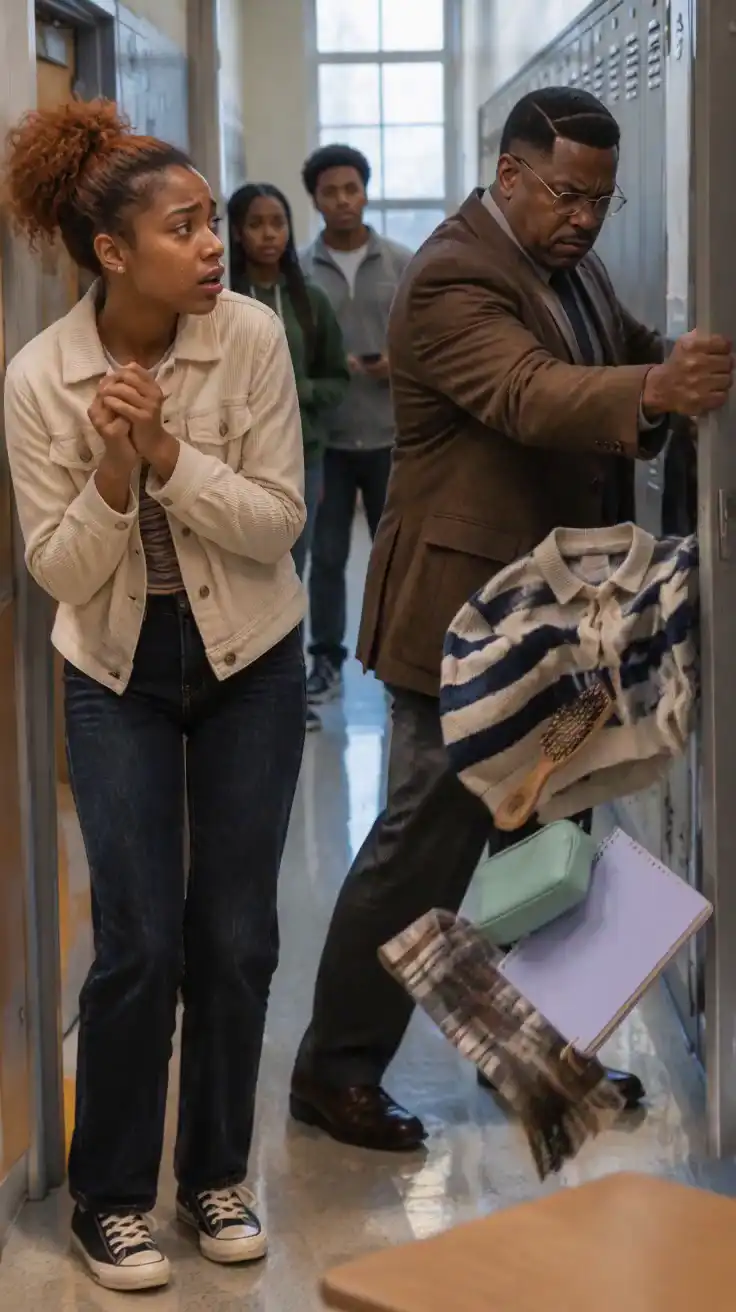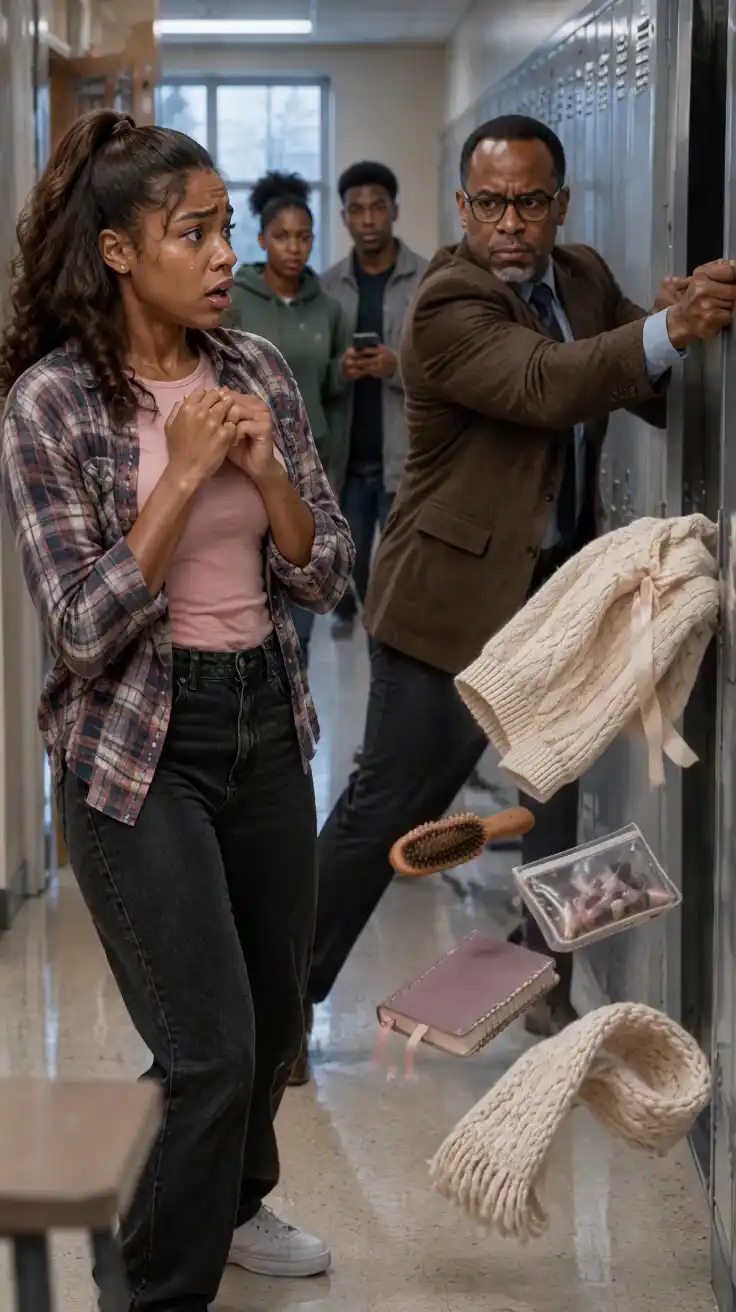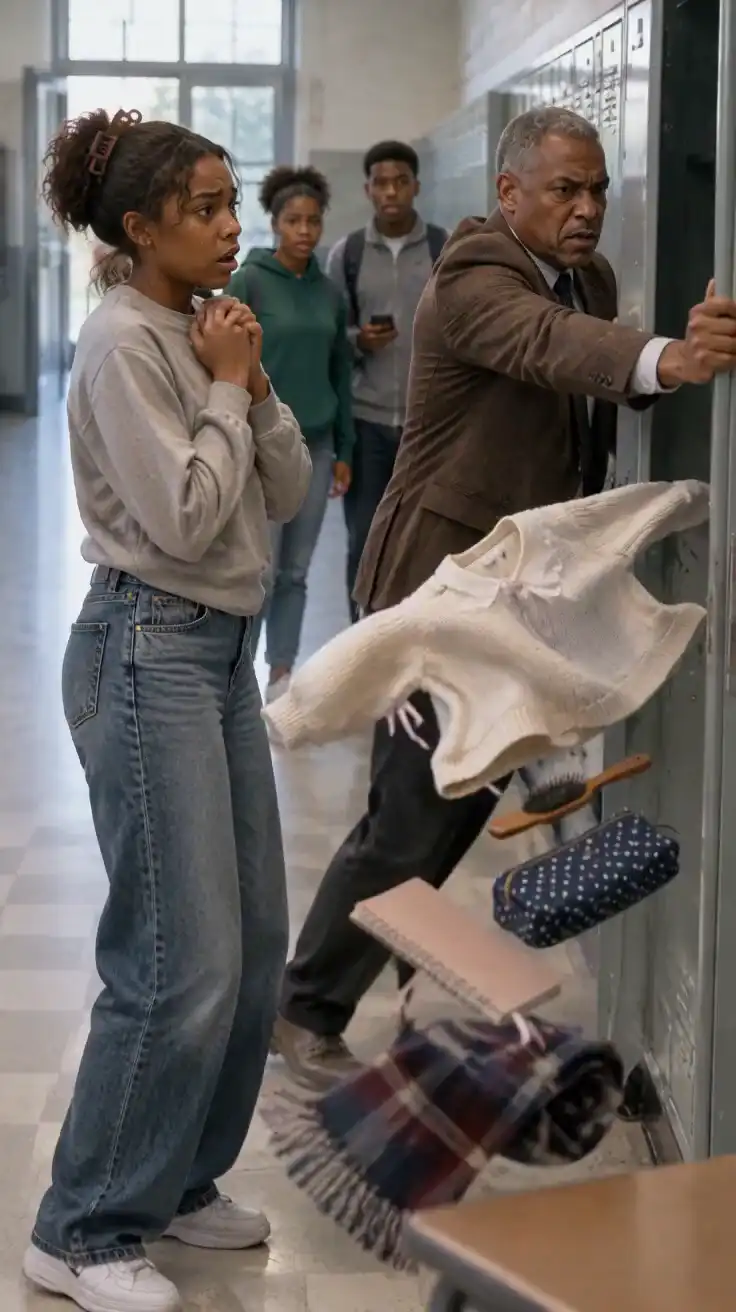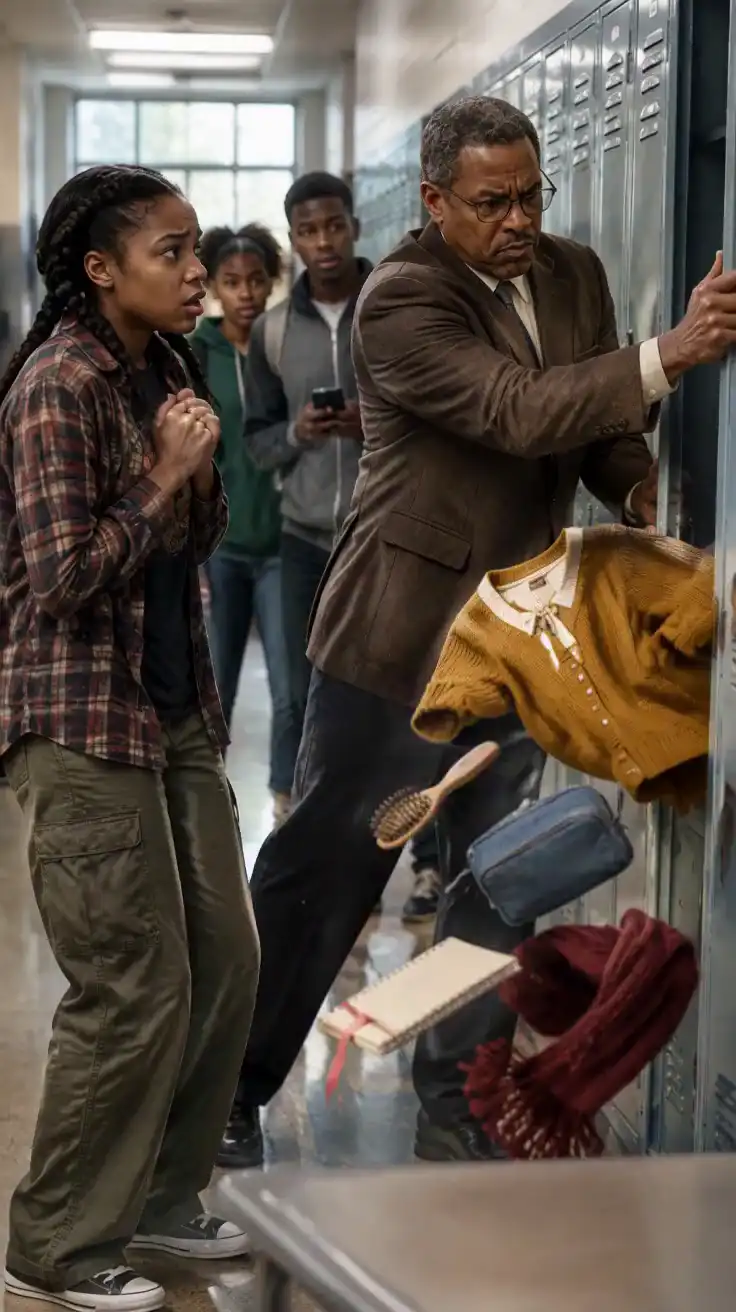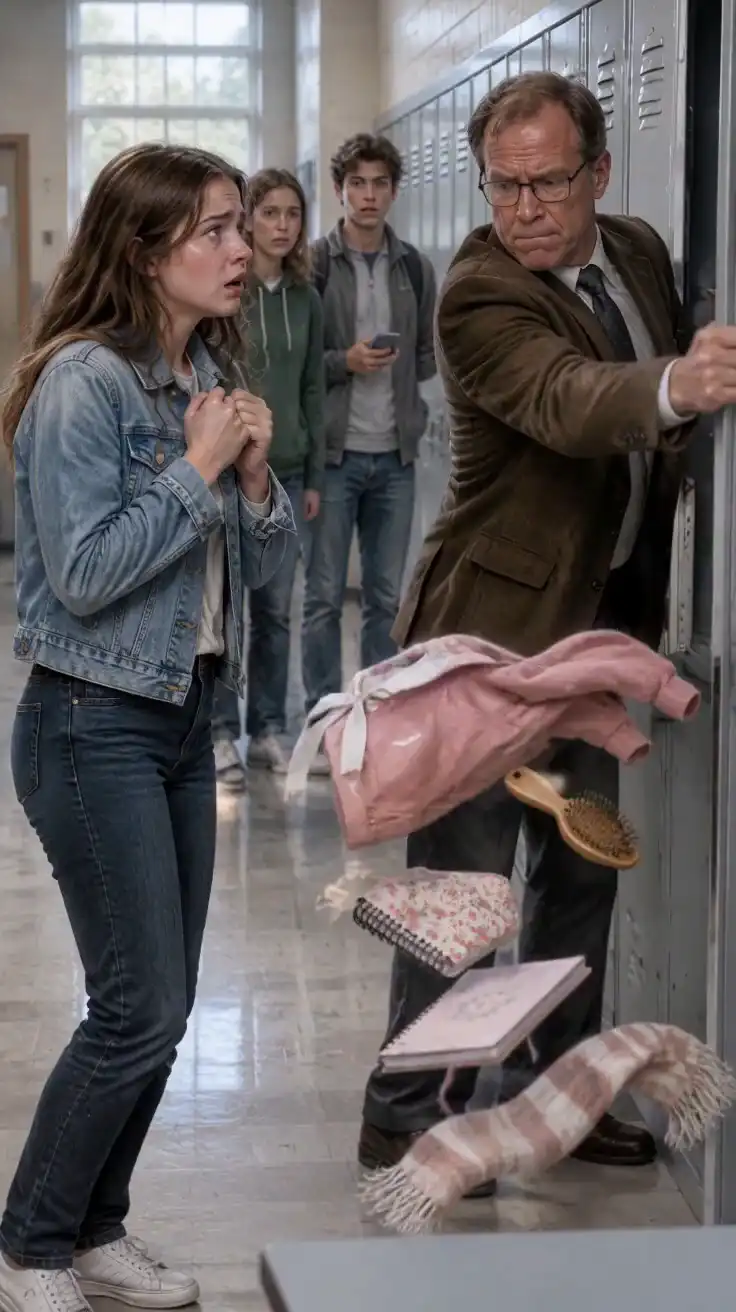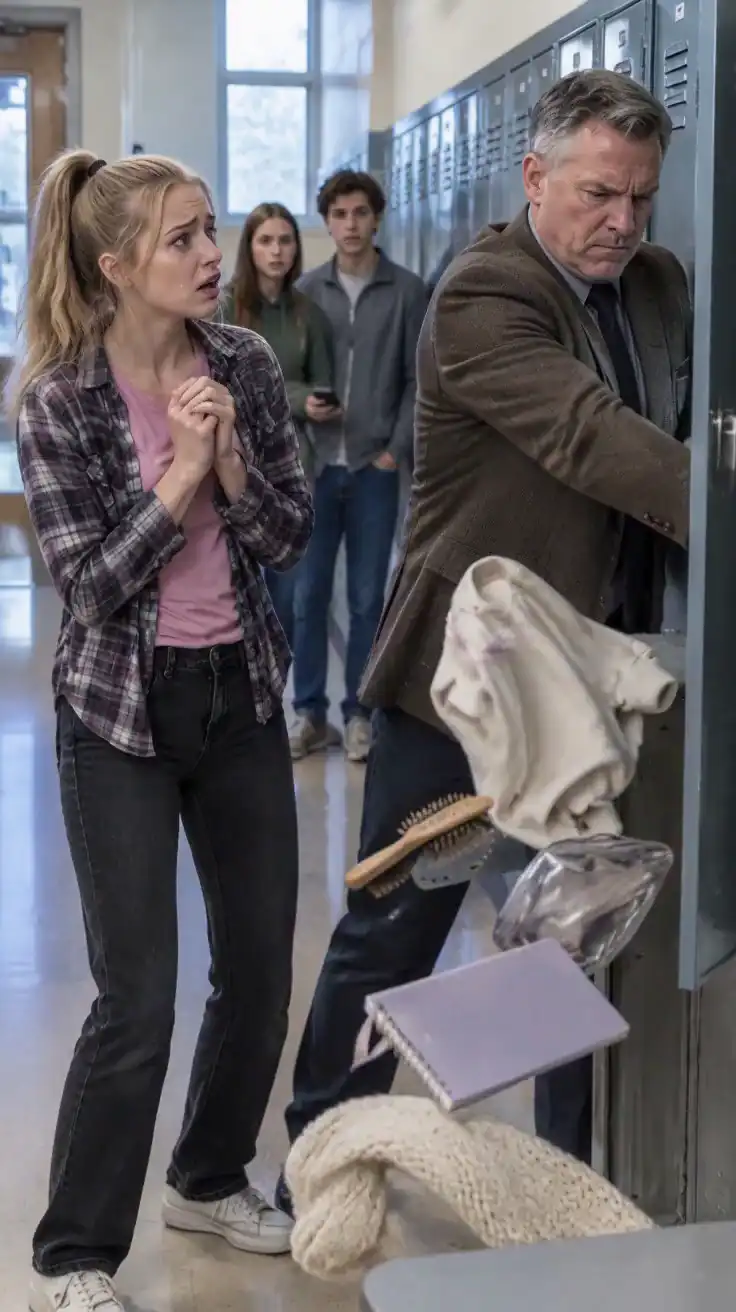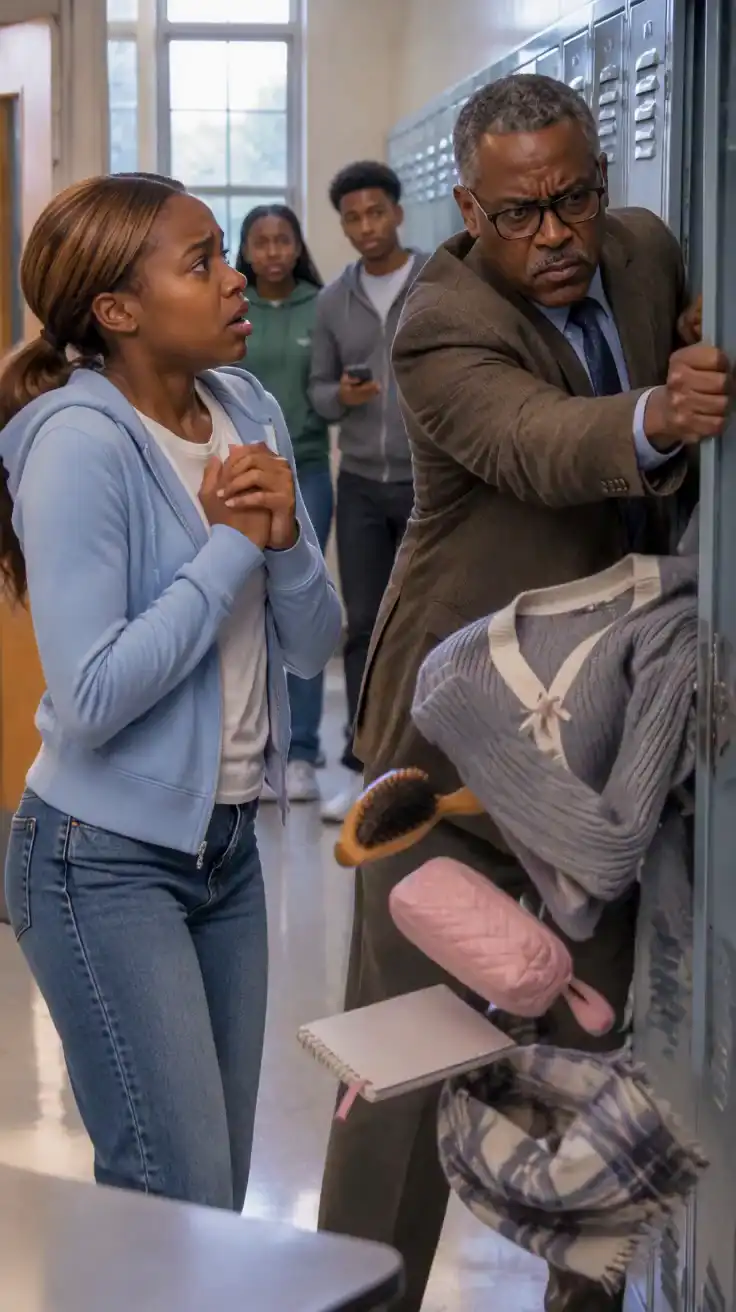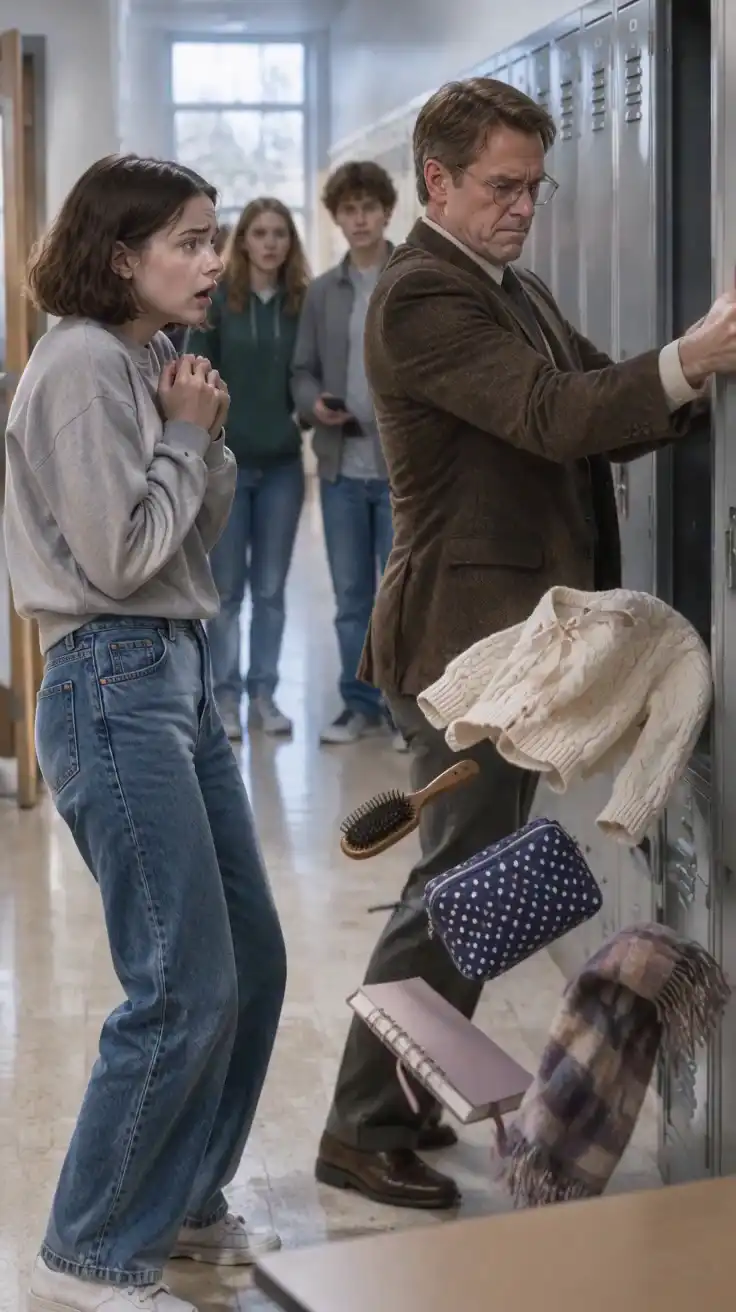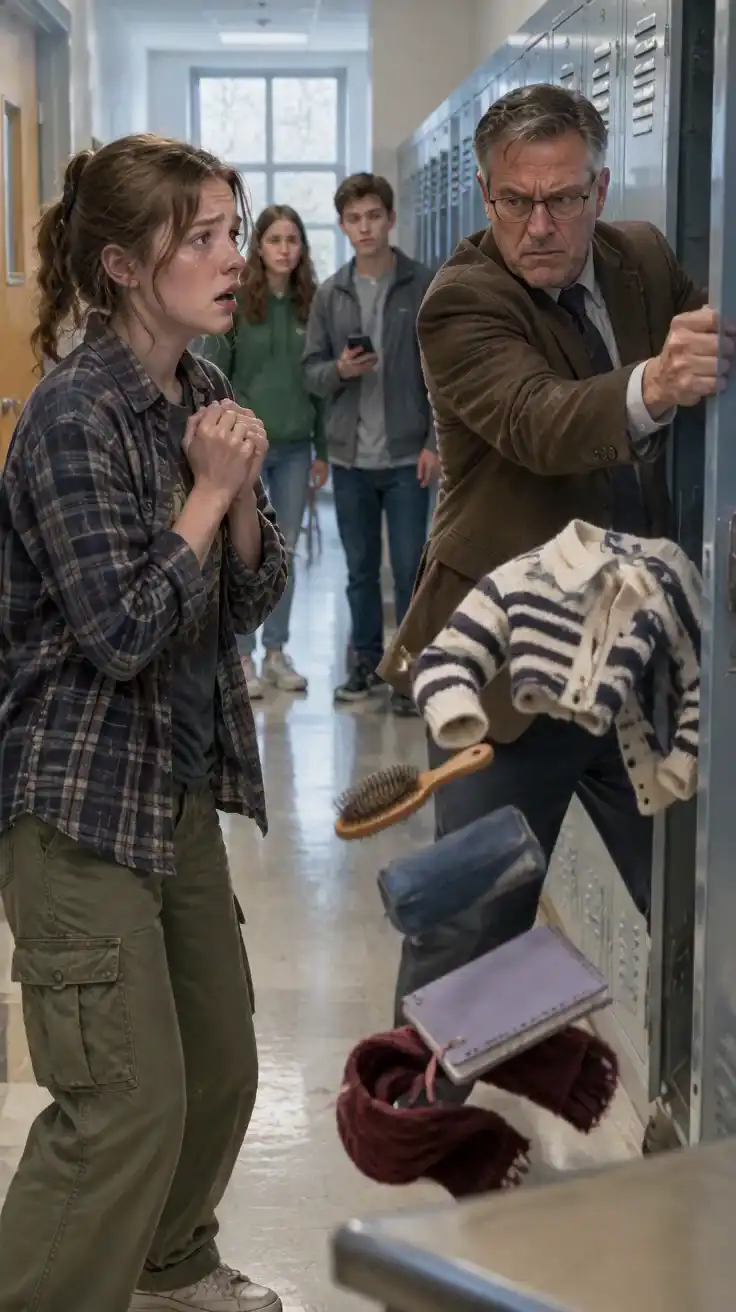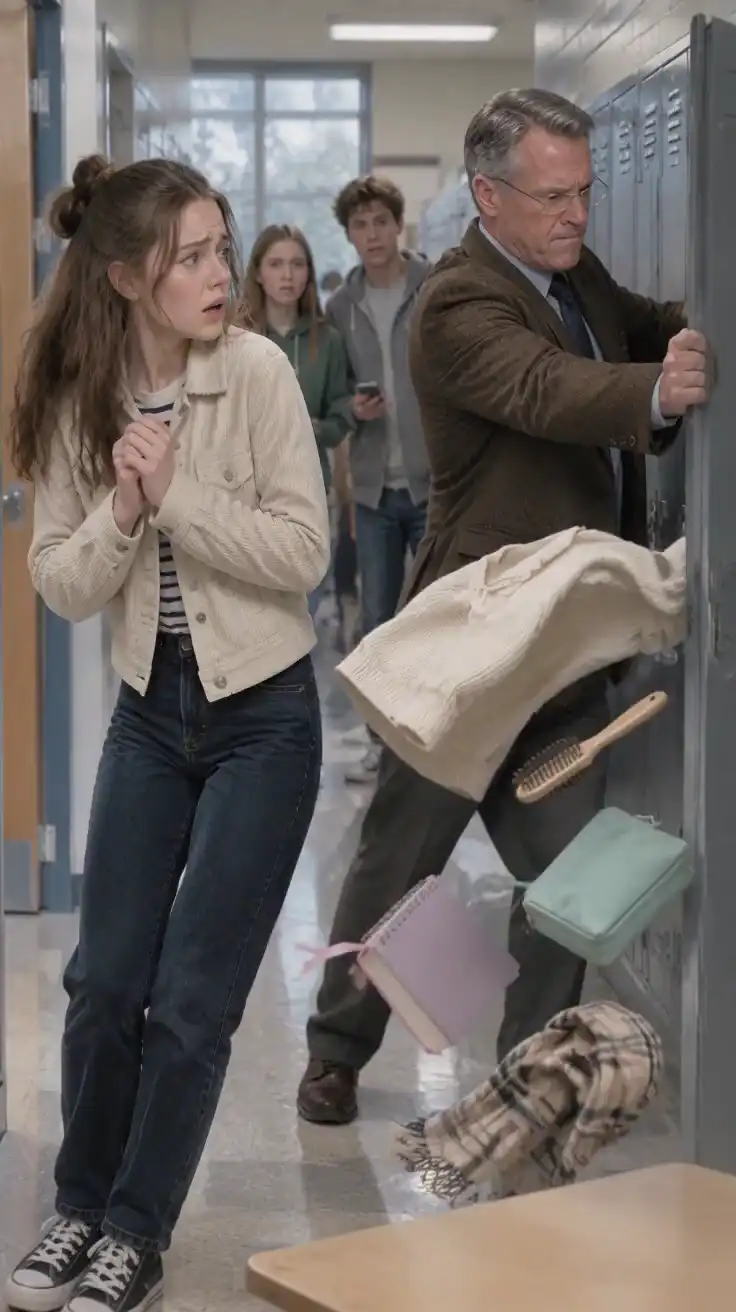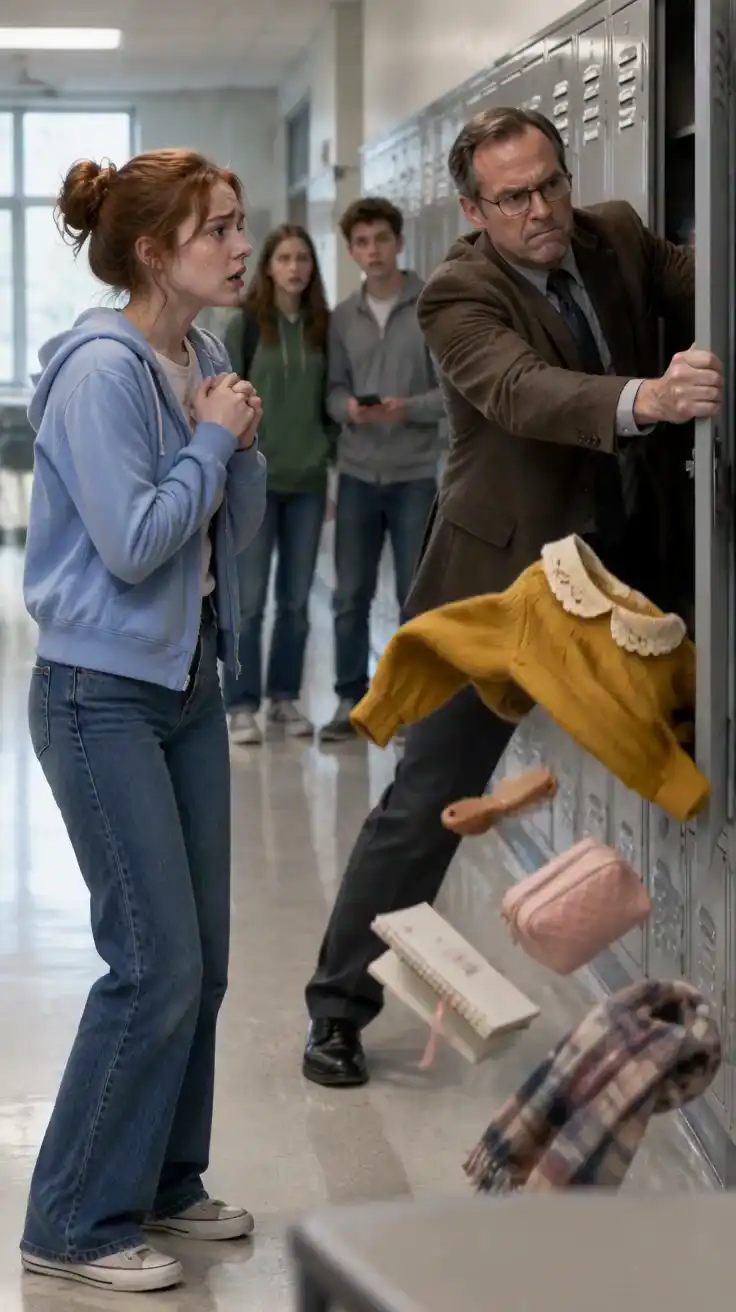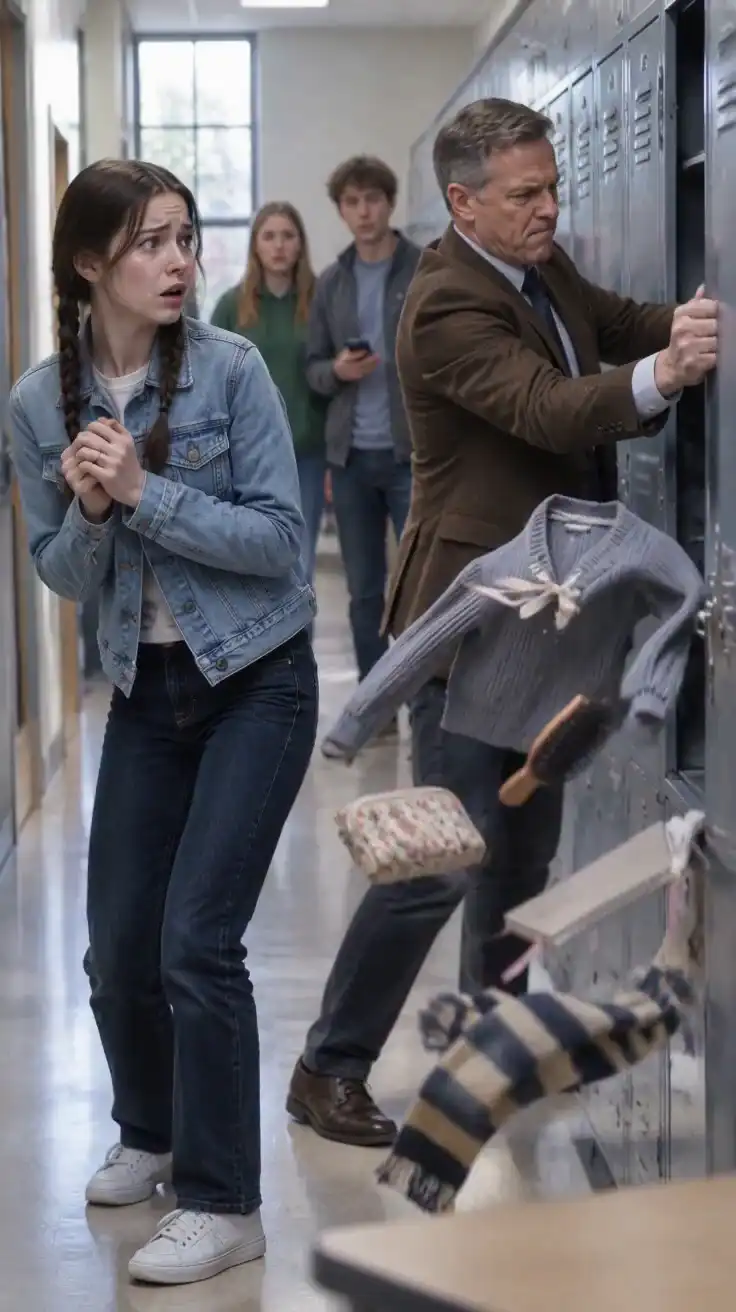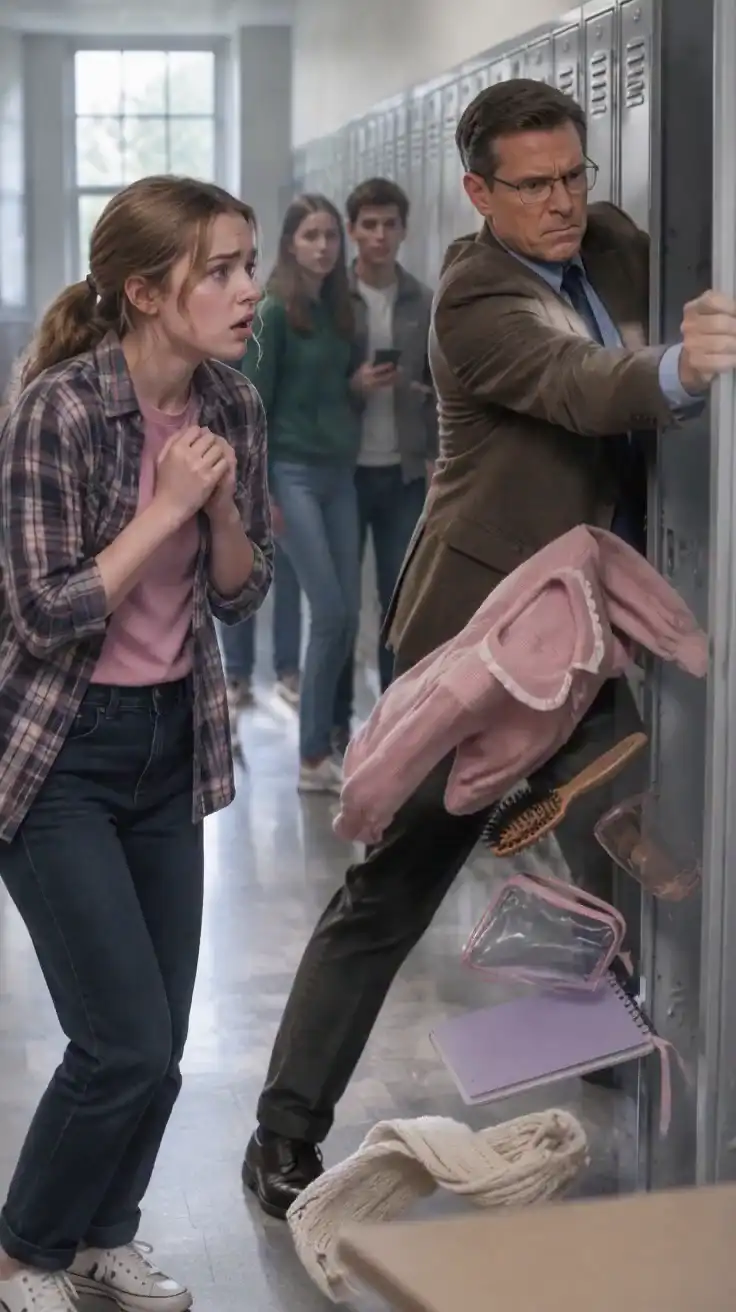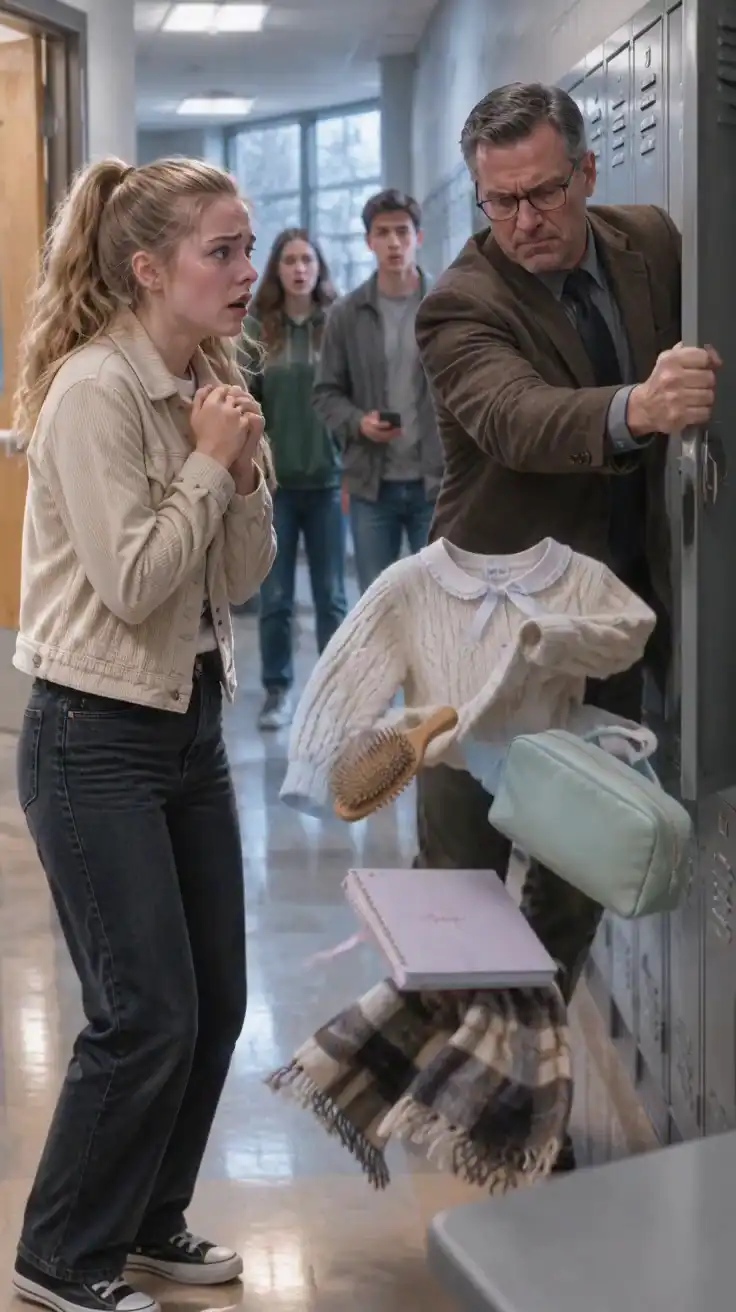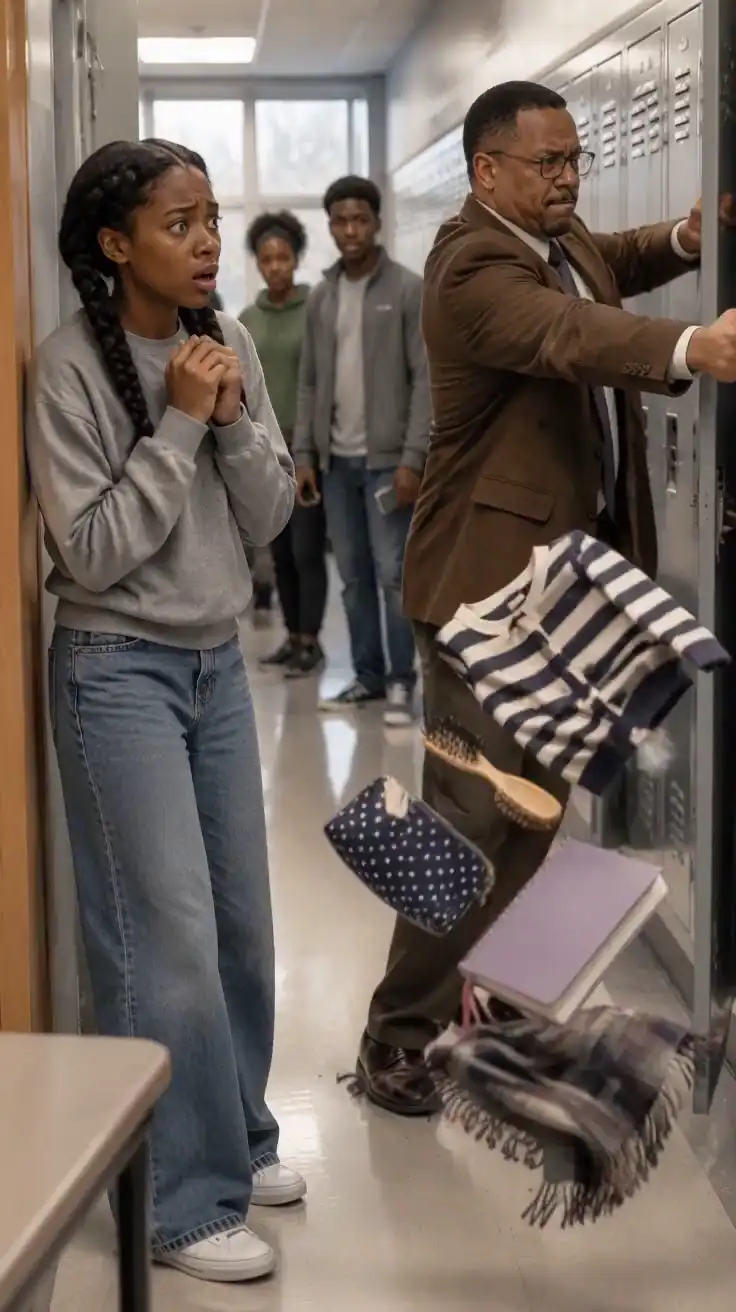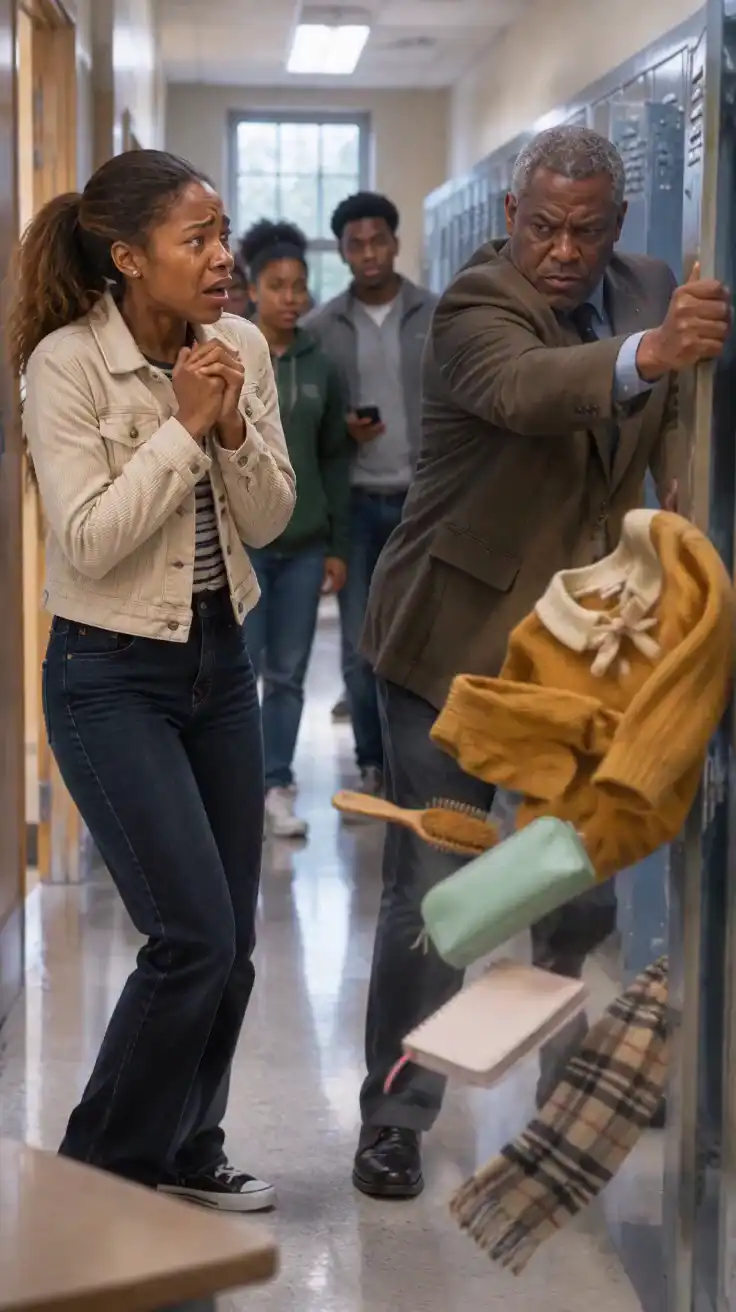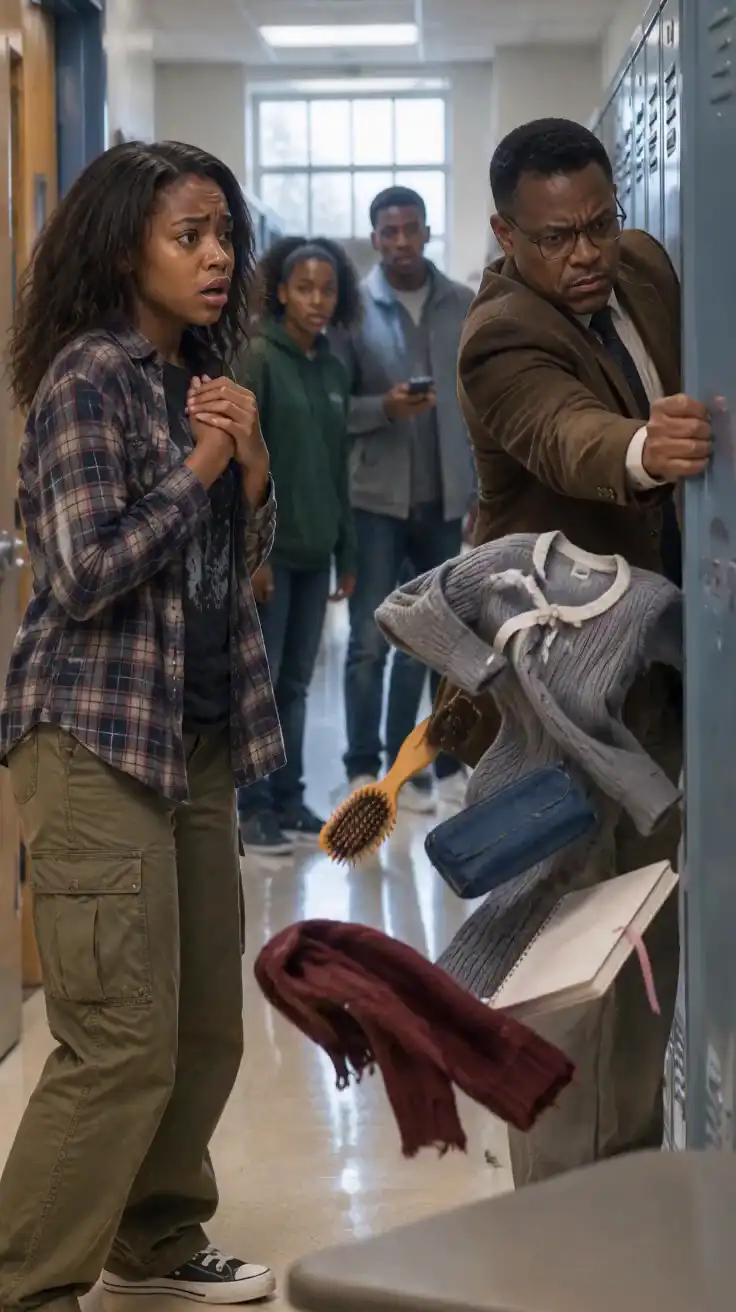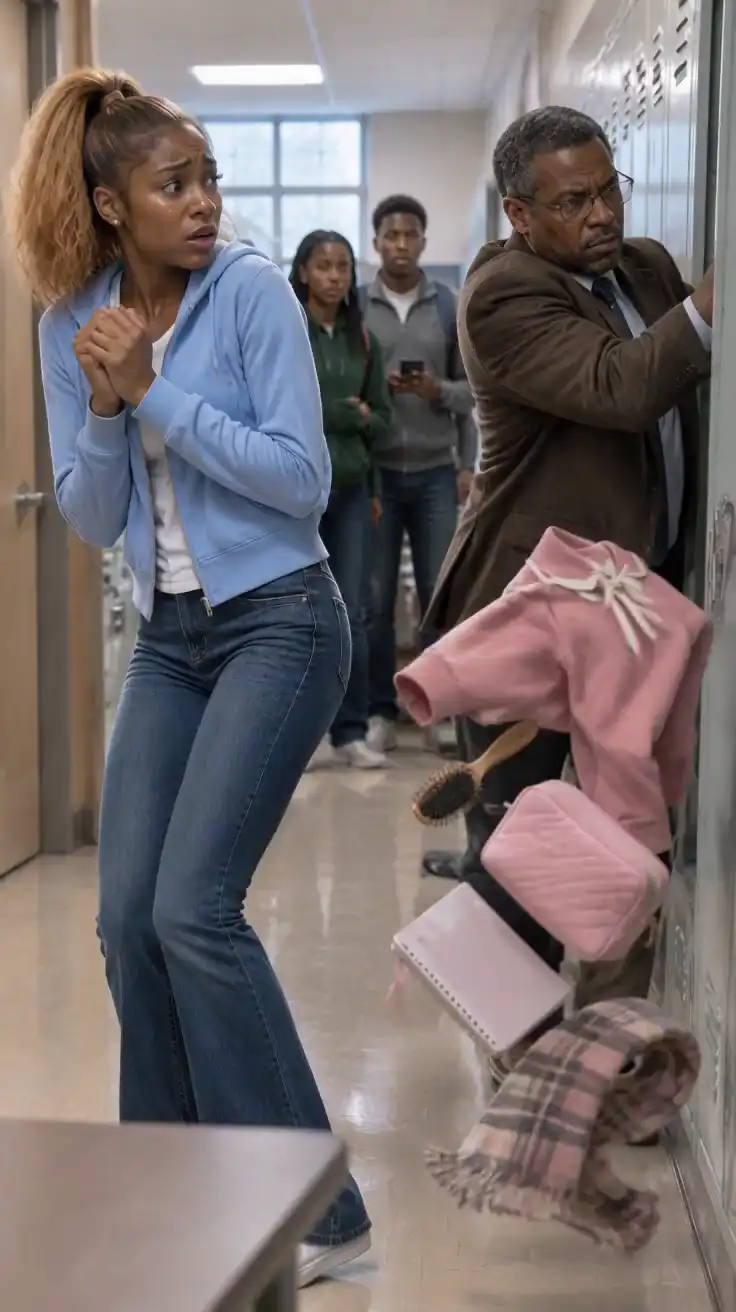
Then the bracelet hits the floor.
It lands between my daughter’s knees and the dean’s black shoes, making a tiny metallic sound that somehow carries farther than all the shouting did.
Maya looks at it.
The girl who reported her looks at it.
The students in the hallway look at it.
The dean, Mrs. Alvarez, bends slowly and picks it up.
It is a thin gold chain with a small oval charm. I recognize it immediately because I had watched Maya fasten it around her wrist that morning before she left for school.
Except it is not Maya’s bracelet.
It belongs to Caroline Bell.
Caroline had said it was missing.
Caroline had told the dean that Maya stole it.
Caroline had pointed at my daughter in front of half the sophomore class and said, “She had access to my locker. She’s been jealous of me all year. She took it because she knew I’d be wearing it for Ethan.”
Now that bracelet is lying at Maya’s knees, and Caroline is the one with her arm stretched across her body.
Mrs. Alvarez looks at the bracelet in her palm.
Then she looks at Caroline.
“Where did that come from?” she asks.
Caroline’s face changes so quickly that, if I had not watched the video dozens of times since, I might have missed it. First comes confusion. Then fear. Then something hard and angry that looks almost like hatred.
“It fell,” Caroline says.
“From where?”
“I don’t know.”
Mrs. Alvarez looks at Caroline’s sweater. It is a cream-colored knit with loose sleeves that reach past her wrists. Her right hand is still pressed against her left elbow, as if she can hold the truth inside her body by keeping her arms crossed.
“Step away from the locker,” Mrs. Alvarez says.
Caroline does not move.
“Caroline, step away.”
The hallway has gone quiet in that strange way schools become quiet when everyone is watching something they know they will repeat later. The phones are still raised, but nobody is laughing anymore.
Maya is still on her knees.
Mrs. Alvarez turns to her. “Maya, stand up.”
My daughter does not stand.
She looks toward the camera, though she cannot possibly know that I am watching from my office two miles away. She looks like she is trying to find me in the crowd.
“Mom,” she says.
That is the part of the video that made me put my hand over my mouth the first time.
Not because she says my name loudly. She doesn’t. She says it the way she used to when she was little and woke from a nightmare, quietly, as if she already knows I am supposed to be there.
Mrs. Alvarez turns toward one of the students. “Call the front office. Tell them I need Principal Hart and the school resource officer in the east hallway.”
Caroline takes one step backward.
“No,” she says. “Wait. This isn’t what it looks like.”
Maya finally stands, but her knees are shaking so badly that she has to put one hand against the locker.
Caroline looks at her.
“You did take it,” she says. “You must have put it in my sleeve.”
Maya stares at her.
For a moment, the girl standing in that hallway is not the Caroline I have known for seven years. She is not the child who used to sleep at our house under a purple blanket. She is not the girl who once cried at my kitchen table because Maya had the flu and could not come to her birthday party.
She is a stranger wearing Caroline’s face.
Mrs. Alvarez’s voice becomes very calm. “Do not say another word.”
Caroline’s mouth closes.
The video ends there because the student filming it lowers her phone when Principal Hart arrives. But by then the truth has already come out. It is on the floor. It is in the dean’s hand. It is wrapped around the wrist of the girl who said it was missing.
I was not in that hallway when it happened.
I was at work, sitting in a conference room with three other people while my phone vibrated against the table.
The first call came from Maya at 1:18 in the afternoon.
I saw her name and answered immediately.
“Hi, baby.”
She did not speak.
I could hear breathing. Fast, uneven breathing, like she had run somewhere.
“Maya?”
A man’s voice said, “Mrs. Bennett?”
I stood up so quickly my chair rolled backward and struck the wall.
“Yes.”
“This is Mr. Hart, the principal at Eastbrook High. I need you to come to the school.”
“What happened?”
“There was an incident involving Maya.”
“What kind of incident?”
He hesitated.
That hesitation was the moment my body understood something before my mind did. Parents know that pause. It is the space where somebody decides how much to tell you before you arrive.
“Is she hurt?” I asked.
“No, she is not physically hurt.”
“Then what happened?”
“I would rather discuss it in person.”
I looked at the people around the table. My coworker, Dana, had stopped taking notes. My supervisor was staring at me with his pen still in his hand.
“Is my daughter in trouble?”
“Mrs. Bennett—”
“Is she in trouble?”
“There was an accusation involving a piece of jewelry. The situation became emotional.”
“A piece of jewelry?”
“Please come to the school.”
I remember the exact details of the next five minutes because fear makes everything sharp. I grabbed my purse from the floor. I told Dana to send the report without me. I emailed my supervisor from my phone while walking to the parking lot. I left my coffee on the conference table with the lid half open.
Outside, the air was cold enough to sting my eyes.
I called Maya back.
This time, she answered.
“Mom?”
“Where are you?”
“At school.”
“I know. I’m coming. Are you hurt?”
“No.”
“Did somebody touch you?”
A pause.
“The dean searched my locker.”
I stopped beside my car.
“What?”
“She searched it in the hallway.”
“Why?”
Caroline’s voice came through the phone before Maya could answer.
“Because she stole my bracelet!”
I gripped the phone tighter.
“Maya, move away from her,” I said.
“She didn’t steal anything,” Maya said, and her voice broke on the last word.
I got into the car.
“Put Mr. Hart on the phone.”
“I can’t. He’s talking to the dean.”
“Where are you?”
“East hallway. By my locker.”
“Stay there. Don’t say anything else until I get there.”
“She’s lying,” Caroline shouted in the background. “She’s always lying now.”
Maya began crying.
Not loudly. Maya has never been a loud crier. She tries to swallow it, which makes it worse. I could hear her breathing hitch.
“Baby, listen to me,” I said. “I’m on my way. You did nothing wrong. Stay with me on the phone.”
The line went silent.
“Maya?”
I heard a voice say, “We need to collect the phone.”
Then the call ended.
I sat in the driver’s seat with both hands on the steering wheel. For several seconds, I could not start the car.
My daughter had just told me that the dean had searched her locker in the hallway because another girl said she stole a bracelet.
That was all I knew.
I did not know that the girl was Caroline. I did not know the search had happened in front of students. I did not know Maya had been made to kneel. I did not know her scholarship interview was less than two hours away.
I only knew that my child sounded afraid.
I drove to Eastbrook with the kind of focus that is not calm but looks like calm from the outside. I stopped at two red lights and barely remember doing it. At the third, I called my husband, David.
He answered from the auto shop where he worked.
“Hey, what’s up?”
“I’m going to the school.”
His voice changed. “Why?”
“There was an incident with Maya.”
“What kind of incident?”
“I don’t know. The principal called me. Something about a bracelet.”
“Is she okay?”
“She says she isn’t hurt.”
“I’m coming.”
“Go get her sister from daycare first.”
“I’ll do both.”
“No. Get Lily. I’ll call you when I know what’s happening.”
“I’m coming to the school.”
“David, if you come now, Lily will be sitting there alone until somebody finds her. Get our other child. I’ll call you.”
There was a silence.
“Tell me what happened,” he said.
“I can’t. I don’t know yet.”
I hung up before he could argue.
The school secretary met me at the entrance. She was a woman named Ms. Nolan, and I had spoken to her many times over the years. She had always been warm with Maya. That day, she looked at me and immediately lowered her eyes.
“Where is she?” I asked.
“Mr. Hart is in his office.”
“Where is my daughter?”
“She’s with him.”
“Is Caroline Bell there?”
Ms. Nolan’s mouth tightened.
“Yes.”
I felt something cold move through me.
“Caroline accused her?”
“She said there was a missing bracelet.”
“That wasn’t my question.”
Ms. Nolan looked toward the hallway.
“Yes.”
I walked past her before she could say anything else.
Principal Hart’s office door was open. I saw Maya first.
She was sitting in a chair against the wall with her arms wrapped around herself. Her hair had come loose from the clip she wore that morning. There was a red mark across one knee, and a smear of dust on the sleeve of her blouse.
The blouse I had pressed before school.
When she saw me, she stood so fast the chair scraped backward.
“Mom.”
I crossed the room and pulled her against me.
She was trembling.
“I’m here,” I said into her hair. “I’m here.”
She held onto my coat with both hands.
For a few seconds, nobody spoke.
Then Principal Hart cleared his throat.
“Mrs. Bennett, I’m sorry you were brought into this situation without more information.”
I turned toward him but kept one hand on Maya’s shoulder.
“What happened to my daughter?”
He looked toward the other side of the office.
Caroline was sitting beside Dean Alvarez. Her mother, Linda Bell, stood behind her with both hands gripping the strap of her purse. Linda and I had met many times at school events, but we had never been close. We had sat together at elementary school concerts. We had taken pictures of the girls at their fifth-grade graduation. Once, she had brought Maya home after soccer practice when I was stuck in traffic.
Now she would not look at me.
I said, “What happened?”
Mrs. Alvarez answered.
“Caroline reported that her bracelet was missing from her locker. She told us she believed Maya had taken it.”
“Why?”
Caroline shifted in her chair.
“Because Maya was near her locker earlier.”
Maya made a small sound beside me.
I looked at her. “Were you?”
“I was walking with Ava.”
Caroline said, “She was standing right by it.”
“Were you in Caroline’s locker?”
“No.”
“Did you touch her things?”
“No.”
I looked back at the dean. “Why was my daughter searched in the hallway?”
Mrs. Alvarez’s face was composed, but there was something strained around her eyes.
“Caroline was very upset. She described the bracelet in detail and said she had seen Maya handling it.”
“Did you see Maya handling it?”
“No.”
“Did any adult see Maya handling it?”
“No.”
“Did anyone search Caroline?”
Mrs. Alvarez looked at Caroline.
“No.”
I felt Maya’s fingers close around the back of my coat.
“Did you search my daughter’s locker?”
“Yes.”
“Without calling me?”
“We believed there was an immediate concern regarding stolen property.”
“You believed a fifteen-year-old girl’s accusation without seeing any evidence, and your response was to empty my daughter’s locker into the hallway?”
“Mrs. Bennett—”
“Did you make her kneel?”
Mrs. Alvarez’s expression changed.
“I asked her to empty her pockets.”
“Did she kneel?”
“She did.”
“Did you tell her she could stand?”
“I was attempting to locate the bracelet.”
“You made her kneel on the floor in front of other students while her former best friend pointed at her and called her a thief.”
Caroline’s mother finally spoke.
“Former best friend?”
I looked at her.
“Your daughter has known mine since third grade.”
“That doesn’t mean—”
“It means you know exactly who my child is.”
Linda’s face flushed. “My daughter’s bracelet was missing.”
“And my daughter did not have it.”
Caroline suddenly stood.
“It was her!”
Principal Hart said, “Caroline, sit down.”
“She took it because she hates me.”
Maya’s face went white.
I turned toward Caroline. “Why would my daughter hate you?”
Caroline’s eyes flicked toward Maya.
Neither girl answered.
That was when I understood there was something underneath the bracelet.
The adults in that room had been treating it like a simple accusation between students. But my daughter’s face had changed when Caroline said she hated her. It was not the face of someone hearing a random insult. It was the face of somebody hearing a private wound spoken aloud.
“Why?” I asked again.
Caroline sat down.
Linda put a hand on her shoulder.
“Mrs. Bennett, this is not the time to discuss teenage drama.”
“Then what is the time to discuss it? After my daughter is suspended? After you call the police? After she misses whatever opportunity she was supposed to have this afternoon?”
Maya’s head snapped toward me.
I looked at her.
“What opportunity?”
She swallowed.
“Mom, I had the interview.”
“What interview?”
“For the Harcourt scholarship.”
The room became still.
I turned to Mr. Hart.
“She had a scholarship interview today?”
He looked uncomfortable. “It was scheduled for three o’clock.”
It was 1:47.
I looked at Mrs. Alvarez. “You knew she had an interview?”
“Yes,” she said quietly. “Maya mentioned it this morning.”
“And you still conducted this search in the middle of the hallway?”
“I did not know the timing.”
“She told you?”
Mrs. Alvarez did not answer.
Maya pressed her lips together. Her eyes filled again.
The Harcourt scholarship was not a small thing for our family. It was a four-year award for students whose parents had not attended college. It covered tuition, books, and housing at the state university. Maya had been working toward it since freshman year.
She had written and rewritten her essay about designing affordable water filtration systems for rural communities. She had asked her science teacher to review it. She had practiced the interview questions in our kitchen while I chopped onions.
What is your greatest challenge?
What do you hope to contribute?
Why should the committee choose you?
Every night for two weeks, she had sat at the table in the same pressed blouse and answered me while I pretended to be a stranger.
That morning, she had stood in front of the hallway mirror and asked, “Does this look serious enough?”
I had told her, “You look like yourself. That’s better than serious.”
Now her blouse was dusty, her knee was scraped, and the interview was less than an hour away.
I looked at Caroline.
She was staring at the floor.
“Did you know about the interview?” I asked.
Caroline did not answer.
“Did you know Maya had the Harcourt interview today?”
Linda said, “That has nothing to do with the bracelet.”
“I asked Caroline.”
Caroline’s chin lifted.
“She told me.”
“When?”
“Last week.”
“Why would you report her today?”
“She stole my bracelet today.”
“Where was it?”
“In my locker.”
“Did you see her take it?”
“No.”
“Did anyone see her take it?”
“No.”
“Then why did you say she did?”
Caroline looked at Maya.
“Because she wanted me to fail.”
Maya whispered, “I wanted you to stop treating me like I was invisible.”
The sentence landed harder than an accusation.
Caroline blinked.
Maya continued, her voice shaking. “You stopped talking to me unless Ethan was around. You told everyone I was trying to get him. You said I copied your clothes. You told him I only applied for the scholarship because you were applying.”
“I never said that,” Caroline said.
“You did.”
“You’re lying.”
“I heard you.”
“Girls,” Principal Hart said.
But they were no longer speaking to the adults.
They were looking at each other the way they must have looked at each other in third grade, when every disagreement was personal because the friendship was everything.
Maya said, “You told Ethan I was desperate.”
Caroline’s face turned red.
“You were flirting with him.”
“He asked me about the robotics competition.”
“You were smiling at him.”
“I smile when people talk to me.”
“You knew I liked him.”
“You told me you liked him in October. You told half the school.”
“You were supposed to be my friend.”
“I was your friend. You stopped being mine.”
Caroline’s mother said her name sharply.
Caroline covered her face with both hands.
I remembered then how the girls’ friendship had started.
They were eight years old when Maya came home from school with a red paper crown on her head. She had made it during reading time and insisted that it was a royal crown, not a hat. She told me there was a new girl in class named Caroline Bell, and Caroline had shared her purple marker when Maya’s broke.
The next day, Maya asked if Caroline could come over.
Caroline arrived carrying a pink backpack and a lunchbox with a missing handle. She stood on our porch and asked whether we had a dog. When I said no, she looked relieved.
The girls spent the afternoon making a blanket fort under the dining room table. They came out only when I offered apple slices.
After that, Caroline was at our house constantly.
They made friendship bracelets out of embroidery thread. They slept on the living-room floor under a pile of blankets. They went through phases together: mermaids, mystery novels, nail polish, baking videos, and a brief period when they tried to speak with British accents.
In fourth grade, they wore matching red sweaters for picture day.
In sixth grade, they promised each other they would attend the same college.
At thirteen, they had a fight over a boy in a group project and did not speak for three days. On the fourth day, Caroline showed up at our door with a paper bag full of candy and said, “We’re not doing this anymore.”
Maya hugged her before she could finish.
That was how it always worked. They fought, then repaired. They knew where each other was tender, but they had never used that knowledge as a weapon.
Not until this year.
Ethan Cole had transferred to Eastbrook in August. He played basketball, but not in the loud, attention-seeking way some of the boys did. He was quiet. He read during lunch. He had a habit of pushing his glasses up with the back of his wrist because he was always carrying something.
Maya liked him first, although she denied it for three weeks.
Caroline liked him too, and she did not deny it at all.
At first the girls joked about it.
They sent each other pictures of his shoes. They argued over whether his hair looked better after practice. They took turns sitting beside him in chemistry because the teacher assigned rotating lab partners.
Then the jokes became tests.
Caroline started asking Maya what Ethan had said to her. Maya began deleting messages before Caroline could see them. Caroline accused her of hiding things. Maya accused Caroline of making every conversation into a competition.
One afternoon in November, Maya came home and threw her backpack onto the floor.
“What happened?” I asked.
“Nothing.”
“Nothing usually doesn’t slam a backpack.”
She had stared at the wall.
“Caroline told Ethan I’m trying to steal him.”
“Are you?”
“No.”
“Do you like him?”
Maya’s face had gone pink.
“That isn’t the point.”
“It can be two points.”
She had sighed. “I liked him before she did.”
“Does he know?”
“I don’t know.”
“Does Caroline know?”
“She knows everything.”
That was the problem. Caroline knew everything. She knew how badly Maya wanted the scholarship. She knew that Maya had been saving every award and certificate in a folder under her bed. She knew Maya’s father and I could not help pay for a private university. She knew that being chosen would mean more than tuition. It would mean that all the hours Maya spent studying while her friends went out were leading somewhere.
She also knew about Ethan.
At the time, I told myself they were fifteen. I thought jealousy would burn itself out.
I did not imagine it would become a bracelet in a sleeve.
Back in the office, Caroline’s mother was whispering to her daughter. Linda looked frightened now, but not for Maya. She looked frightened of what Caroline might say next.
Principal Hart stepped toward the door.
“I’m going to ask Officer Reed to join us. Until we clarify what occurred, both students will remain here.”
“No,” I said. “My daughter is coming with me.”
“Mrs. Bennett, there is an ongoing investigation.”
“Then investigate with my attorney present. My daughter is not sitting in this office while everybody decides whether she looks guilty.”
Maya looked at me.
“I want to go home.”
“You’re going home.”
Mrs. Alvarez stood. “Maya cannot leave until we finish documenting the incident.”
“You already documented it when you searched her in public. You can send whatever paperwork you want to my house.”
Principal Hart rubbed his forehead.
“Mrs. Bennett, I understand your concern.”
“No, you don’t. If you did, you would understand that my daughter was humiliated in front of her classmates over an accusation that has now collapsed.”
At that moment, there was a knock on the door.
Officer Reed entered with another administrator behind him. He had been at Eastbrook for years, and Maya knew him from safety drills. He looked at the bracelet in Mrs. Alvarez’s hand.
“Is this the item?”
“Yes,” Principal Hart said.
Officer Reed turned to Caroline. “Did you report this bracelet missing?”
“Yes.”
“Did you tell staff that Maya took it?”
“Yes.”
“Did you place the bracelet in your sleeve?”
Caroline’s eyes widened.
“No.”
“Then how did it get there?”
“I don’t know.”
Officer Reed looked at the dean.
“Did you see it fall?”
“Yes.”
“From Caroline’s sleeve?”
“Yes.”
Caroline stood again.
“I was reaching for Maya because she was hiding something.”
“What were you reaching for?” Officer Reed asked.
“I don’t know.”
“You don’t know?”
“She had her hands in her pockets.”
Mrs. Alvarez interrupted. “Caroline accused Maya of having the bracelet in her pocket.”
Officer Reed looked at the floor. The contents of Maya’s locker were still scattered in the hallway outside: books, loose papers, the pink pencil case, a gray hoodie, and the small toiletry bag she kept for after-school dance practice.
“Was the bracelet found in Maya’s belongings?” he asked.
“No,” said Mrs. Alvarez.
“Was it found on Maya?”
“No.”
“Was it found in Caroline’s locker?”
“No.”
“Where was it found?”
Mrs. Alvarez looked at Caroline.
“In her sleeve.”
Caroline began to cry.
The sound was different from Maya’s crying. Caroline cried openly, loudly, as though she expected the room to bend around her. Linda reached for her, but Caroline pulled away.
“I didn’t mean for this to happen,” she said.
Nobody moved.
I looked at her.
“What did you mean to happen?”
She shook her head.
“Caroline,” Officer Reed said, “you need to answer the question.”
“I just wanted her to stop.”
“Stop what?”
“Acting like she was better than me.”
Maya stared at her.
“I never acted like that.”
“You got the scholarship interview.”
“That isn’t something I did to you.”
“You got everything.”
Caroline’s voice rose. “You always get everything. Teachers love you. Your parents let you do whatever you want. Ethan looks at you like you’re special.”
Maya’s face crumpled.
“I thought you were my sister.”
Caroline covered her mouth.
Officer Reed asked, “Did you take your bracelet off and put it in your sleeve?”
Caroline nodded.
“Why?”
She looked at Maya.
“Because I wanted them to search her.”
The room seemed to shrink.
“You wanted them to search her?” I asked.
Caroline’s eyes filled.
“I knew they’d find it in her locker.”
“But it wasn’t in her locker.”
“I was going to put it there.”
Maya stepped backward.
“What?”
Caroline wiped her cheeks with the heel of her hand. “I was going to put it in the front pocket of her bag when she was at lunch, but she came back.”
“You planned this?” Principal Hart asked.
Caroline shook her head quickly. “Not like this.”
“What does that mean?” I asked.
“I didn’t think they would make her kneel.”
“You reported her for stealing something you had in your sleeve.”
“I thought they would just look in her locker.”
“Why would they look in her locker if you didn’t put the bracelet there?”
“Because I was going to put it there!”
Her voice cracked.
Maya whispered, “Why?”
Caroline looked at her.
“Because Ethan was going to sit with you during the interview.”
I did not understand.
“What does Ethan have to do with the interview?” I asked.
Caroline’s breathing became uneven.
“He told me he was going to walk her to the library. He said he wanted to wish her luck.”
Maya looked stunned.
“He did?”
Caroline laughed once, without humor. “You didn’t even know?”
“No.”
“He told me yesterday.”
“Why did you tell him I was at the library?”
“Because you were supposed to be.”
“I was supposed to be in the interview.”
“I know.”
“Then why would I be at the library?”
“Because I wanted you to miss it.”
The words were so plain that for a second they did not sound real.
Caroline wanted Maya to miss the scholarship interview.
Not because of the bracelet itself. Not because she believed Maya was a thief. She wanted Maya to miss the interview because Ethan had said he wanted to wish her luck, and Caroline did not want him beside her.
Jealousy had taken a small gold bracelet and turned it into a public accusation.
It had taken two girls who had grown up together and put one of them on her knees in front of a locker.
Mrs. Bell whispered, “Caroline, stop.”
But Caroline was already crying too hard to stop.
“I thought if she got in trouble, she’d have to leave,” she said. “Then Ethan would come with me.”
Ethan.
A fifteen-year-old boy who had not asked for any of this.
A scholarship interview that had nothing to do with him.
A friendship that had survived seven years of ordinary childhood storms and could not survive a competition none of them knew how to name.
Principal Hart stepped away from his desk.
“Caroline, you are suspended effective immediately.”
Linda turned toward him. “What?”
“Pending a disciplinary hearing, Caroline is suspended from school.”
“You can’t suspend her based on one statement.”
“It is not one statement,” he said. “She admitted planning to plant the bracelet and falsely accuse Maya.”
Caroline’s mouth opened.
“I said I didn’t mean—”
“You admitted it,” Mrs. Alvarez said.
Her voice was quiet, but I heard the shame in it.
Principal Hart continued. “Caroline, you will not return to campus. Your mother will take you home now. We will contact you with the hearing schedule.”
Linda stepped forward.
“This is ridiculous. She’s a child.”
“So is my daughter,” I said.
Linda looked at me with tears in her eyes.
“I’m sorry.”
I believed she was sorry.
I just did not know yet whether she was sorry for what Caroline had done or sorry that Caroline had been caught.
Officer Reed spoke to Principal Hart in a low voice. There was discussion about whether the school would file a report. The bracelet belonged to Caroline, so there was no theft. But she had fabricated evidence and made a false accusation. The school had security footage from the hallway, student videos, and statements from the students who had witnessed the search.
Maya stood beside me, silent.
I touched her cheek.
“Your interview,” I said. “Can you still do it?”
She looked down at her blouse.
“I look awful.”
“You look like you survived something awful.”
“I can’t go in there like this.”
“You can change at home.”
“I don’t remember any answers.”
“You know the answers. You wrote them.”
Her eyes filled again.
“What if they saw the video?”
“Then they will see what happened to you, not who you are.”
Principal Hart turned toward us.
“Mrs. Bennett, the committee has been notified. They are willing to reschedule Maya’s interview for tomorrow morning.”
I stared at him.
“They know?”
“Someone from the counseling office contacted them.”
Maya looked at me.
“Tomorrow?”
“Tomorrow,” I said.
It was not the same as getting that afternoon back. Nothing could give that back. But it was something.
We left the office through a side hallway. The school had moved most students to class, but a few lingered at the corners, pretending to check their phones. When Maya walked past, they looked away.
A girl from her English class came toward us.
“I’m sorry,” she said.
Maya stopped.
The girl looked at me. “I saw it. Caroline had the bracelet. I told the dean.”
“Thank you,” I said.
The girl’s eyes moved to Maya’s scraped knee.
“She shouldn’t have done that to you.”
Maya nodded but did not speak.
Outside, my car was still warm from the drive. Maya sat in the passenger seat and stared through the windshield.
For several minutes, I let her sit quietly.
Then I asked, “Did you know Caroline still liked Ethan that much?”
“She told me she did.”
“And you?”
“I liked him too.”
“I know.”
“I didn’t think he was worth losing her.”
I glanced at her.
“Did you tell her that?”
“Yes.”
“When?”
“Last week. She said I was pretending not to care about him so she would look stupid.”
“Did you want him to choose you?”
Maya looked down at her hands.
“I wanted her to stop making me choose.”
That was the heart of it.
Caroline had turned their friendship into a contest. Maya had tried to keep standing outside it. But refusing to compete can look like competition to someone who is already afraid of losing.
At home, Maya went upstairs and changed into sweatpants and an old school T-shirt. She put her blouse over the back of a chair instead of hanging it up.
I found her sitting on the floor beside her bed.
Her scholarship folder was open in front of her. The pages were bent at the corners.
“I can steam the blouse,” I said.
“I don’t want to wear it tomorrow.”
“You don’t have to.”
“What if they think I’m trouble?”
“The committee?”
“The school. Everybody.”
“You were accused of something. You were not caught doing something.”
“People don’t care about the difference.”
“That is true sometimes.”
She looked at me.
I sat on the floor beside her.
“But the people who matter will care.”
“Who decides who matters?”
I did not have a perfect answer.
So I told her the truth.
“I don’t know. But I know your science teacher matters. I know the scholarship committee matters. I know your father and I matter. And I know you matter, even if everybody at school gets the story wrong.”
She leaned against my shoulder.
“I should have known she would do something.”
“Why?”
“She kept asking about my interview.”
“What did she ask?”
“What time it was. Who would be there. Whether my mom was driving me. If I had to bring anything.”
I felt anger move through me again.
“Why didn’t you tell me?”
“Because I thought she was just being weird.”
“She was being weird?”
“She was my best friend.”
Maya’s voice broke.
“I didn’t want to believe she could be dangerous.”
I took her hand.
“Caroline was not dangerous because she liked Ethan. She made a dangerous choice because she wanted control.”
Maya was quiet.
“Do you think she hates me?”
“No.”
“How can you say that?”
“Because hate would have been easier. She was jealous, scared, and desperate to keep you from having something she wanted. That is not an excuse. It is just the truth.”
Maya looked at the scholarship folder.
“What happens to her now?”
“I don’t know.”
“She’s suspended.”
“Yes.”
“Her mom hates me.”
“I don’t think she hates you.”
“She looked at me like I did something.”
“Her daughter did something. People sometimes blame the person who reveals the truth because the truth is painful.”
That night, David came home with Lily asleep against his shoulder. He carried our four-year-old upstairs, put her in bed, and came into the kitchen without taking off his work boots.
He looked at Maya.
“What happened?”
She told him.
Not all at once. She started with the bracelet and the search, then stopped. I filled in the parts she could not say. David listened without interrupting. When she finished, he stood there with both hands flat on the counter.
“Did the school apologize?” he asked.
“Not exactly,” I said.
“They will.”
“David.”
“No. They will.”
Maya looked at him.
“Dad, I still have the interview.”
“When?”
“Tomorrow morning.”
“Then tonight, we practice.”
“I don’t want to.”
“You don’t have to practice tonight.”
“I don’t know what to say.”
“You say what you wrote.”
“What if they ask about today?”
“Then you tell them the truth.”
She looked frightened.
“Will that make me look weak?”
David pulled out the chair beside her.
“Your mother has spent seven years telling you to be polite. I’m going to tell you something else. You do not owe anybody a smaller version of the truth so they can feel comfortable.”
Maya looked at him.
“Is that what you tell customers when their car won’t start?”
“No. With customers, I lie and say it’ll be ready by five.”
She laughed for the first time all day.
It was a small laugh, but we took it as a victory.
The next morning, Maya wore a dark blue blouse and the same small gold earrings she had worn in her scholarship photo. She did not wear the bracelet I had given her for her sixteenth birthday. She left that one in her jewelry box.
Before we left, she stood in the kitchen and read her essay aloud one more time.
Her voice shook at first.
Then it steadied.
The interview was held at the offices of the Harcourt Foundation, in a brick building downtown. Two women and a man sat across from her at a long table. I waited in the lobby with David.
She was inside for forty-five minutes.
When she came out, she looked tired but upright.
“How did it go?” I asked.
“They asked me about the water filtration project.”
“What did you say?”
“I told them my grandmother drinks bottled water because she doesn’t trust the pipes, and that’s expensive when you’re living on a fixed income. I told them clean water shouldn’t depend on whether somebody can afford to keep buying plastic bottles.”
David smiled.
“That sounds like you.”
“One of them asked me why I didn’t tell them about the school incident.”
My stomach tightened.
“What did you say?”
“I said I was there to talk about the work I want to do, not about someone else’s mistake.”
I hugged her.
The scholarship committee offered her the award three weeks later.
The call came on a Tuesday evening while we were eating spaghetti. Maya answered a number she did not recognize and said hello. Then she looked at me.
“Mom?”
I knew.
She put the phone on speaker.
The woman from the foundation told her she had been selected. Maya thanked her three times. After the call ended, she sat at the table with both hands over her face.
Then she cried.
This time, she did not try to swallow it.
The school’s disciplinary hearing happened six days after the search.
Caroline’s parents hired an attorney. We were told we could attend, but Maya did not want to sit in the same room with Caroline, so I went with David while she stayed with my sister.
The school presented the hallway video. They presented statements from three students. They presented the dean’s written report, which described the search but left out the fact that Maya had been made to kneel until we pointed it out.
Mrs. Alvarez revised her report after the video was reviewed.
That mattered to me.
Not enough to erase what happened, but enough to show that the truth was beginning to take up space.
Caroline’s attorney argued that she had been emotionally overwhelmed by the conflict with Maya. He said she had made a poor decision under adolescent pressure. He said suspension would damage her academic record and interfere with her application to a private arts program.
I listened until I could not listen anymore.
When it was my turn to speak, I stood.
“I understand that Caroline is fifteen,” I said. “My daughter is also fifteen. Being young does not make humiliation harmless. Being jealous does not make a false accusation accidental. Caroline did not simply lose control. She planned to put her bracelet in my daughter’s bag, reported her for theft, and watched while an adult searched her in public.”
Caroline was sitting beside her parents. She had cut her hair since the incident. She looked smaller than I remembered.
I continued.
“I am not asking the school to destroy her future. I am asking the school to stop pretending that my daughter’s future was not placed at risk.”
The panel suspended Caroline for ten school days, required counseling, and barred her from contacting Maya directly or indirectly for the rest of the semester. She was also required to write a formal apology and complete a restorative process if Maya agreed to participate.
The school issued Maya a written apology.
It said the search should not have been conducted in public and that staff had failed to follow proper procedures before treating the accusation as credible.
I read it twice.
Then I put it in a folder.
Not because I wanted to preserve it, but because I wanted a record.
Linda Bell came to our house one Saturday afternoon.
I almost did not let her in.
She stood on the porch holding a white envelope. She looked exhausted. Her eyes were swollen, and she had lost weight.
“I’m not here to ask you to forgive Caroline,” she said.
“That’s good.”
“I’m here because I owe you an apology.”
I opened the door but did not invite her inside.
She handed me the envelope.
It was Caroline’s written apology.
I did not read it immediately.
Linda looked over my shoulder into the house, where Maya was sitting at the dining room table doing homework.
“She’s been in counseling,” Linda said. “We should have gotten her help sooner.”
“What did you think was happening?”
“I thought they were growing apart.”
“They were.”
“I thought it was normal.”
“Some of it was.”
Linda nodded.
“She told me Maya was excluding her. She said Ethan was making things worse. I believed her because she was crying.”
“My daughter was crying too.”
“I know that now.”
The sentence sounded sincere.
I said, “You called my daughter a liar.”
Linda looked down.
“I said she was probably confused.”
“You said her accusation couldn’t be dismissed just because the bracelet was found on Caroline.”
“I was defending my child.”
“So was I.”
She nodded.
Neither of us knew what to say after that.
Finally, she said, “Caroline misses your family.”
I felt something inside me tighten.
“Maya misses the girl Caroline used to be.”
Linda wiped her eyes.
“I don’t know if she can get back to that.”
“Neither do I.”
She left without asking to see Maya.
I brought the envelope to my daughter.
She read the apology in her room with the door half closed. When she came out, she looked thoughtful.
“She says she’s sorry she made me look like a thief,” Maya said.
“That’s not the same as being sorry she tried to hurt you.”
“I know.”
“She says she was afraid I would replace her.”
“Did you?”
Maya sat on the edge of the sofa.
“No.”
“Did you want to?”
“I wanted a friend who didn’t make me prove I loved her.”
I nodded.
“That’s fair.”
“She wants me to do the restorative meeting.”
“You don’t have to.”
“I know.”
“Do you want to?”
Maya held the letter in her lap.
“I want her to understand. I don’t know if I want her back.”
Those were different things.
The meeting took place in a counselor’s office at school. There were four chairs in a circle. Maya sat beside me. Caroline sat with her mother. A counselor named Ms. Patel explained that nobody was required to apologize, forgive, hug, or resume the friendship.
Caroline looked at Maya for a long time before speaking.
“I thought if you missed the interview, you wouldn’t leave me behind.”
Maya said, “I wasn’t leaving you.”
“You were getting everything I wanted.”
“You wanted the scholarship?”
“I wanted Ethan. I wanted you to stop being better at everything.”
Maya’s face tightened.
“I never asked you to compete with me.”
“You didn’t have to.”
“Then why did you punish me for a competition I didn’t agree to?”
Caroline began crying.
“I don’t know.”
Maya looked at the counselor.
“Can I say something?”
Ms. Patel nodded.
Maya turned back to Caroline.
“You knew me for seven years. You knew I would never steal from you. You knew I would never try to ruin your interview. You knew I was scared about mine, and you used that.”
Caroline nodded.
“I did.”
“I need you to understand that it wasn’t just embarrassing. For two days, people looked at me like I was dangerous. A teacher asked if my parents knew I had a problem with stealing.”
Caroline covered her mouth.
“Who?”
“It doesn’t matter.”
“It matters.”
“No. What matters is that you made it possible.”
Caroline’s mother started to speak, but Ms. Patel gently raised a hand.
Maya continued.
“I don’t hate you. I don’t know if I can be your friend. But I don’t hate you.”
Caroline was crying silently now.
“I’m sorry,” she said.
Maya nodded.
“I believe that you’re sorry.”
It was not forgiveness, but it was a beginning of something more honest than the friendship they had before.
After the meeting, Maya and I walked through the hallway together.
The locker where everything happened had been repainted. The scratches were gone. The school had installed a camera above it, though nobody told us whether that was because of what happened to Maya or because parents had complained.
Maya stopped beside it.
“I used to keep all my important things in here,” she said.
“Like what?”
“My science notebook. My scholarship folder. The picture of Grandma.”
She took the small photograph from her wallet. It was bent at the corner.
“Why did you keep it at school?”
“I liked having her with me.”
She looked at the locker.
“I don’t want to use this one anymore.”
“We can ask them to move you.”
“They already moved me to the end of the hall.”
“Good.”
“I don’t want to be moved because of her.”
“You’re not being moved because of her. You’re choosing a place that feels safe.”
Maya nodded.
The rumors faded eventually, but not quickly.
For the first month, someone would mention the bracelet whenever Maya walked into a room. A boy in her history class asked whether she planned to steal the school mascot next. He received detention after Maya reported him.
A girl posted a vague message online about “fake victims who cry until teachers take their side.” We knew it was Caroline’s cousin because she used the same phrase Caroline had used in a text message.
Maya wanted to respond.
I told her not to.
Not because the girl was right, but because there are accusations that only survive when you keep feeding them.
The school counselor checked on Maya every week. Her science teacher wrote a recommendation for the scholarship committee that mentioned her resilience without describing her as damaged. Principal Hart asked whether she needed anything.
I told him she needed adults to think before searching children in public.
He said procedures had been updated.
I asked whether the dean had been disciplined.
He said personnel matters were confidential.
That answer did not satisfy me.
Mrs. Alvarez remained at Eastbrook. She sent Maya a personal apology in March.
“I was focused on finding an object,” she wrote, “and failed to see the child in front of me.”
Maya read it and put it in the same folder as the school’s official letter.
She did not answer.
Caroline returned after her suspension. She and Maya had several classes together, so avoiding each other was not easy. They sat on opposite sides of the room. They did not eat lunch together. They did not exchange birthday gifts.
But they stopped trying to wound each other.
That was more than I expected.
Ethan apologized to both girls.
He came to our house once because he had been invited by Maya to work on a robotics project. He stood on the porch holding a box of muffins from the grocery store.
“I should have realized something was wrong,” he said.
Maya looked at him.
“You didn’t cause it.”
“I made it worse.”
“How?”
“I told Caroline I was going to see you before the interview because I thought she was okay with it.”
“You didn’t owe her permission.”
“I know. But I should have told you she was upset.”
Maya considered him.
“Did you like Caroline?”
Ethan turned red.
“I liked talking to both of you.”
“That wasn’t my question.”
He looked at me, helpless.
I went into the kitchen and left them on the porch.
Later, Maya told me he had said he liked her, but he did not want to be the reason two friends stopped speaking.
“That’s a surprisingly mature answer,” I said.
“He still eats cereal with water when we run out of milk.”
“Nobody is perfect.”
The scholarship changed more than our finances.
It gave Maya a direction she could see.
She spent the summer volunteering with a community water project. She took an online engineering course. She learned to drive on the old Toyota we had bought from David’s brother.
Caroline enrolled in a different school for her junior year. Her mother told me they wanted a fresh start. I did not ask whether that decision was voluntary.
In September, a letter arrived from Linda.
She wrote that Caroline had been diagnosed with severe anxiety and had started treatment. She wrote that the counseling had helped Caroline understand how quickly fear had become control. She wrote that Caroline still talked about Maya, not as someone she hated but as someone she had hurt.
At the end, Linda wrote, “I hope one day my daughter earns the right to speak to yours again.”
I showed the letter to Maya.
She read it silently.
“What do you think?” I asked.
“I think she’s trying.”
“Do you want to respond?”
Maya shook her head.
“Not yet.”
That was the answer.
Not never.
Not yes.
Not yet.
The following spring, Maya graduated third in her class. Caroline did not attend the ceremony, but she sent a card. Maya opened it in the car before we went inside.
There was no long apology this time. Just one sentence.
“I hope the future is kind to you, and I’m sorry I tried to take it from you.”
Maya folded the card and put it in her purse.
At graduation, when Maya walked across the stage, I stood with my phone raised and cried so hard I nearly missed the picture.
She wore a blue sash for the Harcourt scholarship.
David shouted her name.
Lily waved both hands.
For one second, I thought about the video. About the hallway. About my daughter on her knees, gathering her books while people watched. About the bracelet falling from Caroline’s sleeve and striking the floor.
Then I watched Maya accept her diploma.
The dean was not on the stage.
Principal Hart was there, but he did not approach us until afterward. He shook Maya’s hand and told her she had earned every part of her future.
I appreciated the words.
I also knew that future had nearly been taken from her by adults who did not slow down long enough to ask the right questions.
Maya left for college in August.
We packed her books, towels, desk lamp, winter coat, and the little photograph of my mother. She placed the scholarship letter in a folder and carried it herself.
Before she left, she stood in front of the hallway mirror, just like she had on the morning of the interview.
“Does this look serious enough?” she asked.
She was wearing jeans and a sweatshirt.
“You look like yourself,” I said.
She smiled.
“That’s better than serious.”
Then she hugged me.
At the car, she opened the passenger door and turned back.
“Mom?”
“Yes?”
“Do you still have the video?”
I did.
I had saved it to three different places because I had been afraid the school would deny what happened. I had watched it when I was angry, when I doubted myself, when I wondered whether I had overreacted.
“I have it,” I said.
“Delete it.”
I looked at her.
“Are you sure?”
“Yes.”
“Why?”
“Because I don’t want that day to be the thing I keep proving.”
She was right.
The video had been evidence. It had been the reason the truth could not be buried. But it did not belong in the center of her life forever.
That night, after she drove away with David following behind her, I sat alone in the kitchen and deleted the file.
Then I emptied the trash.
The bracelet was returned to Caroline’s family. I never saw it again.
But sometimes I remember the sound it made when it hit the floor.
A small, bright sound.
Not the sound of justice, exactly. Justice is usually slower and less dramatic. It arrives in meetings, written apologies, revised procedures, difficult conversations, and the stubborn decision to keep going.
The bracelet was only the moment the lie lost its balance.
What mattered was what came afterward.
Maya learned that friendship could become dangerous when one person needed to win more than she needed to love. She learned that being kind did not require her to stay available to someone who kept hurting her. She learned that telling the truth would not always prevent people from misunderstanding her, but it would give her something solid to stand on when they did.
Caroline learned that jealousy does not become less cruel because it begins with fear. Her family learned that protecting a child does not mean protecting every choice she makes. The school learned, or at least claimed to learn, that suspicion is not proof and public humiliation is not discipline.
And I learned that my daughter could walk into a room where people had called her a thief and still leave carrying her own name.
That was the thing Caroline had tried to take.
Not the scholarship.
Not Ethan.
Not the bracelet.
Maya’s name.
She did not get to keep it.