The first person who called me after the video reached the parents’ group chat was not the dean.
It was my sister, Denise.
“Renee,” she said, before I could say hello. “Tell me that isn’t Amara.”
I was standing at the kitchen counter with a dish towel over my shoulder. I had just turned off the coffee maker, and the house still smelled like cinnamon from the toast Amara had made before school. For a second, I didn’t understand what Denise meant.
“Tell you what isn’t Amara?”
“Open your messages.”
I did.
The video had been sent by a number I didn’t recognize. There was no caption, no explanation, only a gray thumbnail of the school hallway and a message underneath it.
Is this your daughter?
I watched it once without sound. Then I turned the sound up and watched it again.
The third time, I stopped before the bracelet fell.
I called the school.
The secretary answered on the fifth ring and said, “Good morning, Westbrook Academy.”
“My daughter is Amara Johnson,” I said. My voice sounded too calm to belong to me. “I’ve just seen a video of her being searched in the hallway.”
There was a silence on the other end.
Not a surprised silence. Not a confused one.
A silence that told me the school had already been talking about it.
“Mrs. Johnson,” the secretary said, “the dean is in a meeting.”
“I didn’t ask for the dean. I asked why my daughter was made to kneel in a hallway.”
Another pause.
“I’m sure there’s been some misunderstanding.”
That was the sentence that made me leave the kitchen.
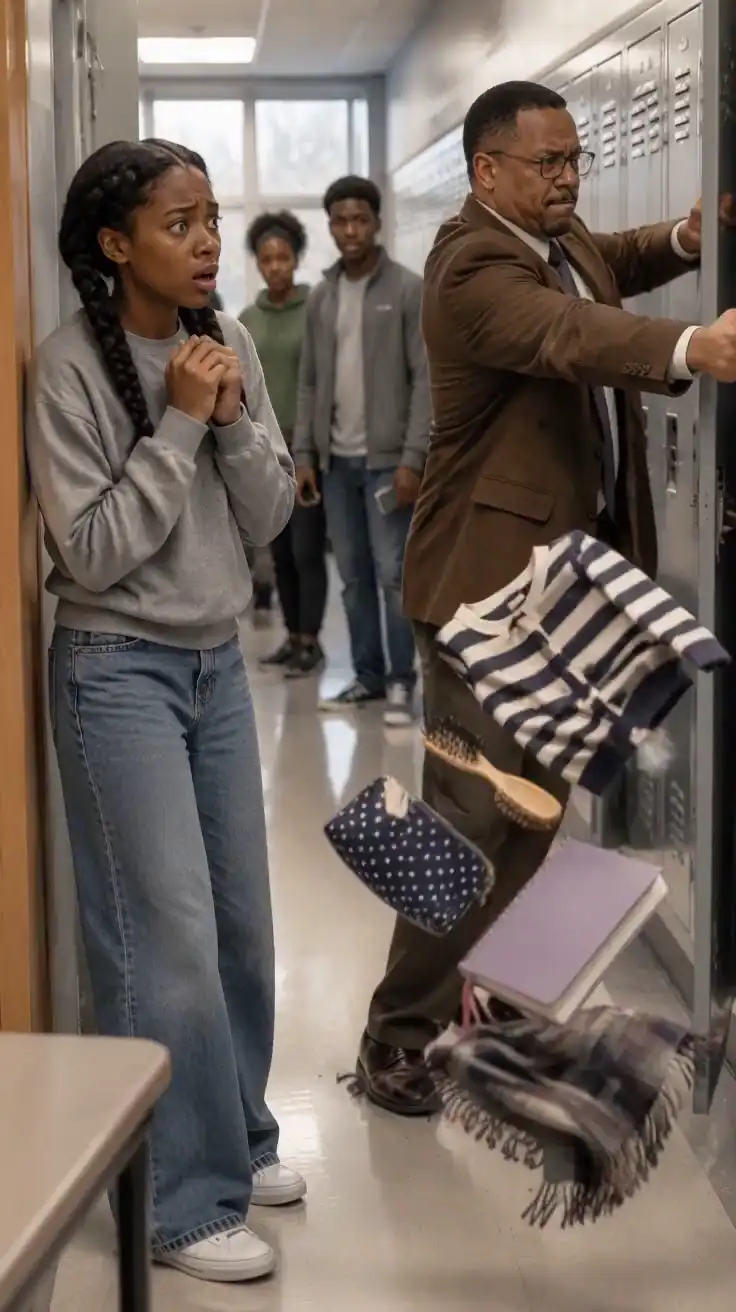
I went upstairs and found Amara sitting on the edge of her bed, still wearing the navy sweater she had worn to school. Her backpack was on the floor beside her, unzipped. Her hair was pulled into two neat braids, but one had come loose near the end. She had a paperback open in her lap and hadn’t turned the page.
She looked at me when I entered.
“Did you see it?”
I sat beside her.
“Yes.”
She closed the book.
“Everybody has.”
That was how I learned the video had not been sent only to me. It had been posted in the eighth-grade group chat, then forwarded to parents, then to students in other grades. By lunchtime, it had made its way to two teachers and one of the board members.
“Why didn’t you call me?” I asked.
She shrugged.
“Mrs. Bell called you.”
“Mrs. Bell called to say you were suspended for the rest of the day. She didn’t tell me what happened.”
Amara looked down at her hands.
“I told her.”
“What happened?”
“I already told the dean.”
“I know. I’m asking you.”
She pressed her lips together. She had learned, like many Black girls learn, how to hold her face still when adults were watching for an attitude. She had learned to make her voice soft even when she was furious. She had learned to say “Yes, ma’am” before she was old enough to understand that politeness did not always protect you.
“I was at my locker between homeroom and science,” she said. “Tessa came up and said I had her bracelet.”
“Tessa came up to you?”
“Yes.”
“Had she said anything to you before that?”
“She said, ‘You know where it is.’”
“Where was the dean?”
“Behind her.”
I felt something tighten in my chest.
“Did he ask you what happened?”
Amara shook her head.
“He said, ‘Open your locker.’”
“And you did?”
“What else was I supposed to do?”
That answer stayed with me because it was not defiant. It was tired.
She told me the rest in pieces.
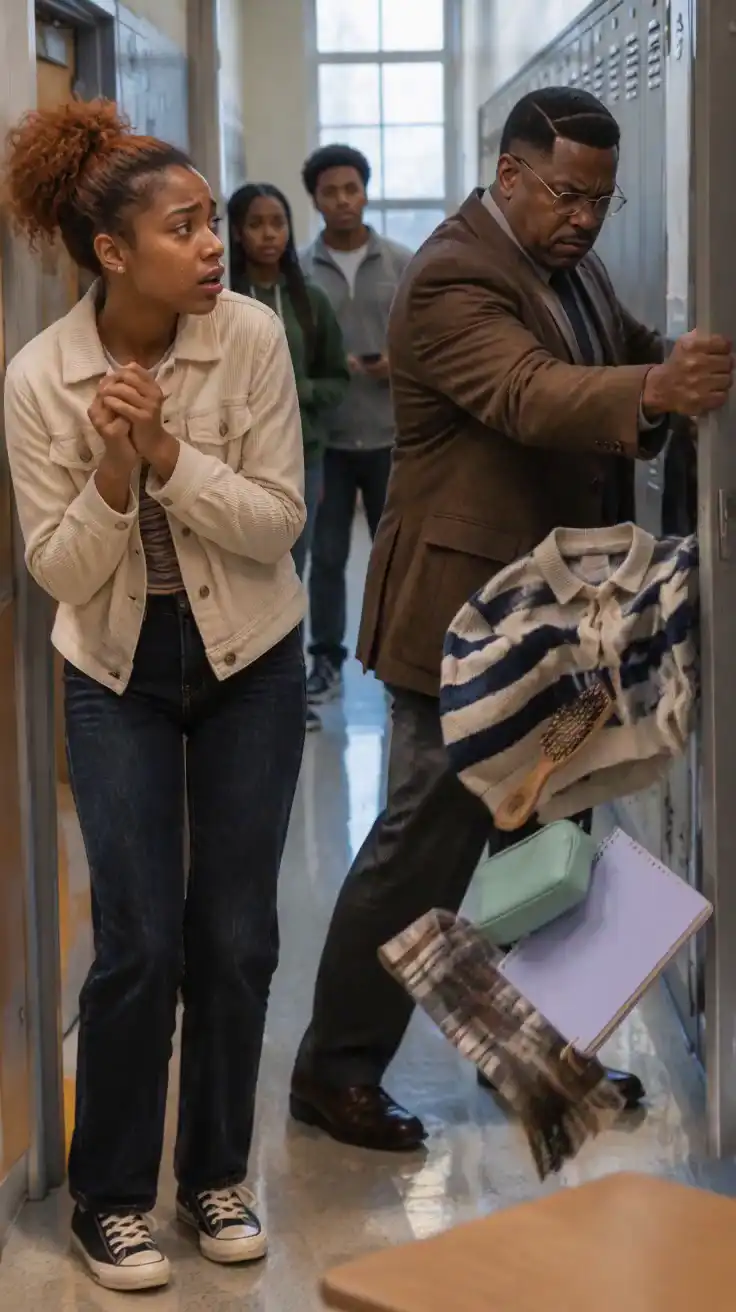
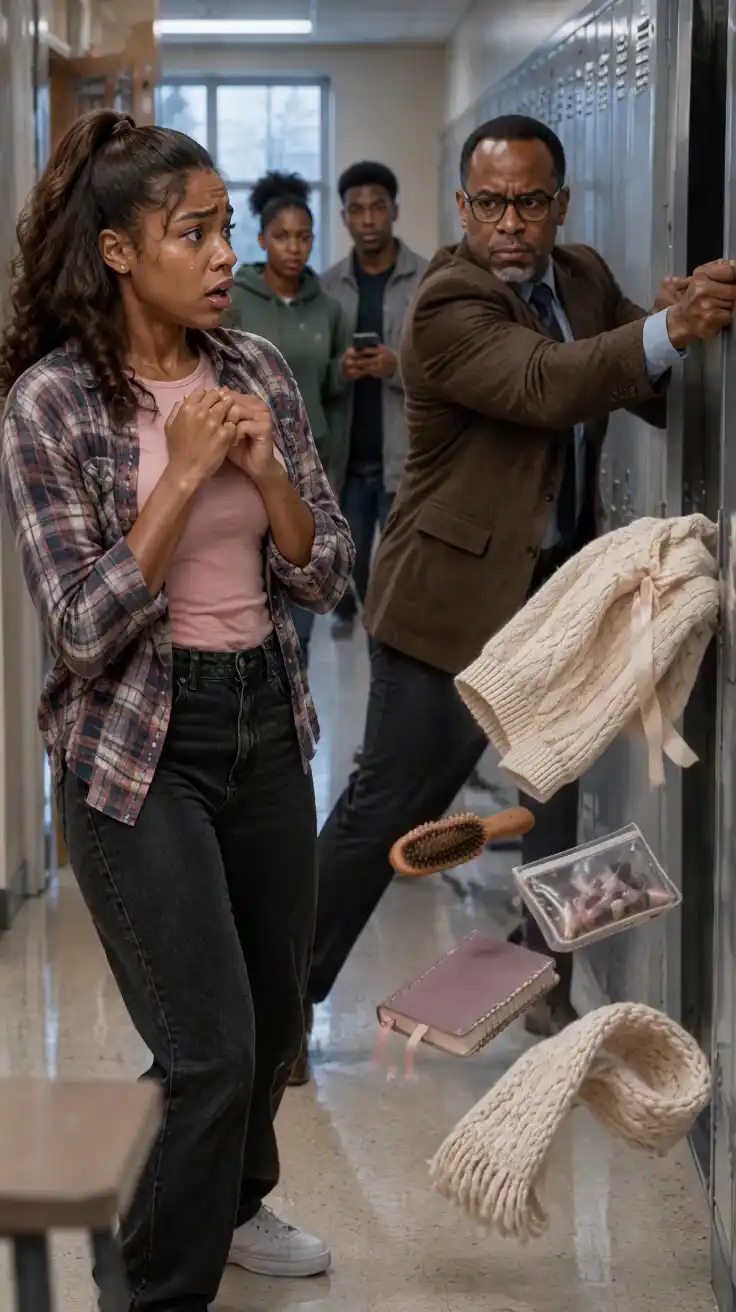
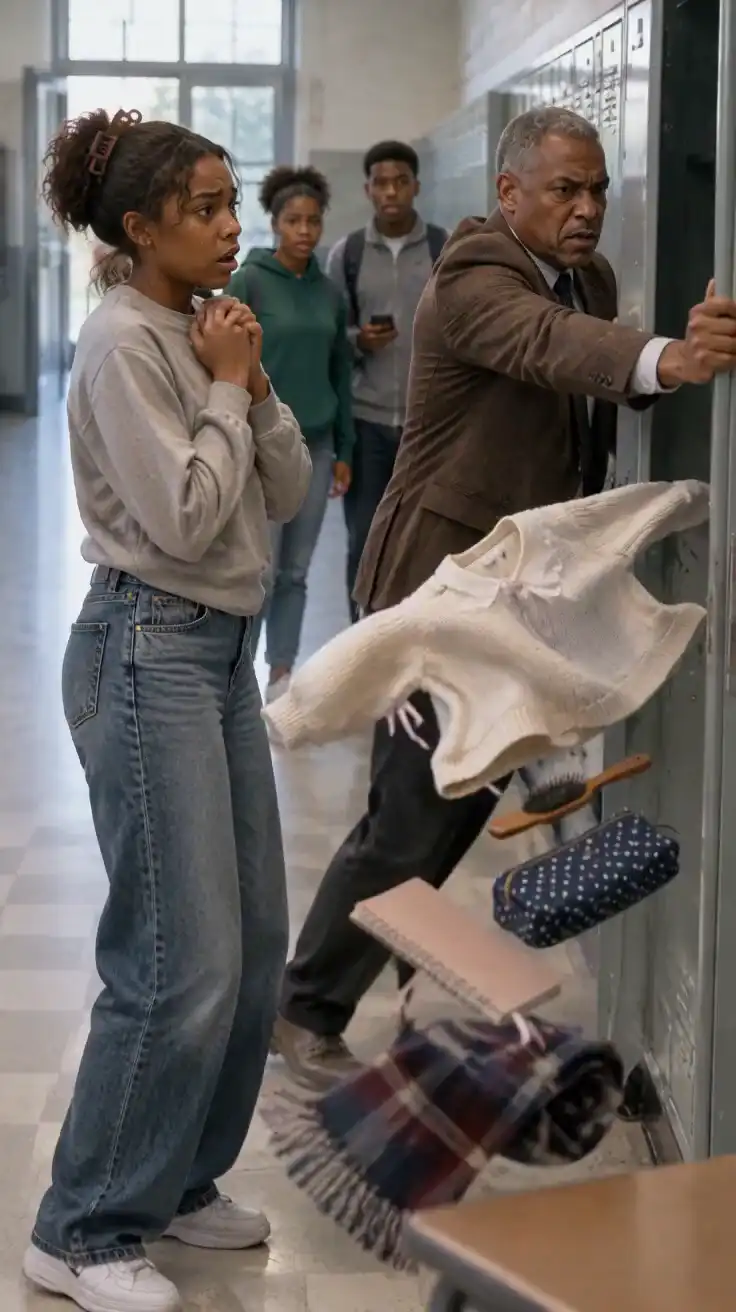
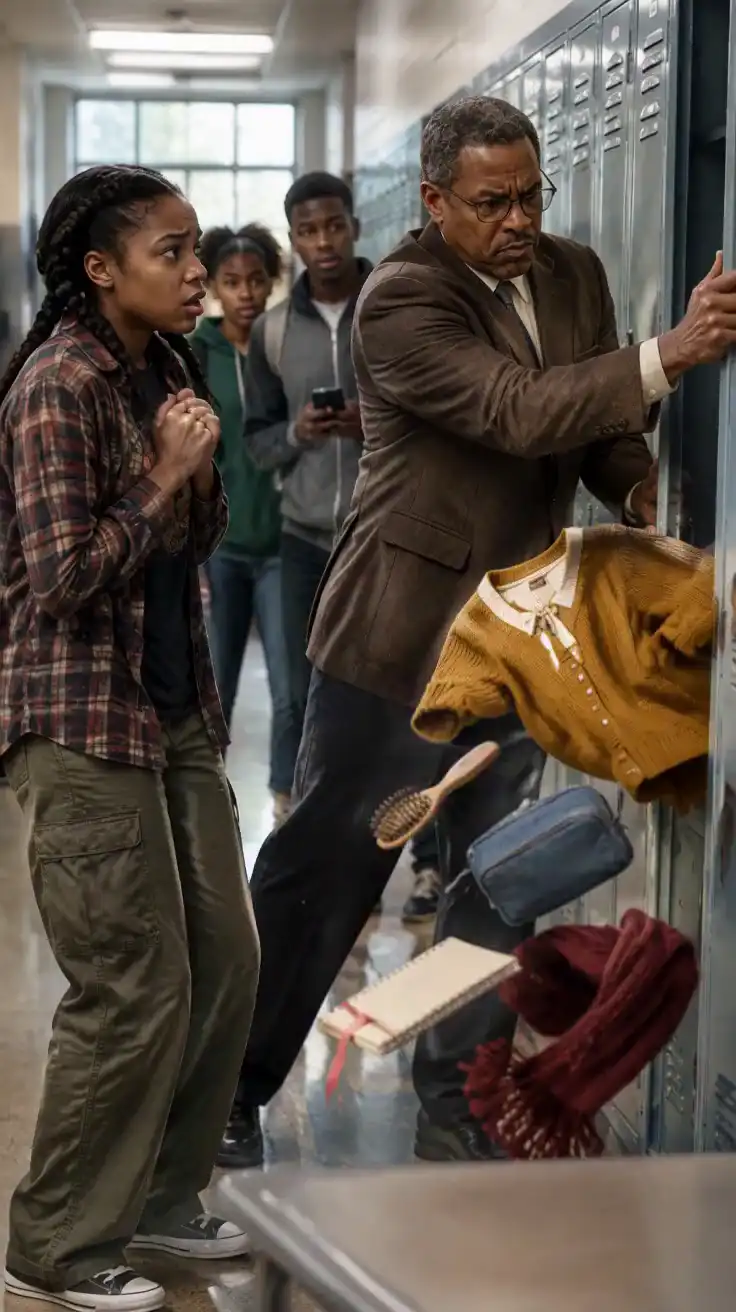
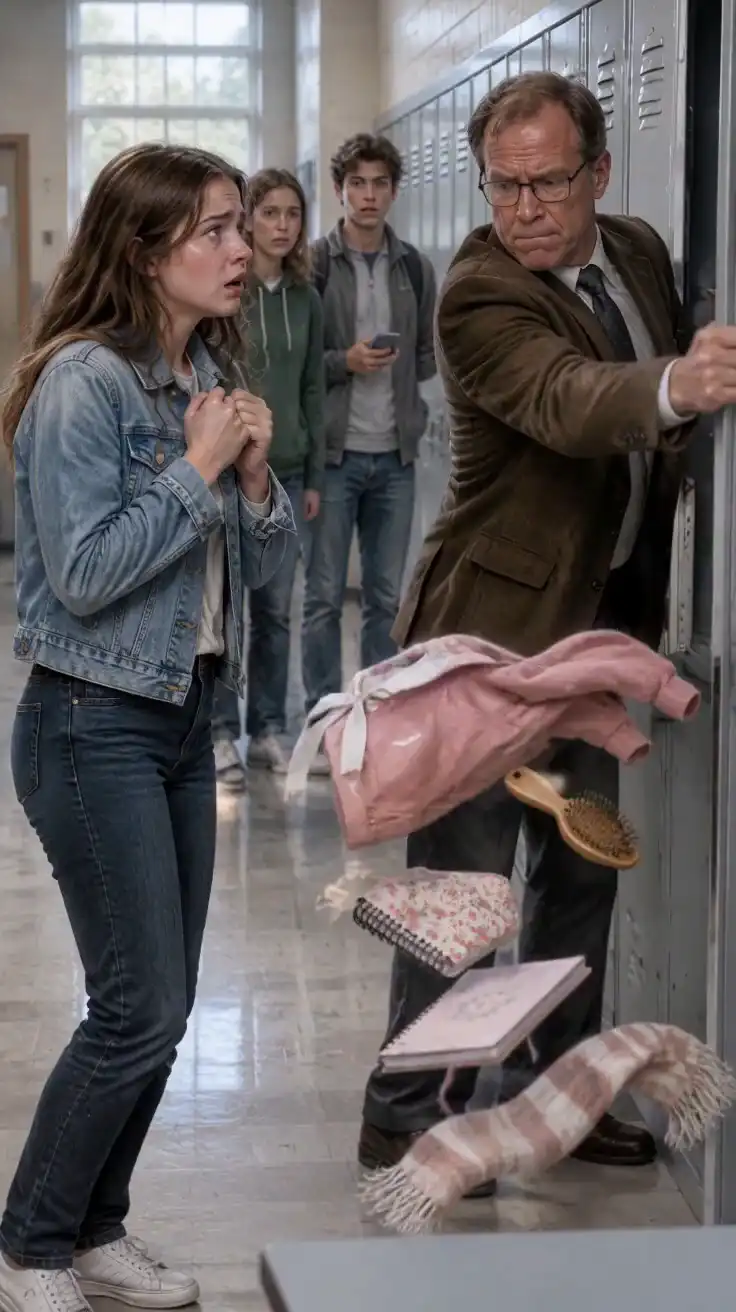
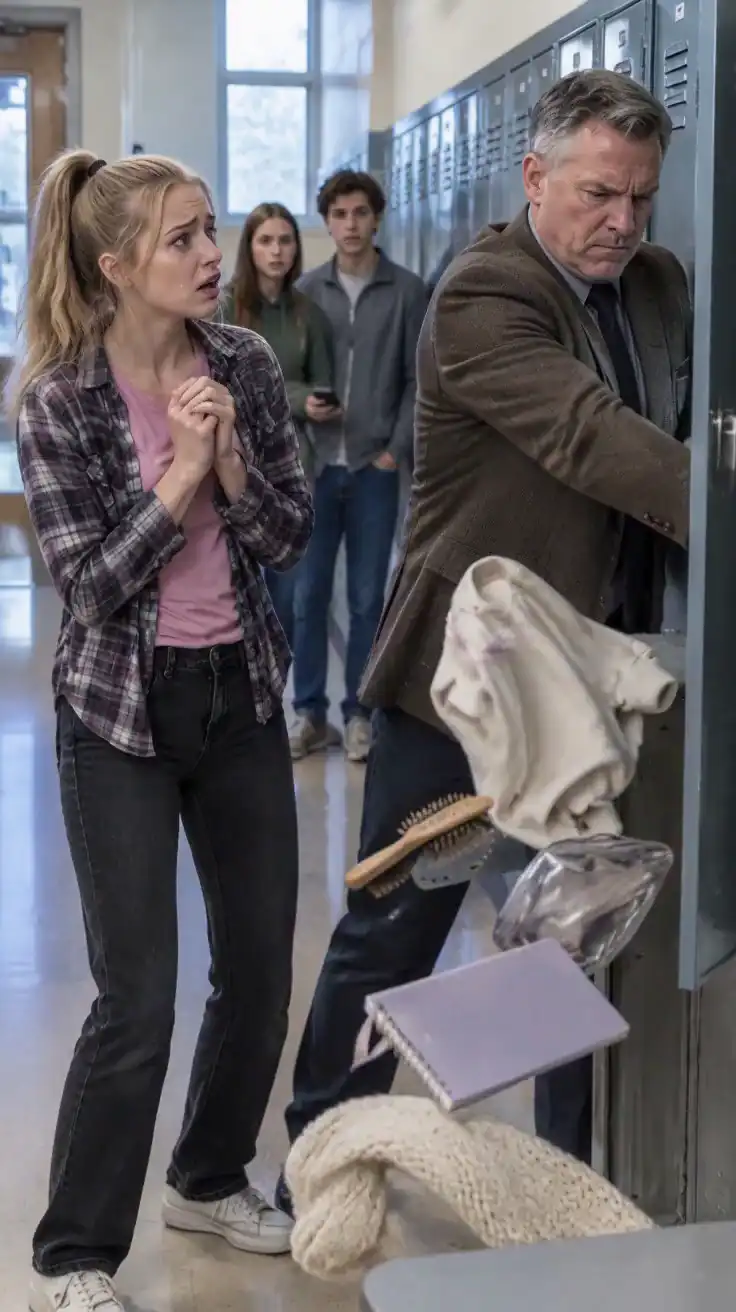
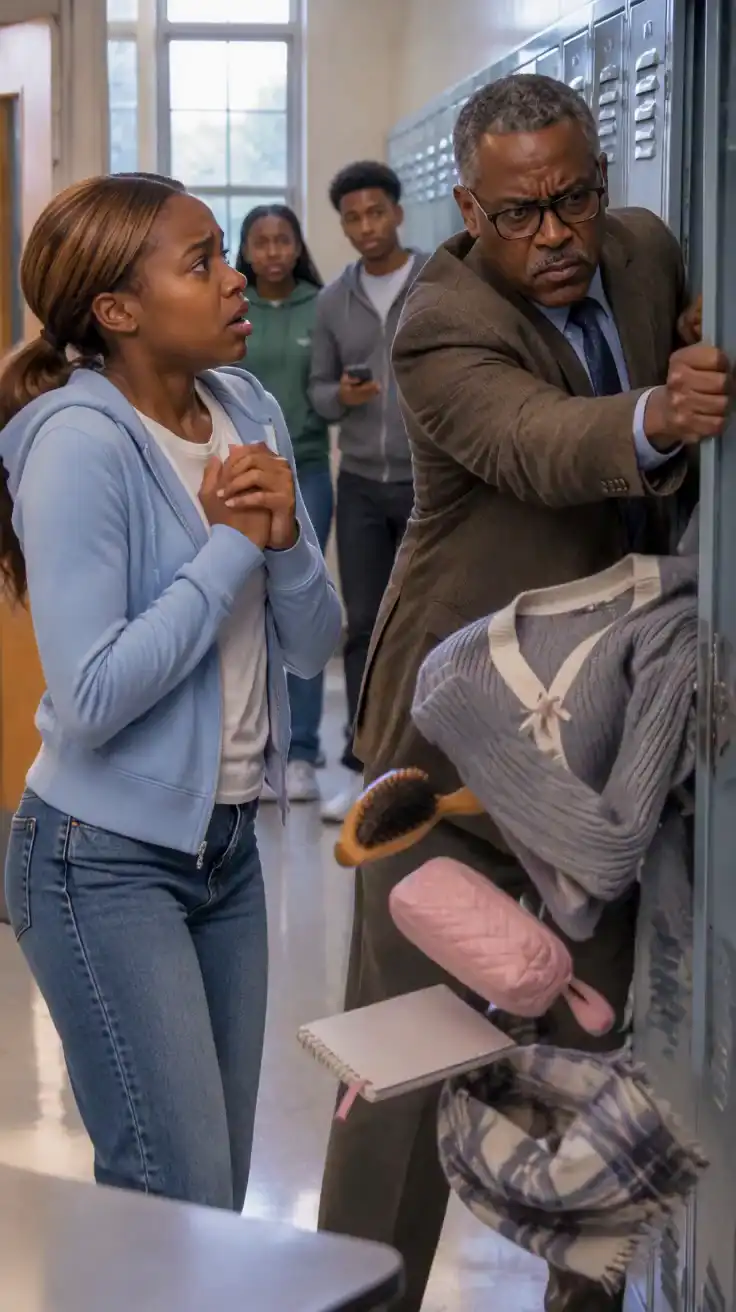
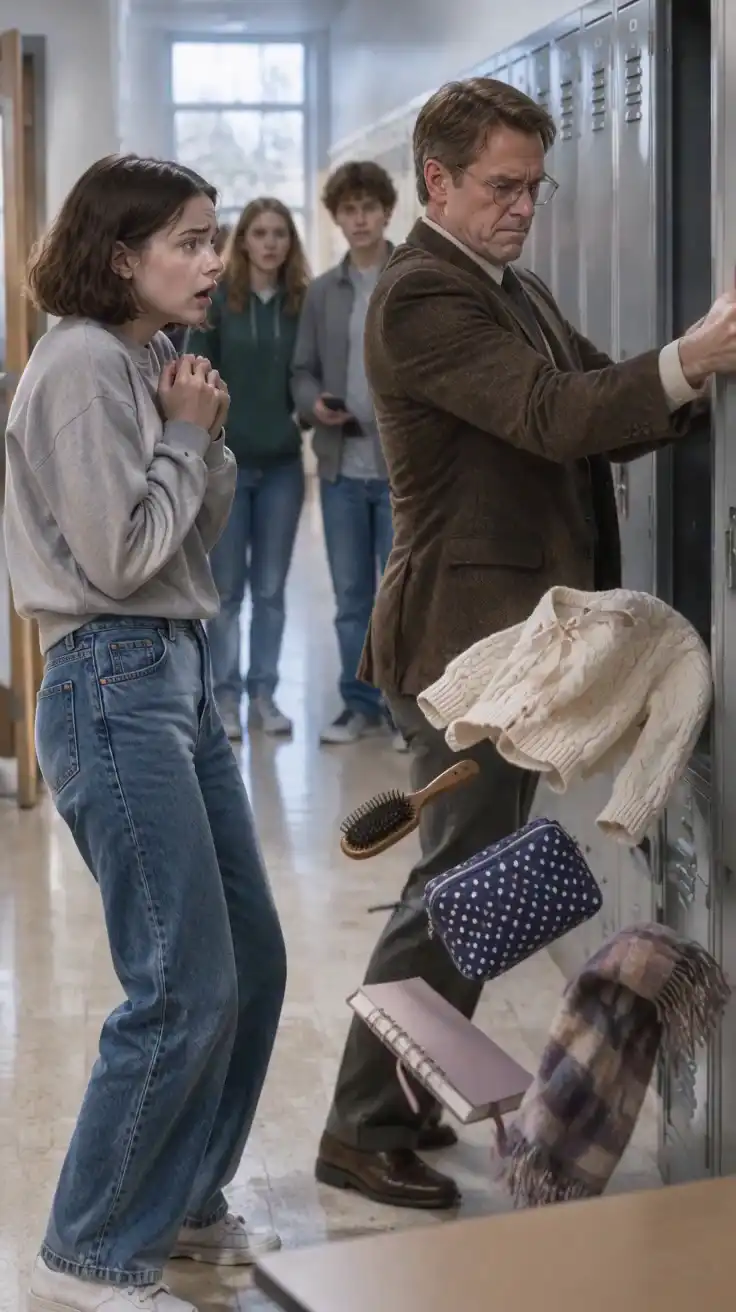
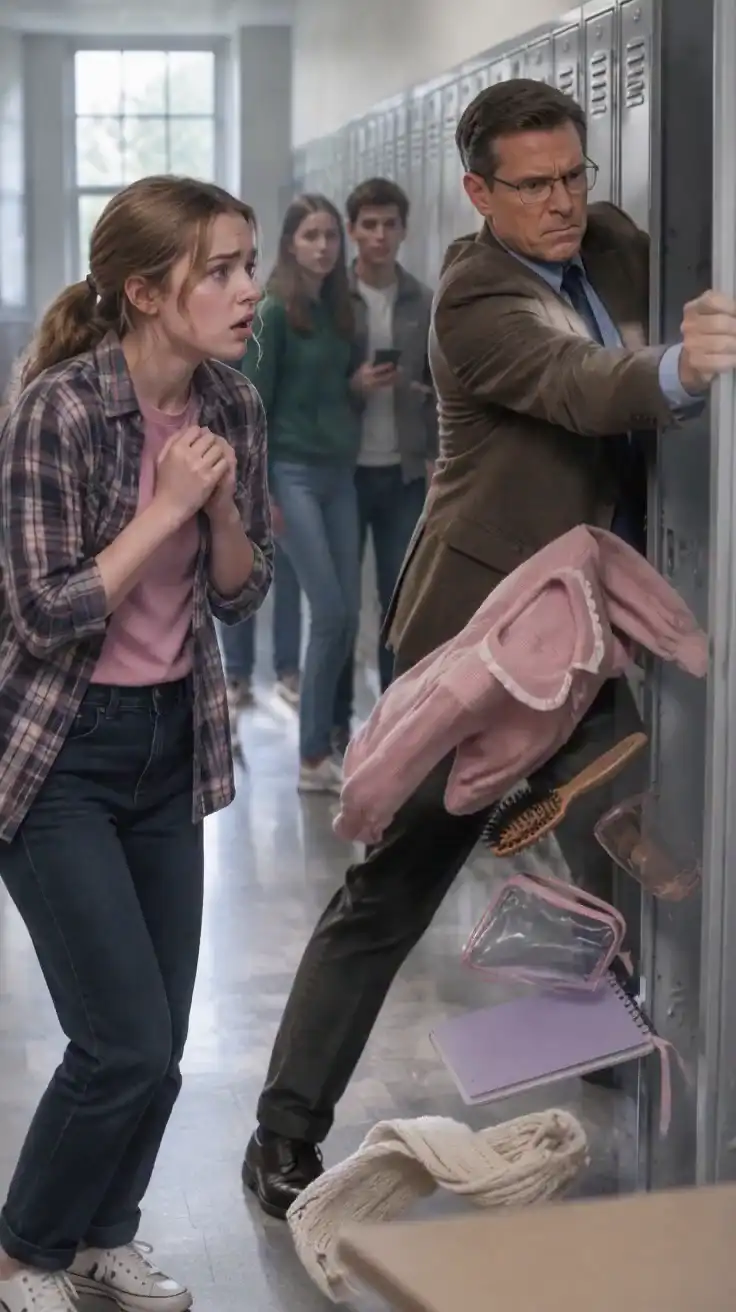
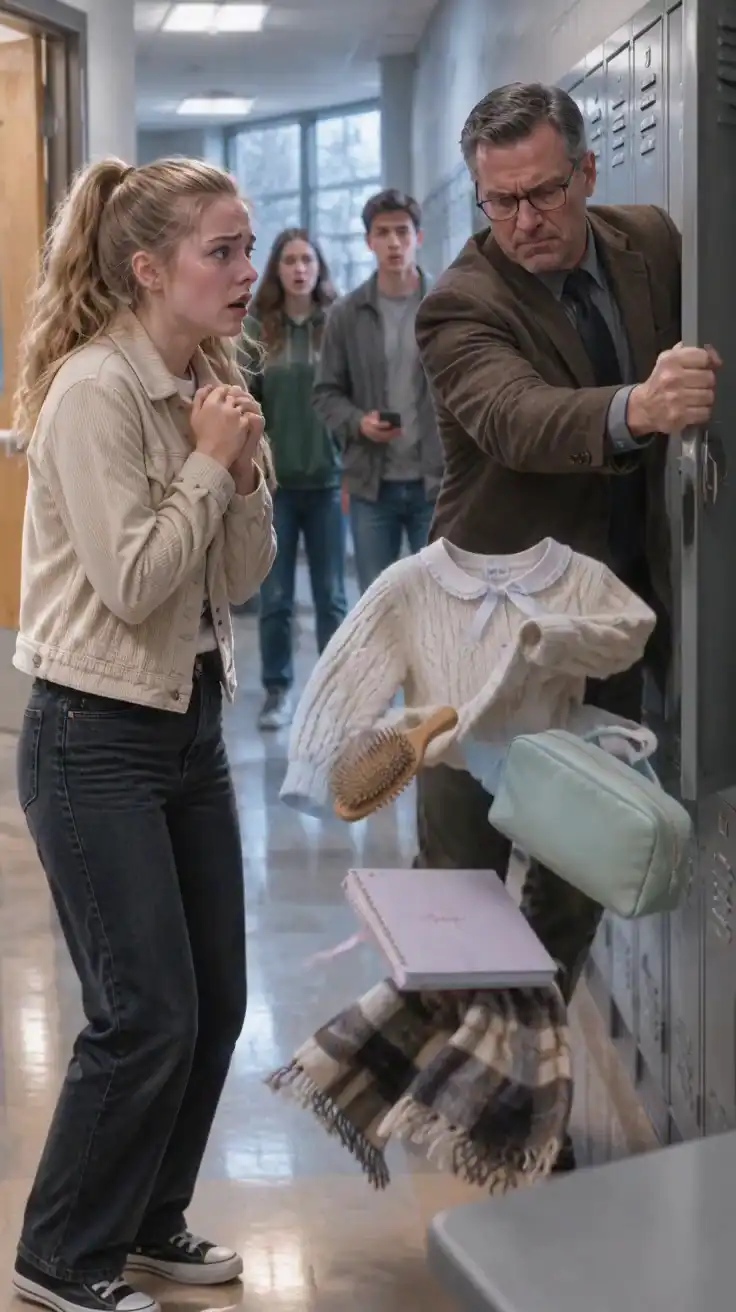
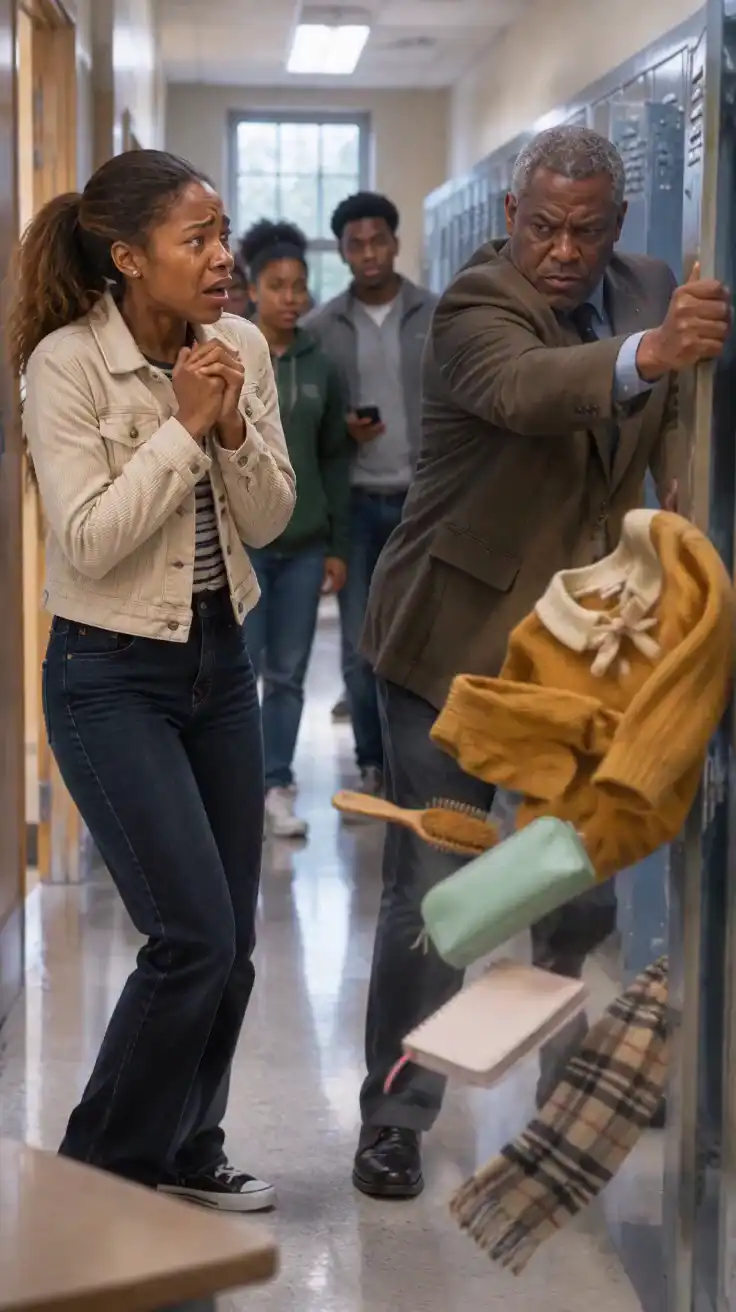
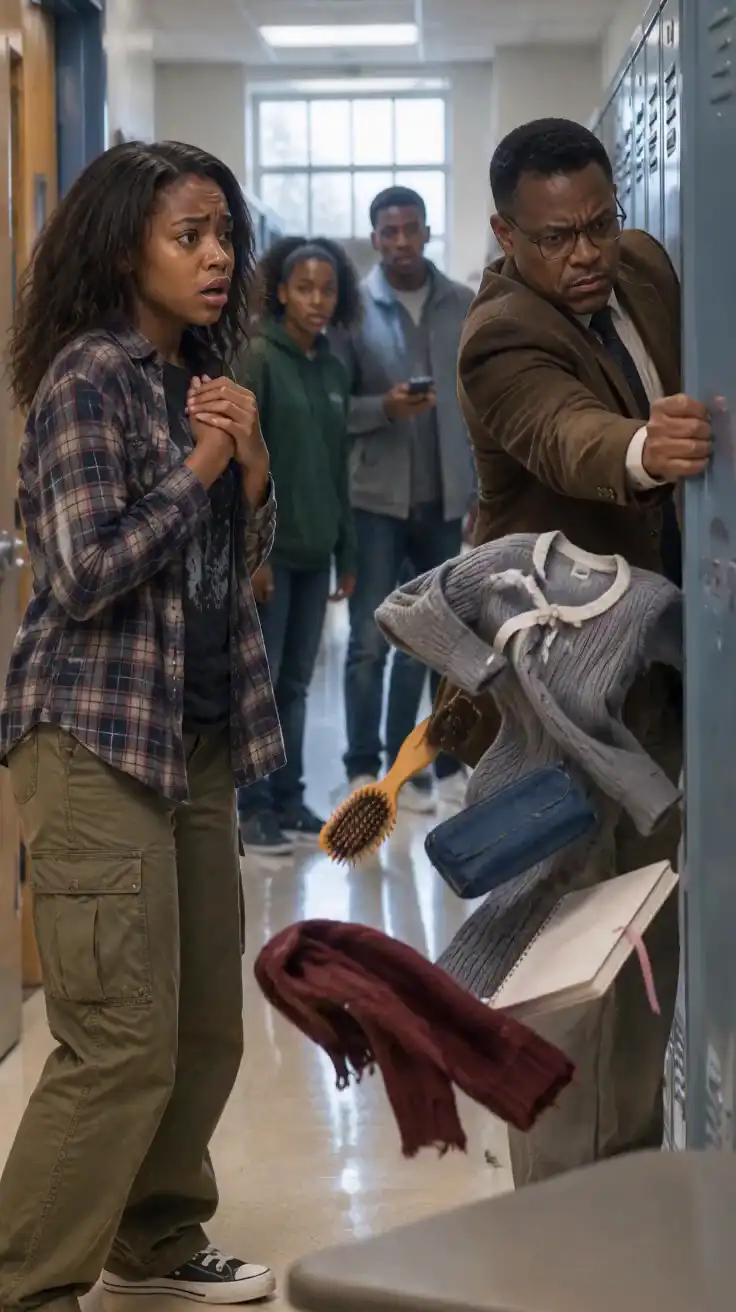
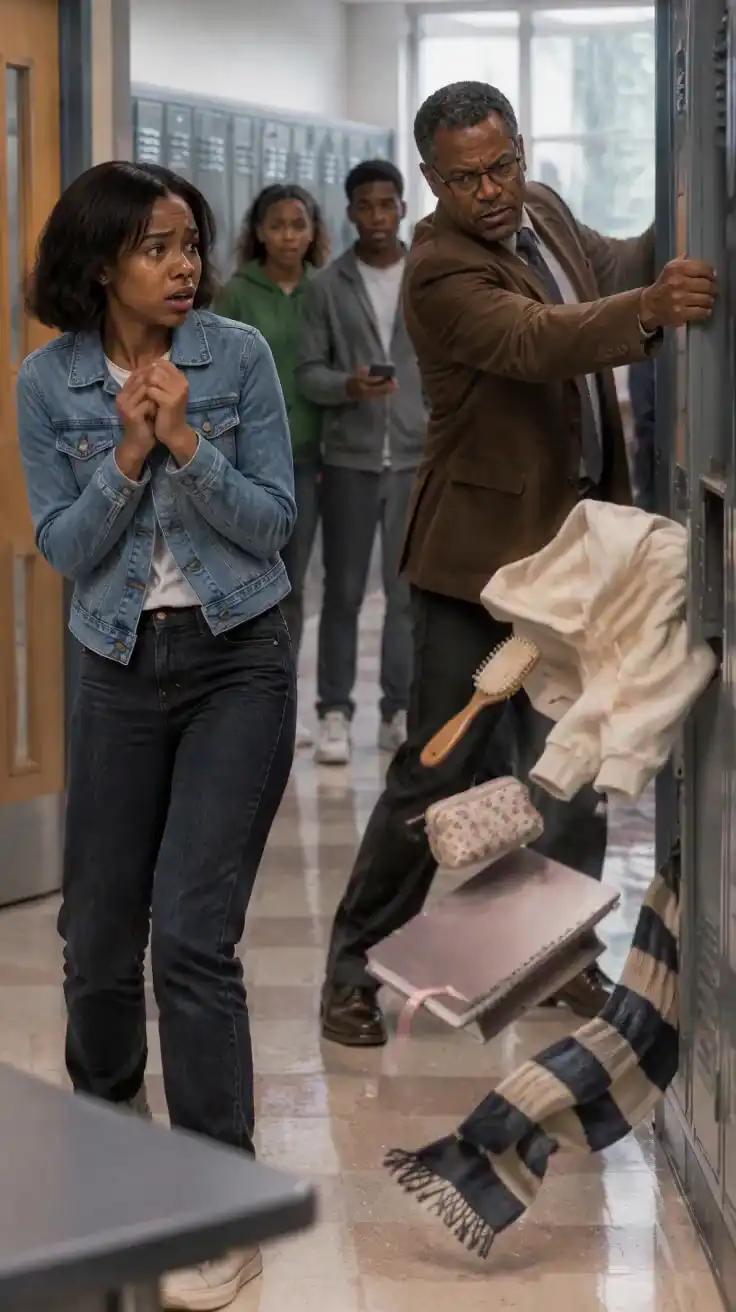
The hallway outside Room 214 had been crowded because students were changing classes. Amara’s locker was near the trophy case, under a framed photograph of the 2018 girls’ soccer team. Tessa had been standing there with her arms crossed. The dean, Mr. Harlan, had one hand on Tessa’s shoulder and the other holding a printed photograph of a gold bracelet.
According to Tessa, the bracelet had disappeared from her backpack during homeroom.
According to Mr. Harlan, another student had told him Amara had taken it.
According to Amara, no one had asked who that student was.
“I said I didn’t take it,” Amara told me. “Tessa said, ‘You’re lying.’ Then Mr. Harlan said if I was innocent, I shouldn’t be worried about proving it.”
I had heard adults say versions of that sentence my whole life.
If you have nothing to hide.
If you didn’t do anything wrong.
If you’re telling the truth, you won’t mind.
It is always offered as logic. It is usually an excuse to ignore the fact that the person with authority has already decided you are guilty.
“What did he do next?” I asked.
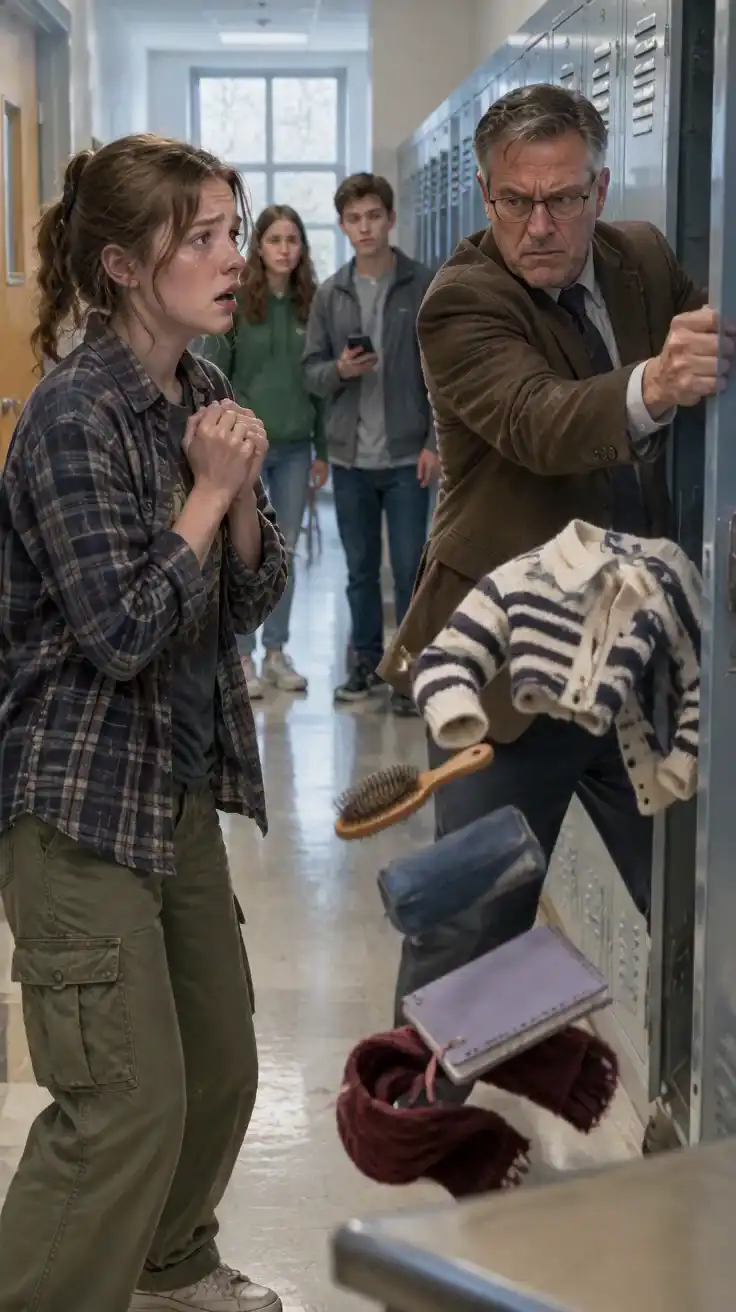
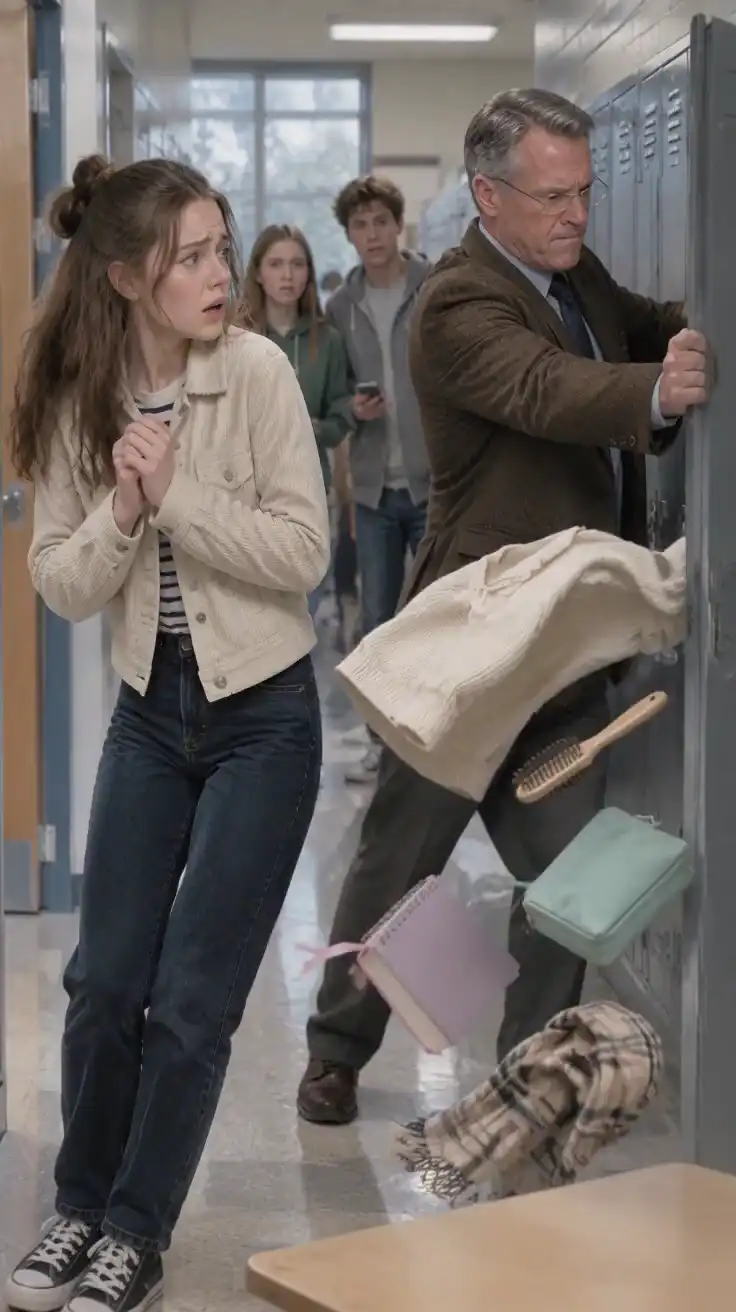
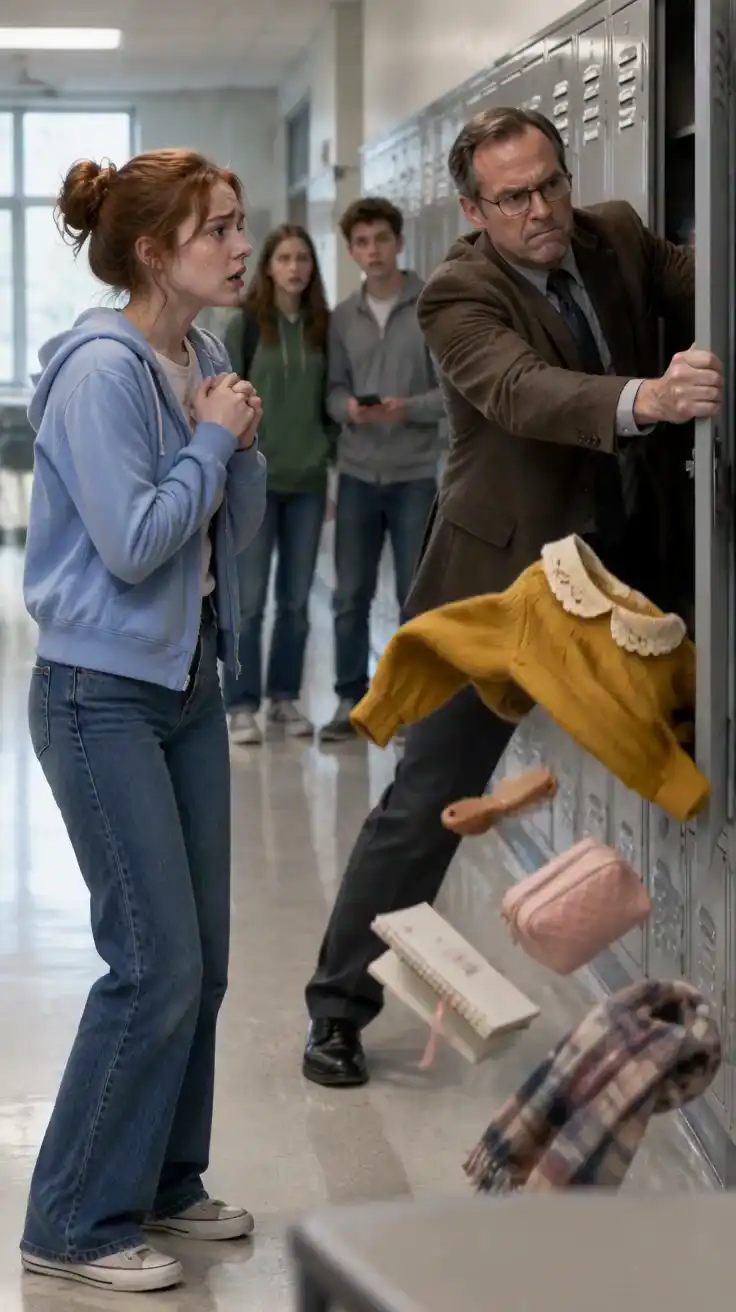
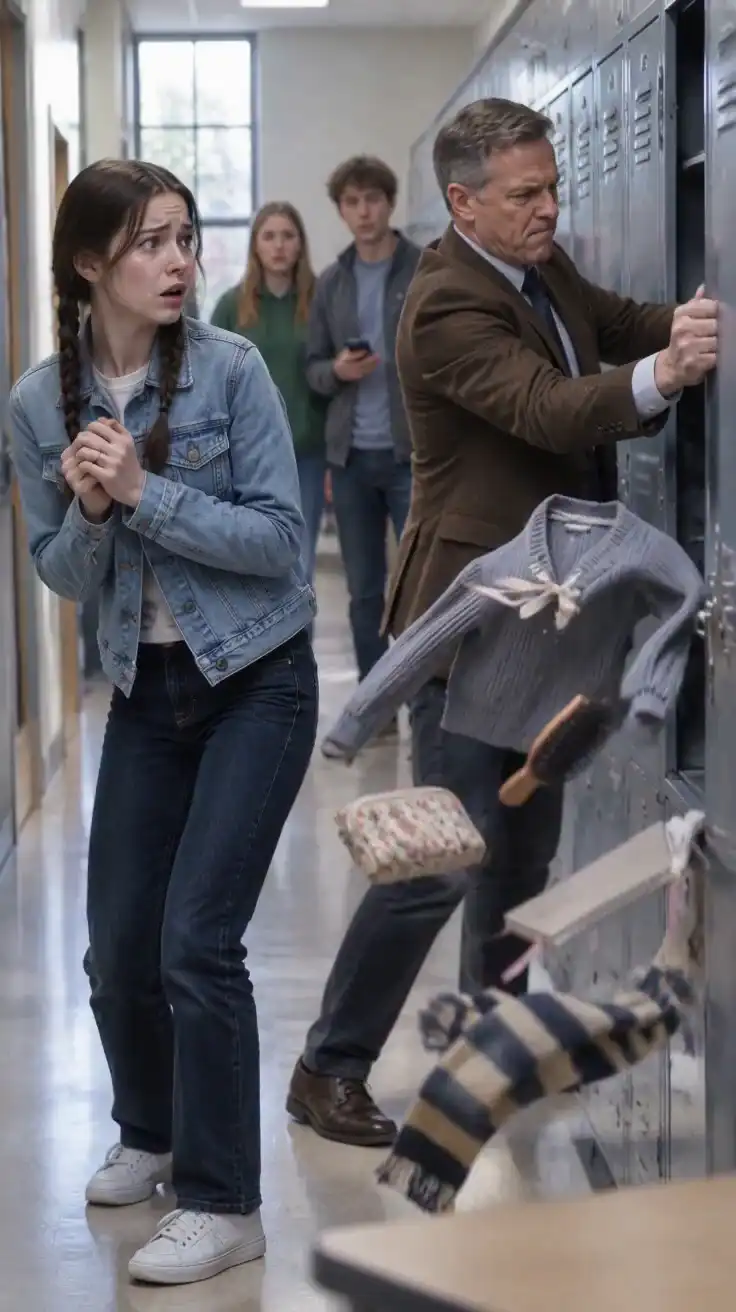
“He emptied my locker.”
“All of it?”
“All of it.”
“Into the hallway?”
She nodded.
“Did he touch your stuff?”
“He pulled everything out. My math binder, my planner, my lunch container, my sketchbook. He dropped my headphones and stepped on one.”
I looked at the floor.
“Did he apologize?”
“No.”
“What did Tessa do?”
“She kept saying, ‘Check her coat. Check her bag. She has it.’”
“Did anyone say anything?”
“Some kids laughed. Jordan told them to stop.”
“Jordan was there?”
“He was the one recording.”
I had not known that yet.
Amara picked at a loose thread on her sweater.
“When Mr. Harlan told me to kneel, I asked if I could just stand and empty my bag on the table. He said I didn’t get to negotiate.”
“Did he say why you had to kneel?”
“He said he wasn’t going to have me hide something under my clothes.”
I closed my eyes.
The worst part was that I could hear the way he must have said it. Not shouting. Not angry. Calm enough to make the cruelty sound procedural.
“Then Tessa pointed,” Amara said. “She said, ‘Look at her. She knows where it is.’”
“And that’s when it fell?”
“Yes.”
“What did Mr. Harlan do?”
“He stopped talking.”
“What did Tessa do?”
“She said, ‘That isn’t mine.’”
Amara looked at me then.
“She said it before anybody even asked her.”
The bracelet had not been on the floor when Mr. Harlan emptied Amara’s locker. It had not been in Amara’s backpack, her coat, her lunch bag, or any of the folders he had scattered across the tile.
It came from Tessa’s left sleeve.
That was visible in the video. So was the way Tessa immediately grabbed her wrist and pulled the sleeve down.
What the video did not show was what happened before, or what happened after the person recording put his phone away.
Mr. Harlan picked up the bracelet.
He looked at Tessa.
Then he looked at Amara.
Then he said, “Everybody back to class.”
That was all.
He did not say he had made a mistake. He did not ask Amara if she was hurt. He did not tell the students who had watched her kneel that she had been falsely accused.
He told her to gather her belongings.
“Did you pick everything up?” I asked.
“I couldn’t find my pencil case.”
“What happened to it?”
“Tessa stepped on it.”
I felt the room get very quiet around us.
“Did she say anything?”
“She said she didn’t see it.”
I stood up.
“I’m going to the school.”
Amara looked alarmed.
“Don’t yell.”
“I’m not going to yell.”
“Mom.”
“I’m not going to yell,” I repeated. “But I am going to ask questions.”
She looked at me in the same way she had looked at me when she was seven and a teacher had told her to stop being dramatic after another child pushed her into a bookshelf. She wanted me to defend her, but she also wanted me to understand that defending her could make things worse.
That is a terrible thing for a child to know about her mother.
I drove to Westbrook with both hands on the steering wheel. At the first red light, I called Amara’s father, Marcus. We had been divorced for three years, but there were moments when marriage was not the important relationship. Parenthood was.
He answered from his office.
“Renee?”
“Have you seen the video?”
“No. What video?”
I told him.
He was silent for long enough that I thought the call had dropped.
“Is she okay?”
“She’s home.”
“I’m leaving now.”
“Marcus, don’t go there angry.”
“I’m not angry.”
“You are.”
“I’m angry enough to know I shouldn’t be the first one to walk into that office.”
“That’s what I’m saying.”
“I’ll meet you there.”
When I arrived, the front office was full of parents. I recognized some of them from pickup, fundraisers, and the school’s winter concert. Nobody made eye contact with me at first.
Then Mrs. Bell, the head of school, came out from behind the reception desk.
She had been the person who called me to congratulate Amara when she won the Hartwell Academic Scholarship in May. She had said Amara’s essay about public libraries and neighborhood access had made the committee cry.
Now she stood in front of me with both hands folded over a tablet.
“Mrs. Johnson,” she said.
“Where is Dean Harlan?”
“He’s in his office.”
“I want to see him.”
“I think it would be better if we sit down first.”
“No.”
She blinked.
“My daughter was publicly accused of stealing, searched, and made to kneel in front of her classmates. I am not sitting down until I understand who authorized that.”
“I understand that you’re upset.”
“No, you don’t.”
The words came out sharper than I intended, but I did not take them back.
“You understand that I am inconvenienced. You understand that I am asking questions at an uncomfortable time. You do not understand what it means for my daughter to have an adult man empty her belongings onto the floor while a crowd watches him treat her like a criminal.”
Mrs. Bell’s face changed.
Not enough. But some.
“I saw the video,” she said.
“So did I.”
“I have spoken to Mr. Harlan.”
“Then tell me why he did it.”
She looked toward the hallway.
“I think we should discuss this privately.”
“Good. Lead the way.”
The office smelled like lemon cleaner and old carpet. On the wall behind the receptionist’s desk were framed photographs of graduating classes. Every child in every photograph wore the same uniform. Every smile looked carefully arranged.
Mr. Harlan was standing beside the conference table when we entered. He was in his early forties, with silver at his temples and the polished manner of a person who had spent years being trusted automatically.
Marcus arrived three minutes later. He did not knock. He walked in, saw me, and stood beside my chair.
Mr. Harlan said, “Mr. Johnson.”
Marcus nodded.
Mrs. Bell closed the door.
For a few seconds, no one spoke.
Then Mr. Harlan said, “I want to begin by saying that I regret the way the situation unfolded.”
“The way it unfolded?” I asked.
“I should have handled the search in a more private setting.”
“You should not have searched her at all without calling us.”
“We had reasonable grounds to believe the bracelet was in her possession.”
“What were those grounds?”
“Tessa identified Amara as the person who took it.”
“That is not reasonable grounds.”
“She said she saw Amara near her bag.”
“Near her bag?”
“During homeroom.”
“Did she see Amara take the bracelet?”
Mr. Harlan looked at Mrs. Bell.
“No,” he said.
“Did anyone see Amara take the bracelet?”
“No.”
“Did anyone see the bracelet in Amara’s locker?”
“No.”
“Did anyone search Tessa?”
His jaw tightened.
“The bracelet was found.”
“On Tessa.”
“It fell from her sleeve.”
“From her sleeve.”
“Yes.”
“So why was my daughter the one kneeling on the floor?”
He did not answer.
Marcus leaned forward.
“You need to understand something,” he said. “This is not a procedural disagreement. You created a scene in which our daughter was presumed guilty, then you continued the scene after the evidence failed to support that conclusion.”
“I acknowledge that the situation should have been handled differently.”
“Did you tell the students she was innocent?”
“No.”
“Did you tell them Tessa had accused her without evidence?”
“No.”
“Did you tell them where the bracelet came from?”
“No.”
“Then you didn’t correct anything.”
Mr. Harlan looked at me.
“I was trying to maintain order.”
“Order for whom?”
He frowned.
“For the students.”
“My daughter is a student.”
“I understand that.”
“Do you? Because when a white girl says a Black girl stole from her, you treated the accusation like a fact. You didn’t investigate. You didn’t separate them. You didn’t call me. You didn’t even ask my daughter to explain herself before you emptied her locker.”
Mr. Harlan’s expression hardened.
“I reject the implication that race played a role.”
“I didn’t ask whether you intended it to.”
Mrs. Bell interrupted.
“Renee—”
“No. We are not going to make this easier by pretending intent is the only thing that matters. He made a decision. It had an effect. My daughter was humiliated in front of her classmates.”
The room became silent again.
Then Mr. Harlan said, “I am sorry she felt humiliated.”
I laughed once.
I couldn’t help it.
He looked offended.
“That is not an apology,” I said.
“I am trying to apologize.”
“Then apologize for what you did. Not for what she felt.”
His mouth opened, but no words came out.
Marcus stood.
“Call Amara,” he said.
Mrs. Bell looked startled.
“Now?”
“Yes. She should be present for whatever you say next.”
“She’s at home.”
“Then call her.”
Mrs. Bell glanced at me.
I nodded.
She made the call herself. Amara answered after the first ring. I could hear Mrs. Bell explaining that we needed her to come back to campus. Amara asked whether Tessa was there. Mrs. Bell said she did not know.
I took the phone.
“You don’t have to come if you don’t want to,” I said.
“What do you want me to do?”
“I want you to know that you get a choice.”
There was a pause.
“Will you be there?”
“Yes.”
“Dad?”
“He’s here too.”
“Okay. I’ll come.”
Marcus drove her back. While we waited, Mrs. Bell stepped outside the office and spoke with someone in the hallway. When she returned, she said the students had been instructed not to discuss the incident.
That instruction lasted less than an hour.
Amara entered wearing a gray coat over her uniform. Marcus held the door open for her. She looked small in the room, though she was nearly as tall as I was.
Mr. Harlan stood.
“Amara,” he said. “I owe you an apology.”
She did not sit.
“For what?”
He swallowed.
“For making you empty your locker in the hallway. For asking you to kneel. For failing to verify the accusation before taking action.”
“Did you think I stole it?”
“I believed there was enough concern to investigate.”
“That isn’t what I asked.”
He looked at Mrs. Bell again.
She said, “Answer her.”
He took a breath.
“Yes,” he said. “At the time, I thought you might have stolen it.”
Amara’s face did not change.
“Why?”
“Because Tessa said you had taken it.”
“Did you ask her if she saw me take it?”
“No.”
“Did you ask me where I had been?”
“No.”
“Did you check the cameras?”
“No.”
“Did you search Tessa?”
“No.”
She nodded once.
“Then you didn’t investigate.”
Mr. Harlan sat down.
Amara looked at the chair beside mine but did not take it.
“Why did you make me kneel?”
His face reddened.
“I made a poor judgment.”
“That doesn’t answer the question.”
“I thought you might have hidden it.”
“Where?”
He did not answer.
“Under my clothes?” she asked. “You said you didn’t want me to hide it under my clothes.”
His eyes dropped.
Amara turned to Mrs. Bell.
“Is that allowed?”
Mrs. Bell’s voice was quiet.
“No.”
“Is making a student kneel in a hallway allowed?”
“No.”
“Is searching someone’s locker without calling their parent allowed?”
“There are emergency circumstances where—”
“Was this an emergency?”
“No.”
Amara looked at Mr. Harlan.
“Then why did you do it?”
He rubbed his hands together.
“I was under pressure to resolve the situation quickly.”
“Because Tessa said I did it?”
“Yes.”
“Even though she didn’t see me?”
He said nothing.
Amara finally sat beside me. Her hands were cold.
Mr. Harlan turned toward her.
“I am sorry,” he said. “I am sorry I treated you as though you were guilty before I knew the facts. I am sorry I embarrassed you. I should have protected you from being put in that position.”
That was the first apology that sounded like an apology.
Amara looked at him.
“Are you going to tell everyone else?”
Mrs. Bell answered.
“Yes.”
“When?”
“Today.”
“Where?”
“In front of the students who witnessed it.”
Amara nodded.
“And Tessa?”
“We are speaking with her and her parents separately.”
“Why separately?”
Mrs. Bell looked uncomfortable.
“Because this involves discipline and privacy.”
“People watched me get searched,” Amara said. “They heard her accuse me. If you protect her privacy by keeping quiet, everyone will still think she was right.”
No one had an answer for that.
The apology happened outside the main office that afternoon.
The school did not summon the entire eighth grade, but they brought the students from Amara’s homeroom into the corridor. Teachers stood near the doors. Students talked quietly until Mrs. Bell stepped forward.
Amara and I stood near the wall. Marcus was behind us.
Mr. Harlan faced the students.
“Earlier today, I conducted an investigation into a missing bracelet,” he said. “I handled that situation improperly. I accused Amara Johnson without sufficient evidence, searched her belongings in public, and ordered her to kneel in the hallway. That was wrong.”
The students went still.
“I also failed to correct the accusation after it became clear that Amara had not taken the bracelet. Amara did not steal the bracelet. She did nothing wrong.”
A girl near the back whispered, “Oh my God.”
Mr. Harlan continued.
“I apologize to Amara and to her family. I also apologize to the students who witnessed my actions. Adults are responsible for the example they set, and I did not set a good one.”
Then he turned to Amara.
“I am sorry.”
Amara looked at him for a moment.
“Thank you,” she said.
That was all.
She did not hug him. She did not tell him it was okay. She did not make his apology more comfortable than his behavior had made her life.
The students filed back into class.
As we walked toward the parking lot, Jordan approached us. He was the boy who had recorded the video. His mother was with him, holding the strap of his backpack.
“I’m sorry,” he said to Amara.
She stopped.
“For what?”
“For recording it.”
“Why did you?”
He looked at the ground.
“I knew nobody would believe you.”
That answer hurt in a different way.
Amara considered him.
“Did you send it to people?”
He nodded.
“I sent it to my cousin. Then someone else put it in the group.”
“You should have asked me first.”
“I know.”
“Are you going to delete it?”
“I already did.”
“That doesn’t delete everyone else’s copies.”
“I know.”
His mother put a hand on his shoulder.
“He should have come to an adult instead of sharing it.”
Amara nodded.
“But if he hadn’t recorded it,” I said, “we might not have known what happened.”
The mother looked at me.
“I’m not saying it was right,” I continued. “I’m saying the school needs to understand that the video is evidence. It isn’t gossip.”
That night, the school sent a message to all families. It said there had been a “misunderstanding involving student property” and that the matter had been resolved. It did not name Amara. It did not name Tessa. It did not mention the search.
I called Mrs. Bell.
“That message is not enough,” I said.
“It was reviewed by counsel.”
“Counsel didn’t make my daughter kneel.”
“We have to protect student privacy.”
“You can protect privacy without lying by omission.”
“We did not lie.”
“You called a public humiliation a misunderstanding.”
She was quiet.
“Mrs. Johnson, we are taking this very seriously.”
“Then write that.”
The next morning, the school sent a correction.
It said the original message had not accurately described the incident. It stated that Amara had been wrongly accused and that the dean had apologized publicly. It also said the school was reviewing its search and discipline policies.
It did not say what happened to Tessa.
I learned that from Tessa’s mother.
Her name was Caroline Whitaker. She called me three days later and asked to meet at a coffee shop near the school.
I almost declined.
Then I thought about the bracelet.
I wanted to know why.
Caroline arrived before me and stood when I walked in. She looked nothing like the woman I had imagined. I had expected anger, excuses, or the polished superiority that sometimes comes from people who believe their children’s mistakes are misunderstandings while everyone else’s are character flaws.
Instead, she looked exhausted.
“I’m sorry,” she said.
I took off my coat.
“Sit down.”
She did.
For a few seconds, we watched the barista steam milk behind the counter.
Then Caroline said, “Tessa took the bracelet from my jewelry box.”
I said nothing.
“It belonged to my mother,” she continued. “My mother died in February. I had the bracelet repaired and kept it in a box at home. Tessa found it while she was looking for a necklace.”
“Why did she take it?”
“She wanted to wear it to the scholarship ceremony.”
“The ceremony for the Hartwell Scholarship?”
Caroline nodded.
“She asked me. I said no. I told her it was too important and too fragile. She said I cared more about a dead woman’s bracelet than I cared about her.”
I looked at the table.
“Did she know Amara had won the scholarship?”
“She knew before the announcement.”
“Tessa was a finalist.”
“Yes.”
“Why didn’t she get it?”
“Her grades were close, but Amara’s essay was stronger.”
I remembered Amara working on that essay at our dining room table, surrounded by library reports and highlighted articles. She had rewritten the conclusion nine times. She had asked me whether it sounded too ambitious to say that public services should not depend on whether a family had a car.
Caroline folded her hands.
“Tessa was humiliated when she lost. She said the committee had already decided because Amara was the kind of student adults liked to feel good about.”
“What does that mean?”
“I asked her. She wouldn’t explain.”
I understood anyway.
Amara was quiet. She was polite. She was high-achieving. Adults praised her as mature until she disagreed with them, and then they called her cold. She had not beaten Tessa by being louder or more popular. She had written something true and persuasive, and the adults in the room had recognized it.
That was enough to make some people resent her.
“She took the bracelet to wear it?” I asked.
“That was the first reason.”
“And the second?”
Caroline looked down.
“She said she wanted Amara to see it.”
“Why?”
“She said Amara had taken everything from her.”
The scholarship. The attention. The confidence Tessa had expected to receive from being chosen.
A bracelet could become a weapon if someone decided it represented what they believed they had lost.
“What happened after the ceremony?” I asked.
“Tessa came home upset. She said Amara had looked at her during the reception as though she felt sorry for her.”
“Did Amara?”
“No.”
“I know.”
Caroline exhaled.
“I found the bracelet in Tessa’s room two days later. I confronted her. She said she had planned to return it, but then she decided she would put it in Amara’s locker.”
“Why?”
“She said Amara deserved to be embarrassed.”
There it was.
Not an accident. Not confusion. Not a misunderstanding.
A decision.
Caroline told me Tessa had seen Amara’s locker combination written on a card inside her planner. She had taken the bracelet from her mother’s jewelry box, hidden it in the cuff of her sweater, and waited until homeroom. She had slipped into the hallway before the bell and placed the bracelet inside the back pocket of Amara’s art folder.
But Amara’s art folder had been on the top shelf of her locker, wedged behind a binder. Tessa had not managed to reach it without making noise. A teacher had opened the classroom door, and Tessa had stepped away.
She had still intended to plant the bracelet later.
Then, according to Caroline, Tessa had realized her own backpack was open and the bracelet was missing.
“She thought Amara had found it,” Caroline said.
“She had it in her sleeve.”
“Yes. Tessa said when she heard the dean was coming, she panicked. She wanted to put it in Amara’s locker before he searched her, but he got there too quickly.”
“So she kept it.”
“She said she planned to drop it.”
“During the search?”
Caroline nodded.
“She thought she could make it look like it had fallen from Amara’s things.”
“But it fell from Tessa’s sleeve.”
“She was pointing and moving her arm. The bracelet slid out.”
I thought of the video. The raised hand. The loose cuff. The small flash of gold.
“She told the dean it wasn’t hers.”
“She said she was afraid.”
“She was afraid of being caught.”
“Yes.”
I looked at Caroline.
“And what does the school plan to do?”
“Tessa has been suspended for ten days. She has to meet with a counselor and write an apology.”
“To Amara?”
“That’s what they said.”
“Will Amara have to accept it?”
“No.”
“Good.”
Caroline nodded.
“I know this doesn’t fix anything.”
“No.”
“I know saying sorry to you doesn’t change what happened.”
“No.”
She looked at me directly.
“I failed her too.”
That was the first thing she had said that I believed.
“How?”
“I taught her that losing something meant someone else had stolen it.”
I sat back.
Caroline’s eyes were red.
“When the scholarship went to Amara, I told Tessa the committee had made a mistake. I said sometimes people wanted to appear fair more than they wanted to be fair. I told her she had every right to be angry. I thought I was comforting her.”
“You were.”
“I was teaching her that her disappointment was evidence of wrongdoing.”
I did not know what to say to that.
Parents like to believe the dangerous things children do come from somewhere outside the home. A bad friend. A cruel internet trend. A teacher who failed to notice something. Sometimes that is true. Sometimes the child brings home an idea that did not begin with them, and the adults have to be honest about having handed it over.
Caroline reached into her purse and took out a folded piece of paper.
“This is from Tessa.”
I did not take it.
“I can’t accept it for Amara.”
“You don’t have to. I wanted you to know she wrote it herself.”
“What does it say?”
Caroline hesitated.
“She says she was angry about the scholarship. She says she thought if Amara got in trouble, the school might reconsider the transfer decision.”
That was the first time I heard the plan stated clearly.
The Hartwell Scholarship was not just money. It was part of a transfer package. Amara had attended Westbrook on academic aid since sixth grade, but the aid was reviewed at the end of every year. The scholarship made it possible for her to stay without us taking on debt we could not afford.
The school’s transfer decision was due Friday because the board was deciding whether Amara would remain at Westbrook under a renewed scholarship or transfer to the district’s magnet program for eighth grade. The academic committee had recommended renewal, but a disciplinary incident could have changed the recommendation.
Tessa had known that.
Caroline said, “Tessa thought if the school believed Amara had stolen from her, the committee would remove her from consideration.”
“Did she tell you that?”
“She wrote it in the letter.”
I finally took the paper.
The handwriting was careful and slanted. The first line said, I wanted them to think Amara was the kind of person who would steal.
I stopped reading.
“You don’t have to finish it,” Caroline said.
I folded it again.
“What happens to Tessa now?”
“She’s transferring.”
“To where?”
“I don’t know yet.”
“Is that her choice?”
“Not entirely. Her father wants her at a different school. He says she needs a fresh start.”
I looked at Caroline.
“A fresh start for her.”
She flinched.
“I know.”
“And what does Amara get?”
“I don’t know.”
That answer was honest. It was also the answer the school had been giving us in different forms for years.
Amara remained home for two days while the school investigated. She wanted to return immediately, but I did not want to send her back into classrooms where every whisper might be about the video.
On the first day, she sat at the dining room table and attended remote lessons. Her science teacher called and apologized for not stepping in sooner. He had been at the far end of the hallway when the search started. He said he had heard Mr. Harlan telling students to move along but had not understood what was happening.
On the second day, her homeroom teacher came to our house with a stack of assignments.
She stood on the porch holding a paper bag.
“I brought her pencil case,” she said.
It was cracked down the middle.
“Tessa stepped on it,” I said.
Mrs. Bell had told me the school would replace it, but the pencil case itself had been a gift from Amara’s grandmother. It had little blue stars on it and a zipper that had always stuck.
“I know,” Mrs. Patel said. “I’m sorry.”
Amara came to the door.
“Hi,” she said.
Mrs. Patel’s eyes filled immediately.
“I’m sorry I didn’t see what was happening.”
“You weren’t there yet.”
“I was walking from the faculty room. I heard voices. I should have stopped.”
“You didn’t know.”
“I knew enough to ask.”
Amara stood there holding the door.
“Did you think I did it?”
Mrs. Patel looked at me, then back at Amara.
“For one second, I wondered why Tessa was so certain. Then I saw the bracelet fall.”
“That’s not what I asked.”
Mrs. Patel took a breath.
“Yes,” she said. “For one second, I believed Tessa before I had evidence.”
Amara nodded.
“Thank you for telling me.”
Mrs. Patel gave her the bag.
“I brought the work. And I wanted you to know that your classmates have been asking when you’re coming back.”
“What are they saying?”
“Some are apologizing. Some are pretending nothing happened.”
“Which is worse?”
Mrs. Patel gave a sad smile.
“I don’t know.”
Amara let her in.
They sat in the living room for half an hour. Mrs. Patel told us the students had been instructed not to discuss the incident, but that instruction had made everyone more curious. She said Jordan’s video had been viewed by nearly every student in the grade before the school could ask anyone to delete it.
“Does the school know Tessa planned it?” I asked.
“Yes.”
“Does the board know?”
“Yes.”
“Does the transfer committee know?”
Mrs. Patel looked at me.
“I believe so.”
“Believe?”
“I’m not part of that committee.”
That Friday, the decision arrived by email at 4:17 in the afternoon.
I was at work when it came through. I saw the subject line and had to leave my office before opening it.
Dear Mrs. Johnson,
Following review by the Academic Support Committee and the Board of Trustees, Westbrook Academy is pleased to confirm Amara Johnson’s continued enrollment for the upcoming academic year under a renewed Hartwell Scholarship.
I read it twice.
Then I called Marcus.
He answered immediately.
“She got it,” I said.
There was a pause.
“Are you sure?”
“Yes.”
“Read me the rest.”
I did.
At the bottom, the letter said the committee had determined that the incident had no bearing on Amara’s conduct or eligibility. It also stated that the school would be adopting new procedures for accusations involving student property, including parent notification and private interviews before any search.
That part mattered.
But the sentence I remembered was the first one.
Amara could stay.
She would not have to leave the school she had worked for.
I drove home and found her in the backyard, sitting on the steps with a book. She had been outside because she said the house felt too small.
I held out my phone.
“You got the email?”
She read it.
Her eyes moved over the screen. Then she looked up.
“So I can stay?”
“You can stay.”
She smiled, but it did not last.
“What about Tessa?”
“What about her?”
“Is she going to stay?”
“No. Her family is transferring her.”
Amara looked at the grass.
“Does that mean I won?”
“No.”
“It feels like I won.”
“You earned your scholarship. Those are different things.”
She considered that.
“Do you think she hates me?”
“I think she was angry at you. I think she convinced herself that hurting you would fix something inside her. I don’t think hatred explains everything.”
“Will she apologize?”
“She wrote a letter.”
“Did you read it?”
“Some.”
“Do I have to read it?”
“No.”
A week later, the letter arrived in the mail.
It was four pages long. Tessa wrote that she had taken the bracelet because she wanted to wear something beautiful to the scholarship ceremony and make people think she had won. She said she had watched Amara receive the award and felt as though the room had chosen the wrong girl.
She wrote that she had heard her mother say the committee probably wanted to reward a “story,” and that she had repeated those words to herself until they sounded like fact.
She wrote that she had planned to put the bracelet in Amara’s art folder and tell the dean she had seen Amara take it. When Mr. Harlan came to the hallway, she had panicked. She said she wanted to throw the bracelet into the locker, but Amara had already opened it.
Then Tessa wrote something that made me put the letter down.
I knew they would believe me before they believed her.
I read that line several times.
Not because it was an admission of guilt. That part was already established.
Because it was the truth about the power she had expected to use.
She had counted on the accusation being enough.
She had counted on Amara having to prove she was innocent.
She had counted on the adults around her treating her certainty as credibility.
That is what frightened me most. Not that Tessa had made one terrible decision, but that she had understood the system well enough to know it might work.
The letter ended with an apology to Amara and a sentence saying she hoped Amara would forgive her someday.
Amara read it at the kitchen table.
She took longer than I had.
When she finished, she folded the pages and placed them in front of me.
“I don’t forgive her,” she said.
“You don’t have to.”
“Maybe later.”
“Maybe.”
“Does that make me mean?”
“No.”
“Mrs. Bell said forgiveness helps people move on.”
“Sometimes. Sometimes people say that because they want the person who was hurt to make everyone else comfortable.”
Amara looked at me.
“Are you going to forgive Mr. Harlan?”
“I don’t know.”
“Do you forgive Tessa?”
“I don’t know.”
“Do you forgive yourself?”
The question caught me.
“For what?”
“For not knowing earlier.”
I sat down across from her.
“You didn’t do anything wrong.”
“I should have told you she was mad.”
“You tried.”
“I said I could handle it.”
“You were a child.”
“I’m almost fourteen.”
“You can be almost fourteen and still deserve adults who pay attention.”
She looked down.
“I thought if I told you, you would call the school. Then everyone would say I was making a big deal out of it.”
“Sometimes it is our job to make a big deal out of something before it becomes bigger.”
She nodded.
I reached across the table and took her hand.
“I should have asked more questions when you told me Tessa was acting differently,” I said. “I saw that you were uncomfortable, and I let you convince me it was manageable because I wanted it to be. I’m sorry.”
Amara squeezed my fingers.
“You didn’t know.”
“I should have.”
“So should they.”
“Yes.”
Mr. Harlan was removed from his dean position before the end of the month. The school said he had resigned to pursue another opportunity, but Mrs. Bell told us privately that the board had asked him to leave. The apology in front of the office was not the end of the matter. There were meetings, policy reviews, and calls from other parents whose children had been searched in less visible ways.
One mother told me her son had been accused of taking a teacher’s phone the year before. He had been pulled out of class and questioned for forty minutes before the phone was found in the teacher’s car.
Another parent said her daughter had been made to empty her backpack in front of a group of girls because someone claimed she had stolen lip gloss.
The school had called those incidents misunderstandings too.
After Amara’s case, people started using different words.
The board required parent notification before non-emergency searches. They created a process for separating the accusing student from the accused student. They required an administrator to document what evidence existed before opening a locker. They added a review procedure for public accusations and disciplinary actions.
None of that gave Amara back the hallway.
None of it erased the students who had watched.
But it meant the next child might not have to stand where she had stood.
The first day Amara returned to school, I drove her there even though she usually took the bus.
She sat in the passenger seat with her backpack on her knees.
“Do you want me to walk in with you?” I asked.
“No.”
“Do you want me to wait in the parking lot?”
“No.”
“Do you want me to call you at lunch?”
“No.”
I pulled into the drop-off lane.
She unbuckled her seat belt but did not open the door.
“What do you want?” I asked.
She looked through the windshield at the school entrance.
“I want you to believe me if I say I can handle something.”
“I do believe you.”
“And if I say I can’t?”
“I’ll come.”
She nodded.
Then she opened the door.
Before she got out, I said, “Amara.”
She turned.
“You don’t have to be brave every minute.”
“I know.”
“Do you?”
She thought about it.
“I’m learning.”
She walked through the entrance without looking back.
I stayed until she disappeared.
At lunch, she texted me a photograph of her new pencil case. It was plain black with a silver zipper. Underneath, she wrote, It doesn’t have stars, but it works.
I wrote back, We can find one with stars.
She replied, I like this one.
That was how she began putting the day behind her. Not by pretending it had not happened, but by choosing what she wanted to keep and what she did not.
Tessa’s family moved before the next school year started. Caroline and I exchanged a few messages after that, mostly about logistics. She asked whether Amara wanted a face-to-face apology. Amara said no. She asked whether I would attend a meeting with the school counselor. I said only if Amara wanted me there. She did not.
I never saw Tessa again.
A few months later, Caroline sent me one final message. She said Tessa had started therapy and had admitted that she had believed she was entitled to the scholarship because she had always been told she was exceptional. She said Tessa was learning the difference between disappointment and injustice.
I stared at the message for a while before responding.
I hope she learns it.
I meant that.
Not because I wanted Tessa to feel better. Not because I wanted the adults around her to feel forgiven. I meant it because children who learn to turn disappointment into punishment can grow into adults who do much worse with the same habit.
I also hoped Caroline learned it.
I hoped the school learned it.
I hoped every person who had watched that video learned something about how quickly an accusation becomes a verdict when the accused child is already seen as less trustworthy.
The video never disappeared completely. Someone posted it again during spring break, and a parent sent it to me with the message, Is this still being handled?
I watched the first few seconds.
Amara’s locker.
Her books.
The crowd.
I closed it.
I did not need to watch the bracelet fall to remember what happened. I remembered the sound of her voice when she told Mr. Harlan she could explain. I remembered the way the students stepped around her things. I remembered the pencil case cracking under Tessa’s shoe.
But I also remembered the office.
Amara standing in front of the dean.
Are you going to tell everyone else?
That question changed more than the bracelet did.
The school had wanted to move on quietly. Tessa’s family had wanted a transfer that would create distance. Mr. Harlan had wanted an apology to close the matter. Even I had wanted, for a few hours, to take Amara home and make the whole thing disappear from her life.
She did not let us.
She insisted that what happened to her be named.
She insisted that the adults who had watched it happen hear themselves say the truth.
She insisted that the school’s decision about her future not be based on the accusation of a girl who wanted to take that future away.
Months later, when Amara received her renewed scholarship certificate at the spring assembly, she walked across the stage alone. The head of school handed her the envelope. The audience applauded.
I stood near the back with Marcus.
When Amara returned to her seat, she leaned over and whispered, “This is less embarrassing than the hallway.”
I smiled.
“That’s a low standard.”
“I know.”
The certificate was not proof that the school had made everything right. It was proof that the people reviewing her record had looked at the facts and refused to let someone else’s lie become her identity.
After the assembly, we went home and put the certificate in a frame. Amara chose a place above her desk, beside the library card she had kept since sixth grade.
The bracelet was never returned to the school. Caroline kept it in a locked box, and later gave it to Tessa’s grandmother’s sister. I heard that from someone else, not from Caroline. By then, it no longer mattered to me where the bracelet was.
It had been a piece of gold.
The damage had been everything built around it.
A scholarship.
A friendship that had never really been a friendship.
A school’s assumptions.
A dean’s authority.
A girl’s belief that she could take another girl’s future if she made enough people doubt her.
For a long time, I thought the moment I would remember forever was the bracelet sliding from Tessa’s sleeve.
Now I think it is the moment after.
The hallway had gone silent. Mr. Harlan was staring at the floor. Tessa was pulling her sleeve down. Amara was still on her knees, surrounded by her books.
Then Jordan’s phone lowered.
Mrs. Patel came running from the classroom.
And Amara began picking up her things.
One folder at a time.
One pencil at a time.
Not because she had done anything wrong.
Because someone had scattered her life across the floor, and she knew she deserved to gather it back.