THE NIGHT THEY LEARNED WHO CONTROLLED THE ROOM
Thomas looked at his phone like it had insulted him.
His grin did not disappear all at once. It folded, piece by piece, the way expensive paper folds when water touches it. First confusion. Then irritation. Then the tiny break in the middle when a man who has always been protected realizes something is moving without his permission.
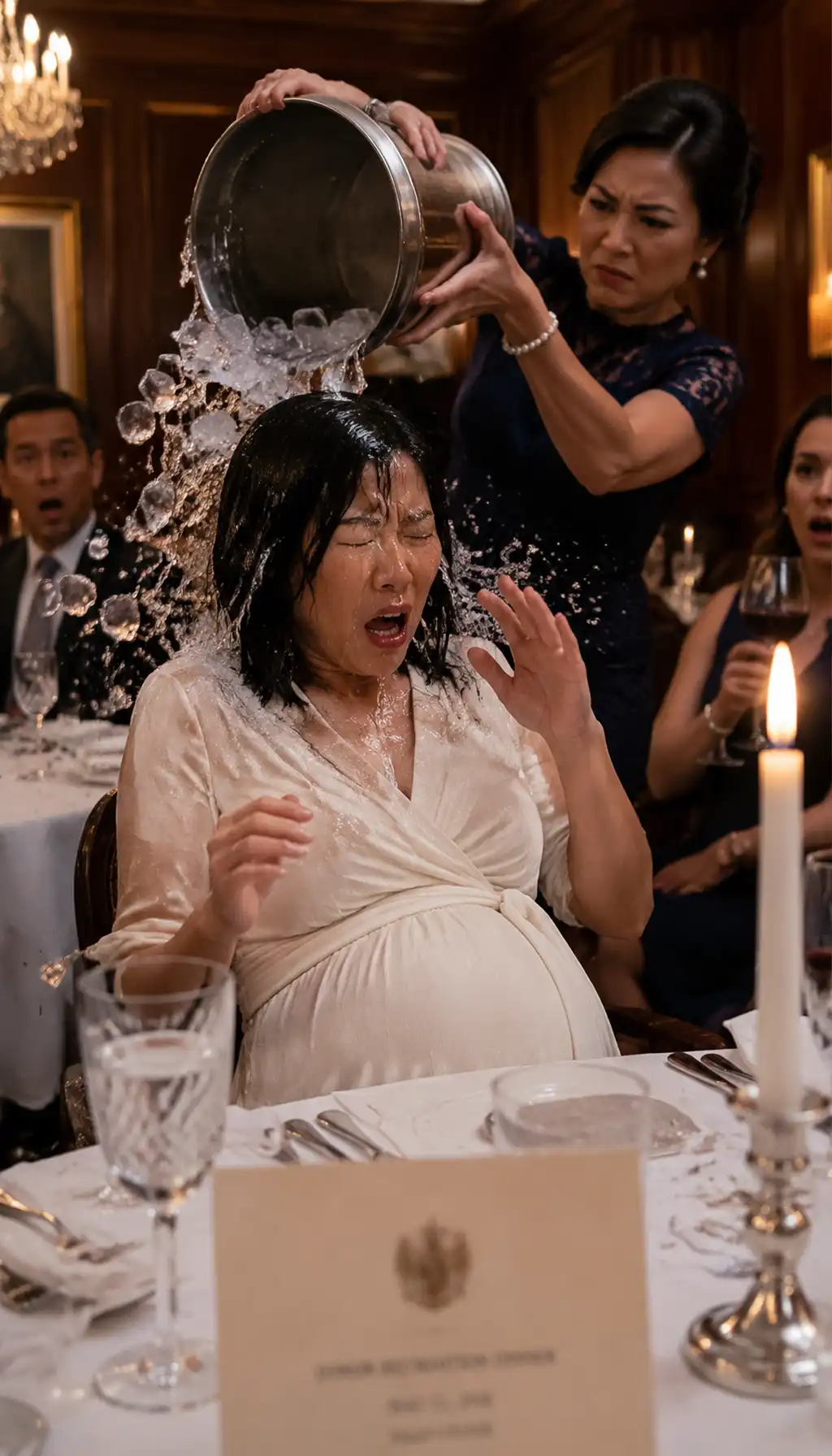
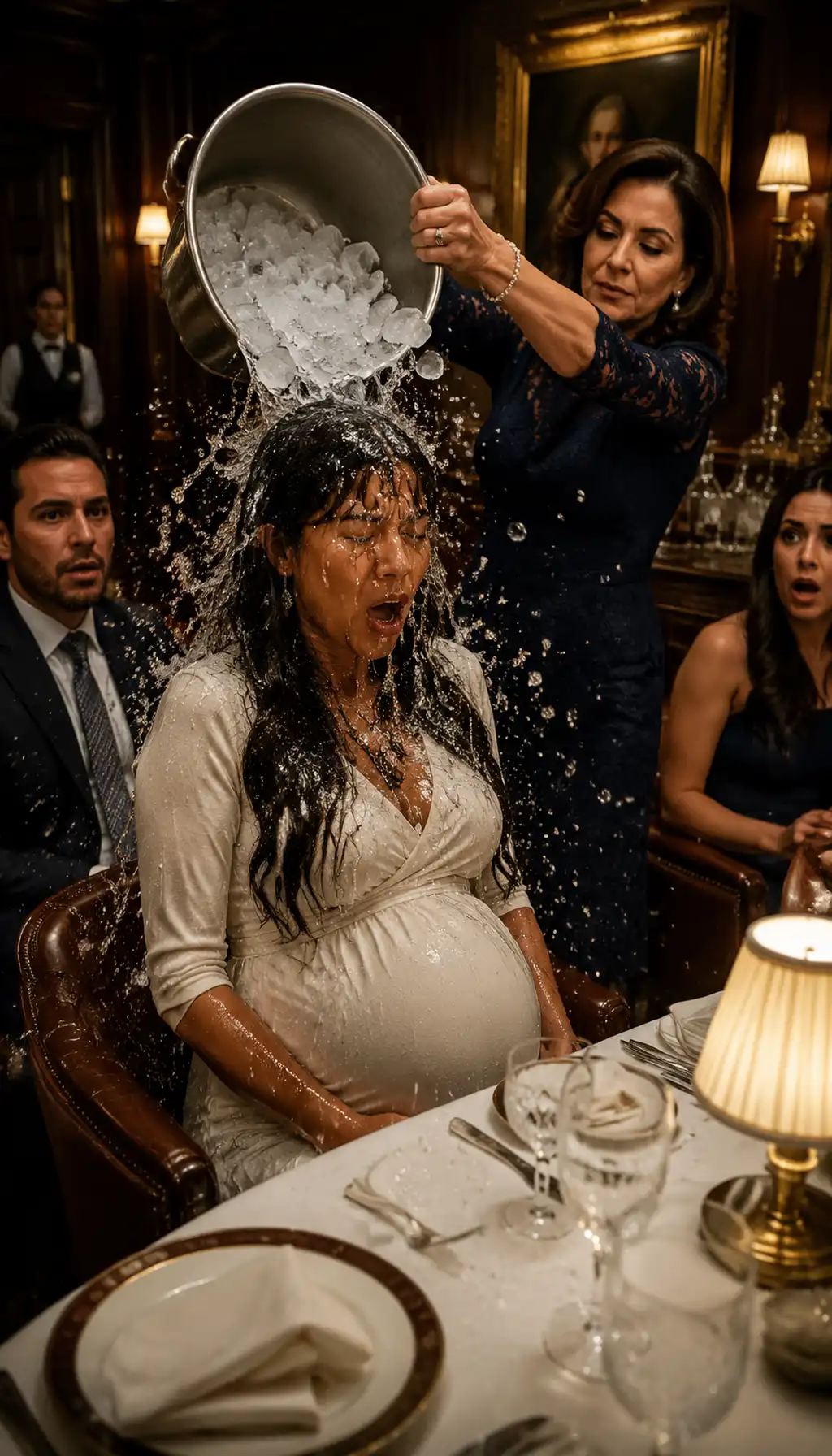
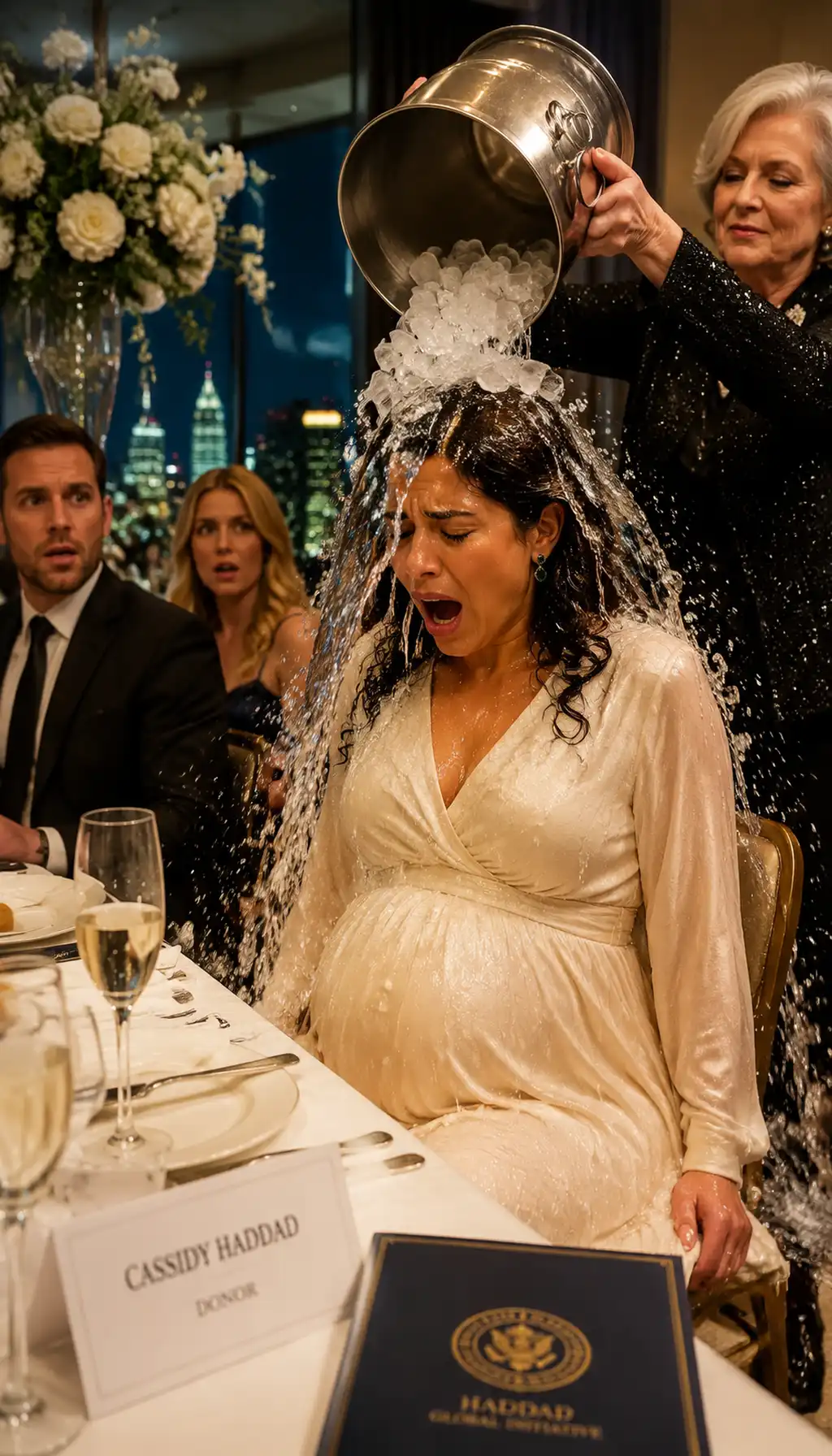
Around us, the side dining room still held the shape of elegance. Gold light. City reflected in the glass wall. Crystal catching the chandelier in a hundred little sparks. White tablecloths, donor place cards, polished silver. The sort of room where people confuse money with immunity because no one has ever forced them to learn the difference.
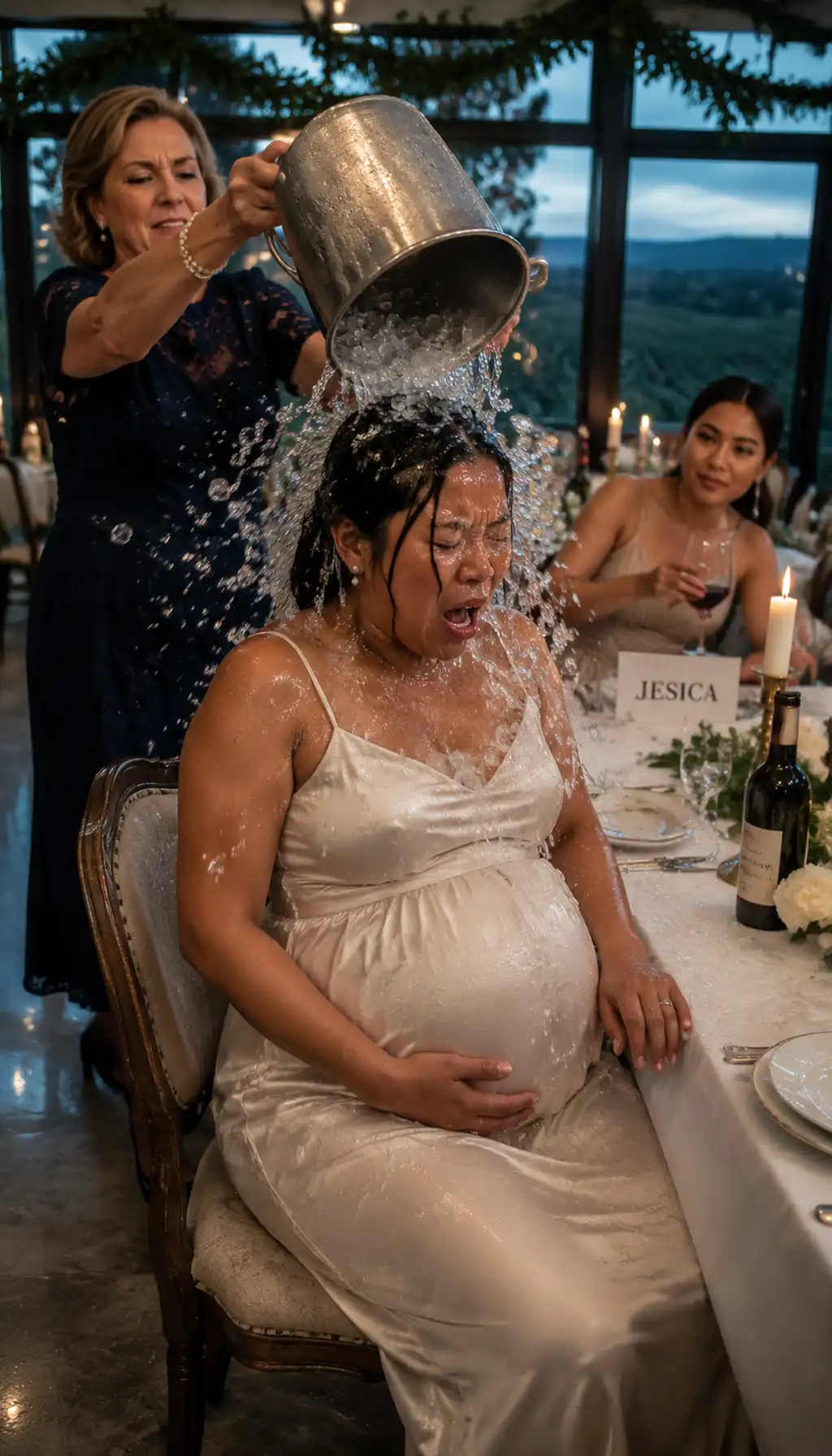
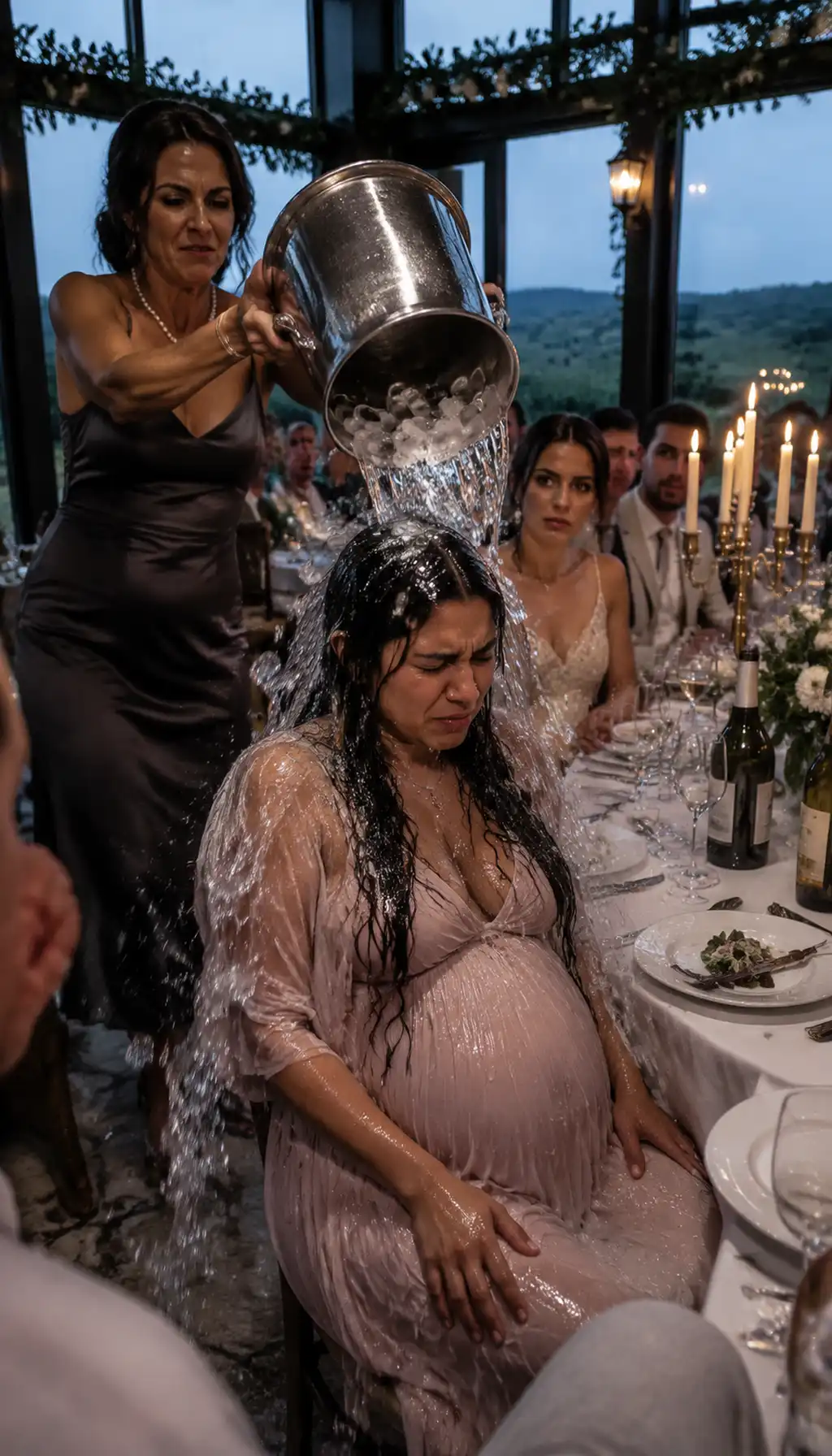
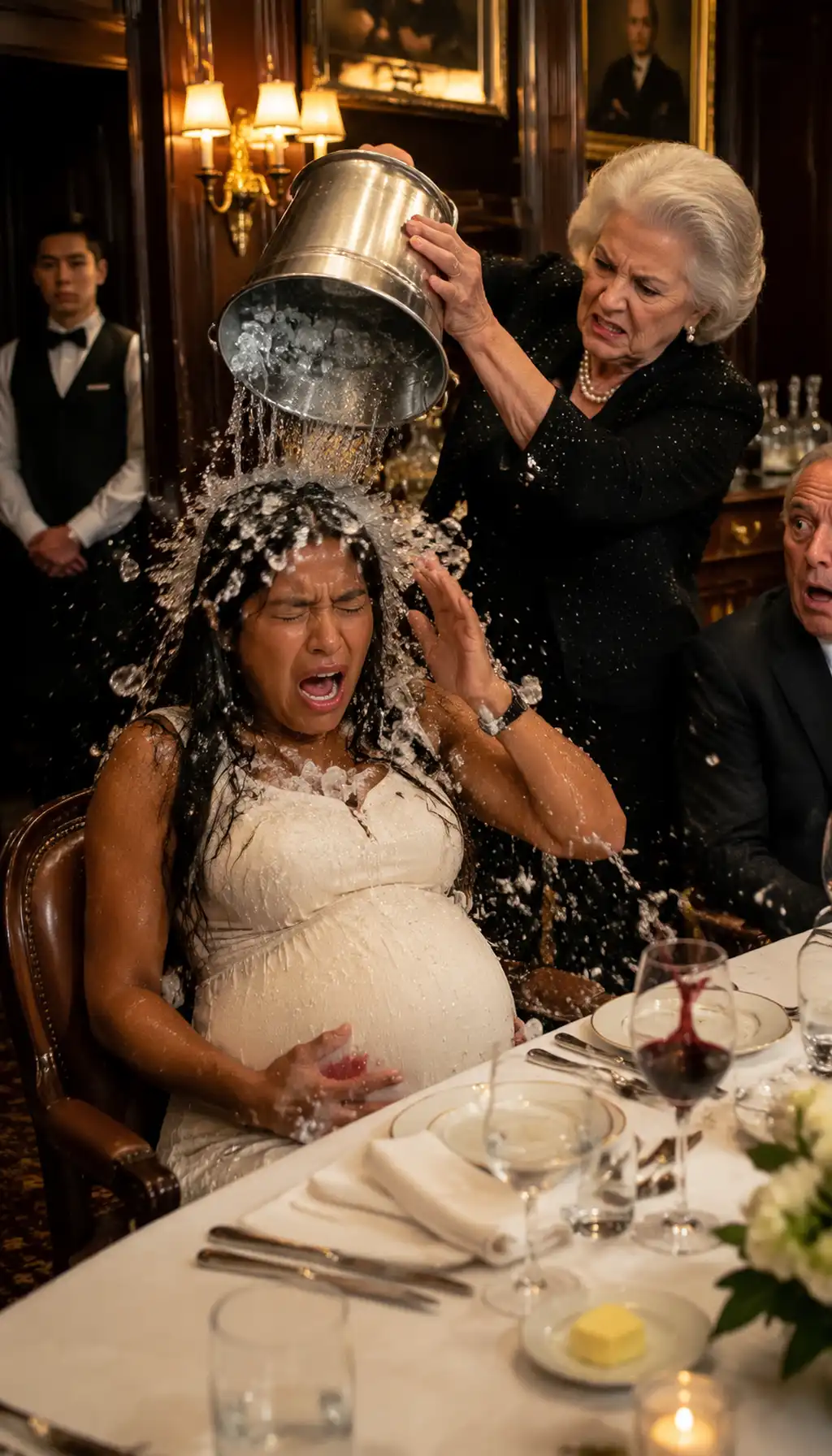
My dress clung cold against my body. Water kept trailing from the ends of my dark curls onto my shoulders. One cube of ice had slipped into the fold of my collarbone and rested there like a dare until I reached up and dropped it onto the plate. The sharp clink was loud in the hush.
Thomas stared at the screen.
"What is this?" he said.
He did not say it to me. He said it to the room, to Elliot, to the universe that had suddenly stopped cooperating.
Elliot had gone pale enough to flatten his whole face. He was older than most of the men on our board, heavy-lidded, careful, and usually too diplomatic to show panic in public. Now his donor envelope sat unopened by his knife, and his fingers were pressed so tightly against the edge of the table that the knuckles blanched white.
"Answer it," Elliot said.
Riley gave a little laugh, brittle and annoyed. "For heaven's sake, Elliot, she is making a dramatic phone call. No one needs to indulge this."
Thomas swiped the call open. "Mr. Vance, I am in the middle of dinner."
Even from where I sat, I could hear the board chair's voice through the speaker because Thomas had jerked the phone away from his ear in surprise. Not every word, but enough.
"Where are you right now?" Mr. Vance asked.
Thomas frowned. "At the gala. Why?"
"Stay where you are. Do not leave that room. Do not send instructions to Finance. Do not access your proxy dashboard. Governance has suspended interim delegation under Protocol Seven pending emergency review."
Thomas looked up so quickly his chair legs scraped.
"What are you talking about?"
The call ended. Not because Thomas hung up. Because Mr. Vance did.
No one moved for a full second.
Then Riley said, in the tight patient tone used by women who have spent a lifetime training the world to agree with them, "This is absurd. Thomas, put the phone away. We are not performing for her."
I lifted my napkin from my lap and blotted my face once. It was a useless gesture. My hair was soaked, my mascara had probably bled, my dress was wet through the front. But the movement steadied me. My baby had settled after that hard kick, though my stomach still felt tight with the aftershock.
I put a hand over the curve of my belly again, slow and deliberate, not hiding it, not apologizing for it.
Then I looked at Elliot.
"You knew Protocol Seven was live," I said.
He swallowed. "I knew the clause existed."
Riley turned toward him. "What clause?"
That was the real beginning. Not the water. Not the laughter. The moment the wrong person asked the right question in a room full of witnesses.
Elliot exhaled through his nose and looked from Riley to Thomas, then to the donor menu lying beside my soaked plate. The company seal was stamped in dark navy at the top. Under the featured fund and the printed list of trustees was a narrow approval line that most people would never notice. Under it, in clean serif lettering, were the initials I used for all internal venue authorizations tied to Haddad Holdings.
S.H.
Those two letters had been beside my plate the whole night.
Elliot had seen them earlier. I knew because he'd stared at the menu when he sat down, blinked once, and then carefully said nothing.
Riley followed his gaze at last. She leaned in just enough to see the line, then straightened. "So what? She approved a menu. We invited her to be polite."
I almost smiled.
There are some lies so small they insult the intelligence of everyone in the room, and yet privileged people tell them anyway because they have gotten away with speaking over reality for so long that they forget facts leave paper trails.
The side dining room door opened. A young event manager stepped in, took one look at me soaked at the table, and froze.
I knew her name. Priya. Sharp, new to the venue, excellent with donor politics, terrified of making mistakes.
She looked at Riley first, because Riley was the loudest status in the room. Then she looked at me. Her eyes dropped to the menu by my plate, then snapped back up to my face.
That was when I knew someone in operations had already sent word.
"Ms. Haddad," she said carefully, "Arthur is on his way up."
Riley laughed again, but there was effort in it now. "This has become theatrical."
Priya did not answer her. She moved closer to me instead.
"Would you like a doctor called?" she asked quietly.
I appreciated the way she asked me directly and no one else. Not Thomas. Not Riley. Me.
"Put one on standby," I said. "And bring towels. Not for the floor."
"Of course."
She left at once.
Thomas had not sat down again. He was staring at me now, not with affection or anger but with the first edge of calculation. He was trying to work backward through the pieces. My holding company. The venue contract. The budget. The menu. The call from Mr. Vance.
He reached for the menu and picked it up. Water from my sleeve had dampened the lower edge, but the printed approval line remained sharp.
"What is this?" he asked.
"The document you ignored when your assistant sent the gala packet," I said.
Riley folded her arms. "Enough games."
"You should have said that before you poured ice over a pregnant woman at a company donor event," Elliot muttered.
She swung toward him. "Do not start posturing because she made one call."
He did not answer. He was watching Thomas's phone.
So was I.
The screen lit again.
This time it was not a call. It was a governance alert.
ACCESS CHANGED - PROXY AUTHORITY SUSPENDED PENDING CHAIR AND LEGAL REVIEW.
Thomas read it twice. "This is impossible."
"No," I said. "It is inconvenient. There is a difference."
His gaze snapped to mine. "You do not have the power to suspend my proxy."
I held his stare.
What I wanted to say was that he had spent three years underestimating me and tonight was just the first time a system had done him the courtesy of making it visible. But I had learned long ago that truth lands harder when offered without drama.
"I do not need to suspend your proxy," I said. "I need to trigger the clause that forces someone else to look at how you got it."
Riley took a step toward me. "Withdraw whatever stunt this is right now."
My entire body was cold, but my mind had gone very still.
This had started before dinner, long before Riley's silver bucket caught the light behind me.
The holding company that controlled the venue management contracts, donor hospitality, and executive event budgets did not sit directly under the Morrison family trust the way everyone in social circles assumed. Years ago, when the original founder had restructured the hospitality and corporate services arms to isolate liability, the controlling interest had been moved into a layered holding arrangement. When he died, one set of people inherited the name. Another inherited actual control if certain conditions were met.
Most of the family never read the conditions.
I did. Because I was the one who sat through the ugly years with lawyers, when the founder's health failed and everyone else argued over heirlooms, donor lists, vacation properties, and which son deserved the board's patience.
My marriage to Thomas had still existed on paper back then. Barely. But the founder had trusted paperwork more than charm, and me more than either of his children. He believed Thomas could be trained, Riley could be managed, and I could read a room without lying to myself about what I saw.
He had once told me, in a conference room that smelled like eucalyptus and old leather, "If they ever humiliate you in public, it will be because they think the machine belongs to them. Machines only belong to the person who understands where the shutoff is."
Protocol Seven was one of the shutoffs.
It was not some dramatic red button. It was a governance trigger inside the emergency charter for Haddad Holdings and its affiliated service entities. If an executive family member engaged in conduct exposing the company to reputational or legal harm during a donor, board, or controlled company event, the holder of protected voting authority could activate temporary suspension of delegated proxy powers pending emergency review by legal and the chair.
The language had looked dry on paper.
In real life, it sounded like phones ringing around a dinner table.
Two more screens lit up. One at the neighboring donor pair behind the flower arrangement. Another in the hand of a board guest near the glass wall. Murmurs moved across the room like a draft.
Riley saw it happen and finally understood enough to become dangerous.
She leaned over me, voice low now. No more theater. No more polished smile. "You will stop this. Right now."
I tipped my face up to hers, wet hair against my cheeks.
"No."
The simple word seemed to hit her harder than a speech would have.
Thomas tried a different angle. "Cassidy, think about what you are doing."
I almost laughed at that, but my baby shifted again and the movement grounded me before any bitterness could.
"I am," I said.
"You are emotional."
"I am cold," I corrected. "And I am documenting."
He looked toward the room, perhaps thinking witnesses could still be softened. That was Thomas's favorite strategy. Not truth, not accountability, just atmosphere. If enough people preferred an easier version of events, he assumed reality would bend.
Unfortunately for him, a side dining room at a donor gala was one of the worst places to test that theory. Wealthy people gossip, but corporate insiders preserve themselves.
The door opened again and Arthur came in.
Arthur Lin was not physically imposing. Mid-fifties, silver at the temples, dark suit, wire-rim glasses, the sort of lawyer people underestimate because he carries quiet like an instrument instead of armor. But every room changes when the person who knows where the liabilities are decides to speak out loud.
Behind him came Priya with two staff members carrying towels and a glass bottle of water. A physician from the club's on-call event team hovered in the hall.
Arthur looked at me first, then at the bucket still glinting near the centerpiece, then at the donor menu in Thomas's hand.
"Ms. Haddad," he said, voice calm, "do you need medical evaluation immediately?"
"My baby is moving," I said. "No pain beyond the shock. Keep the doctor close."
He nodded once. "Done."
Only then did he turn to the others.
Riley stepped forward with the confidence of a woman accustomed to greeting counsel as an employee. "Arthur, thank God. Please put an end to this ridiculous misunderstanding."
Arthur regarded her with that polite, almost remote expression he wore when people told lies in professionally inconvenient ways.
"There is no misunderstanding," he said. "Protocol Seven has been invoked."
Thomas made a scoffing sound, too late and too thin. "By her."
Arthur folded his hands. "Yes."
"As what?" Riley asked.
The room went quiet enough to hear the low hum of the city beyond the glass.
Arthur answered without flourish. "As the protected voting controller of Haddad Holdings, which owns the venue management company, oversees the event contracts, and holds the contingent governance rights attached to your family proxy structure."
If Riley had slapped the table, I do not think the room would have reacted more sharply.
Elizabeth, who had spent the whole dinner decorating the edges of other people's cruelty with little smiles, went white and set down her champagne.
Thomas stared at Arthur. "That is not true."
Arthur looked at him. "It has been true for fourteen months."
That landed like a second bucket.
Thomas actually laughed once, but there was no humor in it. "No. If that were true, I would know."
Arthur's voice stayed level. "You were notified of the trust amendment and contingent governance schedule during the separation review. Your counsel acknowledged receipt."
Thomas's face changed. Not because he remembered. Because he realized he had never read what his counsel summarized.
I knew the moment. I had lived with that habit for years. Thomas loved outcomes and despised documents. He thought meetings existed so other people could tell him whether he was winning. That worked until a room full of paper finally answered back.
Riley recovered first. "This is legal trickery. A temporary paper arrangement. Thomas remains his father's son."
Arthur did not blink. "Parentage is not a governance credential."
A board guest at the far end of the room coughed, trying to hide what might have been a laugh. Riley heard it and flushed.
Priya stepped to my side and draped a thick white towel around my shoulders. Another around the back of my chair. She moved carefully around my belly and did not fuss. I appreciated that more than I could have explained.
The on-call physician approached, introduced herself softly, and checked my pulse with two fingers against my wrist. She asked about dizziness, pain, cramping, fetal movement. I answered each one. My baby moved again, lighter this time, and some of the iron inside my ribs eased.
"I want you warm," the physician said.
"I want witnesses present first," I said.
Arthur nodded. "You have them."
Good.
Because this part mattered.
I looked at Priya. "Close the side room doors but keep staff access open. No one at this table leaves until statements are logged."
Thomas barked a laugh. "You cannot detain people at dinner."
"No," Arthur said. "But we can advise all board-affiliated attendees that leaving before incident documentation may be interpreted during review."
No one rushed the doors after that.
Riley drew herself up. "Are you seriously converting a family disagreement into a corporate event file?"
I met her eyes.
"You poured ice water over a pregnant woman at a company donor dinner in a room operating under company seal while board guests watched," I said. "You converted it."
Her nostrils flared.
She changed tactics again. "It was a joke."
The physician, still by my side, looked at Riley with open disbelief.
Thomas lifted a hand, impatient. "Mother, stop."
There it was. His first use of a cautioning tone toward her. Not morality. Fear.
Arthur turned slightly toward Priya. "Please have security preserve hallway footage, dining room entrance footage, and staff service corridor timestamps for the last twenty minutes. Also preserve all event messaging related to this room."
Priya took out her phone immediately.
Riley snapped, "That is unnecessary."
"It is mandatory," Arthur said.
Elliot finally spoke up from his chair. "You should listen to him."
Riley whirled. "And you should remember whose table you are sitting at."
Elliot gave her a long look. "Apparently, I am."
That was the first true crack in the social order she had relied on all evening.
A server entered with hot tea, then stopped awkwardly at the threshold. It was Mateo, one of the senior banquet captains. He had worked donor nights for years and had the rare gift of seeing everything while pretending to see nothing.
I beckoned him over.
"Mateo, were you in the service lane when the bucket was brought in?"
He glanced at Arthur, then at Priya, then at me. "Yes, ma'am."
Riley made a disgusted sound. "Now the waitstaff is testifying?"
I ignored her. "Did anyone ask where it was going?"
Mateo swallowed. "I did. Ms. Halbrook said it was for a champagne display reset."
That was useful.
"Did it contain only ice?"
"No, ma'am. It had meltwater. It had just come off table service."
The physician's mouth tightened. Arthur's eyes sharpened.
A silver bucket of meltwater lifted over a pregnant woman in a formal dining room did not read as a harmless splash to counsel. It read as intent, humiliation, exposure, and liability.
Thomas sensed the shift and stepped in quickly. "No one intended harm."
"No one?" I asked.
He looked at my soaked dress and then away.
Riley spoke over him. "For God's sake, it was a few inches of cold water."
"My baby reacted before any of you did," I said.
That shut her up for a beat.
Arthur addressed Mateo. "Please give your statement to incident services before the end of your shift."
"Yes, sir."
Mateo hesitated, then added, "There were also two staff near the floral station who saw Ms. Halbrook standing behind Ms. Haddad with the bucket before she poured."
Thomas closed his eyes briefly. He had finally realized witness count mattered.
When Mateo left, Arthur turned to me. "The chair has called an emergency session for ten p.m. Protocol Seven has frozen proxy instructions and account-level discretionary access connected to the Morrison family delegation until legal review. That includes Mr. Morrison's board dashboard, event expenditure authority, and approval path to donor disbursement."
Thomas stared. "You froze my access to donor disbursement?"
Arthur corrected him. "Ms. Haddad triggered the review that froze your access."
Riley looked from one face to another, searching for the weak point she could still dominate. "This is extortion. She is upset because the marriage failed."
I was tired enough of that script to answer honestly.
"The marriage failed because your son mistook charm for character and inheritance for competence," I said. "Tonight failed because you mistook me for disposable."
Silence followed. Thick and total.
Elizabeth's eyes dropped to the tablecloth.
She had laughed earlier. Not loudly, but enough. She had been one more witness validating Riley's cruelty because she believed social alignment mattered more than decency. But people like Elizabeth often break when the cost of staying aligned rises.
Her phone buzzed. She checked it, and I watched the blood leave her face.
"What happened?" Thomas demanded.
She looked up at him. "My foundation grant portal just logged me out."
Arthur answered before Thomas could form the next excuse. "Any access tied to suspended delegated credentials is being reviewed. Temporary lockouts are normal."
Elizabeth pushed back her chair a fraction. "I did not do anything."
I looked at her. "You laughed."
She opened her mouth, then closed it.
Pressure movement after pressure movement. That was the thing about systems. Once they start recognizing the truth, everyone who benefited from the lie begins sorting themselves by survival.
The physician leaned near me. "I would still like to examine you somewhere warmer."
I nodded. "Soon. But not before Riley says on record why she did it."
Riley's expression hardened into marble. "I owe you no explanation."
Arthur said, "Actually, an explanation may help establish intent."
Her eyes flashed. "Fine. She came here parading that pregnancy after what she put this family through. She wanted attention."
The cruelty of that almost stunned the room more than the bucket had.
I kept my hand on my belly.
"What exactly did I put your family through?" I asked.
She did not realize she was walking toward a cliff. "You manipulated his father in his final years. You inserted yourself into decisions that belonged to blood. You took advantage of Thomas while playing the grieving daughter-in-law. Then you left and expected to keep your place at our table."
There it was. The old accusation. The one they used because they had never forgiven the founder for trusting me with documents they could not charm away from him.
Arthur's tone turned colder. "For the record, the founder's final amendments were independently witnessed, medically supervised, and affirmed during probate. Those allegations were litigated and dismissed."
Elliot added quietly, "I was there for the governance review."
Riley snapped toward him. "Then why did no one tell us she had control?"
Elliot's answer was mercilessly plain. "Because the clause only matured if misconduct or incapacity compromised delegated leadership. Until then, your family kept operational dignity so long as you acted with basic judgment."
Thomas went still.
He understood that sentence. Maybe not every legal nuance, but the shape of it.
"You mean," he said slowly, "we had authority only because she let the structure stand."
"No," I said. "You had authority because the structure was designed to give you a chance."
That was worse.
I watched it hit him.
Some truths are not painful because they take power away. They are painful because they reveal power was conditional all along.
The side room door opened once more. Two security professionals took quiet positions outside, visible through the gap but not entering. Smart. Not escalatory. Just enough to make movement a conscious choice.
Arthur checked his watch. "Mr. Vance wants initial witness summaries before the session begins. Ms. Haddad, we can relocate you to the executive lounge and dial you into the board call once the physician clears you."
Riley straightened. "Absolutely not. She is not turning this into a public spectacle."
I touched the menu with one finger. The donor menu. The one with my initials on the approval line. The one she had ignored sitting beside the plate she drenched.
"This was public when you made me the entertainment," I said. "What happens next is governance."
Thomas ran both hands through his hair. "Cassidy, just tell them to reverse the freeze. We can discuss this privately."
Arthur looked at me but did not answer for me. Good. He understood that dignity includes leaving the choice where it belongs.
I considered Thomas for a long moment.
He looked expensive and frayed at once. Navy dinner jacket. Open collar. Watch catching the light. A man raised to think consequences were for other people. Yet beneath the polished surface there was fear, and beneath that, insult. He was not sorry for what had happened. He was offended that the mechanism protecting him had finally acknowledged me instead.
"Privately?" I said. "Like when your mother humiliated me in public and you told me not to make a scene?"
His jaw tightened.
"I am not reversing anything tonight."
His phone buzzed again. Then Riley's. Then Elliot's.
Three screens. Three notifications.
Arthur's phone chimed a second later, and he read the message with the smallest shift of expression.
"What?" Thomas demanded.
Arthur looked up. "The emergency session agenda has expanded. Proxy audit, donor exposure review, and witness affidavit intake are now included."
Elliot closed his eyes.
Riley did not understand why that mattered, but he did. So did I. A proxy audit meant someone had finally decided to inspect the entire chain of delegated authority that Riley and Thomas had used to posture through corporate spaces for over a year. If there were irregular instructions, shadow approvals, pressure placed on staff, or informal decisions routed through social channels, the review would not stop at tonight's bucket.
That was the midpoint. The family had arrived believing I was a soaked woman at their table. They were beginning to understand they were under the weight of a structure built to survive exactly this kind of behavior.
Thomas moved toward me then, perhaps hoping nearness would do what facts could not. "Cassidy, listen to me."
I held up a hand and he stopped.
"No," I said. "You listen."
The room obeyed because he did.
"You spent years letting people treat me as if I was temporary because it made your life easier. You let your mother rewrite history in every room that mattered. You pretended the contracts, budgets, restructuring meetings, and legal reviews I handled were decorative because admitting otherwise would force you to question what your family actually inherited. Tonight you told me not to make a scene while water ran off my face and my baby kicked from the shock. So no, Thomas. I am done listening."
His expression went blank in the way men sometimes go blank right before anger or shame, when they have not decided which one they can afford.
Arthur stepped in before either option matured.
"We need to move Ms. Haddad to a warm room," he said. "Statements can continue there."
Riley blocked the path for one fatal second. Not physically close enough to touch me, but close enough to reveal instinct.
Arthur's voice lost all softness. "Move aside."
She did.
Priya gathered the menu from the table using a clean napkin, preserving the damp edges without smearing them. Good instincts again.
"Keep that with incident documents," I said.
Thomas looked at the menu as if it had betrayed him. In a way, it had. The proof had been in plain sight all night. He had just considered himself too important to notice detail.
As I rose, the physician and Priya steadied the chair and gave me space. My wet dress dragged against my knees. For one second the room tilted, not from fear but from cold and adrenaline finally colliding. I gripped the edge of the table until it passed.
"My baby?" the physician asked softly.
"Moving," I said.
She nodded. "Good. We go slowly."
I straightened and stood on my own.
That mattered to me.
Not because standing proved strength. I did not owe anyone a performance of invulnerability. It mattered because I wanted the people who laughed to remember that the woman they soaked stood up with more control than any of them had managed fully dry.
As we started toward the executive lounge, Elizabeth spoke for the first time since the portal alert.
"Sofia."
I stopped and turned.
Her eyes shone, not with tears exactly, but with the panic of someone suddenly aware the witness line includes her too.
"I should not have laughed," she said.
That was not absolution. But it was the first honest sentence she had offered all evening.
"No," I said. "You should not have."
Then I left her there with the bucket.
The executive lounge was one floor up and significantly warmer. Dark wood, cream walls, a long conference table, a sideboard with tea service, floor-to-ceiling windows reflecting the city. Private enough for counsel, close enough for event operations, secure enough for a board call.
The physician examined me there while Arthur stood outside with Priya and two members of incident services. Blood pressure, pulse, fetal movement, abdominal tenderness. Everything remained stable. She recommended that I visit my obstetrician that night after the board session or go directly to private observation if I felt any cramping.
"I can call your doctor now," she said.
"Please do," I answered.
My OB, Dr. Farrow, joined by speaker within minutes. She heard the outline without melodrama, asked precise questions, and instructed me to monitor movement, avoid a stress spike, and come in for evaluation once I was clear to travel. Her calm voice did more for me than I expected.
After the physician left, Priya returned with dry clothes from the club boutique and a simple ivory shawl to wear over them. The replacement dress was not mine, but it fit well enough. I changed in the adjoining powder room, towel-dried my hair, and looked at my own face in the mirror.
Olive skin flushed from cold. Thick dark curls escaping their pins. Emerald studs still in place. A line of exhaustion around the mouth. Eyes clearer than before.
When I came back out, Arthur was at the conference table with a secure tablet and a stack of printed materials. The donor menu sat inside a clear document sleeve. Next to it was the emergency charter excerpt bearing the language of Protocol Seven, highlighted.
Priya stood with a clipboard.
"Incident services logged eight preliminary witnesses," she said. "Three staff, two board guests, one donor spouse, Elliot, and Elizabeth. Security preserved the footage. Catering also confirmed the bucket came from active table service and was not a decorative prop."
Useful. Specific. Causal.
Arthur gestured for me to sit. "The chair wants your statement first before the emergency board session opens. Also, we received a development from Finance."
I lowered myself into the chair slowly. "What kind of development?"
He slid a page toward me.
It was a system note from the expenditure platform. Over the past six months, multiple donor hospitality charges had been approved under Thomas's delegated proxy credentials but routed through a convenience workflow tied to Riley's private office assistant rather than standard event controls. Not illegal on its face. But inappropriate enough that a proxy audit could widen.
Arthur watched my expression. "The governance team found it while isolating the freeze."
"So tonight just became expensive," I said.
"For them, yes."
Priya looked between us and then away, trying not to appear interested. She failed gently. I did not blame her. Entire careers in corporate hospitality are built around never being in the room when true power changes shape. Tonight had brought the machinery into daylight.
The secure board line opened at ten sharp.
Mr. Vance appeared on screen first, grave and visibly tired. Then two independent directors. Then governance counsel from New York. Then compliance. Then Elliot, dialing in from another room downstairs. Thomas joined from what looked like the same side dining room, his jaw rigid. Riley was just off camera, but I could hear the rustle of her presence. Elizabeth did not join. Sensible.
Mr. Vance began without ceremony. "This emergency session concerns invocation of Protocol Seven at a donor event tied to Haddad Holdings managed operations. Ms. Haddad, are you medically stable enough to proceed?"
"Yes."
"Do you wish to continue tonight?"
"Yes."
"Then state, for the record, the basis for invocation."
I did.
I described the setting, the donor dinner, the silver bucket, Riley standing behind me, the direct crown pour, the laughter, Thomas telling me not to make a scene, my immediate concern for the baby, the visible witnesses, and the company donor menu bearing my approval initials. I stated that the incident took place under company seal during a controlled event involving board-adjacent guests and therefore created reputational exposure and potential legal liability. I stated that I invoked Protocol Seven to suspend delegated proxy authority pending review because the conduct demonstrated material governance risk.
No theatrics. No crying. No speeches.
Mr. Vance thanked me and turned to Arthur for the documentary basis.
Arthur held up the menu in its sleeve. "Exhibit A. Event menu from the side dining room under company seal. Approval line initials match Ms. Haddad's standing authorization file. Venue contract, event budget, and donor hospitality oversight were all routed through Haddad Holdings due to the management-services transition completed last quarter. The event therefore qualifies as a controlled company setting under the charter."
One independent director asked, "And the voting authority basis?"
Arthur slid another document into frame.
"The protected voting schedule matured fourteen months ago following trust restructuring and separation settlement execution. Mr. Morrison retained delegated proxy rights contingent on good conduct and governance reliability. Protocol Seven is one of the suspension triggers."
Thomas leaned toward his camera. "I was never meaningfully informed that my authority was contingent on her discretion."
Governance counsel answered before Arthur could. "Correction. It was not contingent on her mood. It was contingent on behavior thresholds defined in documents your counsel received."
Thomas looked furious. "This is punitive."
Mr. Vance's face stayed still. "A pregnant protected controller was publicly drenched with service ice water at a donor event while you minimized it. We are well past the word punitive."
Riley's voice entered then, sharp from offscreen. "This is a family matter blown out of proportion by a woman with old resentments."
Mr. Vance turned his eyes toward wherever the voice had come from. "Mrs. Halbrook, if you wish to speak, identify yourself on record."
She did, with obvious displeasure.
"Then understand this," he said. "If you poured the bucket, this is not a family matter. It is potential assault, event liability, donor exposure, and evidence of unfitness around delegated authority."
Silence.
One of the independent directors asked for witness confirmations. Priya, to her credit, had prepared concise summaries. Staff saw Riley request the bucket under false pretenses. Staff saw her approach me from behind. Staff heard her line. Elliot heard my protocol invocation and recognized its significance immediately. Elizabeth confirmed laughter and Thomas's minimization. Hallway footage preserved timing and approach. Dining room footage captured the act itself.
The board did not need melodrama. It needed enough truth to activate consequence.
Then came the route's crucial pressure movement. Proxy access review.
Compliance shared a screen displaying Thomas's suspended dashboard. Red bars over approval channels. Delegation pathways paused. Linked assistants locked. Pending disbursements flagged. Informal routing nodes mapped.
Thomas looked shaken for the first time in a way that had nothing to do with pride. He understood now that the social fiction of being the heir had depended on systems he did not own.
"Those accounts need to reopen tonight," he said.
"No," I said.
Every face turned to me.
I rested one hand over my belly under the conference table and kept my voice level.
"The freeze should remain until the audit confirms no donor or operating funds were redirected through personal influence channels. If this room wants to discuss my emotional state, let the record reflect that I am the soaked pregnant woman and still the only person here speaking like a fiduciary."
No one interrupted that.
Mr. Vance nodded once. "Motion noted. We will vote."
Elliot cleared his throat. "Before the vote, I need to place something on record."
Riley inhaled sharply, already knowing betrayal by its shape.
Elliot looked older suddenly, tired in the way decent men become tired when they realize neutrality has been serving the wrong side.
"I knew the clause existed," he said. "I did not disclose Ms. Haddad's matured control because confidentiality constrained me. But I also did not challenge social assumptions that let Mr. Morrison and Mrs. Halbrook operate as if discretionary power was theirs by right. That failure is mine. Tonight proved why the clause was drafted."
That statement mattered. Not emotionally. Structurally. It turned private awareness into board-level acknowledgment.
Governance counsel asked one more question.
"Ms. Haddad, do you request full removal tonight or continued suspension pending formal review?"
This was the moment where revenge could have disguised itself as justice.
I thought of the kick under my hand. Of the ice on my scalp. Of Thomas telling me not to make a scene. Of Riley's voice saying everyone was watching. Of the founder's words about machines and shutoffs.
"I request continued suspension and emergency review," I said. "Not because I cannot ask for more, but because the company deserves process even when certain people did not offer me dignity."
Arthur looked down, hiding what might have been approval.
Mr. Vance called the vote. Suspension upheld unanimously pending full review. Proxy audit authorized. Donor exposure review authorized. Incident and witness file preserved under legal hold. Thomas and any linked delegates barred from financial instruction until further notice. Riley excluded from board-adjacent donor events during review.
There it was. Not the end. But the legal collapse of their certainty.
When the session adjourned, Thomas remained on screen.
"Stay on," he said.
Mr. Vance did not.
The line reduced to three squares. Thomas. Arthur. Me.
Thomas took a breath like someone preparing to step onto a bridge that may not hold.
"Why did you never tell me?" he asked.
I could have answered with cruelty. I had options. Because you never listened. Because every time I spoke, your mother translated me into something smaller. Because the people who handed you summaries knew you preferred comfort to understanding.
Instead I told him the truth.
"I did tell you," I said. "You just kept calling it paperwork."
His eyes closed.
For once, he had no defense.
Arthur excused himself to coordinate next steps with compliance and left us on a private line. I did not ask him to stay. Some endings deserve no witnesses.
Thomas looked older with the room stripped away. Not poorer, not broken, just smaller.
"Mother did not know," he said finally.
"I know."
"She thought she was humiliating me through you."
"She humiliated herself through me."
He almost smiled at the precision of that, then failed.
"What happens now?" he asked.
"For me? I go to my doctor and make sure my baby is fine."
"And for us?"
There was no us. Not in any meaningful sense. Not after the marriage, not after the slow corrosion, and certainly not after tonight. But I had no interest in dramatic declarations. Reality was enough.
"For you," I said, "an audit."
He flinched.
After we disconnected, the lounge went quiet.
Priya returned to collect signatures and left me with a packet copy. Arthur came back in with a car arranged, a driver briefed, and a secure summary of the board vote. He also placed the donor menu folder in front of me.
"I thought you might want the copy," he said.
I touched the plastic sleeve. "Keep the original with legal."
"This is the duplicate."
I looked at the initials in print beside the approval line. S.H. A tiny thing. A visible object everyone had missed because they preferred hierarchy to detail.
"That little menu changed the room," Priya said softly from near the door.
I looked at her and then at Arthur. "No. It proved the room was already changed."
Arthur's mouth twitched.
Before I left, Elliot requested two minutes in person.
I agreed.
He entered without the donor envelope. He must have finally put it down somewhere. Good. He did not need props now.
"I should have spoken sooner downstairs," he said.
"Yes."
He accepted that without flinching. "For what it is worth, your father-in-law expected this kind of night eventually. Not the bucket. The exposure."
"I know."
"He trusted you because you understood that governance is not pedigree."
I looked out at the city for a moment. "He also trusted me because I read what I signed."
That earned the first real smile I had seen all night.
Elliot sobered. "The audit will be ugly."
"Then it should be accurate."
He nodded. "There is one more thing. Riley has been leaning on board guests socially for months, trying to shape donor priorities through private dinners. Nothing formally illegal, but enough to matter if linked to Thomas's proxy assumptions."
"Will you state that in review?"
"Yes."
That was another movement. Witness reversal, not from sudden virtue, but from the pressure of truth finally costing less than the lie. I would take it.
After he left, I stood by the window with one hand on my belly and the other around a cup of tea gone mostly cold. My baby moved again, calm this time. A brush, then another. Present. Steady. The physician's words echoed in my mind: monitor, warm, evaluate. So I listened, not to the building, not to the board, not to memory. To my body.
That choice, more than any vote, restored me.
When the car brought me to Dr. Farrow's private maternity wing, she met me herself. Monitoring showed the baby was fine. Elevated stress, no acute distress. She made me stay under observation for a few hours anyway. I lay there in a soft hospital gown, city lights dim through the blinds, and finally allowed the shaking to come once I knew my child was safe.
It was not dramatic. Just the body's delayed honesty.
Near midnight, Arthur texted that legal had issued the hold notices and that donor communications were being contained with a simple statement about an internal incident review. No names. No spectacle. Controlled justice, exactly as it should be.
At 12:14 a.m., Mr. Vance sent a second message.
Emergency board session reconvenes at 8 a.m. Agenda: proxy findings, delegated authority recommendations, event conduct sanctions.
That was the true payload of the night. Not the splash. Not the silence after. The emergency board session they never thought I could call into existence while sitting wet at their table.
I read the message twice and set the phone on my blanket.
Riley had wanted everyone watching.
By morning, they would be.
Disclaimer: Mention of any brand or trademark is for identification only and does not imply partnership or endorsement