THE NIGHT THEY LEARNED WHO CONTROLLED THE KEYS
Elijah stared at his phone like the name on the screen had appeared by mistake.
Board Chair.
It buzzed again in his hand before he answered, and the expensive little grin he wore for photographs disappeared so completely it left him looking younger and weaker at the same time. Around us, conversations from the far end of the terrace died one by one. Guests did not know what Protocol Seven was, but they knew what panic looked like when it crossed the face of a man who had spent years pretending panic was for other people.
I stayed seated.
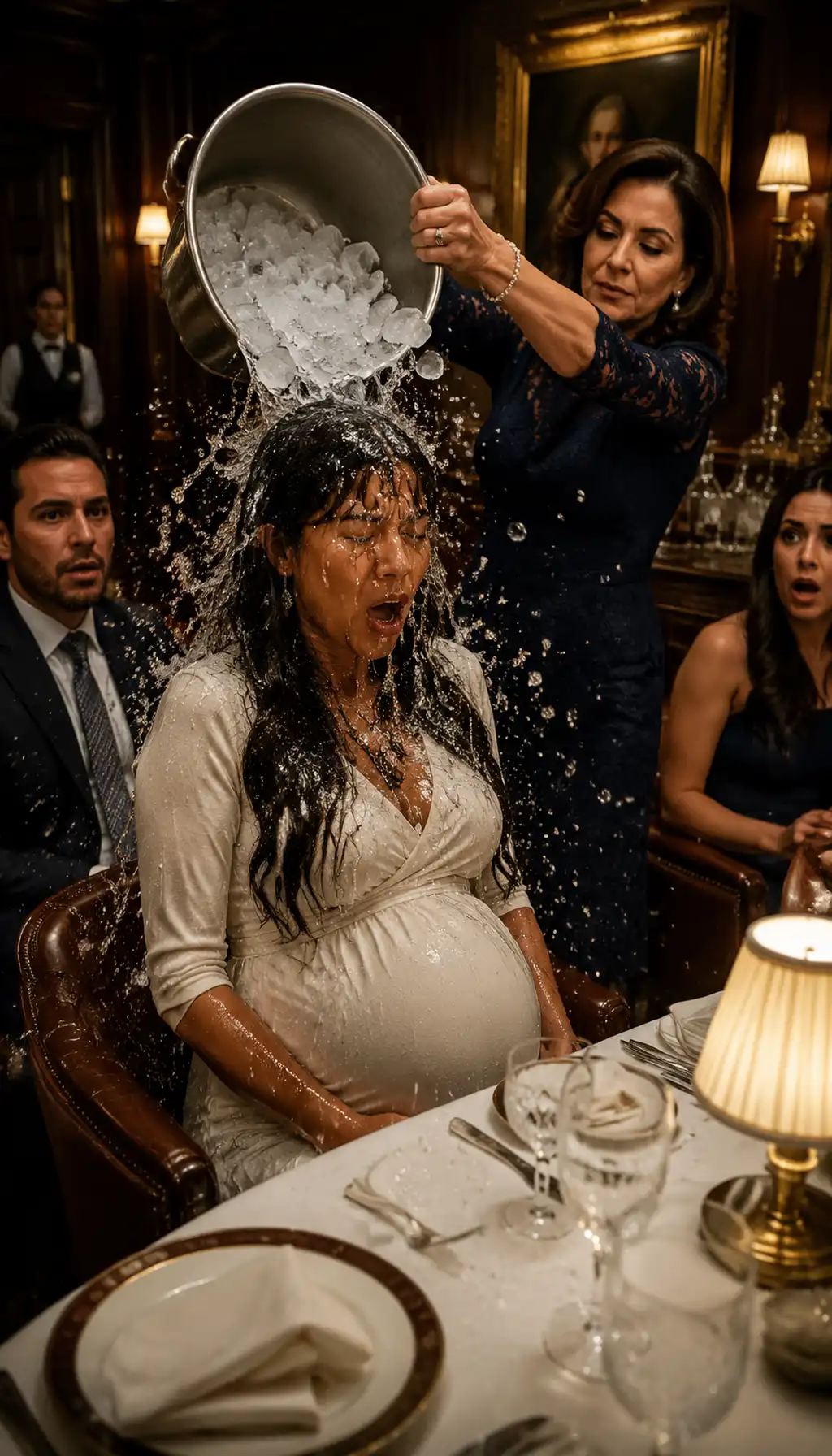
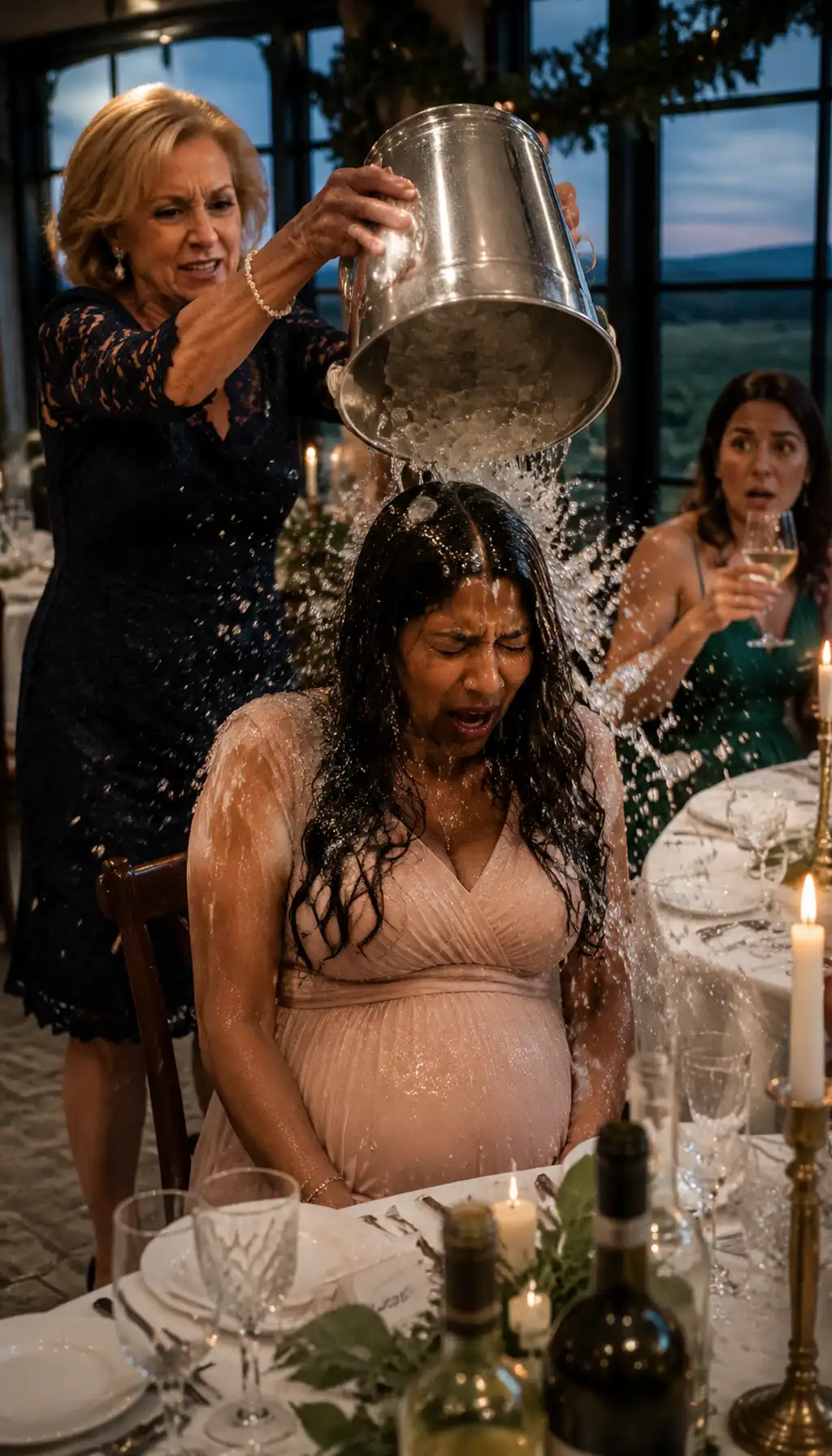
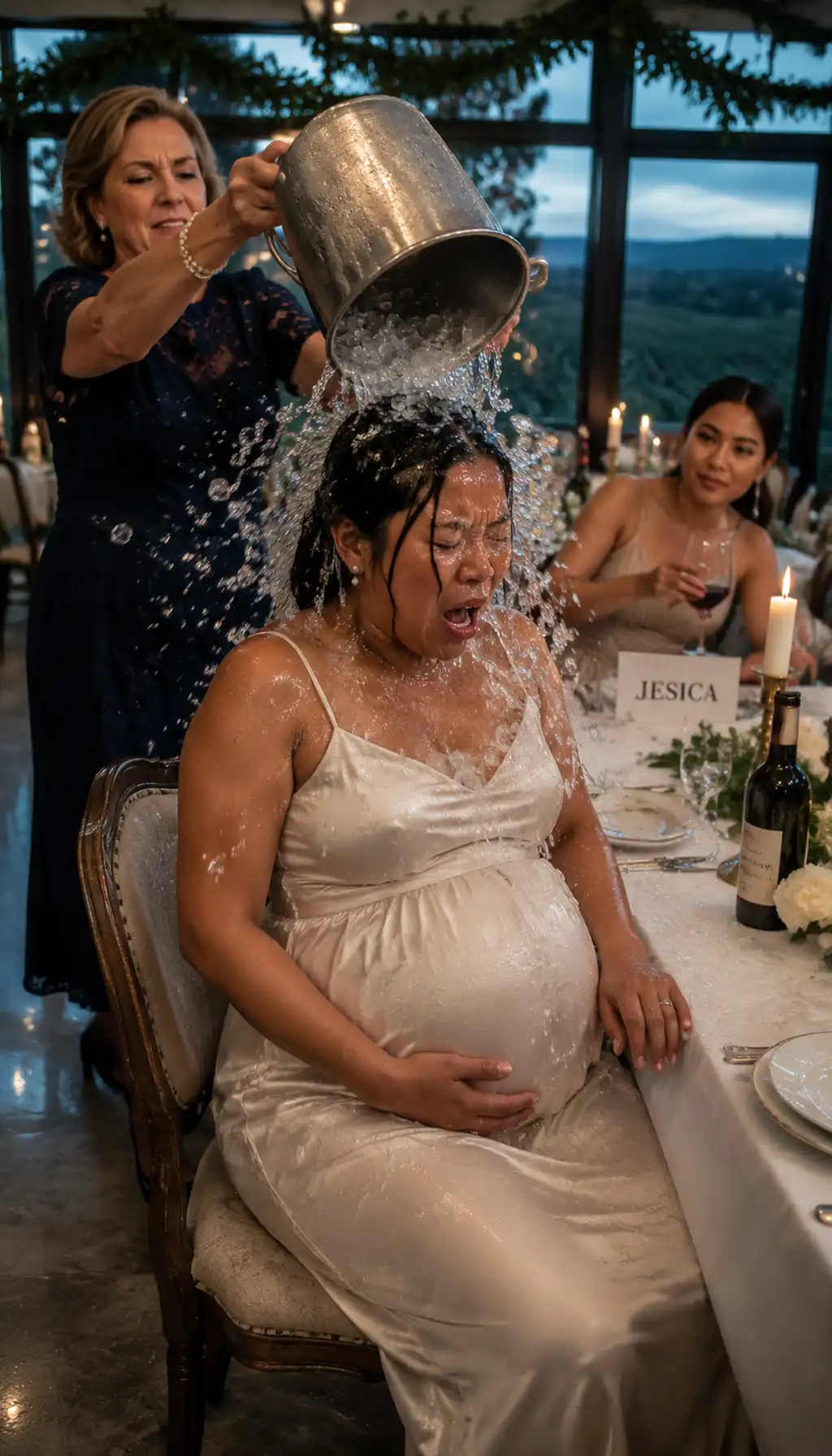
Cold water kept sliding down my back in thin lines. My dress clung to my stomach. One cube of ice had worked its way into the fold of my lap and was melting there. I should have stood up immediately. I should have gone to a private room. I should have been wrapped in a warm blanket with a doctor checking me, because I was pregnant and shivering and furious all at once.
But timing matters when people have built their power on the assumption that you will leave the room the moment they humiliate you.
If I stood too fast, they would call it drama.
If I cried, they would call it instability.
If I let them move me before authority arrived, they would rebuild the scene into something polite and survivable for themselves.
So I kept one hand over my belly and one hand around my phone, and I stayed right where Natalie had tried to reduce me.
Elijah answered at last. "Hello?"
He listened. His face went still. Then he turned slightly away from the table, as if angle alone could turn public panic private.
"No, there must be some confusion."
That line made me almost laugh, and not because anything about the moment was funny.
Confusion was what they called every deliberate cruelty once consequences showed up.
Natalie moved closer to his chair. "Who is that?"
He raised one finger to hush her. He would never have dared do that in a normal moment. She was the family gatekeeper, the woman who had trained everyone around her to orbit her moods and repeat her opinions until they sounded like law. For years she had entered rooms as if the walls themselves were grateful to hold her shadow. She had spent the entire rehearsal week acting like the vineyard estate was a Morrison kingdom and I was a tolerated inconvenience.
Now her son was silencing her.
The nearest server, a young man I recognized from three prior donor weekends, took one step toward me with a folded napkin. Then he paused and looked past me toward the interior glass doors.
Good, I thought.
Someone had already received the first internal alert.
Natalie_70 sat very still with her wine glass halfway lowered. She had laughed when the water hit me. Not loudly, not crudely, but enough. Society people often believe small participation absolves them. They are never the loudest, so they tell themselves they are not responsible.
But she had seen my phone screen too. She had read the contact label, and unlike the others, she had the sense to understand titles.
"Olivia," she said softly, "do you need a towel?"
It was the first humane sentence anyone at that table had offered me.
"I need a dry chair cover and the incident preserved," I said.
She blinked. She had expected emotion. She got procedure.
The server moved at once now, because procedure gives decent people something to hold onto when cruelty has made them ashamed.
Natalie recovered enough to lift her chin. "Incident preserved? Please do not be ridiculous. This was a private family joke."
A private family joke.
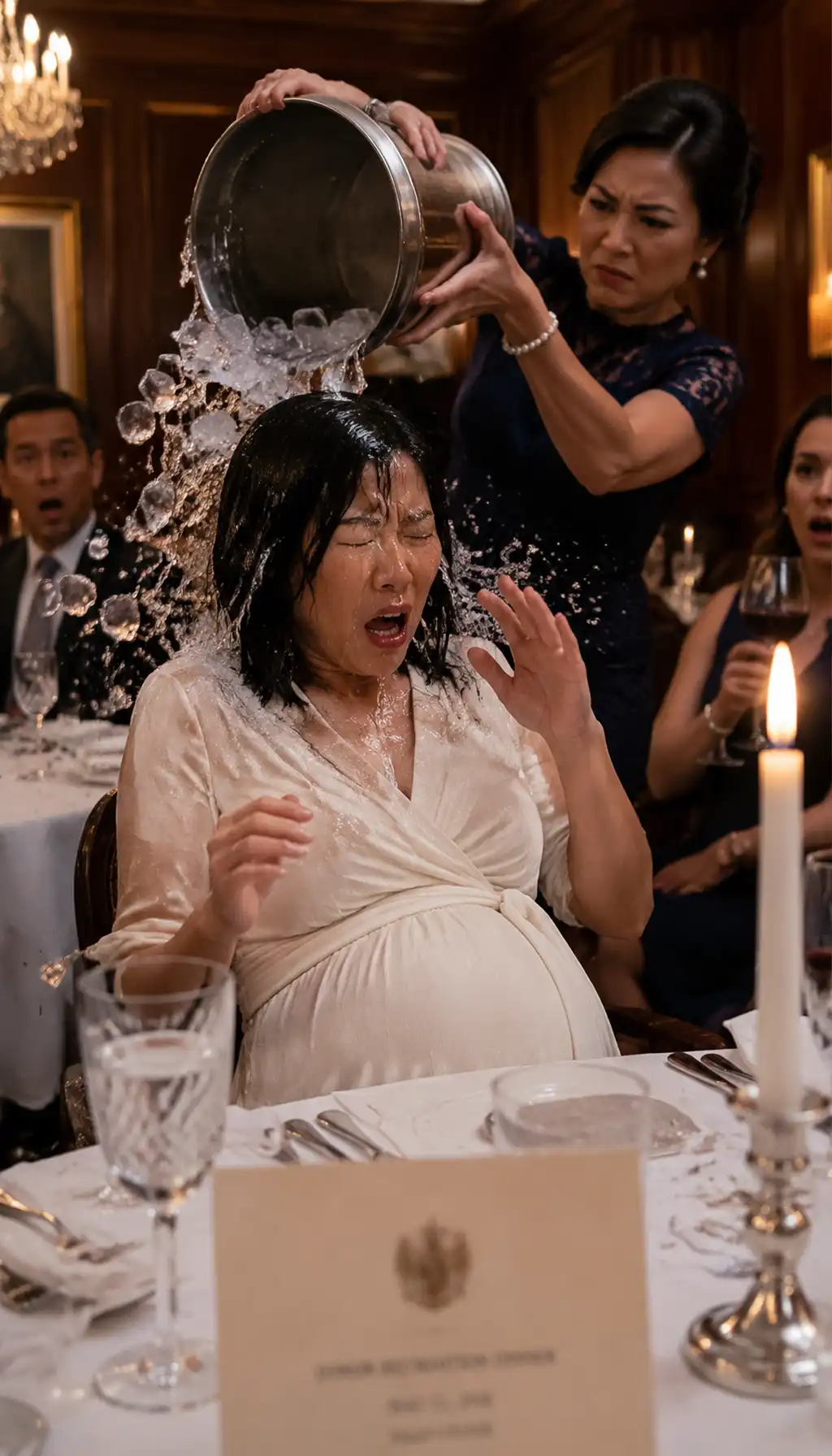
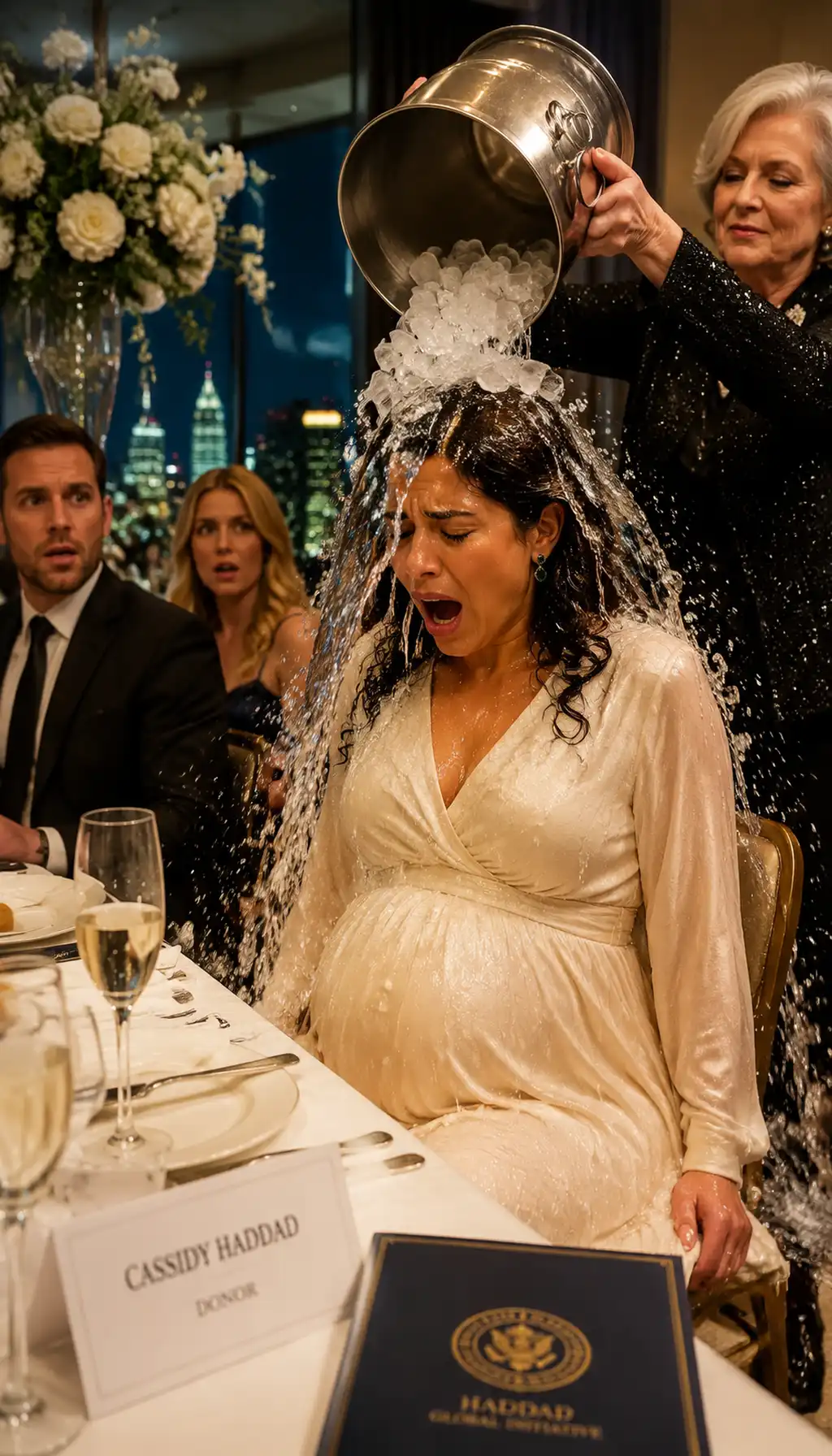
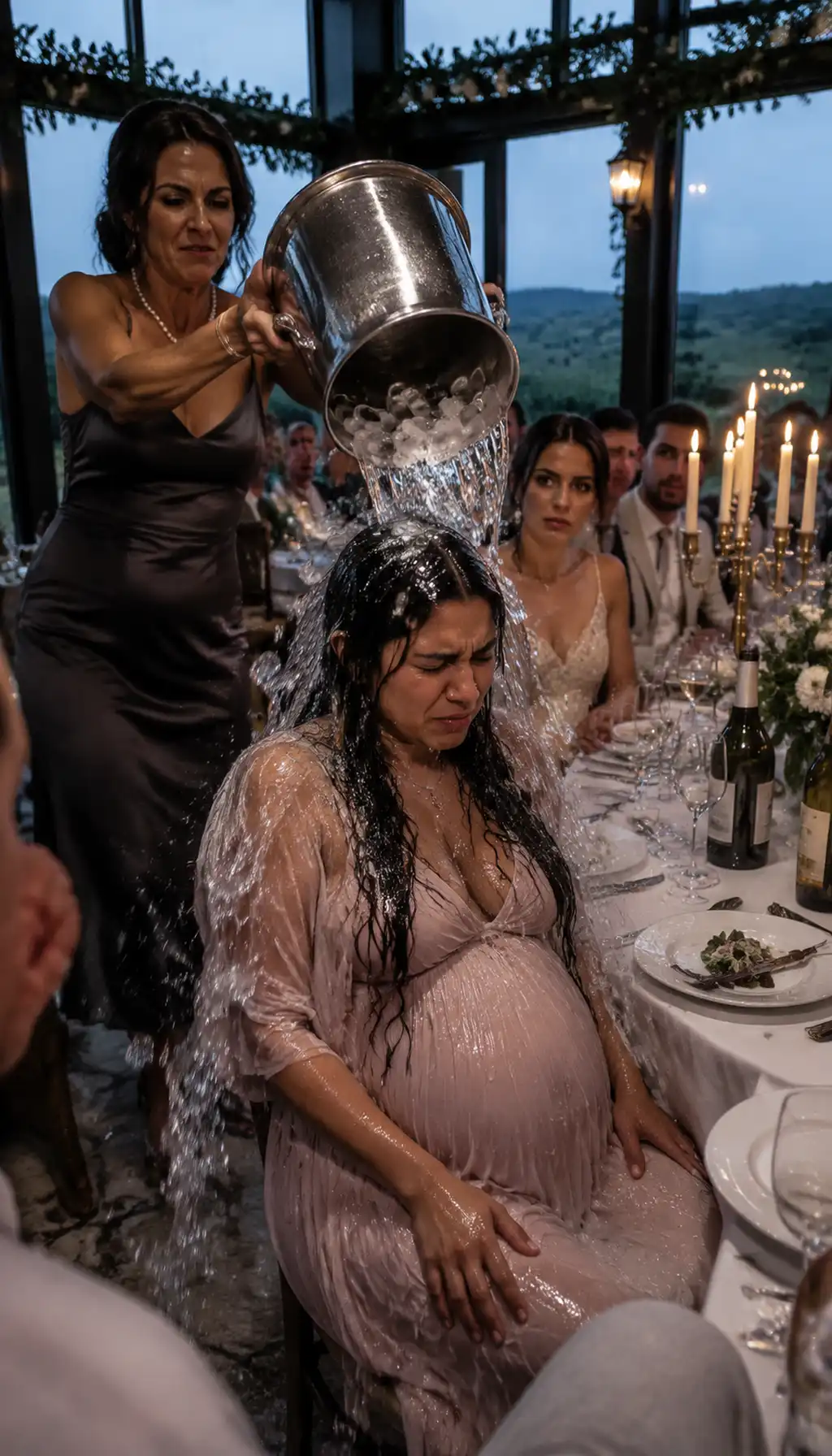
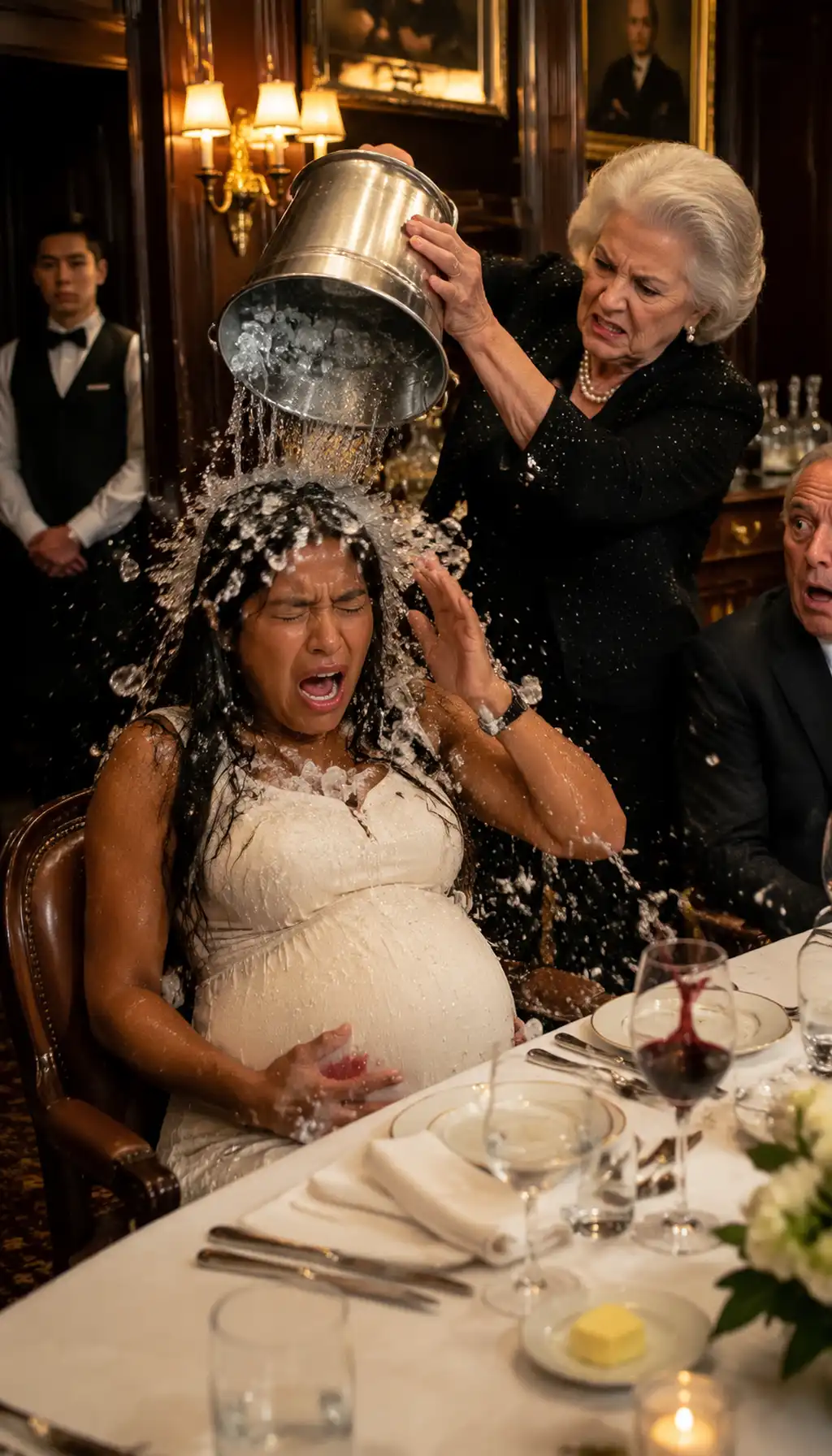
The silver bucket still sat on the table behind my shoulder, beaded with water. Ice fragments glittered near the bread plates. My mascara had probably run. My hair was half down. My baby had kicked hard enough to scare me. There was nothing private about any of it. Twenty-eight guests had watched it happen. Three service staff had direct sight lines. Two more had heard the impact and turned.
I looked at Natalie. "Then you should have no problem with witness statements."
She pressed her lips together.
Elijah ended his first call and stood so abruptly his chair legs scraped the stone floor. "This is absurd," he said, too loudly. "Arthur has no authority to do anything without executive confirmation."
I finally reached for the linen napkin the server offered and pressed it lightly to my cheek. "Arthur has exactly the authority I gave him."
"No," Elijah said. "No, you signed temporary operational documents during the separation because we needed continuity before the merger discussion."
There it was.
The old trick. Use jargon until listeners assume the woman in the room must be confused.
Several guests glanced between us. I knew exactly what they had been told about me over the past year. That I was emotional. Difficult. Ungrateful. Lucky to have been brought into the family business at all. The story had always depended on one lie: that I had married into their world.
I had not.
The venue management company that staffed this estate, the coastal properties, the donor galas, the wedding contracts, the guest housing, and the security systems had belonged to my grandfather before it became mine through the Santos Management Trust. The Morrisons did not own that company. They licensed its services, used its properties, borrowed its prestige, and confused access with ownership for so long they started believing their own fantasy.
The estate itself sat inside a holding structure so layered most people stopped asking questions after hearing the word family. But the staffing contracts, event controls, service systems, renovations, private-client approvals, and access matrix ran through my company.
And my company answered to me.
Not to my ex-husband.
Not to the woman who had just poured ice water over my pregnant body.
Not to anyone at that table.
The interior glass doors opened.
Two security officers stepped onto the terrace with calm expressions and discreet earpieces. They wore dark jackets with the vineyard crest near the collar, but they did not scan for Natalie first. They did not check Elijah's face for cues. They looked directly at me.
That was the first moment the room truly turned.
When authority enters a wealthy room, people expect it to align with the loudest name.
Instead, one of the officers said, "Ms. Santos, are you injured?"
The silence after that felt heavier than the water in my dress.
Natalie's expression changed in tiny pieces. First offense. Then disbelief. Then a sharp old fear she tried to hide with posture.
Elijah took one step toward the officers. "There has been a misunderstanding. This is a family matter."
The taller officer held up a polite hand without even looking at him. "Sir, please remain where you are."
He actually stopped.
That might have been the most shocking thing some guests saw all night.
I answered carefully. "I need medical caution, not emergency transport yet. I am cold, my dress is soaked, and I felt a sharp kick after impact. I would like the on-call physician alerted and a warmed private room prepared, but no one from this table enters before my legal team approves."
"Yes, ma'am," the officer said.
Ma'am.
That word landed differently in the room than any speech could have.
Natalie forced a brittle laugh. "This is insane. We host here every season."
The second officer, a woman with sleek hair and a tablet in hand, tapped her screen and said in the gentlest voice imaginable, "Courtesy hosting access, ma'am. Not command authority."
The phrase hit like another bucket.
Courtesy hosting access.
I saw Natalie understand it before she accepted it. For years she had been treated with deference by staff, and she had mistaken deference for allegiance. But service culture in luxury properties is built on invisible charts, permissions, and authorizations. The smile belongs to the guest. The obedience belongs to the contract.
And every one of those contracts answered to me.
Elijah moved toward me then, not violently but with the entitled urgency of a man who believes proximity is a right. He reached for my phone.
"Olivia, give me that. We are not doing this in front of everyone."
One of the security officers intercepted him with perfect calm. Not a shove. Not a threat. Just a firm step into the line between us that made Elijah halt as if he had met glass.
"Sir," the officer said, "do not approach Ms. Santos or attempt to interfere with active counsel communications."
Several guests inhaled at once.
I did not look at Elijah. I was too busy watching Natalie_70.
She knew what active counsel communications meant. She knew enough to stop pretending this would smooth over with champagne and an apology in the morning. Her gaze shifted to the silver bucket, then to my phone, then to the servers waiting at the edge of the terrace for instructions they would no longer take from the Morrisons.
My phone buzzed again.
Arthur.
I answered immediately. "I'm here."
His voice came low and precise. "Protocol Seven is active. Family-linked account permissions are frozen pending board review. Estate command functions transferred to direct principal control. Do you need the access list read aloud in front of witnesses?"
I thought for one beat and said, "Not yet. Is the physician on standby?"
"Yes. Also, the board chair requests a secure line in ten minutes. He has already reached Elijah and received resistance."
"Of course he has."
Arthur did not react to the edge in my voice. That was one reason I trusted him. He knew when my restraint was still restraint, not weakness. "One more thing," he said. "The renovation archive pulled the Persian rug replacement authorization and terrace flooring addendum from last winter. Your signature is attached. The estate manager says there may be value in surfacing that tonight if ownership is challenged."
I looked down at the polished stone floor under the table, then toward the doorway threshold where the old hand-knotted rug used to sit before I ordered it removed after a guest nearly tripped during a donor event.
That detail had mattered so little to everyone else. But luxury properties reveal their real chain of authority through boring decisions, not glamorous ones. Who signed the catering overflow plan. Who approved the flooring replacement. Who authorized the fire-door code change. Who paid for the rug that used to lie under the winter terrace arch.
I had signed those budgets because they were mine to sign.
"Keep that ready," I told Arthur. "And send me the current access status for this building."
"You'll have it in thirty seconds."
I ended the call and finally stood.
The wet fabric pulled against my legs. A female attendant had arrived with a warmed cream shawl and placed it around my shoulders without fuss. I thanked her quietly. My baby moved again, not the sharp protective kick from the impact this time, but enough to steady me. Presence. Life. A reminder that every choice I made tonight had to pass two tests, not one: Was it just? And was it safe?
"Olivia," Elijah said, softening his voice now that command had failed him, "you are upset."
I turned to face him.
He had perfected that tone during our marriage. It was the tone of a man setting down a poison cup and calling it water. Gentle enough to sound caring. Condescending enough to erase the target's credibility.
"You think I'm upset because your mother humiliated me," I said. "I am upset because she did it while I am carrying a child, in a venue run by my staff, under contracts with my name on them, and you still think the danger here is my reaction."
His jaw flexed. Guests looked away because truth at close range is embarrassing to those who have fed on gossip.
Natalie tried another tactic. "If you are truly worried about the baby, then stop this spectacle and go lie down. We can settle the rest tomorrow."
That was the second classic move. Rebrand accountability as stress. Tell the harmed woman that peace requires her silence because motherhood should make her accommodating.
"No," I said. "Tomorrow is where people edit evidence."
The officer with the tablet stepped closer. "Ms. Santos, building access report."
I held out my hand. She gave me the tablet.
On screen, the estate map glowed with color-coded permissions. Guest suites. Private cellar. event kitchen. office wing. north gate. accounting room. bridal cottage. terrace controls. vendor loading dock. security cabinet. card issuance terminal. Every place the Morrisons had treated like their backyard carried a simple status line beneath their names.
Courtesy access suspended.
Natalie stared. "That cannot be right."
"It is right," I said.
She reached into her clutch for her keycard with the impatience of someone determined to prove technology insolent. It was a polished black card embossed with the vineyard crest, one she flashed around staff the way minor royals wear old medals. She stepped toward the interior glass doors and pressed it to the panel beside the frame.
Red light.
A soft denial tone.
She did it again.
Red light.
Around us, the room went perfectly quiet.
That was the midpoint Arthur had predicted without naming it. The family could not move through a room they thought belonged to them.
Elijah swore under his breath and took his own card from his wallet. He slapped it to the panel harder, as if force could persuade software.
Red light.
The second denial tone sounded almost polite.
Natalie_70 set down her glass entirely now. Even the servers stopped pretending not to watch.
"This is a glitch," Elijah said.
The officer beside me replied, "No, sir. Principal command update."
He turned on me. "You are insane if you think you can lock us out of our own rehearsal dinner."
"Our rehearsal dinner?" I repeated. "The event package invoice was approved through my office after your mother's personal assistant missed the payment deadline and begged accounting for a grace release. I covered the labor hold because I didn't want the staff punished for your family's chaos."
That one landed.
Natalie had not known that. I saw it immediately. She whipped around to Elijah. "What is she talking about?"
He did not answer, which was answer enough.
The officer's tablet chimed with another update. She glanced at it, then at me. "Ms. Santos, the payment tablet at the wine station has also updated permissions. Family charge privileges are disabled pending board review."
I almost told her not to mention that aloud. Then I stopped myself.
No. Let the room learn through every small door they had misused.
At the far end of the terrace, one of Natalie's cousins made a strained joke about paying cash. Nobody laughed.
I handed the tablet back. "Please keep the exits open for guests. No one is detained. I want calm. I want witness names collected from staff. And I want the silver bucket preserved."
"Yes, ma'am."
Natalie drew herself up. "You are treating us like criminals."
"I am treating this like evidence."
The on-call physician arrived then, a compact woman with silver hair pinned neatly back, carrying a leather case and zero interest in society rank. She came directly to me.
"I understand there was sudden cold exposure and abdominal stress," she said. "Would you like privacy now, or a brief assessment here before moving?"
"Brief assessment here, then private room," I said. "I do not want the scene altered before witness capture."
She nodded, impressed rather than shocked. "Any cramping? Dizziness? pain?"
"Cold, tense, one sharp kick after impact, movement since then."
"Good. Keep breathing."
The fact that I answered so plainly seemed to embarrass some guests more than the bucket had. Pregnancy becomes decorative at elite events until a real risk enters the room. Then everyone remembers with visible discomfort that there is a human body inside the polished dress they have been gossiping about all season.
While the physician checked my pulse and asked careful questions, Elijah's phone rang again. He stepped back to take it, but the security officer moved with him, staying close enough to witness, far enough not to intrude.
This time Elijah's voice cracked.
"I told you, I did not authorize-"
He stopped. Listened. His face lost color.
Because of course he had not authorized anything. He no longer could.
I knew what the board chair would be asking. Not whether the event had been ugly. Whether an incident involving the principal beneficiary and controlling signatory had occurred in a managed venue under family access. Whether witness staff were present. Whether medical risk existed. Whether emergency legal freeze had been properly invoked. Whether the family had interfered. Whether all courtesy privileges should remain suspended through review.
Boards are not sentimental. They are slow, cautious machines until liability steps on the gas.
And tonight liability wore pearls and held a silver bucket.
The physician squeezed my wrist gently. "Baby movement now?"
I waited and felt it, a flutter lower this time. "Yes."
"Good. I still want you warm and monitored for the next hour."
I nodded. "Prepare the room. Not the bridal suite."
Natalie snapped, "You cannot deny me access to the bridal suite in my own son's wedding event."
The physician looked at her with flat professional irritation. Security looked at me.
"Assign the library suite," I said. "And lock the bridal suite until inventory is complete."
That command did something no legal speech could have done. Two attendants turned instantly and left to carry it out. No debate. No hesitation.
Natalie looked as though someone had struck her.
Because now the humiliation was no longer symbolic. It had become architectural.
She could stand in the most beautiful room on the property and still fail to enter any part of it that mattered.
Arthur called again as the physician finished her quick assessment. I answered on speaker this time.
"Status," I said.
"Board chair has initiated emergency review. Also, we have the estate renovation packet. The terrace flooring addendum, the library suite furnishing authorization, the old Persian rug removal, and the service-door recode all bear your digital signature. The estate manager confirmed the Morrison family held no principal authority, only hosted-use access extended as a courtesy through your office after the engagement announcement."
Natalie whispered, "Courtesy."
No one spoke over Arthur. Even guests understood official language when it arrived in clean sentences.
He continued, "Additionally, accounting confirms the rehearsal dinner staffing release was held until your direct approval three days ago. Without it, tonight's event would not have proceeded."
Elijah shut his eyes.
That was another truth he had hidden. He had let his mother parade through a dinner she assumed family money had secured while knowing full well the staff had been released because I signed the labor authorization.
I asked, "Any issue preserving video?"
"No. Terrace camera angle has partial audio and full visual of the approach from behind."
Natalie made a wounded sound. "You record family dinners?"
I answered before Arthur could. "I record operational spaces in a luxury venue. Another policy you enjoyed while pretending it was beneath you."
Her hand went to her pearls.
For the first time all evening, she looked old. Not because age had suddenly claimed her, but because certainty had left her body and taken twenty years of posture with it.
Natalie_70 finally found her voice. "Olivia, I think perhaps we all need to calm this down."
I turned to her. "When you saw a pregnant woman drenched in public, you lifted your glass instead of standing up. Please do not start offering moderation now."
That stung, and I let it sting. Dignity is not softness. Sometimes dignity is the refusal to make spectators comfortable.
The board chair must have reached the rest of the family too, because two more phones started buzzing around the table. One uncle walked several steps away before answering. Another guest silently flipped her screen face down as if refusing to look could undo reality. Laughter had vanished so completely it felt imaginary now, like something embarrassing children had done in another room.
The security officer approached me again. "Ms. Santos, one more matter. Per Protocol Seven, temporary command requires principal direction regarding who is revoked first from active movement zones. We need the top order."
This was the moment Arthur had designed the system around, though he never said so in those words. In a crisis, symbolic order matters. The first revocation defines the event.
I knew what some people would expect. That I would say Natalie first because she poured the bucket. Or Elijah first because he laughed. Or both, dramatically, because wounded people are supposed to think in punishments.
But my choices had to protect my baby, preserve evidence, and hold the room.
"Elijah first from communications office and security cabinet access," I said. "Natalie first from guest suite command privileges and all event override controls. Leave them basic exit rights and escorted retrieval rights only."
The officer entered the instructions.
Natalie looked baffled. Elijah looked gut-punched.
Why him first from the communications office? Because he understood systems well enough to interfere. Natalie loved control, but Elijah knew where the quiet switches were. He knew which calls could be redirected, which staff could be pressured, which digital permissions might be muddied before dawn. Remove his access to communication channels and the rest of the machinery had room to work.
And Natalie from event override controls because humiliation had been her weapon. She liked changing seating, deliveries, floral placements, room assignments, and staffing entrances with a snap of her fingers. Removing that power publicly mattered.
The officer's tablet confirmed both updates.
A beat later, one of the interior staff came rushing toward Elijah from the corridor, stopped short when he saw security, and said, "Sir, the office panel denied your code."
He looked at me as if I had arranged the moon.
"It denied your courtesy code," I corrected.
He took a step forward. "Stop calling it that."
"Then stop living off it."
His mouth opened, then closed.
I had loved him once. That was the hardest truth in the room for me, harder even than the cold. I had loved him enough to excuse smaller disrespect early in our marriage because wealthy families train outsiders to confuse endurance with maturity. He had always promised he was different from his mother, and sometimes in private he even believed it. But every time a choice appeared between decency and inheritance, he leaned toward inheritance and called it practicality.
Tonight there was nowhere left to hide that pattern.
The physician touched my elbow. "You need warmth now."
She was right.
But before I left the terrace, I wanted one more thing.
I looked at the server who had first offered me the napkin. "Will you give a statement?"
He swallowed. "Yes, Ms. Santos."
"Tell the truth exactly as you saw it."
"I will."
I turned to the woman at the wine station, who had flinched when the bucket hit. "And you?"
"Yes."
A third staff member nodded before I even asked.
That mattered more than people understood. In these rooms, witness courage is usually strangled by hierarchy. Tonight hierarchy had changed shape fast enough to free honesty.
Arthur sent a document packet to my phone. I skimmed the headings as the physician guided me slowly toward the library suite doors under escort.
Terrace flooring replacement authorization. Signed: Olivia Santos.
Bridal event labor release. Approved: Olivia Santos.
Guest safety recode after winter donor slip hazard. Authorized: Olivia Santos.
Private venue management agreement. Principal signatory: Santos Management Trust.
Every boring, practical, invisible line of responsibility that wealthy guests ignore until a crisis had one name on it.
Mine.
Halfway to the doors, Natalie called after me, and there was something near panic in her voice now, not anger. "Olivia, if you do this, you will ruin the wedding."
I stopped but did not turn around immediately.
No.
I would not let her phrase survive as truth.
When I faced her, I spoke clearly enough for everyone to hear.
"I did not ruin a wedding. You poured ice water over a pregnant woman and laughed in a company-run venue while standing on privileges you never owned."
Nobody moved.
The evening air had gone cool beyond the glass. Candles trembled. The vineyard rows outside were darkening into lines of shadow.
Natalie's voice shrank. "I was upset."
"So was I," I said. "And I still knew better than to assault someone at dinner."
That word hit the table harder than any scream could have.
Assault.
Wealthy people rely on softer substitutes. Incident. Family conflict. misunderstanding. Scene.
But law loves plain nouns.
In the library suite, warmth finally wrapped around me. A staff member brought dry clothes from the emergency hospitality closet: soft black maternity lounge pants, a cream knit wrap top, thick socks. The physician listened for the baby's heartbeat with a portable monitor while I sat in a leather chair under a cashmere throw. The sound came quick and steady, and only then did my throat tighten.
Not from fear exactly.
From release.
I pressed my eyes shut for three seconds and let myself feel how close the evening had come to becoming something else. How one cold shock can turn a polished dinner into a medical question. How fragile a body feels when it is carrying another one.
The physician smiled when she saw my shoulders drop. "Heartbeat is reassuring."
"Thank you."
"I want you observed for a while longer. If cramping starts, we escalate. For now, keep warm and limit stress where possible."
I almost laughed at that last phrase. Stress where possible. As if there were a neat dosage tonight.
When the staff member finished helping me change, I checked my phone again. Twelve messages. Arthur. The board chair. Accounting. Estate manager. One from my cousin in San Diego because apparently news moved through the extended family faster than fire.
And one from Elijah.
Please do not destroy us over this.
Not apologize.
Not are you okay.
Not how is the baby.
Just do not destroy us.
I stared at the sentence and finally understood that some people never see harm except through the lens of what it costs them.
I set the phone down and asked the attendant to bring tea.
Five minutes later Arthur arrived in person.
He was exactly as he always was: dark suit, silver tie, impossible calm. The sort of man who could step into a burning room and make the flames feel administratively embarrassed.
"How are you?" he asked.
"My baby is fine at the moment. I am colder than angry now, which I didn't expect."
"Cold fades. Documentation matters."
I smiled despite myself. "You should embroider that on a pillow."
"It would sell poorly."
He handed me a slim folder. Printed evidence. He knew I liked paper when digital narratives started multiplying. "Board emergency review begins in seven minutes. Before that, there is one development."
I opened the folder. Inside was a copy of the courtesy access schedule for the Morrison family, updated over eighteen months. Every extension required principal approval. Every extension had my electronic signature or my office authorization. Attached behind it sat a memo I had almost forgotten: Elijah's request, during our separation, that his mother be granted seasonal hosting permissions because "maintaining family peace before the wedding cycle is strategically useful."
I looked up.
"He asked me for her access?" I said.
Arthur nodded. "Repeatedly."
I read the date. Eight months after our divorce filing.
The irony was so sharp it steadied me. Natalie had thrown ice water over a pregnant woman using access her own son had requested from that same woman.
"Does she know?" I asked.
"Not yet. But she will if she contests authority."
A knock sounded. The security officer entered. "Ms. Santos, the board chair is on the secure line. Also, Mr. Morrison attempted to enter the communications office again and was denied."
Arthur gave the smallest approving glance. Procedure working as designed.
I took the secure phone.
The board chair, Martin Hale, had a voice like expensive paper. Dry, controlled, hard to wrinkle. "Olivia, first, I am told the physician finds no immediate danger."
"That's correct."
"Good. Second, I need direct confirmation from you. Did Natalie Morrison intentionally pour ice water over you at the rehearsal dinner in view of staff and guests?"
"Yes."
"Did Elijah Morrison attempt to minimize the incident and later interfere with your active counsel communication?"
"Yes."
"Do you wish Protocol Seven to remain in force through dawn pending formal review?"
I looked at Arthur. He did not nod. He never nudged. He just waited for my decision.
Through dawn meant the family would wake up locked out of more than one story they had told themselves. It meant guest movement controlled by escort. It meant no quiet overnight repairs to narrative or evidence. It meant the wedding morning, if there was still to be one, would begin under documented authority rather than emotional theater.
My hand moved to my belly.
"Yes," I said. "Keep it in force through dawn."
Martin exhaled once. "Understood. There is one more question. Who do you want addressed first in the formal notice, Natalie Morrison or Elijah Morrison?"
I thought of the bucket. The laugh. The attempt to take my phone. The years of access mistaken for ownership. I thought of the baby heartbeat still echoing in my ears. I thought of staff who had watched and waited to see whether truth would be protected or punished.
"Elijah first," I said. "He knew what my authority was."
That was the core of it. Natalie had acted with arrogance. Elijah had acted with knowledge.
Martin understood immediately. "Formal notice will reflect that distinction."
When the call ended, Arthur closed the folder and said, "That was the right choice."
"I know."
He studied me for a moment. "Do you want to hear the rest now or after tea?"
"The rest."
"The bridal suite key override has already rejected Natalie's card. The wine cellar charge account is frozen. Guest services informed the wedding planner that all command requests must now come through your office. And the first person whose access was fully revoked from active administrative zones was Elijah."
I leaned back in the chair.
There it was.
Not the grandest punishment. Not the loudest consequence. Just the cleanest truth. The man who laughed and asked who I could possibly call was the first one the building stopped obeying.
Outside the library suite, footsteps passed, hesitant and subdued. The estate had not become chaotic. That was the beauty of a real system. It did not scream. It simply rerouted around people who were never supposed to hold the wheel.
I took my tea, held the warmth in both hands, and for the first time all night let myself imagine tomorrow.
Not a triumphant parade.
Not revenge.
Just breakfast with sunlight on the vines, my child still safe inside me, staff who knew I had protected them by protecting the truth, and a family forced at last to live inside the limits they had spent years denying.
Arthur stood to leave. "I'll remain nearby. Do not answer Elijah unless you want the message preserved through counsel."
"I don't want to answer him at all."
"That is also a message."
When he reached the door, I stopped him. "Arthur."
"Yes?"
"Thank you for picking up on the first ring."
He gave me the faintest smile. "You signed the protocol yourself. I assumed if you used it, there was a reason."
After he left, I sat in the quiet with the monitor still faintly ticking beside me.
People always imagine power announces itself with volume. They think the owner is the loudest man at the table, the oldest woman in pearls, the family name engraved on the gate, the person who orders the staff around without looking up.
Real power is usually much less theatrical.
Sometimes it is a woman in a wet dress who does not cry.
Sometimes it is a phone contact everyone mistakes for a cab.
Sometimes it is the building choosing, in front of witnesses, whose card turns red first.
And that night, the first name the system shut out was Elijah Morrison.
I’ll continue directly from the last story beat and keep it in plain fulltext only.His second message came eleven minutes later.
You are making this worse.
I looked at the screen, then locked it without answering.
That was what he always did when reality moved beyond his control. He treated exposure like escalation and silence like cruelty. If he hurt you privately, it was complicated. If you named it publicly, you were vindictive. If his mother crossed a line, she was emotional. If I set a boundary, I was destructive.
The physician returned to check my temperature and asked whether the baby had moved again. I waited, breathing with one hand against the side of my stomach until I felt a small answering flutter.
"Yes," I said.
"Good. Still no cramping?"
"No."
She nodded, but she did not look relaxed. "You had sudden cold exposure, shock, and stress. Even with a reassuring heartbeat, I want you monitored. If you feel tightening, dizziness, bleeding, pain, or reduced movement, we escalate immediately."
Escalate. There was that word again. It belonged to the whole night now.
A knock sounded, and the security officer from the terrace stepped inside with a tablet tucked against her arm. "Ms. Santos, I'm sorry to interrupt. We have a situation at the west corridor."
Arthur, who had stayed just outside the suite making calls, appeared in the doorway behind her. "What kind of situation?"
The officer glanced at me first, waiting for permission. I appreciated that more than she knew.
"Tell me," I said.
"Mrs. Morrison attempted to enter the bridal suite despite the lock order. When denied, she instructed the planner to remove floral inventory and personal items immediately. The planner refused without updated authorization. Mrs. Morrison then tried to direct two attendants to open the suite manually."
Arthur's face hardened by half a degree. "Were any doors forced?"
"No, sir. But there is more. Mr. Morrison is in the west corridor stating he needs his laptop from the communications office, and he says he will not leave until he gets it."
I sat straighter in the chair. "Who is with him?"
"Two groomsmen, the planner, and three guests. Also Natalie_70."
Of course she was. Witnesses drift toward power the way people drift toward heat in a cold room.
Arthur looked at me. "You should not go back into the corridor."
"I know."
But I also knew something else. If they created a second scene in the hallway, it would grow roots by morning. People would say they were trying to recover personal belongings. They would say security overreacted. They would say I turned a private conflict into a lockout. The story would start to slide.
"Put the corridor camera feed on the tablet," I said.
The officer did so and handed it to me.
The angle was from a high corner, clear enough to show Elijah in the center of the hall near the old oil painting of the vineyard founders. His jacket was unbuttoned now. His hair looked wrong, disturbed by too many hands through it. Natalie stood beside him, rigid as a spear, one palm flat against the planner's forearm as if holding her in place through sheer entitlement. Natalie_70 hovered a little behind them, no longer amused, no longer distant either. Her face had the drawn look of someone who understands she stayed in the wrong room too long.
I watched Elijah point toward the corridor intersection that led to the communications office.
Then he did something so predictable I almost felt tired.
He raised his voice and gestured toward security as if he were the one being humiliated.
Arthur saw it too. "He's building witness sympathy."
"He won't get it if I control the facts first."
The officer waited.
I thought quickly. The physician was already preparing to object, so I spoke before she could. "I'm not going there in person. Bring the corridor phone on speaker. And send one attendant to the communications office under escort to retrieve any personal medication or non-company property from Elijah's bag if there is any. Not the laptop. Not any device."
Arthur nodded once. "Good."
The officer spoke into her earpiece, concise and calm. A minute later the secure corridor line opened on speaker.
Elijah's voice arrived first, too loud. "This is absurd. I have personal property in that office."
Arthur said, "The office is now a restricted administrative zone."
"I know what you're calling it," Elijah snapped. "I need my computer."
I leaned toward the phone. "Why?"
Silence.
Then a slight intake of breath from someone in the corridor. He had not expected to hear me directly.
"Olivia," he said, shifting instantly into his softer voice, "you don't need to be involved in this part. Just tell them to let me get my things and this ends."
Arthur lowered his eyes for a second, almost in disbelief at the performance.
"This ends when evidence is secure," I said. "What is on the laptop that cannot wait until counsel inventories it?"
Another pause. Too long.
Natalie cut in sharply. "His work. His private correspondence. His life. Must you strip everything from us tonight?"
I felt the baby move again, smaller this time, and steadied my breathing. "No one is stripping anything. Restricted property is being logged. If there is medication in his bag, it will be brought under escort. If there are personal effects, they will be documented. If there are company files, they remain in company custody."
"Company custody," Natalie repeated, as if the phrase itself were vulgar.
"Yes."
The planner's voice entered, strained. "Mrs. Morrison has requested release of suite inventory, but guest services refuses without principal approval. I need instruction on whether tomorrow's ceremony setup should proceed."
There it was. The next pressure point. Not access. Not just evidence. The wedding itself.
Every person in that hallway went still waiting for my answer.
Arthur said quietly, "You are not required to decide tonight."
He was right, but the planner needed a direction. Properties like ours run on timing. Florals wilt. vendors arrive at dawn. chairs move before sunrise. A suspended decision becomes chaos, and chaos is the perfect cover for liars.
I asked, "Are any vendors already on-site for overnight staging?"
"Yes," the planner said. "Florals in the lower annex, lighting crew at five thirty, ceremony chairs at six."
I closed my eyes for one beat. Then I opened them and chose the narrowest path.
"Continue preservation of perishable materials only. No ceremony installation. No bridal suite dressing. No movement into final event spaces until board review concludes."
The silence after that was bigger than the first one.
Not cancellation.
Not permission.
Suspension.
Enough to stop the machinery without setting it on fire.
Natalie found her voice first, and it broke on the second word. "You cannot hold an entire wedding hostage."
"I am not holding anything hostage," I said. "I am freezing operations after an assault in a managed venue with active legal review."
That word again. Assault. I used it because they kept trying to wash it into something social.
On the speaker, I heard Elijah turn away from the group. When he spoke again, his voice was lower. More dangerous because it was closer to honest.
"What do you want from me?"
An apology would have been the easy answer. A confession. Public shame. Something cinematic and satisfying.
But none of that would protect what mattered.
"I want you to stop moving," I said. "Stop calling staff. Stop trying doors. Stop framing yourself as the injured party. Sit down somewhere and act for once like a man who understands what happened in front of him."
No one answered.
Then the security officer at my side touched her earpiece. "Update. Attendant has located one toiletry bag and medication from Mr. Morrison's satchel outside the office door. No need for office entry. Laptop remains secured."
Elijah exhaled hard. "Fine."
But he did not sound defeated. He sounded interrupted. I knew that tone too. It meant he was thinking ahead, looking for the next way around the wall.
The call ended.
The physician set her kit down on a side table with more force than necessary. "You should rest now."
"I will," I said.
But rest had become a fantasy word.
Two minutes later Arthur's phone buzzed. He glanced at the screen, then looked at me. "The estate manager found something."
My skin prickled with a new kind of cold. "What?"
"He says one of the service supervisors saw a guest pick up a phone from the terrace table after the incident and walk off with it before security locked the zone."
For a second I didn't understand.
Then I did.
My phone.
I looked down at my lap in confusion before remembering that Arthur had handed me the secure house phone after the library suite call. My personal phone, the one with Arthur's contact labeled EVP Legal, the one that had shown the message thread and the digital packet, the one that proved exactly who I called and when, was no longer in my hand.
"When?" I asked.
"Immediately after you were escorted out. The supervisor believed it had already been cleared as part of your belongings."
The room seemed to tilt, not from weakness but from anger so clean it felt like steel.
"Who took it?"
Arthur checked the message. "The supervisor thinks it was Jessica."
I sat forward so fast the physician protested. "Natalie_70?"
"Yes."
Of all the things I expected, that had not been one of them.
She had laughed first. Then offered a towel. Then lingered near every pressure point in the building. And now she had my phone.
That changed everything.
Because if she took it for Elijah, then they were not panicking. They were coordinating. If she took it on instinct, she still carried evidence in her hand. Either way, the device had to be located immediately.
"Lock all exterior exits to monitored passage only," I said. "No detainment, but visual on every departure. Quietly. Ask Jessica to remain available for witness follow-up. Do not accuse her in public yet."
Arthur was already texting before I finished. "Done."
The physician crossed her arms. "You are white as the throw blanket."
"I know." My voice came out colder than I intended. "I'm also missing the primary device containing direct evidence."
She did not argue after that.
Within four minutes, the security officer returned. "Jessica says she picked up a phone from the terrace because she thought it belonged to one of the guests. She claims she gave it to Mrs. Morrison for safekeeping."
My whole body went still.
Not Elijah.
Natalie.
Arthur swore softly under his breath for the first time all night.
That made sense in a poisonous way. Natalie would not know what was on the phone, but she would know it mattered because everyone had changed the instant it lit up. And if Jessica handed it over, she had crossed from passive witness to evidence movement.
"When was this?" I asked.
"Three minutes after you left the terrace."
"Where is Natalie now?"
"In the blue salon, with two relatives and Jessica."
Arthur looked at me. "We retrieve the device now."
"Yes," I said. "And I want two witnesses when you ask."
He started for the door, but I stopped him. "Wait. Speaker again."
The officer relayed the instruction.
A minute later a second call connected, and the first sound was Natalie saying, "I do not appreciate being questioned like this in front of guests."
Then she heard my voice.
"You should have appreciated that before you handled property belonging to legal counsel communications."
Silence.
Jessica spoke next, rushed and brittle. "Olivia, I was trying to help. I saw your phone near the spilled water and I thought someone might step on it. I handed it to Natalie because she said she would make sure it got to the right room."
Natalie cut in instantly. "I was protecting it. Honestly, you should be grateful someone had the presence of mind to save your property while you were staging a corporate takeover."
Arthur said, "Mrs. Morrison, return the phone immediately."
"I don't have it."
That lie was too fast.
I said, "Natalie, if my phone appears damaged, wiped, unlocked, or separated from its case, the consequences get worse, not better."
She let out a little laugh that landed nowhere. "Do not threaten me."
"I am informing you."
The security officer in the blue salon must have stepped closer, because Natalie's next words came tighter. "I put it in my bag. I did not touch anything."
There it was.
"Then take it out," Arthur said.
A rustle of leather. The metallic slide of a clasp. A few long seconds.
Then Jessica's voice again, higher now. "It's not there?"
My pulse jumped. "What do you mean it's not there?"
"I mean," Natalie said, and now the control was gone from her voice, "it is not in this bag."
Arthur's head snapped toward the officer. "Nobody leaves that room."
The officer spoke into her earpiece. Movement answered in muffled footsteps through the speaker.
I gripped the side of the chair. "Search the floor, the chairs, under the settee, every wrap and gift bag. Ask who else touched it."
Jessica made a sound like she might cry. "I gave it to her. I swear."
One of the relatives said, "Natalie set her bag down twice. Once in the corridor and once in the salon. Anyone could have-"
Arthur cut in. "Names."
The room on speaker became a mess of voices. Corridor. salon console. powder room. planner. cousin. shawl. bag.
The physician touched my shoulder. "Breathe."
I did, but the edges of my vision were narrowing anyway. Not from panic exactly. From the sheer violence of being forced to think medically, legally, emotionally, and strategically all at once while my body still felt the shock of ice.
The officer muted the line briefly while her team sorted the room.
Arthur crouched slightly so his eyes were level with mine. "Listen. We have the terrace camera. We have staff witnesses. We have board activation logs. Losing the phone would be serious, but not fatal."
"Unless they unlock it."
"You use face ID."
"Elijah knows my old code pattern."
Arthur's expression sharpened. "Old pattern?"
"I changed it after the separation."
"Then we are ahead of them."
A sharp cramp seized low in my abdomen.
Not strong. Not long.
But real.
I sucked in air and pressed both hands to my stomach.
The physician was beside me immediately. "Describe it."
"One tightening. Low. Brief."
"Again?"
"No."
She was already opening the monitor case. "Feet up. Now. If you have another one, we escalate from observation to transport."
Arthur's face changed then in a way nothing else had managed to produce. Not panic. Not even fear. Something colder. A recalibration. The whole evening shifted from scandal risk to maternal medical risk in his mind, and that made every other concern secondary.
The officer unmuted the call.
"Ms. Santos," she said, "we have your phone."
My eyes opened.
"Where?"
"It was found in the powder room waste cabinet behind folded hand towels."
No one spoke for a second.
Then Arthur said very quietly, "Behind the towels?"
"Yes, sir. Screen side down. Case still on. Appears damp but intact."
Natalie started speaking immediately, too quickly, too indignantly. "That is impossible. Someone planted it. This is exactly what I mean. This whole night is becoming absurd."
Jessica whispered, "Oh my God."
Arthur did not raise his voice. "Chain of custody from this moment. Bag the device. Photograph location. Witness list for every person in the blue salon and corridor. No one discusses this outside staff and counsel."
The officer confirmed and ended the call.
I leaned back against the chair, but there was no relief in it. Only another layer. The phone had not just been misplaced. It had been hidden.
And if Natalie had hidden it, then she was not merely arrogant. She was conscious of evidence. If she had not hidden it, someone around her had acted on the same instinct.
The physician attached the monitor and listened in silence until the baby's heartbeat filled the room again. Steady. Quick. Dearer than anything else on earth.
"No immediate distress," she said. "But that tightening means I stop negotiating with you. One more episode and you go to the hospital."
I nodded because there was nothing else to do.
Arthur stood and made three rapid calls in succession. Evidence preservation. device forensics. board notice update. His voice never rose, but every sentence tightened the net.
When he finished, he turned back to me. "The board chair needs one final clarification tonight. With the hidden phone and attempted access breaches, he wants to know whether you are requesting conversion from internal review to external reporting trigger if device tampering is confirmed."
External reporting.
Police.
Insurance.
Regulators, potentially, if financial systems had been touched.
The word sat between us.
This was the emotional reversal they never imagine when they laugh at a woman in public. They think consequences will arrive as embarrassment, maybe gossip, maybe a canceled toast. They never picture the moment when the person they targeted has to decide whether to hand their names beyond the walls of the family.
I closed my eyes for one long breath.
I did not want spectacle.
I did not want revenge.
I wanted truth, safety, and a future in which my child would never learn that I let powerful people rewrite harm because confronting them was inconvenient.
"If the device shows tampering," I said, "yes. Trigger external reporting."
Arthur nodded once. "Understood."
He stepped out again.
The suite became quiet except for the fetal monitor and the clink of the spoon as the attendant refreshed my tea. I should have felt victorious by then. That is what people imagine, that exposure creates triumph.
It does not.
Exposure creates aftermath.
And aftermath is exhausting.
A soft knock sounded, and before I could answer, Jessica herself appeared in the doorway under escort. Her mascara had smudged slightly. She no longer looked elegant. She looked shocked to discover that being adjacent to cruelty can stain you too.
The officer said, "She requested to speak to you directly. Briefly."
The physician frowned, but I surprised myself by saying, "Let her in."
Jessica stepped just inside the room and stopped. "I am sorry," she said at once. "I should have stood up on the terrace. I should have handed the phone to security. I don't know why I gave it to her except that everyone always gives things to her and I wasn't thinking."
It was the first honest sentence she had spoken all night.
"Did you see her hide it?" I asked.
Jessica swallowed. "No. But I saw her open your lock screen. It lit up in her hand. She couldn't get past it. She looked furious. Then Brendan came into the corridor and she told him she had it handled."
I felt something in me go very still.
"Elijah knew she had my phone?"
"Yes."
The officer beside the door was already noting it.
Jessica continued, voice shaking now. "And he said... he said, 'Make sure Arthur can't pull anything else off that thing.' I didn't understand what that meant then. I do now."
There it was. Not confusion. Knowledge. Coordination.
The physician put a hand on the back of my chair, grounding me physically because the room had started to feel far away.
"Will you put that in a statement?" I asked.
Jessica nodded instantly. "Yes. Everything."
"Why now?" I asked.
Her face crumpled, but she held it together. "Because when they found it hidden, Natalie looked at me like I should lie for her. And I realized if I did, I would become one of the people who watched and helped and later called it awkward. I don't want to be that person."
No one speaks beautifully when they tell the truth under pressure. That is how you know it is true.
"Give your statement to Arthur," I said. "Complete and signed."
She nodded again and let the officer lead her out.
The door closed.
I sat there listening to the baby's heartbeat and understanding with sick clarity that Elijah had crossed a line even after the bucket. He had seen me soaked, seen me pregnant, seen security answer to me, seen the board chair call, and still his first instinct had been to interfere with evidence.
Arthur came back ten minutes later with the phone sealed in a clear evidence pouch and a look I had only seen on him twice before.
"What?" I asked.
"We ran a quick exterior check. No damage. No unlock. But there is another issue."
He handed me a printed screenshot from the estate gate log.
At 9:43 p.m., three minutes after the phone disappeared from the terrace and before it was hidden in the powder room, a request had been placed through guest services for a vehicle to be brought to the west drive immediately under Morrison family priority release.
"Who requested it?" I asked.
"Elijah."
The paper trembled slightly in my hand. "He was trying to leave."
"Likely with the device, if they could unlock it or remove it quietly."
The physician muttered something under her breath that sounded like a prayer and a curse mixed together.
Arthur continued, "The request was denied automatically because Protocol Seven had already changed departure clearance for family-coded movements. He then attempted office access. Then the phone was hidden."
That sequence mattered. It transformed the whole pattern from panic to attempted evidence removal.
I thought again of the message he sent me.
Please do not destroy us over this.
No.
He had already started trying to save himself from the truth.
My abdomen tightened again.
Harder this time.
I doubled forward before I could stop myself.
The physician moved instantly. "That's two. We're done. Hospital."
Everything accelerated.
The attendant grabbed my socks and shawl. The officer called for the medical transport car instead of an ambulance at first, then switched to ambulance when the physician said no delay. Arthur was on the phone with the hospital before I even stood up.
"Contractions?" he asked the physician.
"Possibly stress-related uterine irritability. Could resolve. Could worsen. We are not gambling."
The room sharpened with purpose.
This was the rescue part no one at the dinner had imagined while laughing over wine. Consequences did not end at locked doors and frozen accounts. They ran straight into fluorescent hallways, monitors, paperwork, and the absolute terror of waiting to hear whether your body will keep your child safe through a night that should never have happened.
As they helped me to my feet, the officer received a message in her earpiece and looked at Arthur.
"Say it," he told her.
"Board chair has upgraded review status in light of possible evidence interference. Mr. Morrison is to remain on-site pending counsel arrival. Mrs. Morrison also. All outbound vehicle requests under their names are suspended."
Good, I thought grimly. Let the building hold them where the truth happened.
They moved me through a private service corridor instead of the main hall. Even then I could hear fragments of the estate beyond the walls. Doors opening. hushed voices. a planner crying somewhere far away. The weird muffled life of a beautiful place after it has swallowed something ugly and cannot spit it back out.
At the turn near the lower annex, we passed the floral storage room. White roses. Green garlands. Candle boxes labeled for tomorrow.
Tomorrow.
The word nearly broke me.
Arthur stayed at my side until the ambulance team took over at the north drive. The night air hit my face, cool and grape-scented, and for one second I saw the terrace through the glass above, still glowing with candlelight as if none of this belonged to it.
"Listen to me," Arthur said as the paramedic secured the straps lightly over my hips and thighs. "Your only job now is the baby. I will handle the rest."
"Do not let them leave."
"I won't."
"Do not let them spin the phone."
"I won't."
He hesitated, then added, "Jessica's written statement is already in hand. And the board has the gate log. Elijah's sequence is exposed."
That steadied me more than reassurance should have.
As the ambulance doors closed, I caught one last glimpse of the estate entrance. Elijah stood just inside the lit archway with a security officer beside him and no jacket on now, his phone in his hand, his face empty. Not angry. Not suave. Just stripped. Behind him, Natalie stood a few feet back, small against the stone, pearls bright in the light like a costume piece from a play that had ended badly.
Neither of them were in control anymore.
At the hospital, everything reduced to essentials.
Name.
Weeks pregnant.
What happened.
When did the tightening begin.
Any bleeding.
Any loss of fluid.
Pain scale.
The nurse asked if the stress event involved domestic violence, and I answered, "It involved family assault at a venue under my management."
Her eyes flicked up, sharp and kind at once. "Understood."
Monitors. blood pressure. fetal heart tracing. warm blankets. a doctor with tired eyes and fast hands. Another contraction, then a longer gap. The baby looked stable. My uterus was irritable but not progressing into labor, at least not yet. They gave me fluids, warmth, and observation and told me the next two hours would matter.
Those two hours lasted half a year.
At 1:18 a.m., Arthur texted through the nurse-approved contact line.
Device forensics complete. No entry. Multiple failed face unlock attempts recorded while screen was active in corridor. Time stamps align with Jessica statement.
At 1:26 a.m., another text.
Board chair served formal suspension notice on Elijah from all administrative privileges pending emergency session.
At 1:41 a.m.
Natalie attempted to contact planner again through cousin's phone. Staff refused and logged it.
At 2:03 a.m.
Wedding planner has suspended ceremony installation citing active legal and medical incident review.
At 2:27 a.m.
Security recovered audio from west corridor. Elijah clearly says, "Make sure Arthur can't pull anything else off that thing."
I stared at that last line so long the nurse asked if I wanted her to call someone into the room.
"No," I said. "I just needed to see it in words."
This is what exposure consequences really look like. Not applause. Not a dramatic music cue. Just timestamp after timestamp turning a powerful family into a set of recorded decisions.
Near three in the morning, when the contractions had spaced and the doctor said the immediate danger was easing, my phone line lit again. This time it was not Arthur.
It was Martin Hale, the board chair.
I answered because by then there was no point pretending tonight could wait until business hours.
"Olivia," he said, "I am calling from the estate with counsel present. I wanted you to hear this directly. Based on witness statements, access logs, attempted evidence interference, and medical escalation, the board has converted the review to formal misconduct inquiry."
I let out a slow breath.
He continued, "Elijah has been removed from interim succession consideration pending outcome."
There it was. The exposure consequence he would feel deepest. Not public embarrassment. Not even the locked doors. Loss of the future he thought was waiting obediently for him.
"And Natalie?" I asked.
"Her family-host designation has been revoked indefinitely across all managed properties under the current agreement."
The room around me remained dull hospital beige, but inside me something shifted. Not relief. Not joy. A hard settling. Gravity restored.
Martin paused. "There is one more thing. Do you wish the wedding event formally canceled tonight, or held in suspension until morning physician clearance and counsel review?"
I thought of white roses in cold storage. Staff schedules. Guests in expensive rooms whispering behind doors. My child turning quietly beneath the monitor straps. My own body still trembling from a bucket of ice and two contractions too many.
"Cancel it," I said.
I did not say maybe.
I did not say postpone.
I did not say let's see how everyone feels in the morning.
"Cancel the wedding event."
Martin's answer was immediate. "Done."
After the call, I cried for the first time all night.
Not because I regretted it.
Because endings are sad even when they are necessary.
The nurse pretended not to notice for a minute, then tucked the blanket higher around me and said, "You made a hard decision while protecting yourself and your baby. Those are the ones people always cry after."
She was right.
By dawn, the vineyard had gone from rehearsal dinner fantasy to active evidence site. Staff collected statements. The silver bucket was photographed and bagged. The terrace camera file was duplicated to secure archive. The bridal suite remained locked. Guests were offered early checkout transport under revised event status. Florals were donated before noon to the hospital chapel and two shelters at my instruction because I could not bear the thought of all that white beauty browning in storage because cruel people mistook privilege for immunity.
Arthur came to the hospital at sunrise with a fresh suit, coffee I could not drink yet, and a printed packet.
"The cancellation notice has gone out," he said. "The planner used force majeure language tied to medical and legal review. Neutral on its face. Accurate in function."
"And the family?"
"Split. Some are furious. Some are silent. A few are suddenly very respectful."
I almost smiled.
He handed me the packet. On top was a copy of the formal suspension notice to Elijah. Below it, the revocation notice to Natalie. Then witness statements, beginning with the young server who had first offered me the napkin.
He wrote: Ms. Santos was the only person speaking calmly.
That line hit me harder than any legal memo.
Not because I needed praise.
Because it meant someone had seen me clearly in the middle of all that cold.
Arthur turned to the final page. "There is one small item you should know. When the overnight gate system updated the family list after formal suspension, the first auto-revoked profile was still Elijah's. He tried to use a side entrance at 12:14 a.m. after being told to remain in the guest wing. The panel denied him."
"Of course it did."
"He was not accustomed to hearing no from a building."
I looked out the hospital window at the pale beginning of morning.
Neither was Natalie.
Neither, honestly, were most of the people at that dinner.
That was what made the night larger than a family scandal. It exposed the invisible habit of wealth: the belief that rooms, workers, systems, and women will all eventually yield if you press the right tone against them.
Sometimes they do.
Until one night they don't.
By midmorning, my contractions had fully calmed. The doctor cleared me for discharge with strict rest instructions, follow-up monitoring, and a look that promised she would personally drag me back by the ear if I ignored her.
Before I left, I asked Arthur one final question.
"Did Elijah ask about the baby?"
Arthur did not answer immediately.
That was answer enough, but after a moment he said, "He asked whether the board intended to notify insurers."
I looked down at my hands.
Then I nodded once, because there was no more of him left to discover.
When we drove back past the vineyard hours later, the terrace had been reset. White cloths removed. candles gone. chairs stacked. Glass reflecting daylight so cleanly it looked innocent again.
But the building knew.
The staff knew.
The logs knew.
The board knew.
And I knew.
I placed my hand over my stomach as the car turned toward the private residence wing that answered only to my key, my code, my contracts, my name.
My baby moved once, gently this time.
Alive. Present. Still with me.
That was the only victory that mattered most.
Everything else was just exposure.
Disclaimer: Mention of any brand or trademark is for identification only and does not imply partnership or endorsement