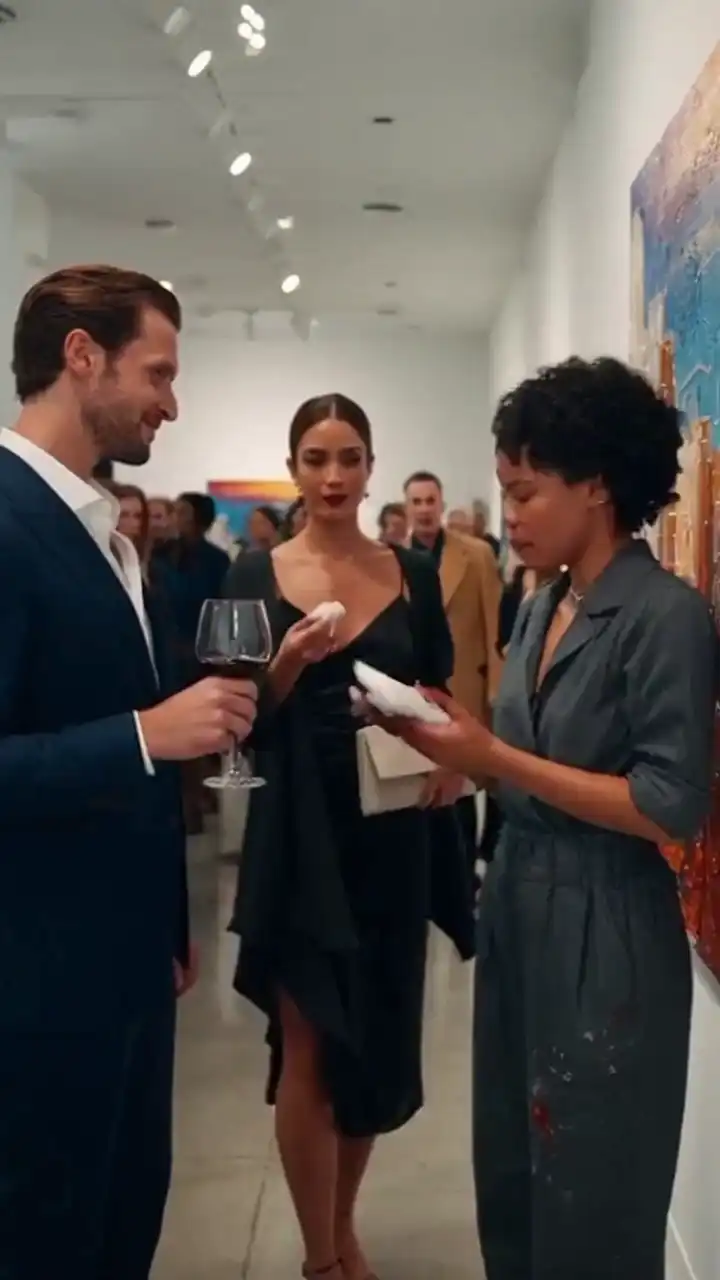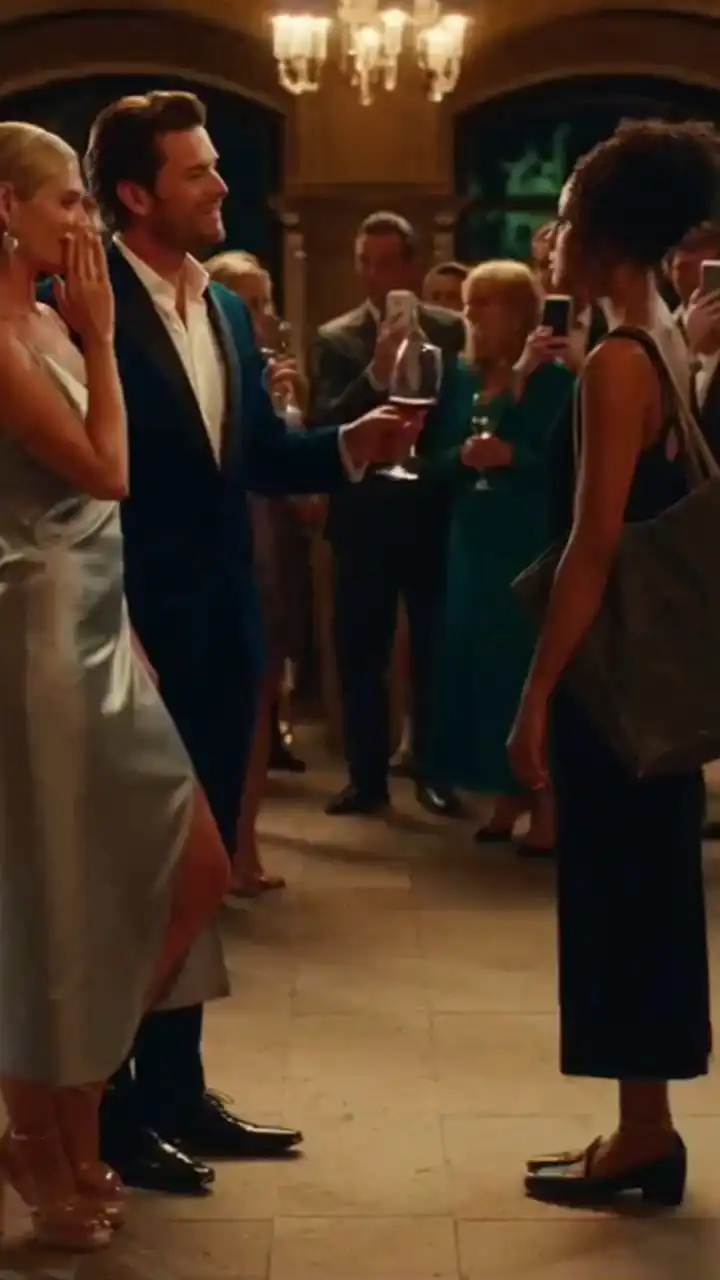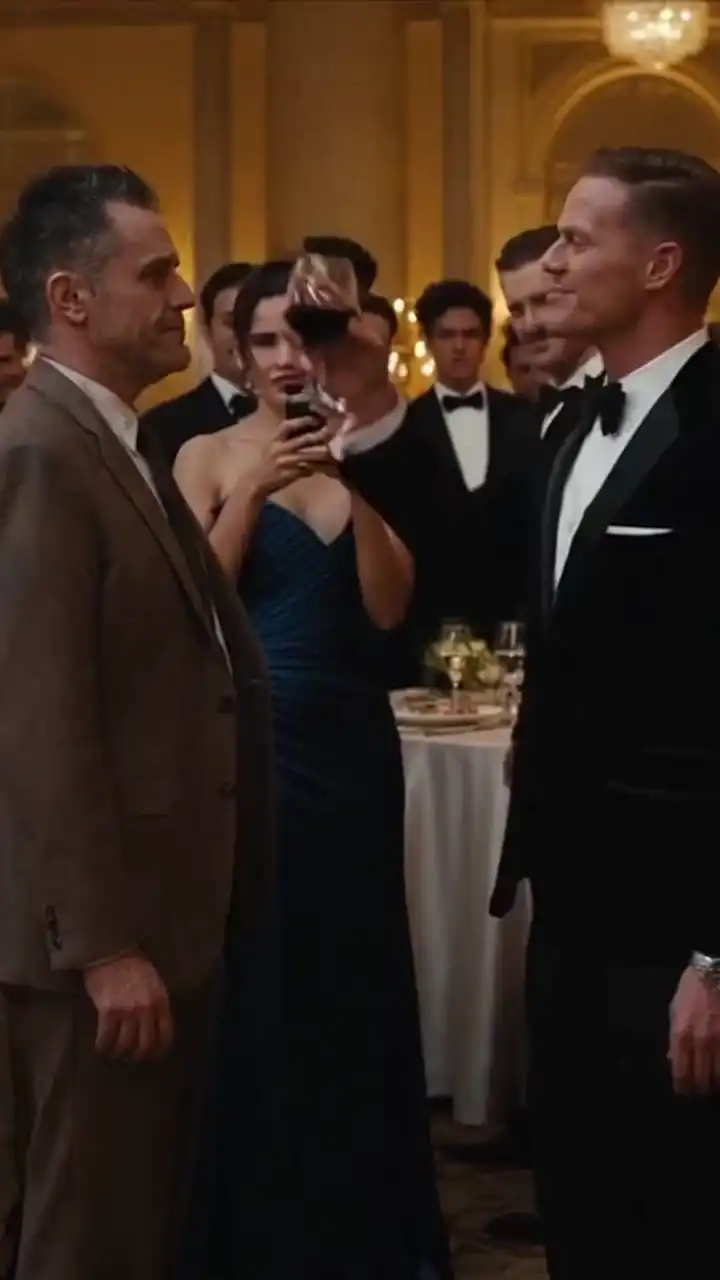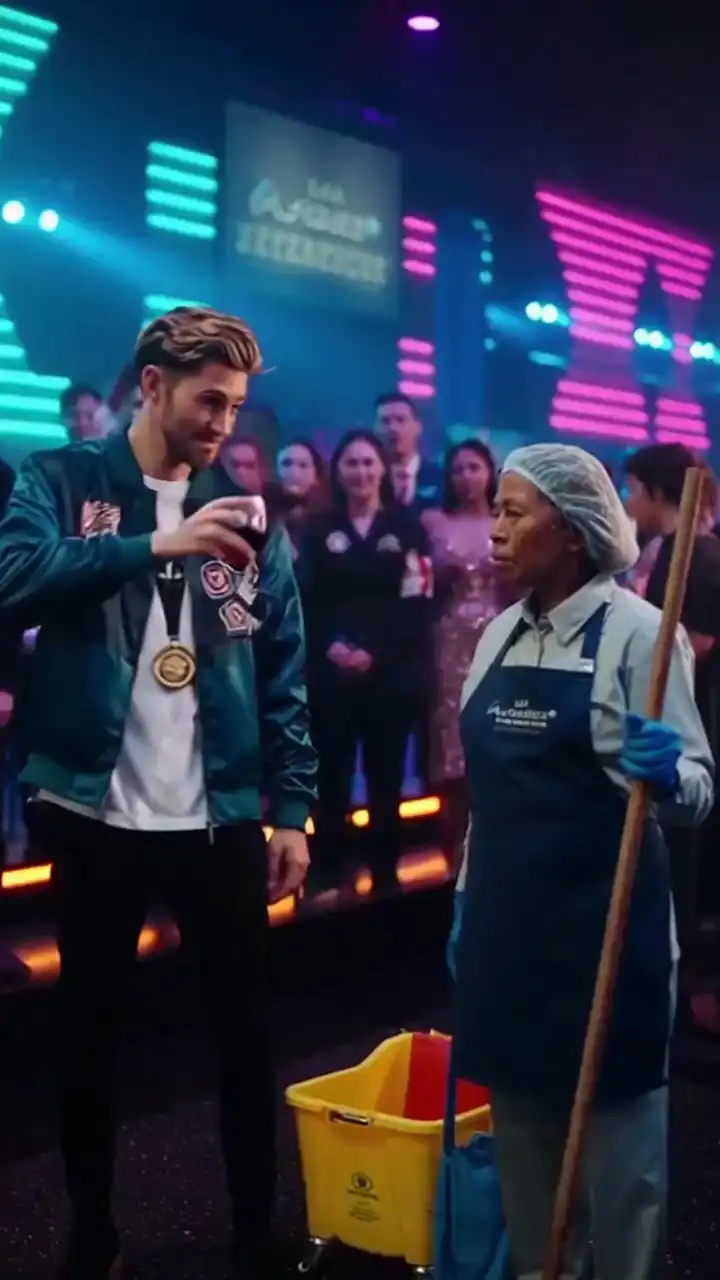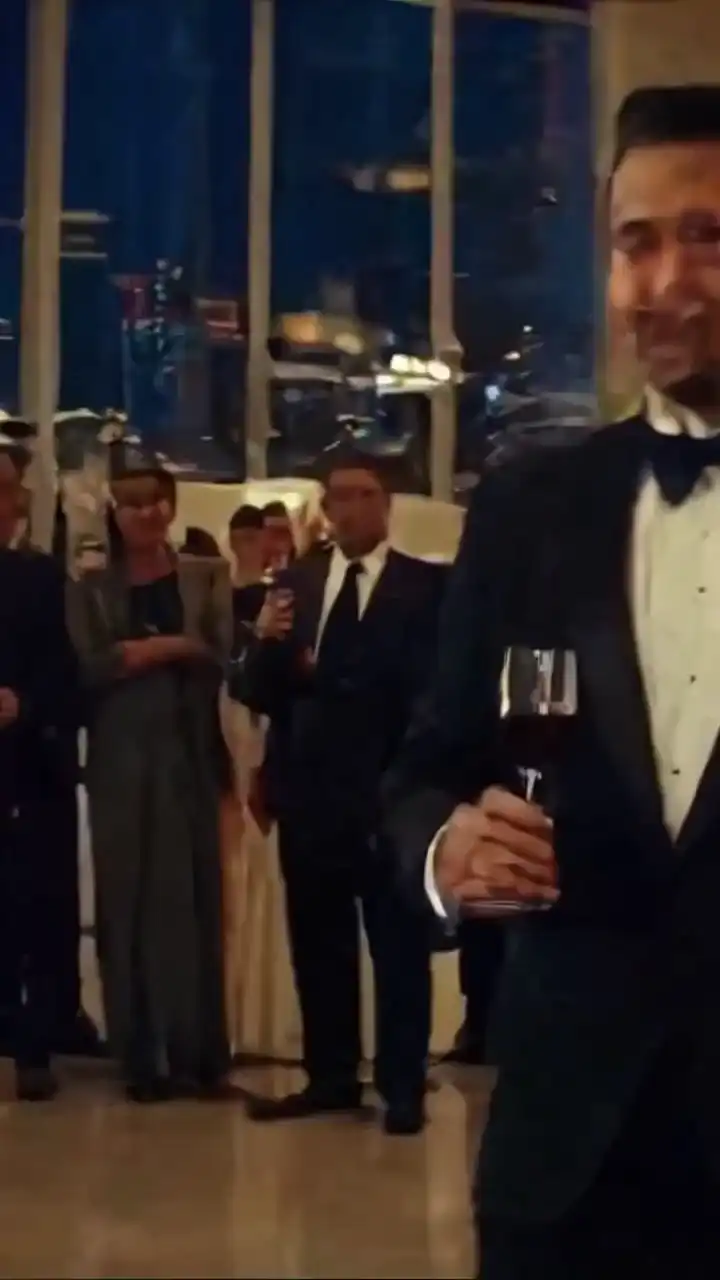
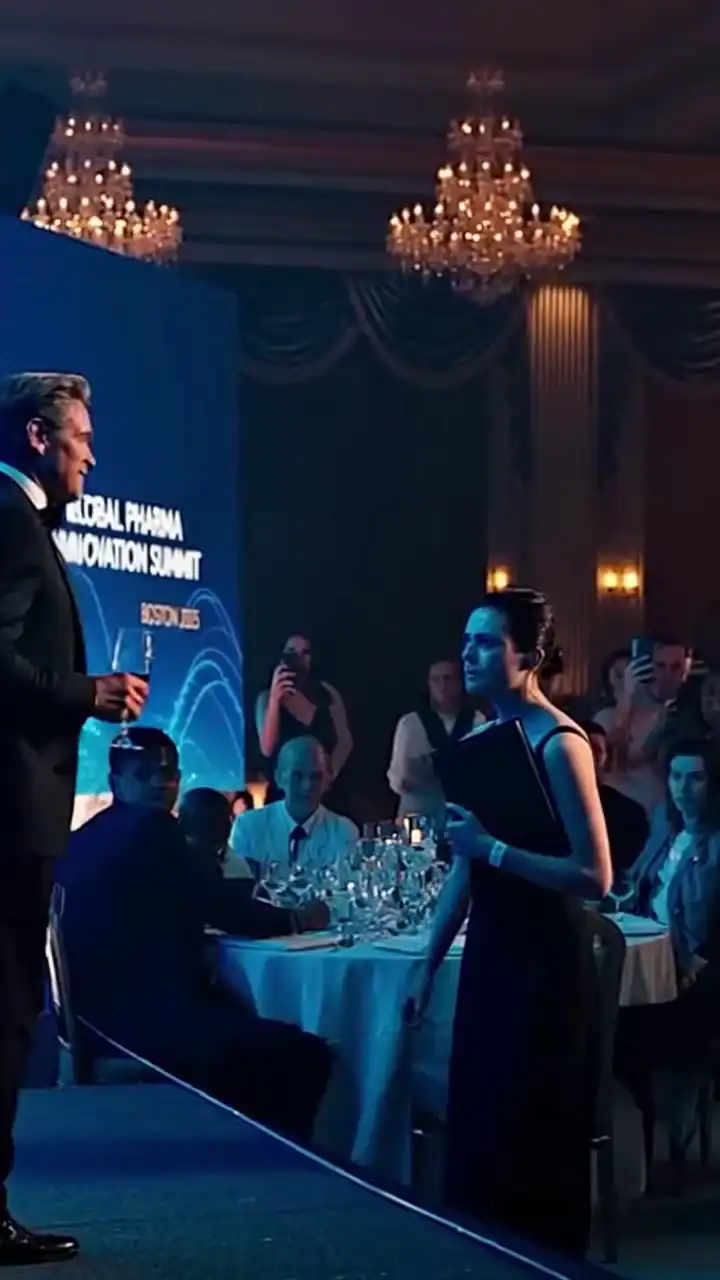
HE THREW WINE IN MY FACE… THEN WATCHED HIS MONOPOLY DIE ON A 30-FOOT SCREEN
The first image flickered into focus behind him: a bright, sterile production floor in Newark, silver vats gleaming under white lights, technicians in blue suits moving with the kind of disciplined speed that only came from months of rehearsal.
For one second, he just stared.
Then he gave a short laugh. “What is this supposed to be?”
I took a napkin from a stunned waiter’s tray and pressed it once against my cheek. “Line Three,” I said. “Pilot batch complete. Stability confirmed at ninety days. The molecule you planned to discontinue is already in transfer.”
The room didn’t breathe.
He turned back to me with that same patronizing smile, but I saw the first crack in it. “You think a factory livestream is going to scare me?”
“No,” I said. “The contracts behind it should.”
His hand twitched.
On the screen, the camera angle changed. A close shot now: labeled drums, lot numbers, time stamps, the active ingredient code I had memorized eight years ago and could have recognized half-blind. Not a mock-up. Not an animation. Real product. Real inventory. Real release preparation.
One of the board members, Margaret Lin, rose halfway from her chair. She was the one who had laughed too quickly when the wine hit me, a sharp little sound she probably thought got lost in the shock of the room. Now her face had gone pale. “How are they even producing that?” she asked.
I looked at her instead of him. “Because your exclusivity wall broke this morning at 8:14.”
The CEO’s expression hardened. “That is impossible.”
I slid the folder from under my arm, opened it, and pulled out the top document. The paper was thick, cream stock, with a blue state seal pressed into the corner and three signatures at the bottom in black ink.
“Not impossible,” I said. “Just expensive. And you were so busy killing the drug that you forgot to maintain the process lock on the secondary synthesis route.”
He snatched the document from my hand.
Good.
I wanted him to read it himself.
His eyes moved across the page once, fast and arrogant. Then again, slower. I watched the exact moment the words stopped being abstract.
Compulsory license authorization.
Emergency public health manufacturing order.
Approved under federal review and cross-filed in Massachusetts, New Jersey, and Illinois.
Effective date: today.
Beneath it were the names of three contract manufacturers he had spent years freezing out with supply pressure, litigation threats, and predatory distributor agreements. All three had signed. All three were already online.
“That’s not valid,” he said immediately.
Denial. Right on schedule.
“It is,” I said.
He looked toward the general counsel at the far end of the table. Daniel Mercer had stayed silent when I was humiliated. He had looked down at his plate and adjusted his cuff links while wine dripped from my hair. Now he held out his hand for the document with fingers that did not look steady.
The CEO didn’t give it to him at first.
That was the interesting part. He knew.
“Give it to Daniel,” I said quietly.
A few people actually flinched at my tone, because I hadn’t raised it once all night.
He handed it over. Mercer read the first page, then the second, then turned to the final exhibit: the manufacturing transfer packet. My assay data. My process notes. The alternate precursor pathway I had built after his company shut down every collaborative proposal I submitted for four straight years. The packet listed equipment compatibility, purification thresholds, impurity controls, projected output by quarter.
I knew every line on those pages.
I had written them while hooked to an IV some nights, my own hands numb, because I knew what this drug meant when it vanished from formularies. It wasn’t abstract to me. It was the difference between waking up with enough strength to stand and waking up wondering whether my heart would keep its rhythm through the day.
Mercer swallowed. “It’s real.”
The CEO stared at him. “No, it isn’t.”
Mercer didn’t answer quickly enough.
That silence did more damage than anything I could have said.
Someone near the back lowered her phone, then lifted it again with both hands. The camera flash of live attention seemed to strike him all at once. Investors were whispering. Doctors were leaning forward. Every person in that ballroom could feel the floor shifting.
On the screen, a second feed came up. Chicago this time. Packaging line. Cartons moving in clean, mechanical rows beneath printed labels.
Not his company’s logo.
A plain white mark with a blue band and one simple line of text: ESSENTIAL ACCESS PROGRAM.
He actually took a step backward.
“You stole proprietary material,” he said.
I shook my head. “I preserved patient access under an emergency pathway your team said no one would ever dare use.”
His jaw flexed. “Do you understand what litigation is going to do to you?”
I almost smiled at that.
“I understand it very well,” I said. “That’s why the filing package also went to the Department of Health and every major insurer in the state before dessert.”
A ripple moved through the room.
Margaret sat down too fast and knocked over her water glass. She didn’t even notice. Beside her, Dr. Alan Reeves—the investor who had filmed me getting drenched with a smirk on his face—slowly angled his phone away from me and toward the CEO instead. He looked sick now, as if he had just realized which clip the world was actually going to replay by morning.
The CEO lunged for control the way men like him always do: by reaching for volume when authority starts slipping.
“She’s lying,” he snapped. “This is a stunt. Shut that screen off.”
No one moved.
“Turn it off!” he barked again.
The host looked at Mercer.
Mercer looked at me.
Then at the screen.
Then back at the CEO.
And he said the sentence that ended him: “I don’t think we should.”
The ballroom erupted—not loudly, but in the low, deadly sound of people talking money. Not ethics. Not compassion. Consequences. Antitrust exposure. Market impact. Regulatory scrutiny. Share volatility by opening bell.
That was when the verification stage began.
Three board members crowded around Mercer with the papers. One requested the docket number and began checking it on her phone. Another called someone from compliance. A physician from Johns Hopkins, still wearing his summit badge, asked me what output capacity the Newark line could sustain.
“By month three?” I said. “Eighty thousand treatment courses annually across all facilities if precursor supply holds.”
He stared. “You’re serious.”
“I was serious when I asked him not to bury it.”
The docket number came back first.
Valid.
Then the state registry confirmation.
Filed.
Then the emergency access memo.
Approved.
You could almost hear the air leave him in stages.
“No,” he said again, but now it sounded smaller. “No, they can’t do this without our cooperation.”
“They already did,” I said.
He looked up at the screen like it had personally betrayed him. For a man used to controlling every room he entered, there was something almost childlike in the confusion on his face. He had built his whole empire on the assumption that people without his money would eventually fold.
He never understood what sick people learn early.
Some of us don’t have folding left.
Alan Reeves approached me then, his face pink and strained. “I didn’t know,” he muttered. “If I had known—”
“You knew enough,” I said.
He opened his mouth, closed it, and stepped back.
Margaret Lin came next, voice thin. “I laughed because I thought—”
“I know what you thought.”
She looked down at the wine still drying on my dress and couldn’t finish.
At the far end of the room, two junior doctors who had stayed silent earlier were now speaking to reporters. I caught fragments: patient access, deliberate discontinuation, ethical breach. Silence was expensive now. They were trying to buy their way out of it with honesty.
The CEO planted both hands on the table. “You have no idea what this costs.”
I met his eyes.
“I do,” I said. “I know exactly what missed doses cost. I know what organ decline costs. I know what it costs when a mother cuts tablets in half to make a prescription last an extra week. I know what it costs when a company looks at survival and calls it underperforming inventory.”
His face went gray.
Not metaphorically. It actually drained.
For the first time all night, he stopped looking angry and started looking afraid.
Onscreen, the Newark camera zoomed tighter as the first official cartons were sealed and loaded into a stainless holding bay. A digital clock in the corner marked the time in red numbers. The workers didn’t look up. They just kept moving, calm and methodical, because unlike him, they were there to do a job.
Mercer cleared his throat. “We need an emergency board session. Now.”
The CEO turned on him. “You’re on my payroll.”
Mercer held the compulsory license in one hand and said, very softly, “Not in the way that matters tonight.”
That was the dawning horror.
Not the screen.
Not the papers.
The realization that all the private intimidation he had relied on was suddenly public, timestamped, and losing value by the second.
Around us, chairs scraped back. Calls were being placed. One investor walked straight out without taking his coat. Another was already dictating a statement to an assistant. Somewhere near the stage, a journalist asked whether the company had intentionally restricted access to an essential therapy. No one rushed to answer.
The CEO looked at me one last time, searching for panic, triumph, vindictiveness—anything he could use to make me small again.
I gave him none of it.
“This was never your drug,” I said. “You just had the keys for a while.”
Then I took my badge from where it hung against my ruined dress, unclipped it, and set it on the white tablecloth beside his untouched champagne.
Not thrown.
Placed.
A final, careful sound.
I walked past the screen, past the board, past the people who had watched me be humiliated and only found their voices when power changed hands. In the mirrored wall by the exit, I caught a glimpse of myself—hair damp with wine, black dress stained dark across the front, shoulders straight.
Outside, the night air hit cold and clean.
Behind me, the ballroom doors stayed open just long enough for the noise to spill out, then swung shut.
I kept walking.
By morning, the drug would still exist.
And I would no longer belong to anything that had ever begged him for permission.
Disclaimer: Mention of any brand or trademark is for identification only and does not imply partnership or endorsement