HE LAUGHED AT HER CANVAS BAG—THEN FOUND OUT SHE COULD KILL A BILLION-DOLLAR DEAL WITH ONE SENTENCE
The CEO’s voice came through the speaker, low and sharp enough to cut glass.
“Alessandro, if she is standing in your event tonight, you are either looking at one of our largest private stakeholders or the woman who decides whether our Shanghai flagship opens on schedule. Which mistake did you just make?”
No one moved.
Even the violin from the next room seemed to stop.
The regional director’s smile held for one second too long, like his face hadn’t caught up with the danger yet. Then he gave a short laugh and spread his hands. “There has to be some misunderstanding.”
I looked at him.
“There isn’t.”
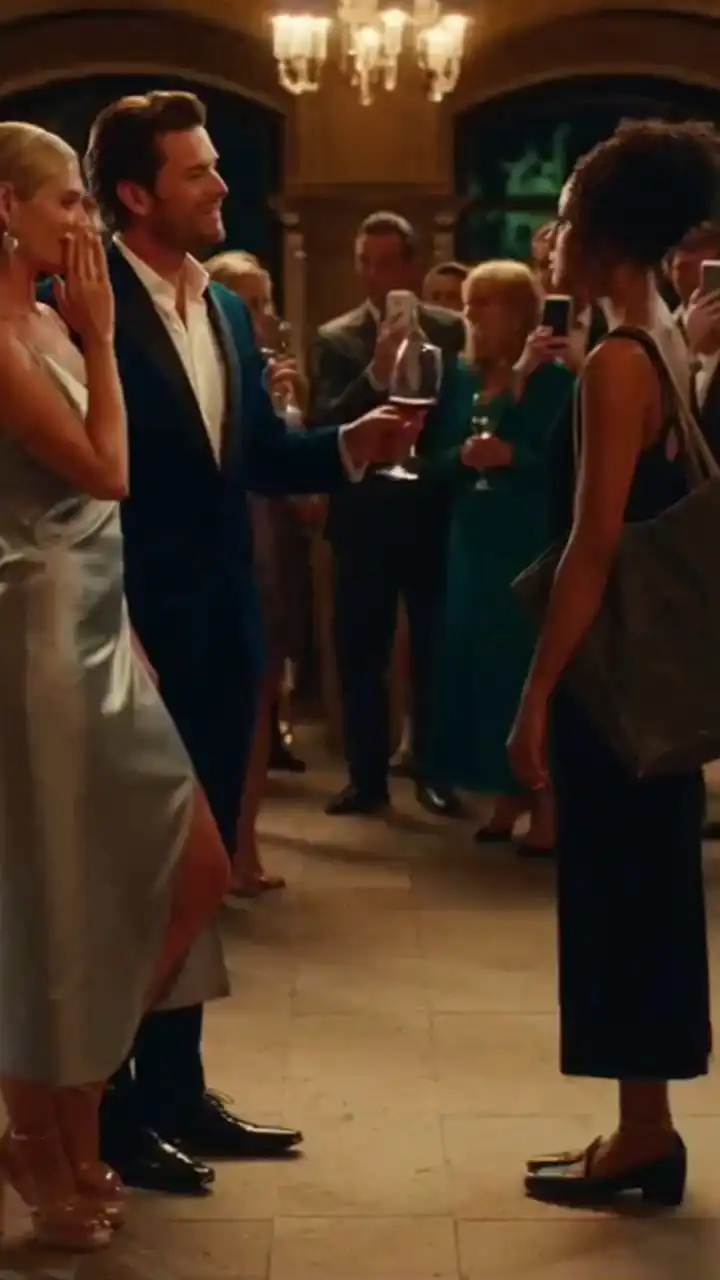
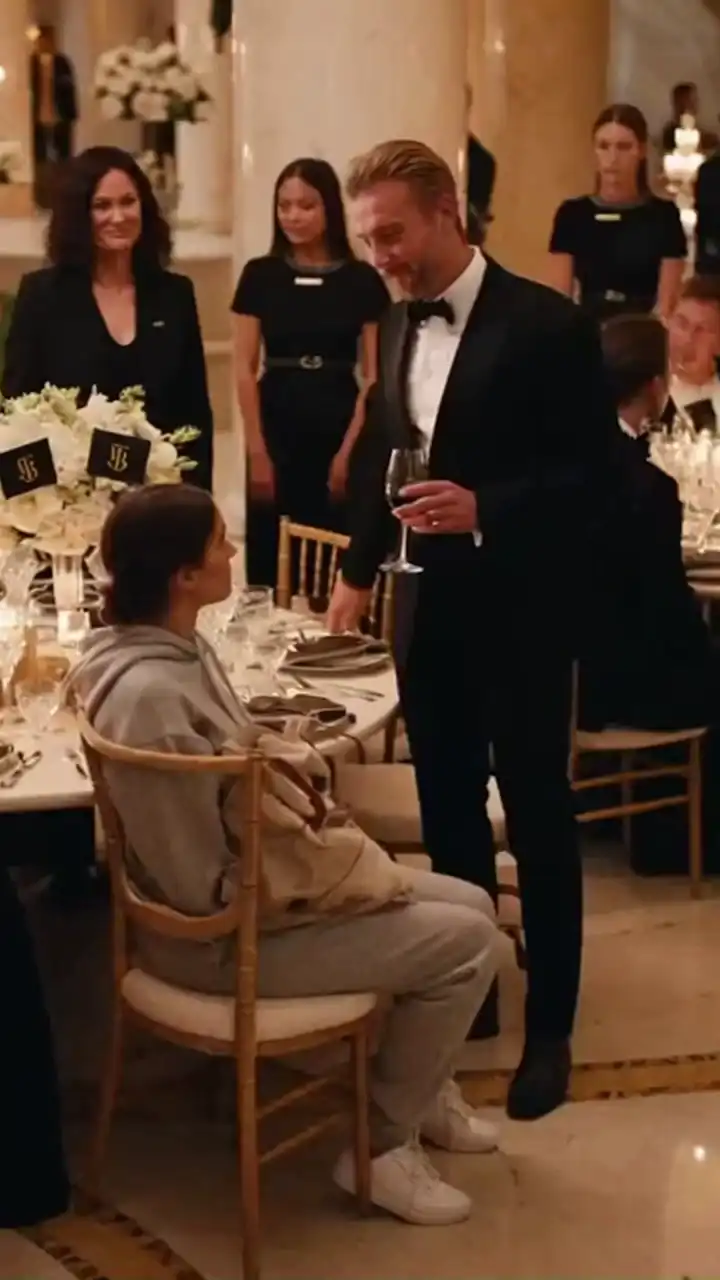
My tote dripped one dark red line onto the marble. I set it carefully on the table beside the untouched bread plate, then reached into it and pulled out the folder he had mocked without knowing it existed.
Cream paper. Thick stock. Three embossed seals.
The store manager went pale before I even opened it.
Alessandro tried again, louder this time, performing confidence for the room. “Anyone can print a folder. Anyone can call a number and pretend—”
“Check page two,” the CEO said.
His voice was calm now, which was worse.
“Alessandro, if you still have your job in thirty seconds, it will only be because she allows it.”
A young woman near the end of the table, the one who had laughed into her champagne flute when he called me a tourist, lowered her phone at once. Another guest raised his higher.
I opened the folder.
The first page was a draft distribution agreement. The second was the signature sheet. Not a concept note. Not a social courtesy packet. A live contract packet for the Greater China expansion, with projected placement rights for six cities and one line highlighted in blue across the bottom margin.
Final approval contingent upon strategic retail partner review.
Below it was my name.
Not as a shopper.
Not as a guest.
As principal.
I turned the page so Alessandro could see the date, the legal stamp, and the initials beside the Hong Kong holding company he had spent six months trying to court.
His eyes went to the seal first.
Then to the company name.
Then to mine.
He stopped breathing correctly.
“That’s impossible,” he said.
“It was impossible five minutes ago,” I said. “Before you poured Barolo on due diligence documents.”
The store manager made a tiny sound in his throat, almost a choke. He stepped closer, squinting hard at the paper like his eyes might save him if he could just read faster.
He knew the holding company.
Of course he knew it.
Luxury retail in Asia had been feeding on rumors about the acquisition structure for months. Quiet money. Family office backing. A retail group with ports, logistics corridors, real estate, and enough cash to force delivery schedules nobody else could negotiate. The press kept guessing which old dynasty was behind it.
The answer had been standing in his boutique in gray sweatpants.
Alessandro finally looked at the black card when I slid it out beside the folder.
No logo.
No bank name.
Just matte metal and a small engraved line of text.
The kind only issued by invitation, to people banks did not advertise because the numbers embarrassed everyone else in the room.
His face changed.
That was the first crack.
Denial gave way to calculation. He turned to the store manager. “Call legal. Now.”
“They’re already on,” the CEO said dryly through the phone. “And HR. And our board liaison, since Ms. Lin has been more patient than I deserve.”
I heard three different people inhale at once when he said my name.
The salesgirl with the sleek ponytail—the one who had whispered that security was outside—took one slow step back from the door as if distance might erase what she had done. Another sales associate, the brunette who had filmed me when the wine hit my bag, lowered her phone and covered her mouth. Her screen was still glowing.
I looked at her.
“Keep recording,” I said.
Her hand trembled, but she lifted it again.
Alessandro’s voice hardened. “If this is about a contract, then this can be solved professionally.”
I almost smiled.
“Professionally?” I asked. “You publicly insulted a guest at a private client dinner, ordered security on me without cause, damaged confidential documents, and announced that women like me only touch, ruin, and leave. In a room full of clients. During Fashion Week. While representing a brand currently asking my group to commit nine figures.”
He opened his mouth.
Closed it.
The CEO did not let him recover.
“Alessandro, remove your name badge and place it on the table.”
A pulse jumped in his jaw. “You cannot terminate me over a phone call.”
“No,” the CEO said. “I’m terminating you over witness statements, event footage, guest recordings, and the fact that your conduct may cost this company a strategic market entry. The phone call is just a convenience.”
The room seemed to tilt toward him.
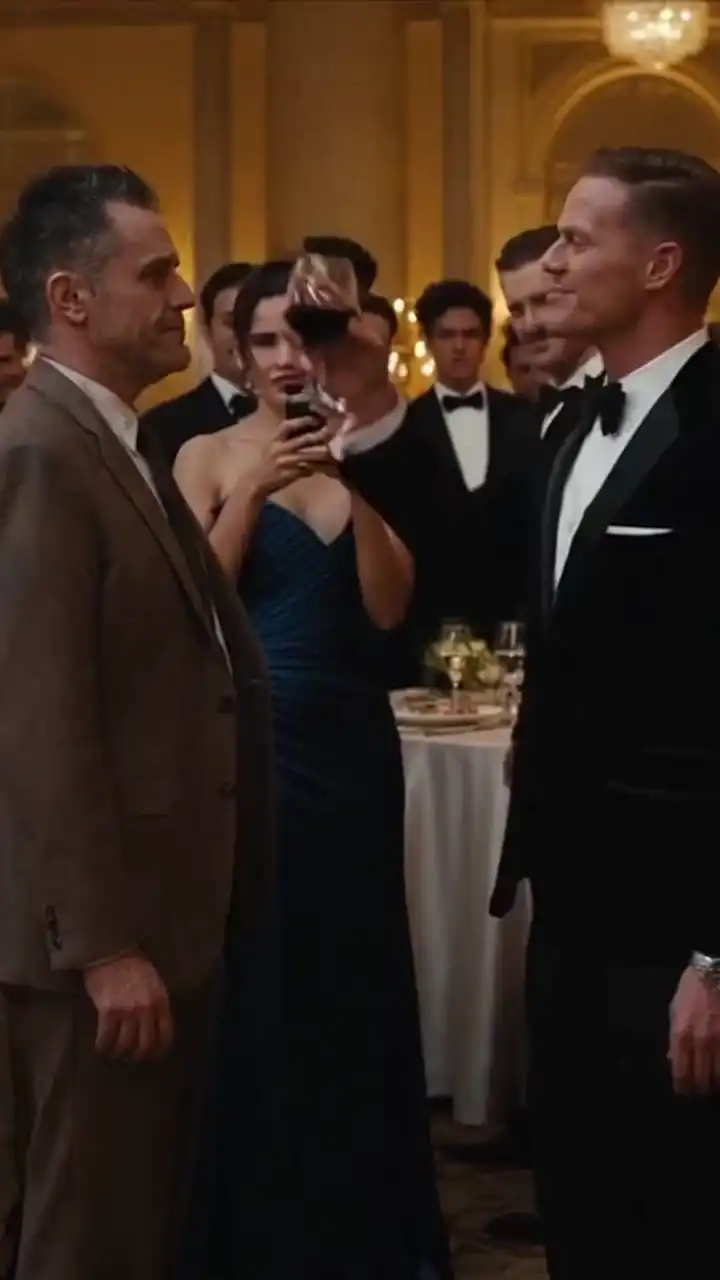
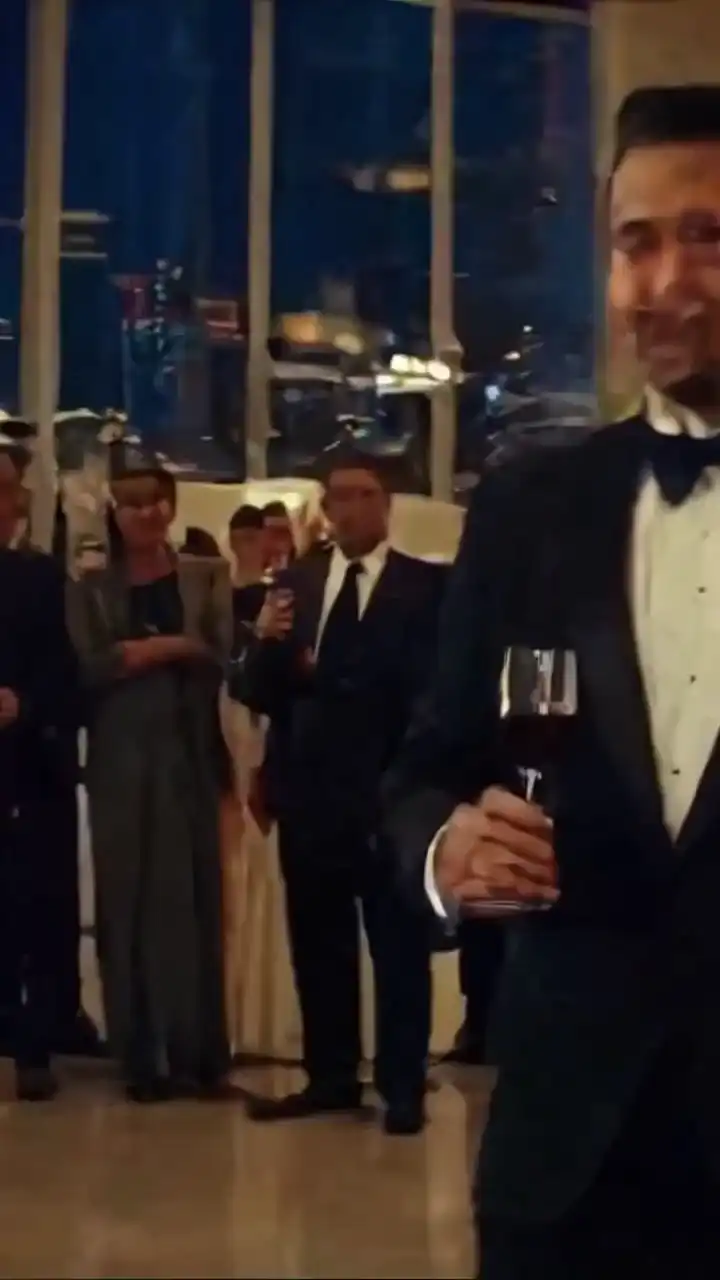
Slowly, like his hand weighed twenty kilos, Alessandro reached for the badge clipped inside his tuxedo jacket. His fingers slipped once on the metal. When he finally tore it free, the sound of the pin snapping thread was absurdly loud.
He placed it on the white tablecloth.
No one touched their glass.
No one looked away.
The store manager swallowed and stepped in too quickly, eager now, almost panting with regret. “Ms. Lin, I am deeply sorry. We had no idea—”
I turned my head toward him.
“That’s the problem,” I said. “You thought not knowing who I was gave you permission.”
His mouth shut.
Across the table, a woman in diamonds who had watched everything with amused silence set down her fork. “I didn’t realize,” she said softly, as if that lessened anything.
I met her eyes for one second and moved on.
The brunette sales associate suddenly spoke, words rushing out of her. “He told us not to bother with her when she came in earlier. He said the outfit tells you everything. He told us to keep the archive pieces away from her.”
Alessandro snapped, “Be quiet.”
But fear had changed the air. Once it starts moving, everyone wants to survive it.
The ponytailed salesgirl added, “And he said if she asked about the Milan capsule, we should tell her it was reserved. It wasn’t reserved.”
The store manager shut his eyes.
That was his second crack—the moment he realized this was no longer one ugly scene he could smooth over with a private apology and flowers. It was procedure. Pattern. Exposure.
I took a linen napkin from the table and dabbed once at the wine on my tote. The stain had already sunk into the canvas fibers, dark and permanent.
“Do you know why I wore this bag?” I asked.
Nobody answered.
“It belonged to my mother when she was twenty-four. She carried ledgers in it when she was meeting textile suppliers who laughed at her accent and quoted her the fake prices. The strap is frayed because she used it until the stitching gave out. I carry it when I want to remember what rooms like this are worth.”
My voice never rose.
“That bag has seen more real business than your entire dinner.”
Alessandro looked like he wanted to interrupt, defend, bargain, anything. But horror had finally reached his eyes. Not just that I had power. That I had power tied exactly to the thing he could not afford to lose.
The Greater China deal was not a vague opportunity.
It was inventory access, flagship placement, licensing preference, import acceleration, bonded warehousing, cross-border member data, landlord leverage in Shanghai and Chengdu, and a launch calendar already promised to investors. If my group walked, their competitors would fill the space before sunrise.
He knew that.
Now everyone else knew he knew it.
The CEO spoke again. “Ms. Lin, the decision is yours. We can suspend the dinner, issue a statement tonight, and have regional compliance on site within the hour.”
Every eye in the room came back to me.
The brunette kept filming, tears now sitting bright in her waterline. The woman in diamonds stared into her plate. The store manager had both hands clasped so tightly in front of him that his knuckles had gone white.
Alessandro stood very straight, but all the blood had left his face. “Please,” he said, and that one word was worse than any speech. “Let me apologize.”
I let the silence sit long enough for him to feel it.
Then I said, “Clean it.”
He blinked. “What?”
I looked at the floor where the wine had spread in a crescent near his polished shoes.
“You heard me.”
For one frozen second, his pride fought for breath.
Then he took the napkin from beside his own plate, bent down in that perfect tuxedo, and pressed white linen to red wine on marble while half the room recorded him.
No one laughed now.
The ponytailed salesgirl was crying outright. The brunette whispered, “I’m sorry,” though I hadn’t asked for it. The store manager started to kneel to help, but Alessandro stopped him with a tiny shake of his head. Even then, some instinct in him understood that this part belonged to him alone.
When he stood again, his cuff was stained.
He looked smaller.
Not physically. Socially. Structurally. Like the invisible architecture that had held him up all night had been removed beam by beam.
I picked up my folder and slid the black card back into my bag.
Into the speaker, I said, “Suspend the regional dinner budget review. Freeze the signing until I decide whether your apology culture is cosmetic or operational.”
“Yes, Ms. Lin,” the CEO said immediately.
“Send me every complaint filed against this region in the last eighteen months. Unedited.”
A beat.
Then: “Within the hour.”
I ended the call.
No dramatic gesture. No slammed phone. Just a dark screen in my hand.
As I turned, the woman in diamonds rose halfway from her chair, maybe to stop me, maybe to align herself with the winning side before it was too late. The store manager stepped aside so fast he nearly hit the wall. The security guard at the door—who had come in ready to remove me—lowered his gaze and opened the way without being asked.
I walked past the mannequins in borrowed importance and dresses nobody at that dinner had earned.
At the entrance, I adjusted the strap of my mother’s stained canvas bag on my shoulder.
Then I left them with the color still wet on the floor.
Disclaimer: Mention of any brand or trademark is for identification only and does not imply partnership or endorsement