THE FAKE CROWN FELL FIRST—THEN HER WHOLE BLOODLINE LIE WENT WITH IT
“Your Grace.”
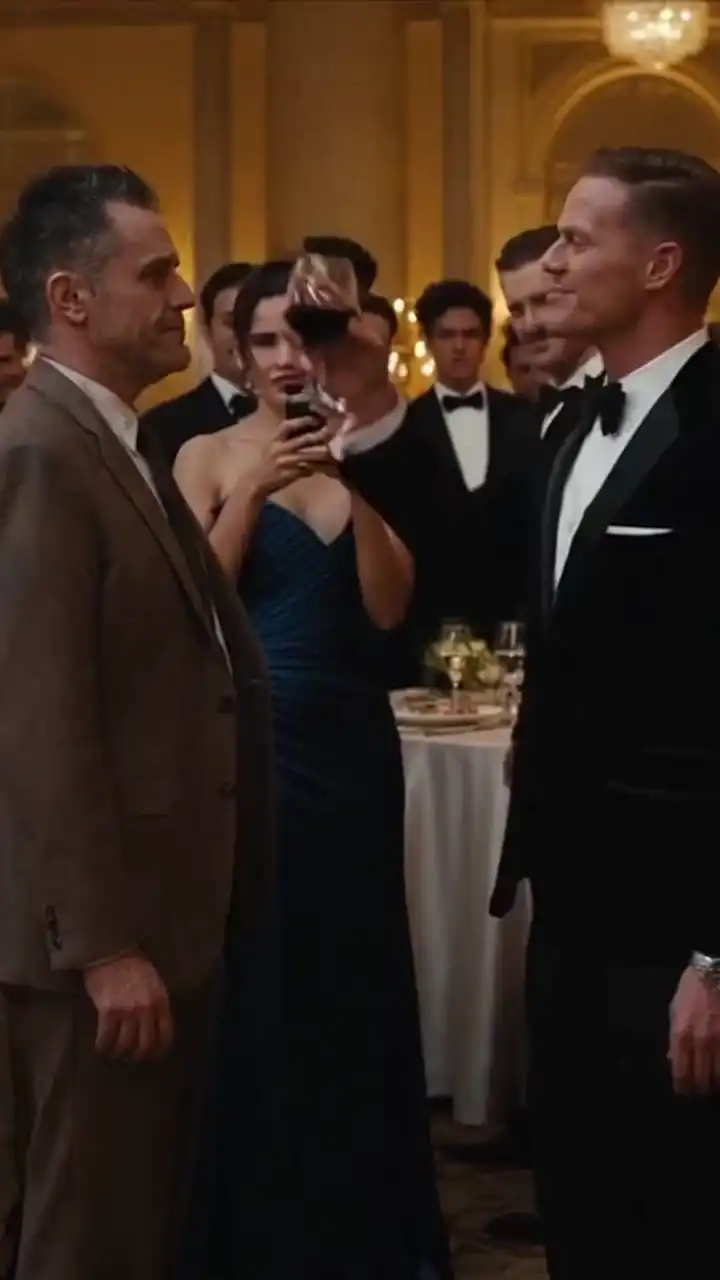
The guard’s voice cut through the ballroom so cleanly that even the girl holding up her phone forgot to breathe.
He wasn’t looking at Victoria.
He was looking at me.
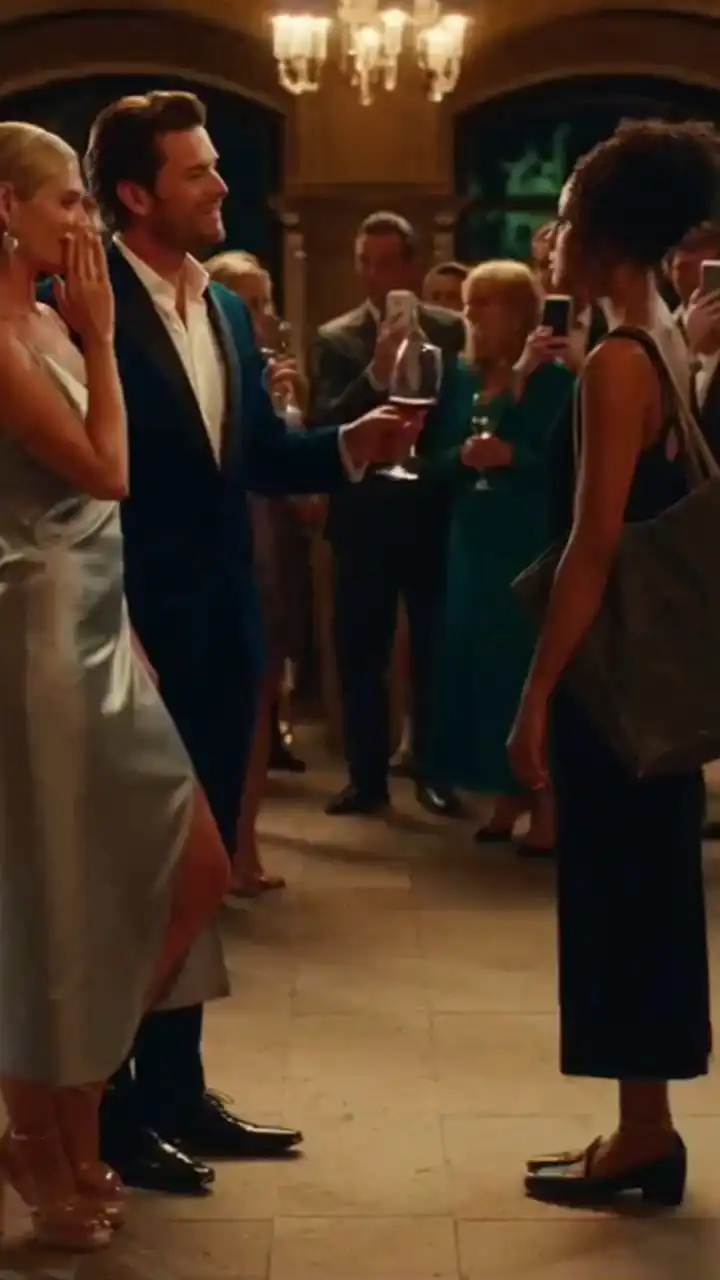
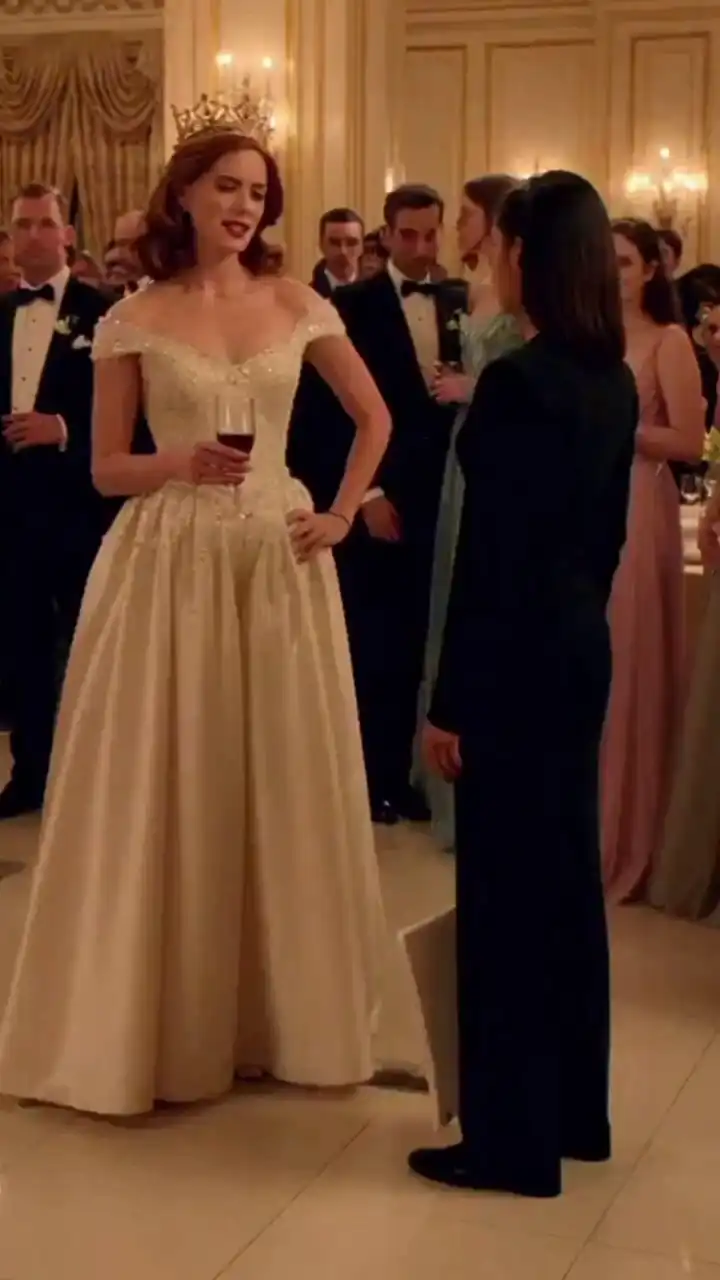
The second guard moved to my side without touching me, one white-gloved hand hovering near my elbow as if I might need steadying. I didn’t. I set my clutch on the nearest table, the crystal glasses rattling softly, and met Victoria’s stare while wine dripped from the hem of my dress onto Claridge’s polished floor.
“No,” Victoria said too quickly. Then louder, with a brittle laugh, “No, that’s ridiculous. She’s an intern.”
Her friends looked from her to me and back again, their smiles hanging on their faces like masks that no longer fit.
The first guard inclined his head. “Lady Helena Ashbourne, by authority of the Crown Archives and the Lord Chamberlain’s office, we are here at your request.”
A sound went through the room. Not a gasp exactly. Something thinner. More frightened.
Victoria’s fingers tightened around the antique crown. “There must be some mistake.”
“There isn’t,” I said.
My voice came out calm. Almost bored. That was what finally unsettled her.
She had expected tears, or outrage, or a scene ugly enough to make her cruelty feel justified. What she got instead was me stepping forward, stained dress and all, and opening my clutch.
I took out the ring first.
It was heavy gold, old enough that the edges had softened with time, its face engraved with a rampant lion beneath a closed helm. Inside the band, visible when I turned it beneath the chandelier light, was a date and a name in tiny worn script.
Victoria blinked at it. “That’s a ring.”
“It’s a signet of custodianship,” I said. “Issued under Charles II. It authorizes a sealed petition when hereditary royal property is misrepresented, sold, or falsely claimed.”
Someone near the back whispered, “Oh my God.”
The girl who’d said I came for free food lowered her eyes so fast her lashes hit her cheeks.
Victoria tried to recover. You could see her reaching for the performance again, the one where confidence becomes truth if it’s spoken loudly enough.
“My family has had this crown for over a hundred years.”
I held out my hand to the guard.
He placed a flat leather folio in it.
“Then this should be easy,” I said.
I opened it carefully, not because I was afraid, but because documents that old deserved respect. Inside was the deed, vellum thick and yellowed, the Ashbourne seal impressed in dark green wax beside a later registry stamp from 1894, when private noble holdings tied to ceremonial inheritance had been re-catalogued after a succession dispute.
I turned it so the nearest guests could see.
“Inventory item seven,” I read. “One ladies’ coronet, silver-gilt, set with seed pearls and table-cut garnets, commissioned 1764, held in trust by the Ashbourne line until recall by the Crown or transfer by direct written grant.”
I lifted my eyes to Victoria. “There was never a transfer.”
Her face went blank for a second.
Then she laughed again, but now the sound snagged in her throat. “That proves nothing. Anyone could forge old paper.”
The second guard spoke for the first time. “Miss Harrington, the serial hallmark inside the coronet was recorded during the 1894 registry and again during a wartime vault relocation in 1941. If you wish, we can compare it in front of witnesses.”
One of Victoria’s friends took a sharp step away from her.
“Do that,” Victoria snapped. “Please. By all means.”
The guard extended his hands. “The coronet, ma’am.”
Victoria hesitated.
That tiny pause did more damage than anything I could have said.
Because innocent people hand things over. Guilty people weigh their odds first.
Finally, with all eyes on her, she placed it in his gloves.
He turned it over beneath the lights, pressed his thumb gently near the inner rim, and angled it toward the room. “Hallmark visible. Registry notch present. Interior engraving matches archival description.”
He looked at me. “Confirmed.”
Victoria’s lips parted. No words came out.
I took the deed back and slid one finger beneath the next page.
“This is where it becomes ugly,” I said.
Her color changed.
The page beneath the deed was newer, though still decades old—a probate copy from 1978, complete with filing marks and a barrister’s notation in blue-black ink.
“Your grandfather, Edmund Harrington, purchased the contents of Ashbourne House after the east wing fire,” I said. “Furniture. Portraits. silver. Two clocks. A cabinet of estate ledgers. He did not purchase ceremonial holdings held in trust. Those were removed from the sale before auction.”
I looked directly at Victoria. “Except this one disappeared before collection.”
The silence pressed in.
An older man near the center, one of the donors who had ignored me when I was on the floor, stepped closer and adjusted his glasses. “Are you saying it was stolen?”
“I’m saying,” I replied, “that my grandmother spent thirty-one years trying to recover an item your family displayed in private while claiming ancestral right to it in public.”
Victoria’s mouth trembled. “My grandmother said it was ours.”
“I believe she did,” I said. “That’s the problem with inherited lies. The children start wearing them.”
The girl who had been filming lowered her phone completely now. “Victoria…”
“Shut up,” Victoria hissed, not even looking at her.
The first guard accepted another paper from the hotel manager, who had appeared at the edge of the crowd pale and sweating. He scanned it, then addressed the room with official precision.
“For clarity: tonight’s event application listed Miss Victoria Harrington as appearing in family regalia of verified private provenance. That declaration is now in dispute. Pending inquiry, the item is confiscated under authority of the Lord Chamberlain’s office.”
Confiscated.
The word landed like a hammer.
Victoria took one step forward. “You can’t do that. This is my charity gala.”
“Claridge’s charity gala,” the manager said weakly.
It was the first brave thing he’d managed all evening.
Victoria turned on him in disbelief. “You invited me.”
“We rented a ballroom,” he said, voice tightening. “We did not authorize fraud involving Crown property.”
Her friends were no longer standing in a pretty cluster. They had spread out instinctively, each creating small islands of distance from the sinking center.
The one with the bridesmaid curls gave me a desperate half-smile. “We didn’t know. I mean, she told us—”
“You laughed,” I said.
She stopped speaking.
The girl with the phone swallowed hard. “I deleted the video.”
“You still filmed it.”
Her eyes filled immediately. Not because of me. Because for the first time all night she heard how small and ugly she sounded.
Victoria drew herself up, trying one last version of superiority. “Even if that absurd story is true, you tricked everyone. You came here dressed like staff.”
I looked down at my wine-soaked dress and black flats.
“I came here as staff,” I said. “I accepted the internship under my mother’s surname because the Archives wanted to know how your family was using the piece, who handled it, what story you told when no one important was supposed to be listening.”
Her pupils widened.
That was the moment the truth reached her in full. Not just that the crown was real. Not just that it wasn’t hers. But that for weeks—months—I had been in rooms with her, hearing every smug little lie, watching every casual cruelty, saying almost nothing while she performed nobility she had never possessed.
“You were investigating me?” she whispered.
“I was verifying records,” I said. “You investigated yourself every time you opened your mouth.”
The donor with the glasses let out a breath through his nose, embarrassed on behalf of the entire room.
Another woman—one who had turned away when the wine hit me—stepped forward with a linen napkin she should have offered ten minutes earlier. “Lady Helena, I am so terribly—”
“No,” I said gently, and she froze. “You don’t get to borrow dignity from an apology after the risk is gone.”
Her face flushed scarlet.
Victoria looked around the ballroom as if searching for someone who would still stand with her. She found only lowered eyes, a retreating circle, and the blank professionalism of the guards.
“What happens now?” she asked.
No one answered immediately.
Then I did.
“Tonight? The coronet goes back into protected custody.” I nodded toward the folio. “The inquiry opens at nine tomorrow morning. The false provenance filings, the insurance declarations, the use of a ceremonial object for solicitation and status representation—they’ll all be reviewed.”
Her breath started to come faster. “Solicitation?”
“The donations attached to your ‘ancestral exhibit’ campaign,” I said. “You told people they were preserving heritage.” I paused. “People tend to dislike learning the heritage was a theft.”
One of the trustees near the dais quietly removed his event pin.
Another turned his body away from her completely.
Stage by stage, the collapse moved across her face: denial stripped bare, calculation failing, horror settling in where vanity used to live. She looked suddenly younger, not in innocence but in helplessness. Like a child locked outside the house she’d spent years claiming to own.
The first guard handed me a clean handkerchief.
I took it and dabbed once at the wine on my collarbone.
“Was any of it real?” Victoria asked, and for the first time there was no performance in her voice.
“Yes,” I said. “Your cruelty.”
She shut her eyes.
No one laughed now.
I closed the folio, returned the signet ring to my clutch, and nodded to the guards. They understood. One took the coronet. The other stepped aside to clear my path.
As I passed the table, the girl who had filmed reached for my sleeve, then stopped herself before touching me. “I’m sorry.”
I believed she meant it.
It changed nothing.
At the ballroom doors, the hotel manager rushed ahead to open them himself. Beyond the velvet and gold and chandeliers, the corridor looked almost plain. Quiet. Honest.
I stepped out of the room without looking back.
Behind me, voices finally started—hushed, frantic, ruined.
In front of me, the night waited, cool against my skin, and wonderfully free of crowns.
Disclaimer: Mention of any brand or trademark is for identification only and does not imply partnership or endorsement