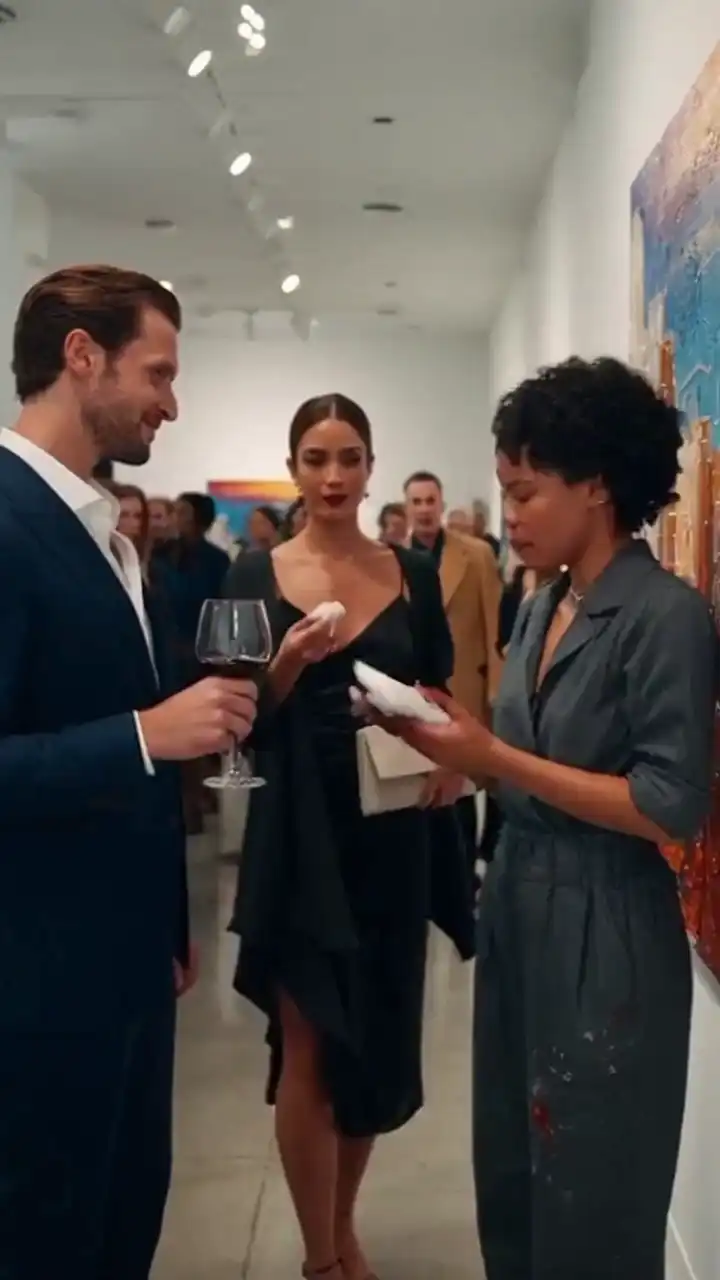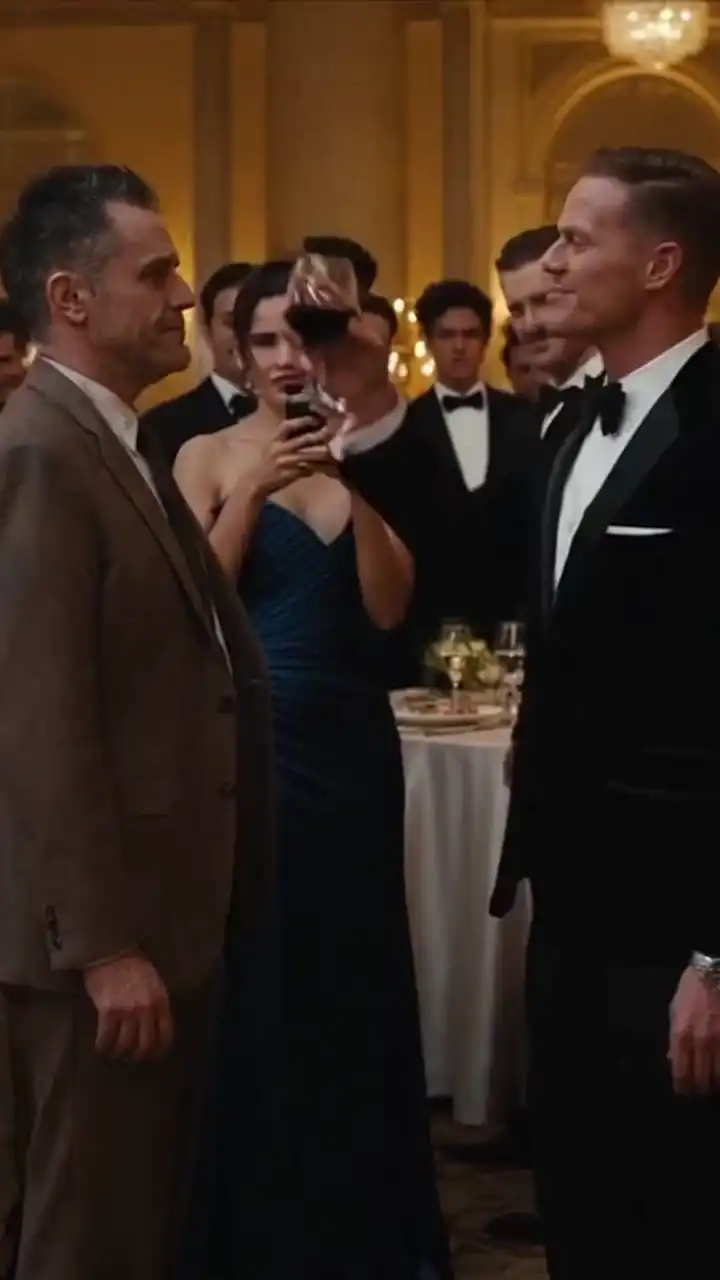
HE POURED WINE ON THE WRONG WOMAN—AND WATCHED HIS EMPIRE DIE IN SILENCE
Her thumb came down.
Not hard.
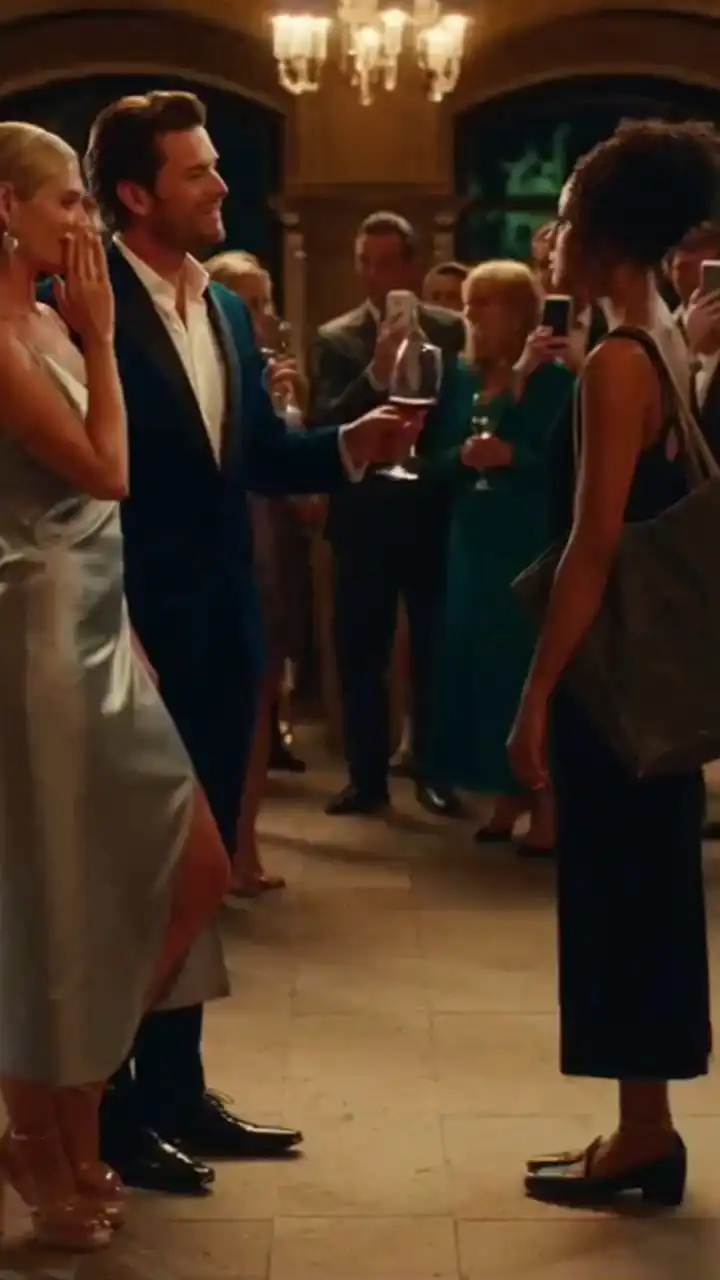
Just one precise tap, and the post went live beneath the glowing chandeliers while half the room was still laughing.
I was at tonight’s launch for Adrian Carter’s new novel. Ten years ago, I cataloged a manuscript with the same opening line, same plot structure, and same ending twist under a different name. I kept the drafts, the timestamps, the editorial replies, and the forwarding chain. Thread below.
The first notification hit before I lowered my phone.
Then another.
Then a flood so fast the screen blurred white with movement.
The room changed with that tiny electronic chorus. People who had been smirking a second ago started checking their own devices. Heads dipped. Faces shifted. Someone near the champagne tower whispered, “No. No way.”
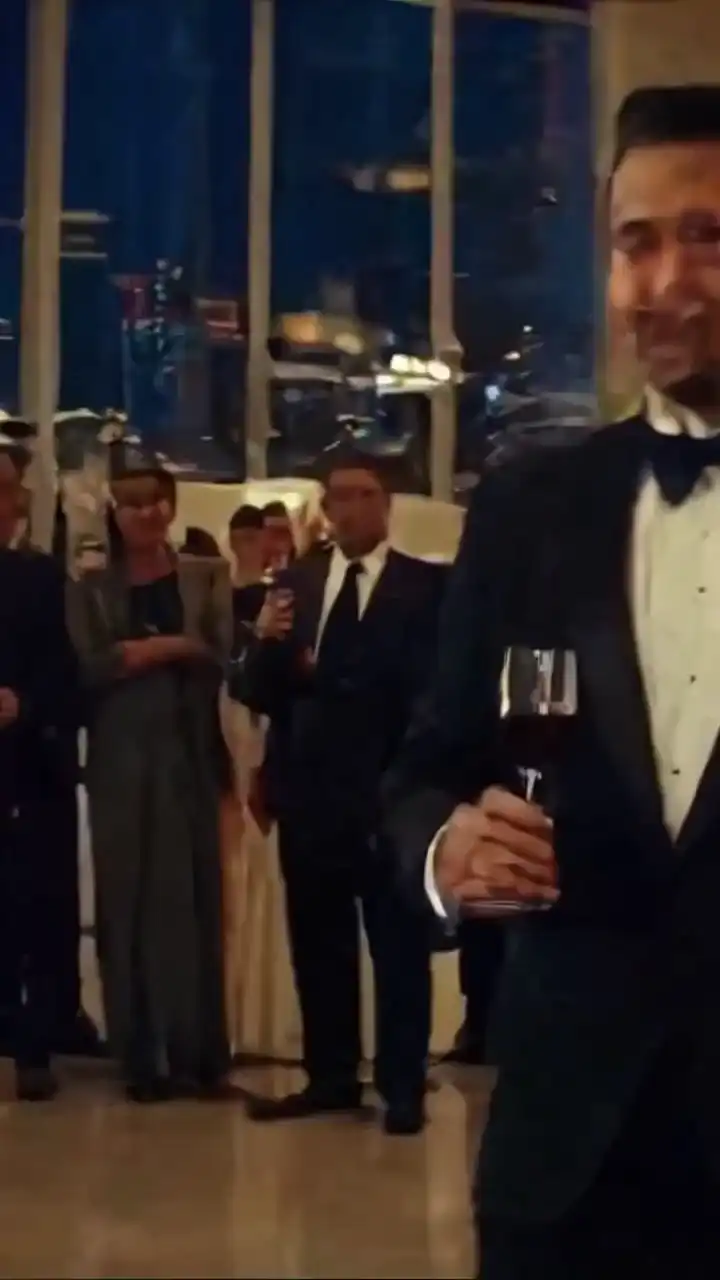
Adrian Carter stared at me, still holding the stem of his glass.
“You’re bluffing,” he said.
I slipped the sealed envelope from my tote bag and laid it on the signing table, directly over the glossy stack of his books. The cream paper was old enough to have softened at the corners, but the red legal stamp across the flap was intact.
“I never bluff,” I said.
He gave a short laugh, meant to sound amused. It landed wrong.
“That could be anything.”
“It could,” I said. “If I hadn’t also posted the metadata.”
His editor lunged for her phone so quickly she nearly dropped it. I recognized her now—Vanessa Lin. Ten years older than the assistant whose forwarded email sat in my archive, but the same sharp jaw, same habit of pressing her lips together before bad news. She scrolled once, twice, and all the color drained out of her face.
“Adrian,” she said quietly, “don’t say anything else.”
That got the room’s attention better than any shout could have.
He turned on her at once. “What do you mean, don’t say anything else? She’s some librarian with a grudge.”
“Former special collections archivist,” I corrected. “Acquisitions and manuscript intake. New York Public Library. West branch annex, then the rare book division.”
A young woman in a silver dress—the one who had laughed the loudest when the wine hit me—lowered her phone. “Wait,” she said. “Is she—”
“Yes,” someone hissed beside her, staring at their screen. “Oh my God. That account is hers.”
A week earlier, they would have called me by the name on the profile with reverence. Tonight they had called me dusty.
Interesting how quickly language changed when people realized who was holding the knife.
Adrian set his glass down too hard. “This is ridiculous. Everybody gets similar ideas. One opening line means nothing.”
“One opening line does,” I said. “Three identical chapter turns, a mirrored secondary character arc, and the same handwritten margin revision on page one hundred and twelve do not.”
I opened the envelope.
Paper slid free with the dry whisper of age and use. The first page was a cover letter, dated March 14, ten years earlier. The original title sat at the top in plain serif font. Beneath it, the author’s name.
Elias Wren.
Not Adrian Carter.
A murmur moved through the crowd.
I laid down the next sheet: intake stamp, 9:12 a.m. Library literary access program, unsolicited manuscript deposit for protected review. Then the submission log with the accession number. Then the printout of the email chain. Then the rejection letter sent three months later after the manuscript had supposedly been “declined unread due to staffing limitations.”
Vanessa closed her eyes.
Adrian didn’t look at the pages. He looked at her.
“What is this?” he demanded. “Why are you acting like this is real?”
She swallowed. “Because my name is on the forward.”
Silence.
It spread wider than the laughter had.
I slid that page forward with one finger. There it was in black ink and old formatting, the relic of another digital age.
From: vanessa.lin@halcyonlit… To: adrian.carter@… Subject: wild one from the slush / don’t laugh
Attached above it had once been the manuscript file.
Below, one sentence.
The opening is annoyingly good.
The silver-dressed woman took a step backward like the paper itself had struck her.
Adrian’s mouth opened, then shut. “That doesn’t prove anything,” he said, but now his voice had thinned around the edges. “People share submissions all the time. Maybe I looked at a line. Maybe it stuck with me.”
Vanessa stared at him.
“A line?” she whispered.
I removed one more sheet from the envelope. This one I had protected in a plastic sleeve. It was page 112 from the original manuscript, printed on cheap office paper. In the margin, in blue ink, a note beside a scene involving a train platform and a widow in green gloves.
Too sentimental here. Make her drop the gloves, not keep them. Stronger image.
I set a fresh hardcover copy of his book beside it, opened to page 241, and turned it toward the nearest cameras.
The widow dropped the gloves.
The sentence was nearly word for word.
This time nobody whispered.
They just stared.
A man near the front—one of the bloggers who had filmed me with a grin when the wine hit—slowly lowered his phone, then turned it around and began deleting clips. His hands were shaking. Beside him, the editor who had told me to leave before security got involved took one stumbling step toward me.
“Ma’am,” she said, voice cracking, “I—I didn’t know—”
“No,” I said. “You didn’t.”
That hurt her more than if I had yelled.
My phone kept singing.
Comments multiplied by the second. Screenshots spread. Former interns were naming names in real time. Two retired copy editors had already recognized scenes from conference workshop packets. A rights manager from London had reposted my thread with exactly six words:
We are reviewing all active contracts.
Vanessa saw that one over my shoulder. She went so still I thought she might faint.
Adrian finally grabbed the book from the table, flipping pages as if he could force the text to change by touching it. “This is insane,” he said. “You can’t ruin someone over old paperwork and internet hysteria.”
I watched him carefully then, because this was the moment denial turned into calculation.
“You’re right,” I said. “Not over internet hysteria.”
I took out the final item.
A notarized affidavit from Elias Wren’s estate executor, signed two years after his death.
Adrian frowned at the name, not understanding yet.
Then he read the first paragraph.
I had known Elias. Not socially. Not romantically. He had been one of the quiet ones who came into the library every Thursday with a canvas folder and a cough he kept apologizing for. He trusted systems because he had never been important enough to trust people. When he got sick, he asked me what happened to writing no one wanted.
I told him it stayed where it was witnessed.
After he died, his sister brought me the duplicate drafts he’d kept in a box under his bed. She also brought his notebook, where he had written three names beneath the heading SENT TO. One of them was Halcyon Literary. One of them was Vanessa Lin.
And one line lower, in cramped pen, after hearing nothing for months:
If it ever appears elsewhere, Miriam will know.
Adrian read that sentence twice.
Then he looked up at me for the first time as if I were not small at all.
Dawning horror is a quiet thing. It doesn’t arrive with thunder. It arrives when a man realizes every exit in the room is already blocked by facts.
“This was ten years ago,” he said, weaker now. “Why now?”
“Because tonight,” I said, “you asked why a librarian was judging books.”
His face twitched.
I leaned in just enough for only the first row to hear.
“I was never judging the book, Adrian. I was recognizing the body.”
The young woman in silver covered her mouth.
Vanessa made a sound that was almost a laugh and almost a sob. “Oh my God,” she said. “Oh my God, we are finished.”
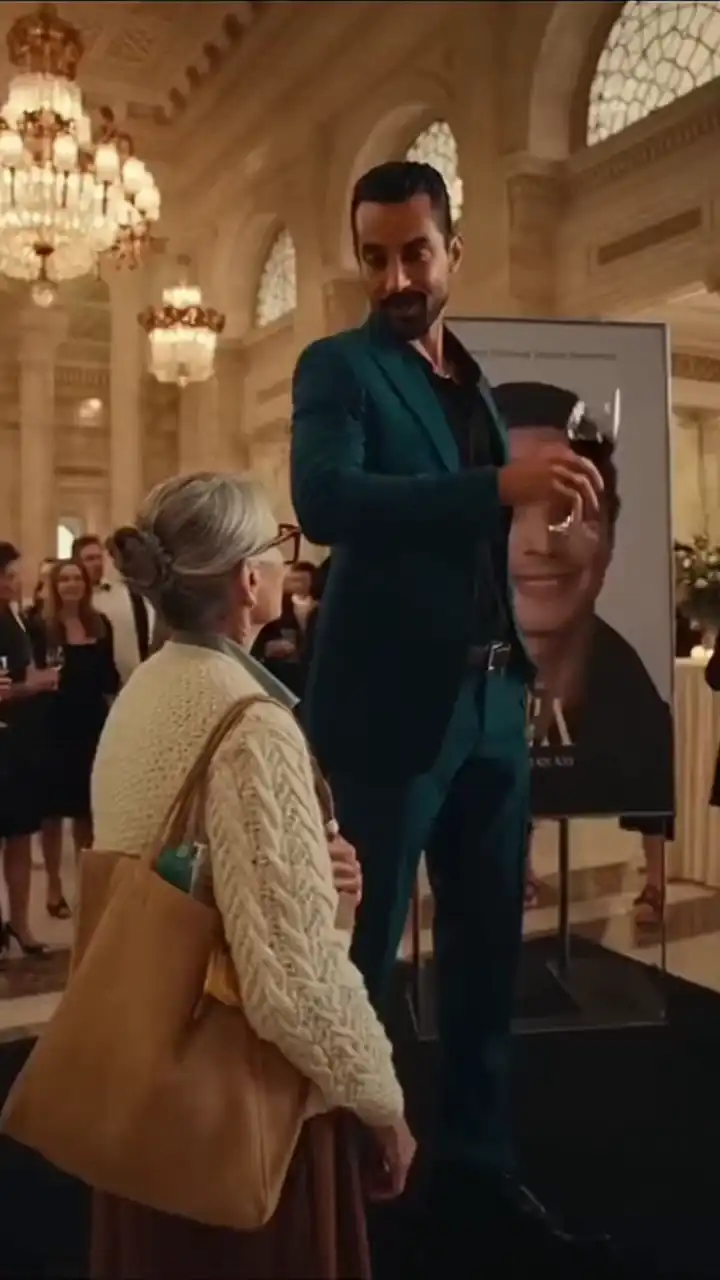
At the far side of the room, the event manager was suddenly speaking in a frantic whisper into a headset. Staff began removing the poster with Adrian’s face from the easel by the staircase. They did it carefully, as though speed might draw blood.
The blogger who had deleted his video approached me with reddened ears. “I’m sorry,” he said. “I posted that clip before I knew.”
“You knew enough,” I said.
He nodded once, like a man accepting a sentence, and stepped back.
The editor who had threatened security folded in on herself next. “I laughed,” she whispered.
“Yes,” I said.
Her eyes filled. She looked down at the stain on my cardigan and had the decency not to offer a napkin.
Adrian turned to Vanessa one last time, desperate now. “Say something.”
She did.
“To legal,” she told her assistant, who had appeared ghost-pale at the doorway. “Call them now. Freeze tomorrow’s interviews. Pull every digital galley. And tell accounting not to move another royalty payment until counsel reviews provenance.”
“Vanessa—”
She faced him with a look emptied of all protection. “If even half of this thread verifies, you’re done.”
“It was one draft—”
That was the worst thing he could have said.
Because the whole room heard it.
Because it wasn’t I didn’t do it.
It was only this much.
Phones rose again, but no one was laughing now.
I repacked the papers slowly, each sheet returning to the envelope it had waited in for a decade. My sweater was cold where the wine had soaked through. My hands were steady.
On the screen, my thread had passed two million views.
I locked my phone and slipped it into my bag.
Adrian stood stranded in the wreckage of his own launch, jacket immaculate, reputation bleeding out in real time. He looked like he wanted to call after me, to bargain, to rage, to make one final performance out of his collapse.
I didn’t give him an audience.
I lifted my tote onto my shoulder, adjusted the damp edge of my cardigan, and walked past the stacks of his books without taking one.
By the doors, a guard moved aside for me before I had to ask.
Outside, the city air was cold and clean. Behind me, somewhere under all that marble and light, the room was still coming apart.
I didn’t look back.
Disclaimer: Mention of any brand or trademark is for identification only and does not imply partnership or endorsement