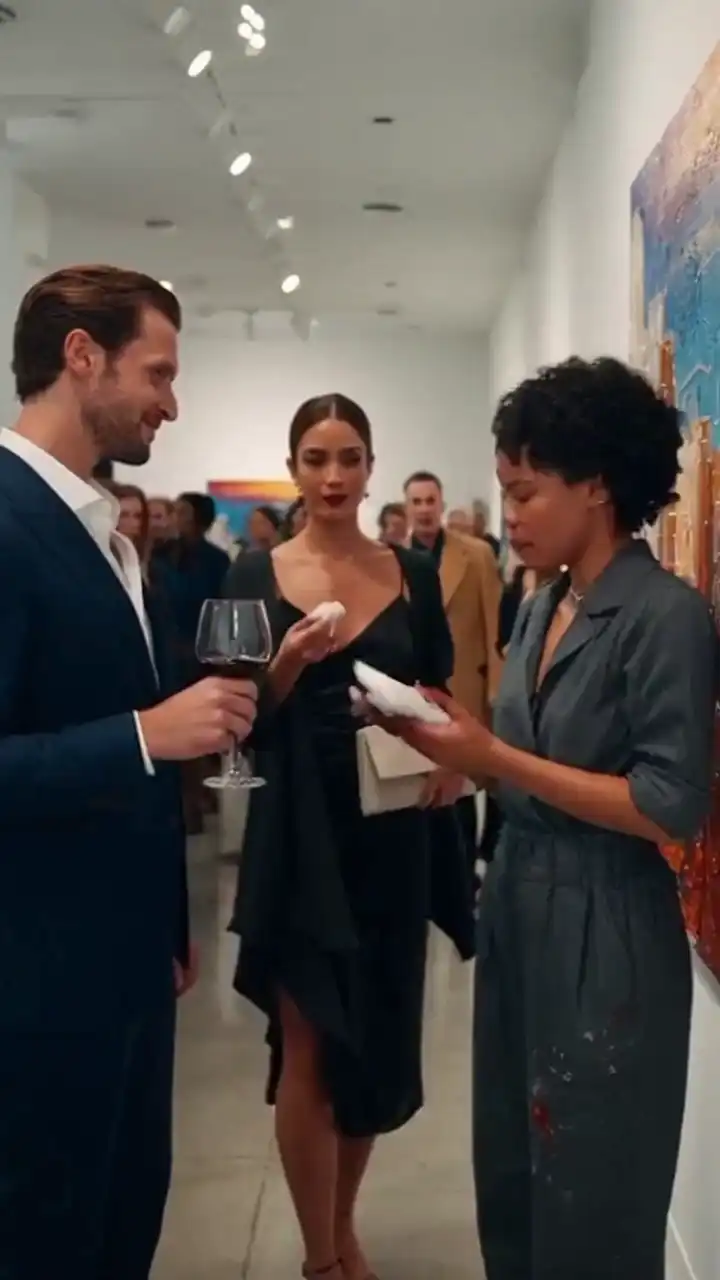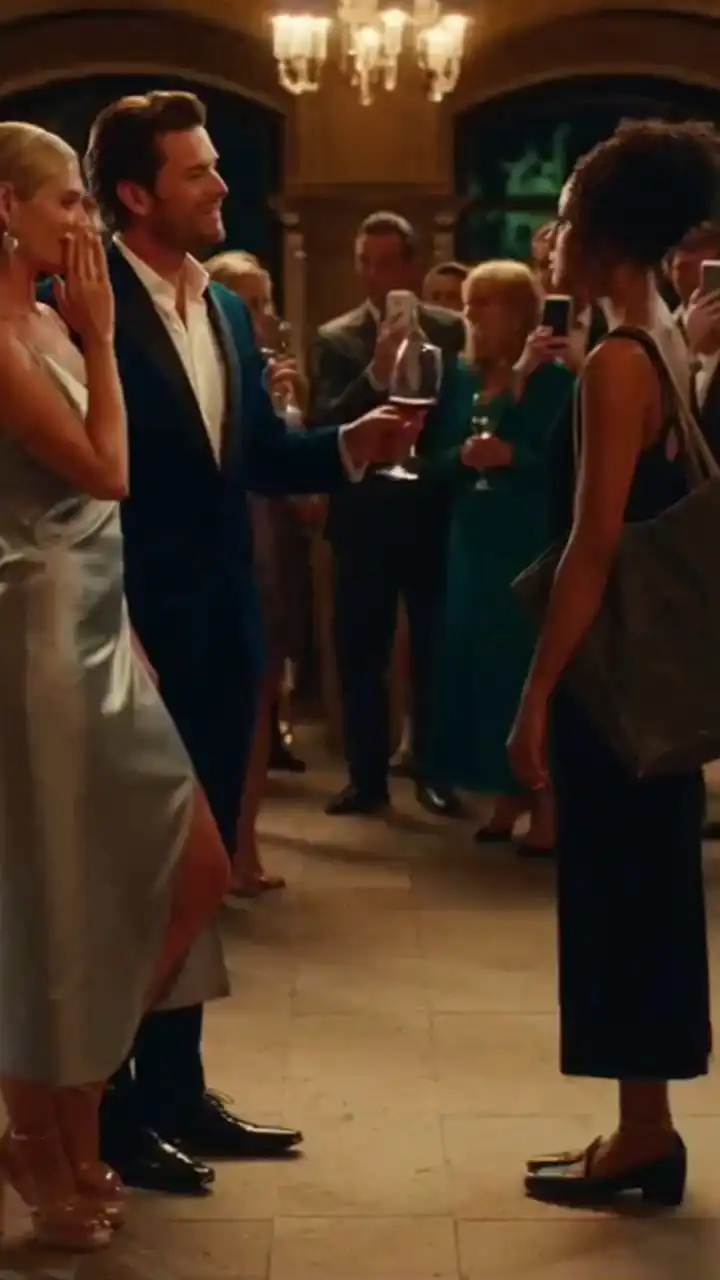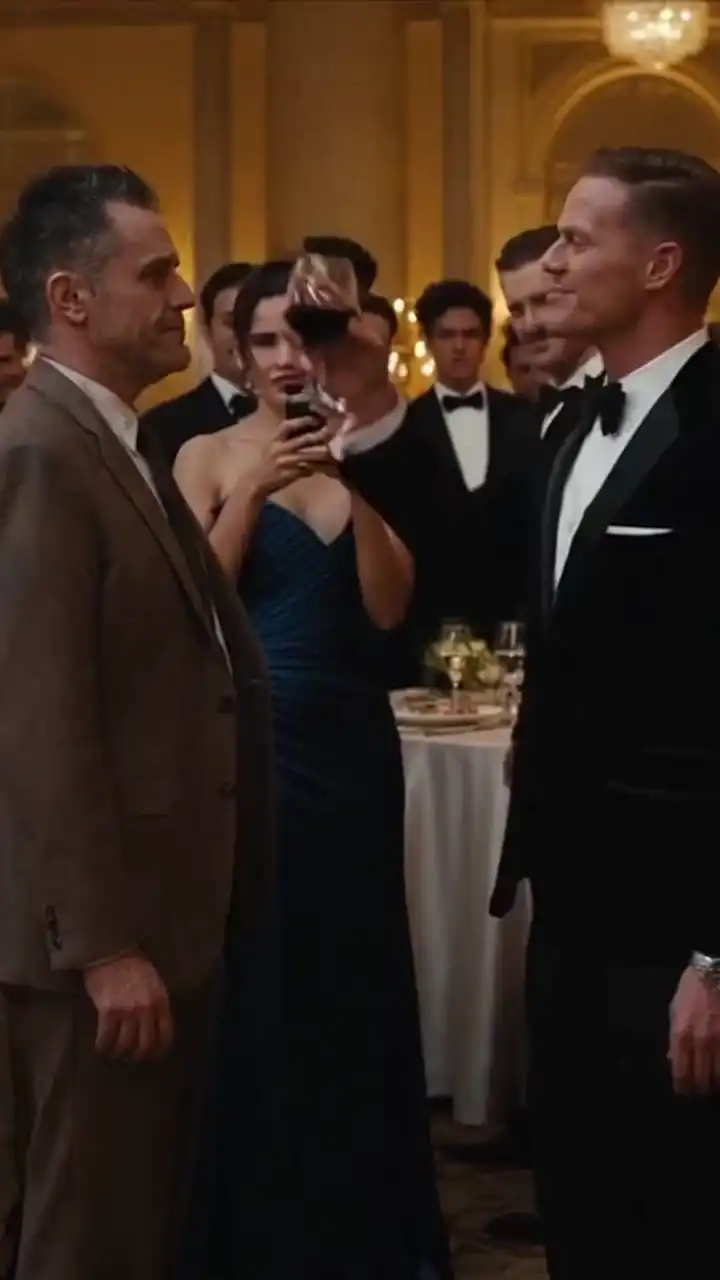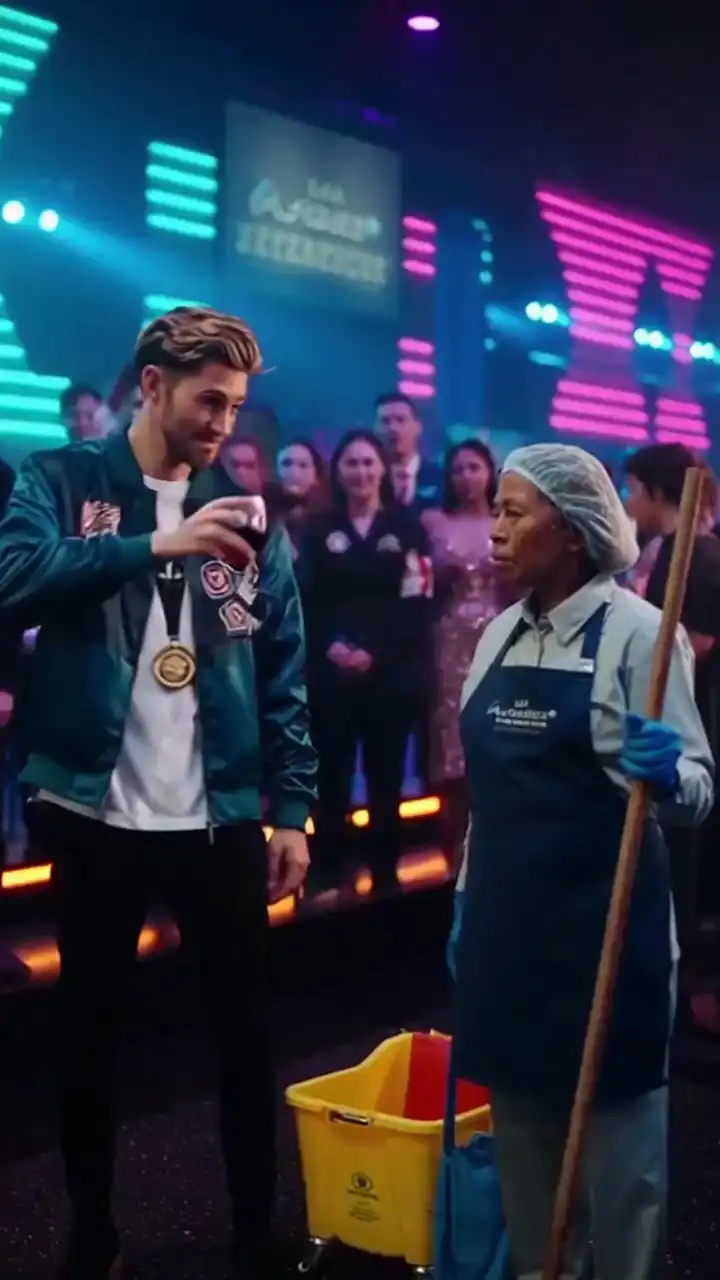
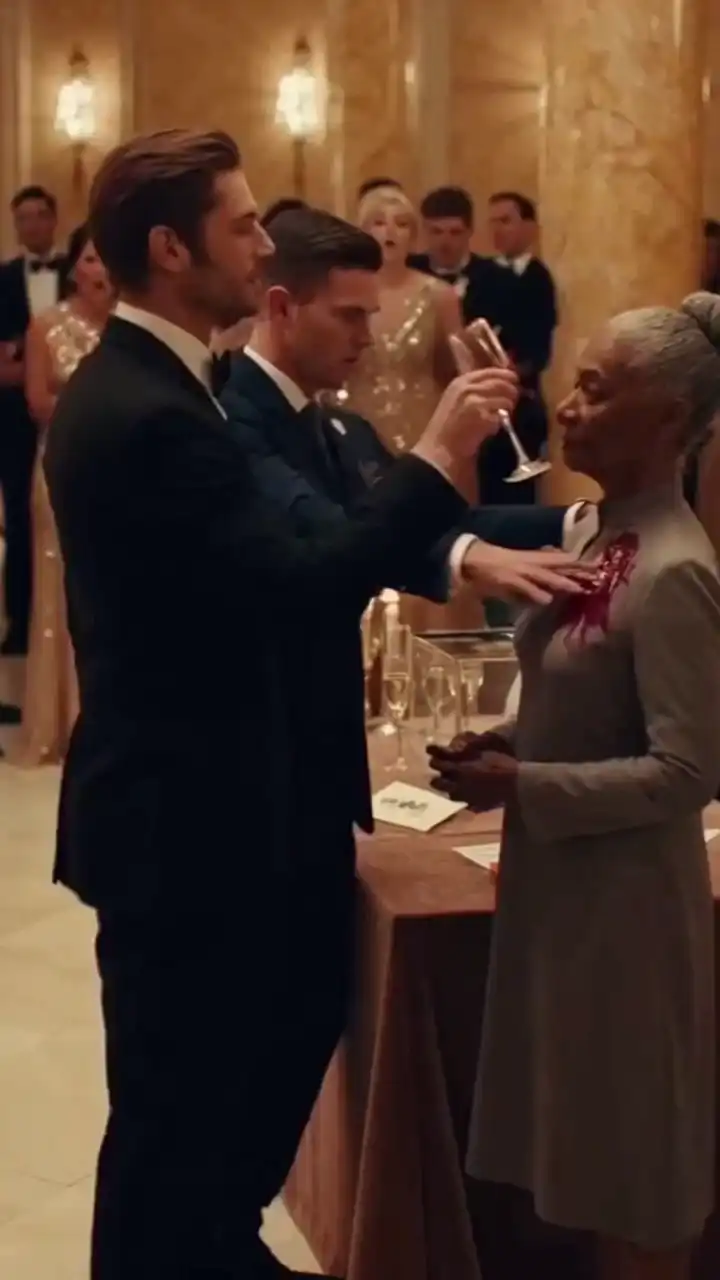
HE POURED WINE ON THE WRONG WOMAN—AND LOST HIS CAREER BEFORE THE GLASS HIT THE FLOOR
The first ringtone cut through the ballroom like a blade.
Then the second.
Then the third.
Nobody moved.
The district attorney’s hand was still half raised, empty stem between his fingers, as the campaign treasurer stared at the donor card in the old woman’s hand like it might burn through his skin. The hotel manager fumbled his phone out so fast he almost dropped it. Across the room, the lead reporter looked at her screen, then at the woman in the gray dress, and all the color drained out of her face.
The old woman lowered her hand.
“Answer them,” she said.
Her voice was soft enough that people leaned in to hear it.
The treasurer answered first. “Yes— yes, I’m here.”
Whatever he heard made his shoulders fold in on themselves. He swallowed, glanced at the district attorney, then looked away so fast it was almost a flinch.
The hotel manager answered next. “Sir, I didn’t know she had already arrived. We were told to expect a private guest later, yes. Yes, I understand.” He straightened so abruptly it looked painful. “Of course. Immediately.”
The reporter was last. She listened in silence, one hand still wrapped around her phone, the other tightening around the press badge hanging at her waist. “You’re confirming the source personally?” she said. “Tonight?”
The old woman held out her palm.
The reporter crossed the room without another word and placed her phone into it.
The district attorney finally found his voice. “What exactly is this supposed to be?”
No one answered him.
The woman lifted the phone to her ear. “Evelyn,” she said, “you may release the full file.”
A pause.
“Yes,” she said. “Every page. Include the bank transfers, the shell contracts, and the riverfront parcels acquired through the veterans’ redevelopment fund.”
This time the silence in the ballroom was different. It wasn’t shock anymore.
It was recognition.
The district attorney laughed again, but there was strain in it now. “That’s absurd. You think you can walk in here dressed like that and bluff your way into—”
“Daniel Mercer,” the woman said.
He stopped.
She closed the donor card and slipped it back into her hand. “You used campaign money to pay legal consultants who never performed legal work. Those consultants routed money into three development groups registered under different names but controlled by the same two men. Those men bought land along the river six months before your office announced the rezoning recommendation.”
A bead of sweat appeared near his temple.
“You signed the recommendation yourself,” she said. “After your office declined to investigate the displaced homeowners’ complaints.”
The mayor’s campaign director, standing near the stage, whispered, “My God.”
Daniel squared his shoulders. “Those are allegations.”
“They were,” the old woman said. “At five fifteen this afternoon.”
She turned to the reporter. “Not anymore.”
The reporter snatched her phone back, already tapping with both thumbs, breathing too quickly to hide it. “I need my editor,” she muttered. “I need legal on standby. I need everything recorded.”
A young woman near the bar—the same aide who had shoved the old woman’s shoulders—took one step back and hit the linen-covered cocktail table behind her. Her face was chalk white. “I didn’t know,” she whispered to no one. “They told me she was a gate-crasher.”
The hotel manager heard her and snapped, “Be quiet.”
But his own hands were shaking.
Daniel looked around the room as if searching for somebody to laugh with him, somebody to restore the order he was used to. “You’re all really going to indulge this? Fine. Let’s verify it.”
He pointed at the donor card. “Show them.”
The old woman did.
The treasurer took it with trembling fingers. Inside, written in dark blue ink beneath the gold seal, was a single name:
Lillian Voss.
The treasurer shut his eyes for one terrible second.
Several donors reacted at once. One older man actually cursed under his breath. A woman in emerald silk put her hand over her mouth. Near the auction display, somebody whispered, “The Voss Foundation?”
Not a foundation.
The foundation.
The scholarship endowment on the university library. The free oncology wing at Saint Anne’s. The legal aid clinics that kept half the city’s eviction cases from turning into funerals. Quiet money, old money, the kind that never needed to introduce itself twice.
The district attorney frowned, still refusing to understand. “So what? She writes checks. That doesn’t make her—”
“It makes her the principal donor behind your reform initiative,” the treasurer said hoarsely.
Daniel turned.
The man could barely get the next words out. “The anonymous benefactor whose money kept the youth diversion centers open after the state cuts. The donor who covered the deficit in your victim advocacy budget. The one person every person in this room was told not to alienate under any circumstances.”
A rustle moved through the crowd like wind through dry leaves.
The mayor’s campaign director stared at Daniel as if seeing him for the first time. “You said you had never met her.”
“I hadn’t,” he snapped.
Lillian Voss tilted her head slightly. “And yet you found me easy to judge.”
He opened his mouth, but nothing came out.
That was denial breaking.
Verification came harder.
Daniel lunged for the folder on the donation table as if he could somehow seize control by touching paper. The treasurer got there first. Inside were photocopies, tabs, notarized affidavits, dates highlighted in yellow. A transfer ledger. Property records. Email headers. An internal memo from Daniel’s own office warning that several eminent domain complaints had been buried before review.
The lead reporter leaned over the documents, reading so fast her lips parted with each line.
“Oh my God,” she whispered.
Then louder: “This one has the account numbers.”
A cameraman who had been pretending to film the floral arrangements suddenly aimed straight at Daniel’s face.
The aide who had shoved Lillian began crying quietly, mascara streaking down both cheeks. “I’m sorry,” she said. “Ma’am, I’m so sorry.”
Lillian looked at her for a moment, not unkindly.
“You put your hands on me because a powerful man told you I was disposable,” she said. “Remember this feeling the next time he points at someone else.”
The girl nodded so hard it looked painful.
At the back of the room, one of the donors who had laughed when the wine spilled—an orthopedic surgeon with a red pocket square—was now edging toward the exit. The reporter saw him and called out, “Doctor Hale, don’t leave. You were close enough to hear exactly what he said.”
He froze.
“I have no comment,” he muttered.
“You had one a minute ago,” she replied.
A few nervous laughs died instantly.
Daniel took a step toward Lillian. “Listen to me carefully. If this is about optics, if you feel insulted, we can settle this privately.”
There it was.
The first bend in the spine.
Lillian looked down at the red stain spreading over her dress, then back at him. “You still think this is about me being embarrassed.”
His jaw tightened.
She reached into the plain black bag hanging from her wrist and drew out a folded document inside a clear sleeve. Not campaign papers this time. Older paper. Cream-colored, thick, the edges carefully preserved.
She handed it to the reporter first.
“Read the date.”
The reporter blinked. “June 14, 1978.”
“And the property description.”
Her eyes moved down the page. “Two hundred and eleven acres bordering the south river tract... transferred in trust... Voss Agricultural Holdings.”
The room went so quiet even the ice in the glasses seemed loud.
Lillian turned toward Daniel. “That land your partners purchased through cutouts? The land your office fast-tracked for rezoning?”
He stared at the document.
The dawning horror arrived slowly, visibly, like floodwater finding cracks.
“No,” he said.
“It was never abandoned,” Lillian said. “It was mine.”
The word mine landed harder than any shout could have.
“My husband and I placed it in trust after our son died. We left it untouched for decades because we intended it for a veterans’ rehabilitation farm and housing project. The same project your donors dismissed as sentimental nonsense while they carved access roads across the northern edge.”
Daniel’s face had gone gray.
“You buried the title challenge filed three months ago,” she said. “You assumed the old woman attached to it would die before anyone noticed.”
He looked at the treasurer, at the manager, at the campaign director, desperate for contradiction. None came.
The hotel manager took a step toward Lillian and bowed his head. “Mrs. Voss, on behalf of the hotel, I offer my deepest apology. The presidential suite is prepared if you wish to—”
“No,” she said.
The single syllable stopped him cold.
The campaign director was already on his phone. “Suspend all statements,” he hissed to someone on the line. “No, all of them. Pull the ads. Pull his appearance tomorrow morning. I don’t care what it costs.”
Daniel heard that.
Something in his face collapsed.
Not all at once.
First the arrogance.
Then the certainty.
Then the ugly little faith that rules protected him.
He looked smaller with each breath, as if the tuxedo had been fitted for a man who no longer existed.
“You can’t do this over one misunderstanding,” he said, and even he seemed to hear how pathetic it sounded.
“One misunderstanding?” the reporter repeated.
She lifted her phone and began reading from her notes. “Witnesses heard you tell her to go back where she belonged. You ordered security to remove an invited guest. You poured wine on her. And that was before the public corruption file.”
The surgeon with the red pocket square quietly slipped his own phone into his jacket, but not before another guest saw the recording app still open.
So many of them had filmed.
So few had stepped in.
Now they all looked at the floor.
Lillian reached for the folder, tucked it under her arm, and took back the old deed. “The rest will move through the proper channels,” she said. “Press, investigators, bar review, tax authorities. I have no interest in theatre.”
Daniel’s lips parted. “Please.”
That was the final state.
No anger left.
Only naked fear.
Lillian studied him as if committing nothing at all to memory. “You were very comfortable with humiliation when you believed it had no cost.”
She turned from him then.
The crowd parted instantly, a clean line opening through silk gowns, polished shoes, and faces full of belated conscience. The young aide moved aside first, crying openly now. The treasurer stepped back with both hands visible, as though surrendering. Even the security guard who had reached for her arm lowered his eyes and whispered, “I’m sorry, ma’am.”
She walked past the donation table without looking at the crystal centerpiece, the auction board, or the giant campaign banner bearing Daniel Mercer’s smiling face.
At the ballroom doors, the hotel manager rushed ahead to open them.
Cool air from the corridor touched the wine-stained fabric of her dress.
Behind her, the room had finally found its voice—phones calling attorneys, reporters shouting into microphones, donors demanding explanations, the first sharp sound of a career coming apart.
Lillian never looked back.
She simply adjusted the black donor card in her hand and walked out wearing the stain he gave her, leaving him to drown in it.
Disclaimer: Mention of any brand or trademark is for identification only and does not imply partnership or endorsement