SHE STOLE MY DAUGHTER’S HEART—SO I TOOK HER EMPIRE IN SILENCE
The lead attorney crossed the marble floor without hurrying, rain still shining on his shoulders, and stopped beside me like he had been expected all evening.
Vanessa’s fingers tightened around the folder.
“What is this?” she demanded, forcing out a laugh that cracked at the edges. “Some kind of stunt?”
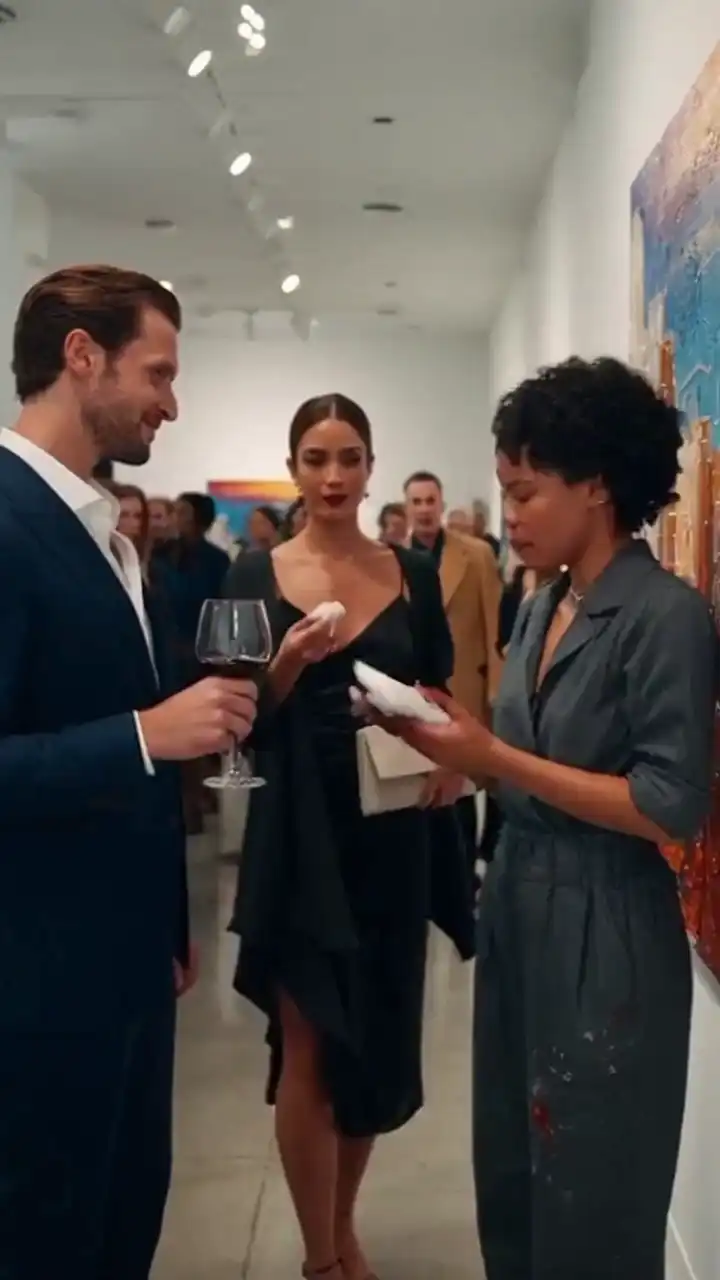
I took the white linen napkin from the table beside me and wiped the last streak of wine from my cheek. The room smelled like roses, money, and antiseptic drifting down from the upper floors.
“No,” I said. “This is the part where you learn what you touched.”
The attorney beside me, Mr. Kessler, held out his hand. “Mrs. Hale, the file.”
She stared at him, then at me. “You can’t be serious.”
“You accessed the Aster Biogenetic Continuity Registry at 2:14 a.m. three nights ago,” I said. “You flagged one pediatric donor match. Then you used your husband’s foundation influence to redirect surgical priority through administrative pressure.” I looked at the folder. “And unless you forged more signatures than I think you did, you documented every step.”
A murmur moved through the ballroom.
Dr. Levin, the transplant surgeon who had avoided my eyes all night, took one step forward. “That’s impossible,” he said too quickly. “The registry is private.”
“It is,” Mr. Kessler said. “Entirely private. Owned under Arden BioSystems, held through a blind trust, and licensed to select research hospitals under federal confidentiality restrictions.” He turned slightly, enough for the whole board to hear him. “My client is the principal owner.”
For a second, nobody moved.
Then Board Chair Eleanor Price actually gripped the back of a chair to steady herself.
Vanessa blinked once. Twice. “Your client?” she repeated. “Her?”
I met her eyes. “Yes. Me.”
The denial came fast, exactly the way cowardice always does when it’s dressed in silk.
Vanessa laughed again, louder this time. “That’s absurd. She came in here looking like—” She cut herself off, glancing at the wine on my dress and the room full of witnesses. “This is intimidation. Harold?” She looked toward the hospital executive who had told me not to make this ugly. “Tell them.”
Harold’s face had gone gray. “Vanessa, perhaps we should review the documents.”
“Review?” she snapped. “I fund this wing.”
“You bought the plaque,” I said. “Not the children inside it.”
That landed.
Hard.
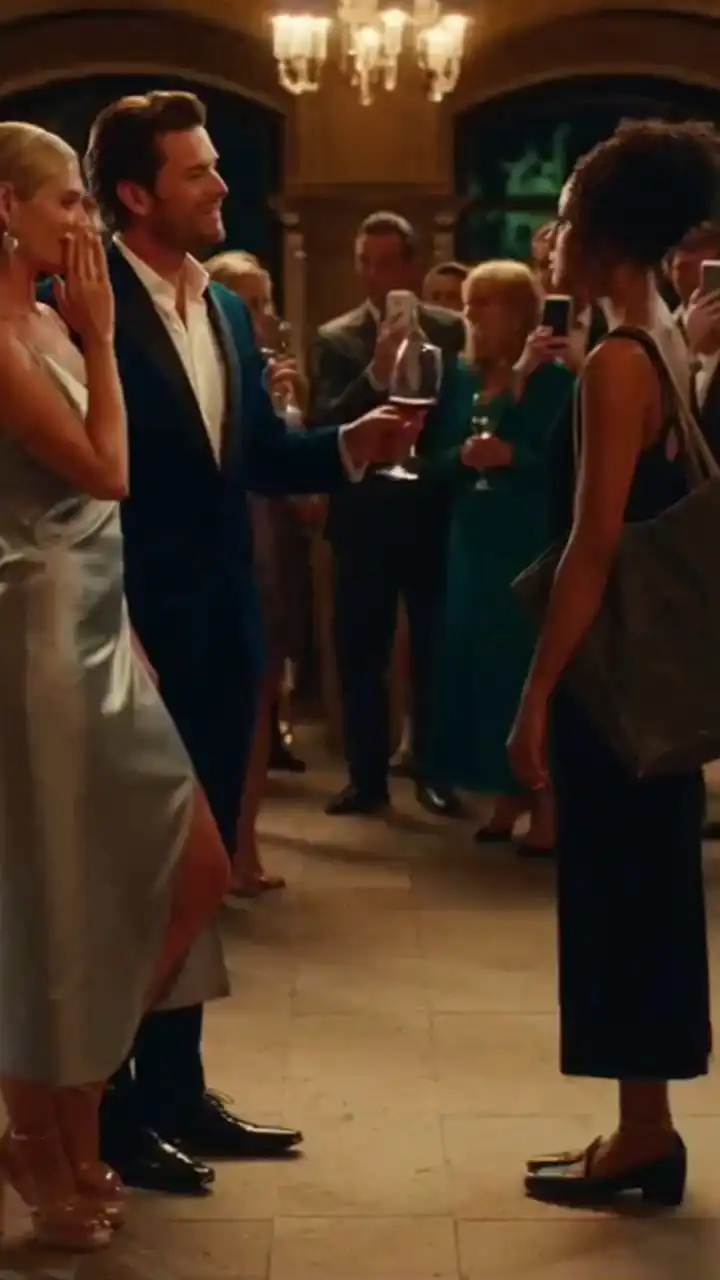
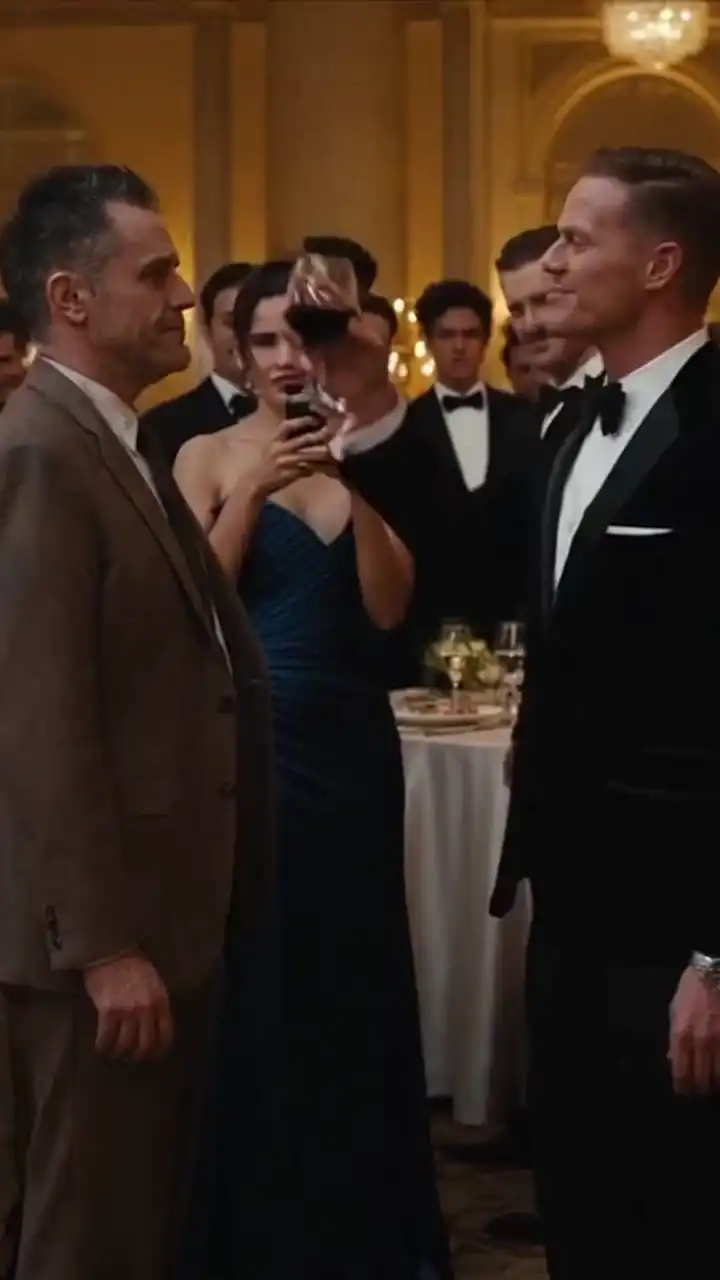
A phone was still raised near the dessert station. Cindy Mercer, one of the lifestyle reporters who had smirked when security blocked me, lowered it halfway. Her lipstick smile was gone now. She looked from me to Vanessa like she was realizing she had been filming the wrong woman.
Mr. Kessler opened the leather portfolio he carried and removed three documents in protective sleeves. He handed one to Eleanor, one to Dr. Levin, and one to the hospital’s compliance officer.
“Original trust formation,” he said. “Patent control schedule. Registry custody affidavit. Please note page four, section eight: unauthorized retrieval or donor manipulation triggers immediate injunction, civil seizure, and federal referral.”
The compliance officer’s hand trembled as he flipped pages. “These are notarized.”
“Yes,” said another lawyer behind Kessler. “In Delaware, New York, and California. We came prepared in case anyone here confused money with immunity.”
Vanessa’s husband, Richard Hale, had been silent until then, standing near the sponsor wall with that polished, dead expression men wear when they think their last name can do the talking for them. Now he stepped in.
“My wife was advocating for our nephew,” he said. “If there was an administrative misunderstanding, we can resolve it privately.”
“No,” I said.
The room went still again.
“Emma’s file was marked ‘defer pending donor reassignment,’” I continued. “Your nephew’s file was marked ‘expedite under exceptional patron review.’ Those changes were made eleven minutes apart from the same terminal using credentials assigned to Marisol Trent.”
Marisol—the donor relations director who had laughed into her champagne flute when Vanessa called people like me lower priority—went white.
“I—” She swallowed. “I was instructed—”
“By whom?” Eleanor asked sharply.
Marisol looked at Vanessa.
There it was. Stage two. Verification.
Not rumor. Not performance. Names, timestamps, signatures.
Dr. Levin snatched the document closer. “The donor heart was Emma’s match first?”
“It was identified through my registry and legally routed through your transplant network at 7:42 p.m. yesterday,” I said. “The child upstairs remained the priority recipient until someone decided a donor gala mattered more than a waiting list.”
Harold took off his glasses and rubbed his face. “My God.”
Vanessa’s voice dropped lower, meaner. “Even if any of that is true, do you have any idea who you’re accusing?”
I almost smiled.
“Yes,” I said. “A woman who thought pouring wine on a mother in public would keep her quiet long enough to steal a child’s heart.”
A sound escaped someone near the back—half gasp, half prayer.
Cindy lifted her phone again, but this time she pointed it at Vanessa.
So did another guest. Then another.
The room had changed sides without saying it aloud.
Richard stepped toward me, lowering his voice. “Name your number.”
Mr. Kessler moved between us so smoothly it looked effortless. “Don’t insult our time.”
“It’s not an insult,” Richard said. “It’s a resolution.”
I looked past him at the gold donor wall. HALE FAMILY FOUNDATION glowed under recessed lights, polished enough to reflect the ballroom.
“My daughter is upstairs attached to monitors because people like you believe need can be negotiated,” I said. “There is no number.”
Eleanor Price straightened at last. “Security.”
The same guard who had blocked me earlier stiffened near the entrance.
His eyes met mine, then dropped. “Ma’am…”
“For them,” Eleanor said, pointing at Vanessa, Richard, Harold, and Marisol. “No one leaves. Lock the media exits. Call legal and transplant oversight now.”
The guard hesitated only a second before nodding. “Yes, ma’am.”
He moved this time without putting himself in front of me.
That mattered more than his apology would have.
Vanessa finally opened the folder in her own hands, as if seeing it for the first time might change what it was. Inside were the reassignment requests, the internal emails, the provisional authorization forms her assistant must have compiled for pressure. I saw the exact moment she recognized her own signature at the bottom of page six.
Her face emptied.
“No,” she whispered.
Richard grabbed the pages. His jaw clenched harder with every line. “You signed this?”
“You told me to handle it.”
“I told you to make calls.”
“You said Daniel could not lose that heart.”
Their voices had turned raw now, stripped of polish. They had forgotten the room.
Good.
Because the room had not forgotten them.
Marisol began crying first—not elegantly, not softly. Her mascara streaked as she looked at Dr. Levin. “They said it happens all the time. Donors shift. Patrons intervene. I thought—”
“You thought wrong,” he said, and his voice shook with disgust, though whether at her or himself, I couldn’t tell.
Harold backed toward a chair and sat down too quickly, as if his knees had given out. “I told you not to put anything in writing,” he muttered to Vanessa.
Cindy Mercer stepped closer, phone recording openly now. “Mrs. Hale, did you knowingly interfere with a pediatric transplant allocation?”
Vanessa flinched like she’d been struck.
An hour earlier, Cindy had laughed when I said Emma had a right to that heart.
Now she wanted the quote that would end a dynasty.
Another bystander found her conscience too late. Gerald Pike, one of the board donors who had looked away while Vanessa humiliated me, cleared his throat and approached Eleanor. “For the record, I objected to donor influence from the start.”
Eleanor didn’t even look at him. “No, Gerald. For the record, you stayed quiet.”
That one hurt him. I could see it.
Richard tried one last time. “If this becomes public, the hospital takes damage too.”
“It already is public,” Mr. Kessler said, nodding toward the phones. “And damage implies future tense.”
Then came the horror.
Not hers first.
His.
Richard looked around the ballroom and realized no one was coming to save them. Not the surgeons. Not the board. Not the reporters who had once chased his wife for fashion photos. Not the executives who had taken his checks with both hands.
The power had left the room, and it had not gone with him.
Vanessa turned to me then, finally seeing me clearly—not the dress, not the wet face, not the single mother she thought she could crush with one sentence.
“Who are you?” she asked.
The question almost made me tired.
“I’m the woman who built the registry your people stole from,” I said. “After my sister died waiting for a donor that never came because someone richer moved ahead of her.” My voice stayed even. “I made sure no family would be invisible inside the system again. You looked at that system and saw a menu.”
She had no answer.
Upstairs, somewhere beyond the ballroom ceiling, a code cart rolled past in the hall. Its wheels rattled over the seam in the tile.
Every sound sharpened inside me.
“Dr. Levin,” I said, turning to him. “Is Emma still viable for the procedure if this is corrected now?”
He stared at me a beat too long, shame flooding his face. Then he nodded once, firmly. “Yes. If we release the illegal hold and notify procurement immediately, the operating room can be ready in under forty minutes.”
“Then go,” I said.
He did.
No speech. No defense. Just motion.
For the first time that night, something in my chest loosened.
Eleanor handed the compliance officer her phone. “Call state health authority, UNOS oversight, and outside counsel. I want every access log preserved.”
Richard reached for Vanessa’s arm, but she pulled away from him. The diamonds at her wrist flashed under the lights like broken glass.
“Please,” she said to me, and hearing that word from her was stranger than hearing her insult me had been. “My nephew is sick.”
“So is my daughter.”
The silence after that was complete.
Not dramatic. Not triumphant.
Just finished.
Mr. Kessler touched my elbow lightly. “They’ll take it from here.”
I nodded.
As I turned toward the elevator, Cindy stepped aside without a word. The security guard held the door open for me. He still couldn’t meet my eyes, but he moved with care this time, like he understood exactly who he had stood in front of.
Behind me, voices rose again—legal language, panicked whispers, somebody crying, a board member demanding names.
I didn’t look back.
The elevator doors opened with a soft chime, and the sterile scent of the upper floors washed over me, clean and cold.
Emma was waiting.
I stepped inside, pressed the button, and left their ruin to the people who had built it.
Disclaimer: Mention of any brand or trademark is for identification only and does not imply partnership or endorsement