THE NIGHT THE PTA QUEEN POURED WINE ON THE WRONG MOTHER
Headmaster Collins froze with his hand halfway to the microphone.
The ballroom lights hit the sweat forming at his temple. Natalie’s fingers tightened around the stem of her glass so hard I thought it might snap. For the first time that night, her chin dipped toward the folder in my hand instead of my coat.
“I’m sorry,” she said, giving a brittle little laugh. “An audit of what, exactly?”
I slid one sheet free.
“PTA operating funds, restricted scholarship donations, and event reimbursements from the last eighteen months.” My voice stayed even. “Including the winter gala, the literacy auction, and the so-called family assistance fund.”
A murmur moved through the room like wind through dry leaves.
Her husband stepped forward first, puffed up with the kind of confidence men borrow from their wives’ social power. “This is absurd. Natalie volunteers hundreds of hours for this school.”
“Then she’ll appreciate accurate bookkeeping,” I said.
Headmaster Collins finally took the microphone, but he didn’t speak into it yet. He looked at me instead. Not at the coat. Not at the wine. At me. Really at me.
His eyes flicked once to the bronze plaque on the wall.
Then back to my face.
The color drained from his.
Natalie saw it happen.
That shook her more than anything I’d said.
“Andrew,” she snapped at him, too quickly. “Say something.”
He cleared his throat into the mic, and the feedback squealed across the ballroom. “I believe,” he said carefully, “that before we continue dinner, there is an administrative matter that requires immediate attention.”
“Administrative?” Natalie laughed again, sharper now. “You cannot be serious.”
I held up the first page.
The paper was thick, cream-colored, with the academy letterhead and a clean row of numbers highlighted in yellow. “The family assistance fund collected two hundred and eighty-four thousand dollars over eighteen months,” I said. “One hundred and ninety-two thousand was disbursed. Ninety-two thousand is unaccounted for.”
Dead silence.
Someone near the dessert table whispered, “Ninety-two?”
Natalie lifted her chin. “That’s impossible.”
“It would be,” I agreed, “if receipts hadn’t been submitted for chauffeur services, spa invoices, floral installations at your home, and a catering deposit for your Cape summer party.”
Her husband barked, “That is defamatory.”
I turned the next page and read without raising my voice. “Harbor Mist Catering. Twelve thousand, six hundred dollars. Invoice address: 14 Waverly Point, Chatham. Registered property owner: Bennett Family Holdings.”
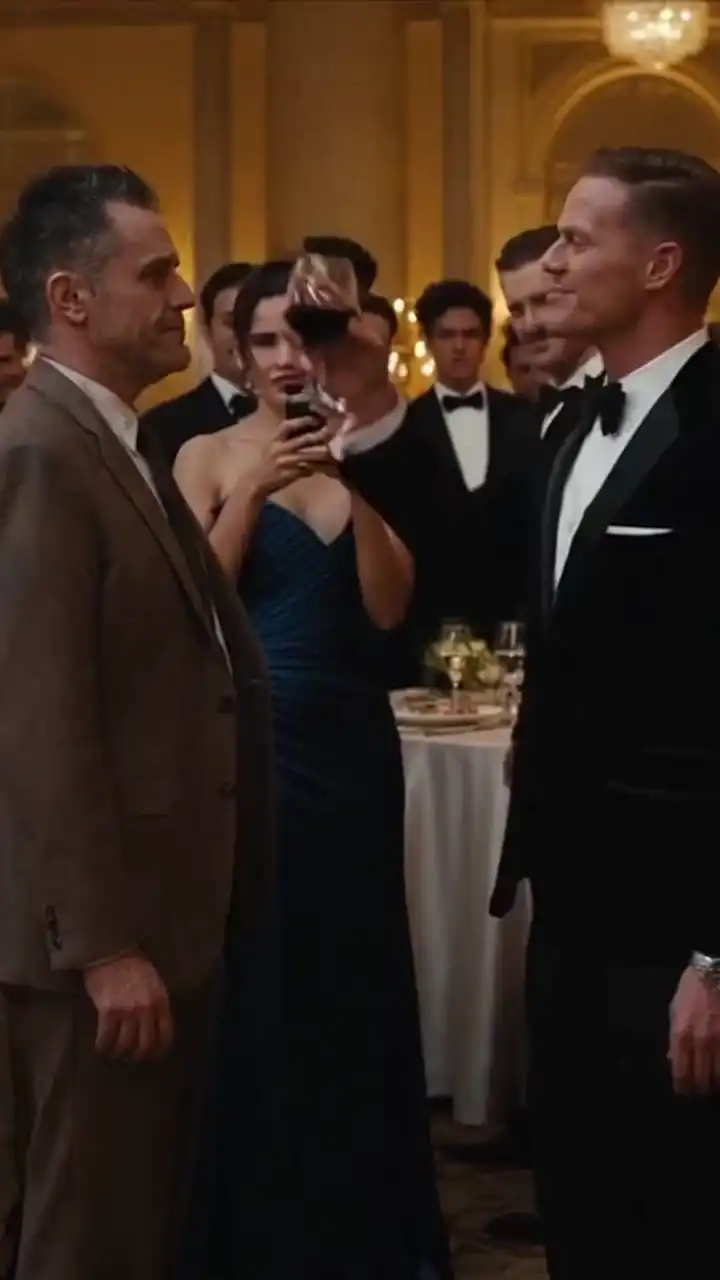
A woman at table three sucked in a breath. I recognized her immediately—Vanessa Cole, the one who had laughed into her napkin when Natalie spilled the wine. Her smile was gone now. Her phone, which had been aimed at me minutes ago, slowly lowered to her lap.
Natalie took one step toward me. “You have no right to go through PTA records.”
“I approved the forensic review,” Headmaster Collins said.
That landed.
She turned to him so fast her diamonds flashed. “You what?”
His voice came out strained. “The review was authorized after irregularities were flagged by the board.”
The board.
Now the room really changed.
People sat up. A few actually looked at me for the first time instead of through me. A man near the front—Daniel Mercer, the father who’d said admissions must be getting desperate—stared like he was trying to rebuild the last hour in his head and failing.
Natalie’s laugh disappeared completely. “The board doesn’t investigate me without my knowledge.”
“Not usually,” I said.
She looked at me then, fully, and I watched the exact second memory tried to connect to recognition. The plaque. My face. My name.
I took the final sheet from the folder and unfolded it.
“This is the donor agreement for the Whitmore Futures Endowment,” I said. “Dated May 14, eight years ago. Fifty million dollars in irrevocable funding, placed in trust for scholarships, faculty retention, and campus expansion. Signed under my legal name: Eleanor Vale.”
I let the page turn in my fingers.
The bronze plaque behind her read exactly the same.
DONATED ANONYMOUSLY BY ELEANOR VALE IN HONOR OF STUDENTS WHO EARN THEIR PLACE
Natalie turned, saw it, and stopped breathing for a second.
No one moved.
Her husband spoke first, but softly now. “Natalie…”
“No,” she whispered. “No, that—that can’t be right.”
Headmaster Collins found his voice. “Mrs. Carter elected to keep her married name private from the academy community for her son’s sake.”
I could feel every eye in the room swinging back to me.
Used Honda. Old coat. Practical shoes.
None of it had changed. Only their math had.
“You’re on the board,” Daniel Mercer said, as if he needed to hear the stupidity of the question out loud.
“Yes.”
Vanessa Cole’s face went pale. “Oh my God.”
The woman who had shifted her chair to block my seat—Lydia Harrow, pearls and all—stood so abruptly she knocked over her water glass. “I didn’t realize—”
“I know,” I said.
That was worse for her than if I’d shouted.
Natalie recovered enough to grab at one last branch of denial. “Even if you are who you claim to be, this is still a misunderstanding. PTA accounting is complicated. Funds are moved all the time. Reimbursements get delayed.”
I handed the folder to Headmaster Collins.
“There are forty-seven pages,” I said. “Bank transfers routed through a secondary events account opened with only one authorized signer. Cash withdrawals below reporting thresholds. Duplicate invoices. Reimbursement requests for items already comped by vendors. And six scholarship stipends delayed while parents waited for tuition relief.”
A mother near the back let out a choked sound. I recognized her too. She’d spoken to me once at pickup, quietly, about medical bills after her husband’s surgery. Her daughter was one of the children whose assistance had been “under review” for three months.
Natalie heard that sound.
That was the beginning of the horror.
Because numbers were one thing. Faces were another.
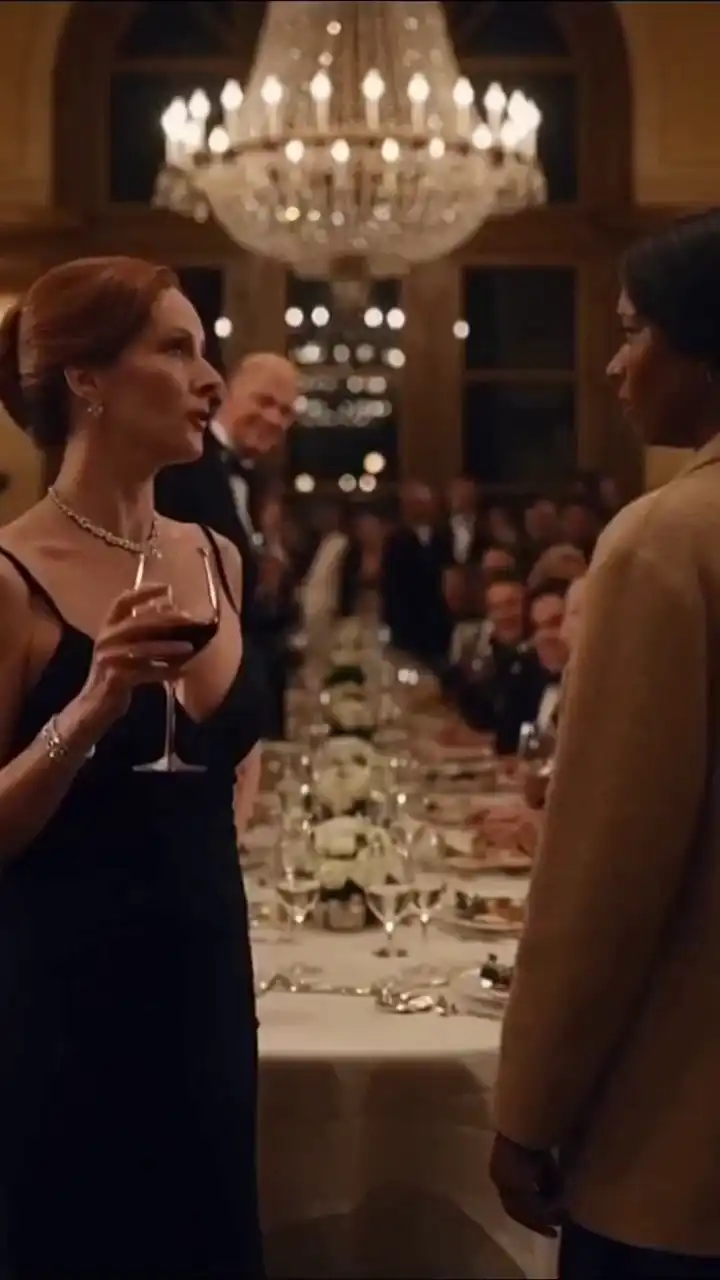
She looked around the ballroom as if searching for the easy loyalty she was used to finding. It wasn’t there. Not one of the women who had orbited her all year stepped closer. Even her husband had edged half a pace away, not enough to be obvious, enough to be real.
“You planned this,” she said to me.
“No,” I said. “I planned to attend my son’s school dinner.”
Her eyes dropped to the red stain spreading across my sleeve.
Understanding hit her in pieces. If she had ignored me, the audit would still have happened behind closed doors. Quietly. Procedurally. There might have been room for resignation, explanation, careful language. Instead she had chosen a stage.
And handed me the microphone.
Headmaster Collins adjusted his glasses and began reading the board motion. His hands were shaking. “Pending full review, Mrs. Natalie Bennett is suspended from all PTA authority effective immediately. Access to school fundraising accounts is revoked. An external accounting firm will finalize findings within five business days. If misappropriation is confirmed, the academy will refer the matter to counsel and, if necessary, to the district attorney’s office.”
Natalie stared at him.
Then at me.
Then at the parents around her, as if one of them would laugh and break the spell.
Nobody did.
Her husband finally tried a different tactic. “We can settle this privately.”
I looked at him. “Can you privately return money collected in the names of children?”
His mouth opened.
Closed.
Vanessa Cole stood up, voice wobbling. “I recorded what happened.” She wasn’t looking at Natalie. She was looking at me. “The wine. What she said. I laughed, and I shouldn’t have. If the school needs it, I’ll send the video.”
Lydia Harrow swallowed hard. “I heard her say your son didn’t belong here.”
From another table, Daniel Mercer rose halfway from his chair, every bit of swagger gone. “I made a comment earlier,” he said. “It was out of line.”
I met his eyes for one second. “Yes.”
He sat back down like the word had weight.
Natalie’s face had gone past anger now. Past humiliation. She looked stripped bare, the expensive kind of bare money couldn’t dress. “You let me do this,” she said.
The accusation almost sounded childish.
I thought about that for a moment. About every parent in that room who had watched to see whether I would break. About my son upstairs in the student wing, helping stack debate team binders because he liked being useful. About the years I had spent making sure he would never have to grow up believing wealth was character.
“I didn’t pour the wine, Natalie.”
The words settled over the room like a door closing.
One of the servers approached with a towel, finally, timid and late. I took it, pressed it once to my sleeve, and set it aside. The stain remained. So did the silence.
Headmaster Collins asked if I wanted security.
I almost laughed.
“No,” I said. “I’m finished here.”
Natalie stepped forward, desperation cracking through her voice at last. “Please. Mrs. Carter—Eleanor—this can be explained.”
That was her final state: not queenly, not polished, not feared.
Pleading.
I picked up my bag.
“Explain it to the families who wrote checks they could barely afford,” I said. “Explain it to the children you used as a backdrop.”
Then I turned toward the exit.
No one blocked my way this time. Chairs shifted back. Eyes dropped. The phones that had lifted so eagerly when they expected a humiliation stayed pointed at tablecloths and trembling hands.
At the door, Headmaster Collins hurried after me and lowered his voice. “Mrs. Carter—I owe you an apology. For tonight. For not seeing sooner.”
I looked through the glass panels toward the dark courtyard where my Honda waited under the lamps.
“For tonight,” I said, “you owed me a chair.”
He flinched because he understood.
I walked out before he could answer.
The night air hit cold and clean. Behind me, through the ballroom windows, I could see people clustering in broken little groups, the kind that form after a storm has taken the roof off something they thought was solid.
I unlocked my car, slid into the driver’s seat, and rested my hands on the wheel for a second.
Then I looked up at the academy building, at the old stone and lit windows and the name on the plaque they had passed a hundred times without ever asking who built the future they were standing in.
When my son came out, I would take him home.
And tomorrow, he would still belong.
Disclaimer: Mention of any brand or trademark is for identification only and does not imply partnership or endorsement