HE POURED WINE ON THE WRONG WOMAN—THEN THE SCREEN EXPOSED EVERYTHING HE BUILT
The black screen held for one long, strange second.
Long enough for Grant’s smile to twitch.
Long enough for the room to stop pretending this was still a joke.
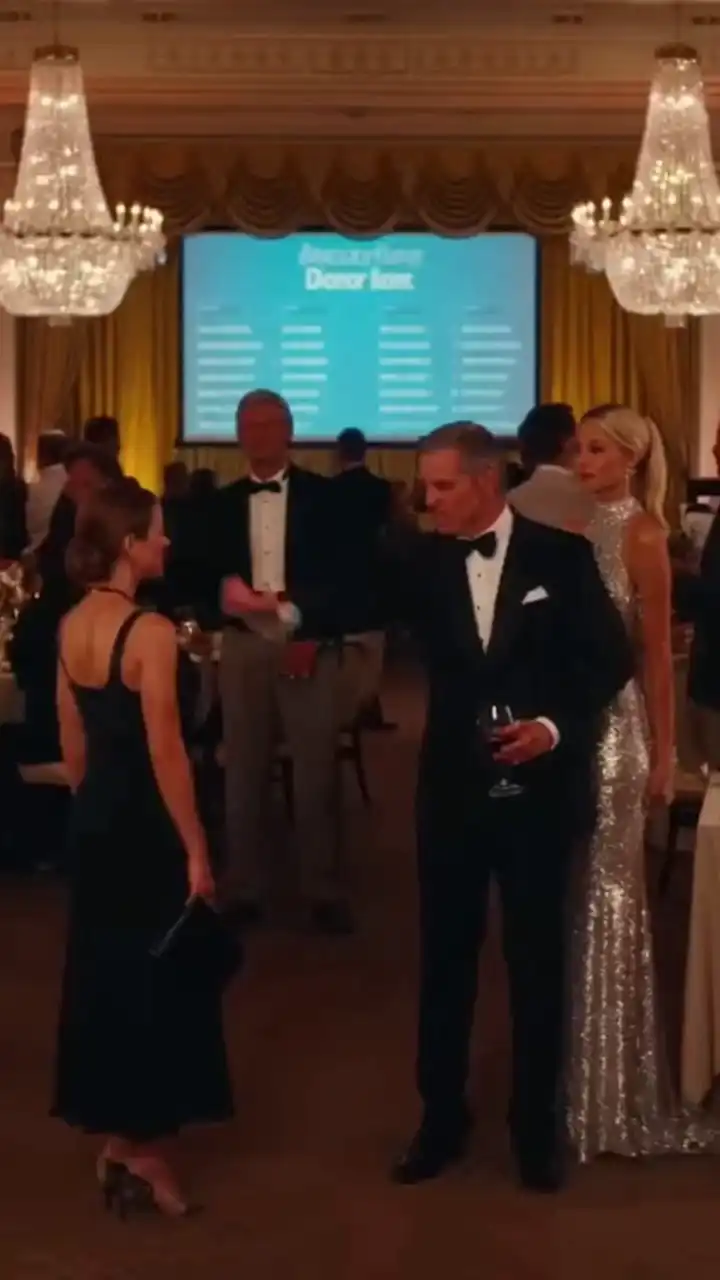
Then white text appeared in the center of the screen.
MERCER CAPITAL: INTERNAL TRANSFER SUMMARY
A murmur rolled across the ballroom like wind over water.
Grant turned first to the screen, then to me. “What the hell is this?”
I took the towel from the waitress at last, folded it once, and dabbed the wine from my jaw. “Your ending.”
The model on his arm gave a nervous laugh, too late and too thin. “Babe, is this some weird roast thing?”
No one answered her.
The next slide came up.
A scanned invoice. Vendor names. Dates. Amounts. The red circles I had marked myself around duplicate payments and shell accounts. Then another. And another. Neat columns. Offshore wires. “Consulting fees” billed to companies that existed only on paper and vanished three days after funds cleared.
Grant’s face drained by degrees.
At first he did what men like him always do. He scoffed.
“This is fake,” he said, loud enough for the entire room. “Someone shut this off.”
The AV technician didn’t move.
He was looking at me.
Grant followed his eyes, and for the first time that night, he understood he was not the one anyone was waiting on.
I set the towel down on a passing tray. “Don’t stop now. Slide twelve is my favorite.”
The room stayed still.
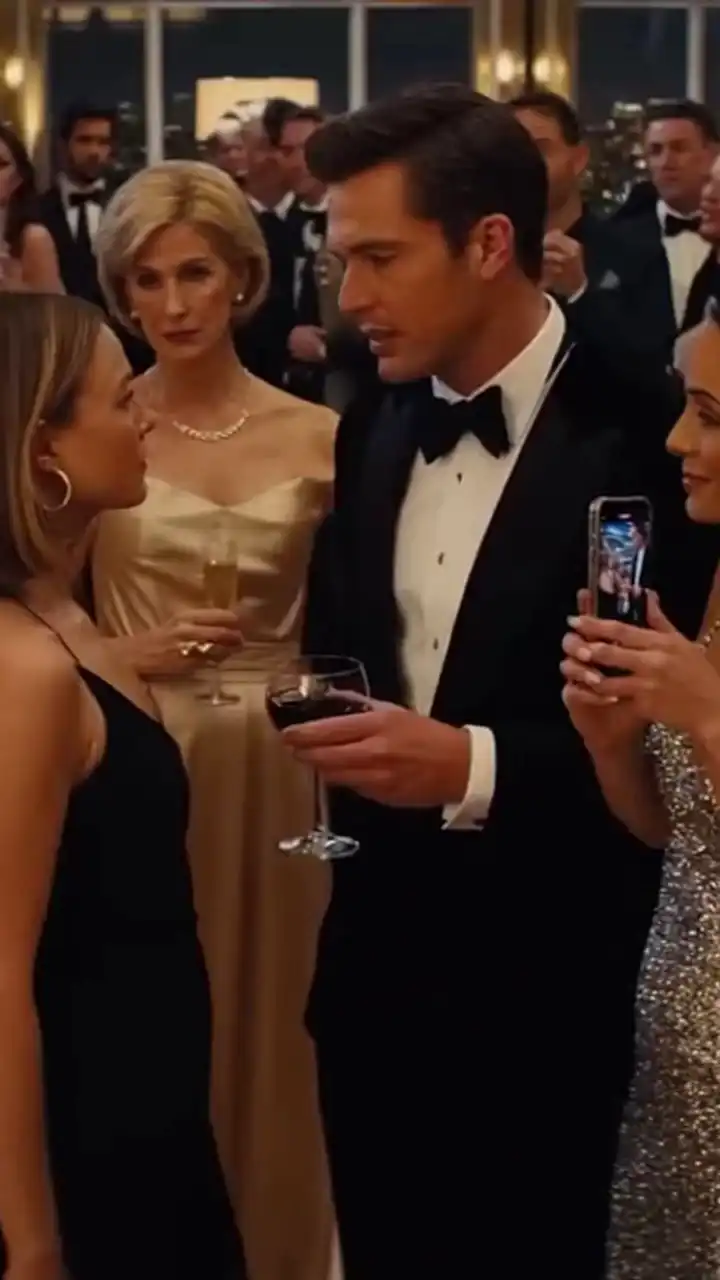
A donor near the front, Eleanor Whitcomb, the woman who had laughed into her champagne when Grant called me an embarrassment, lowered her glass so quickly it sloshed onto her hand. She stared at the screen, blinking hard, as if numbers could become harmless if she looked long enough.
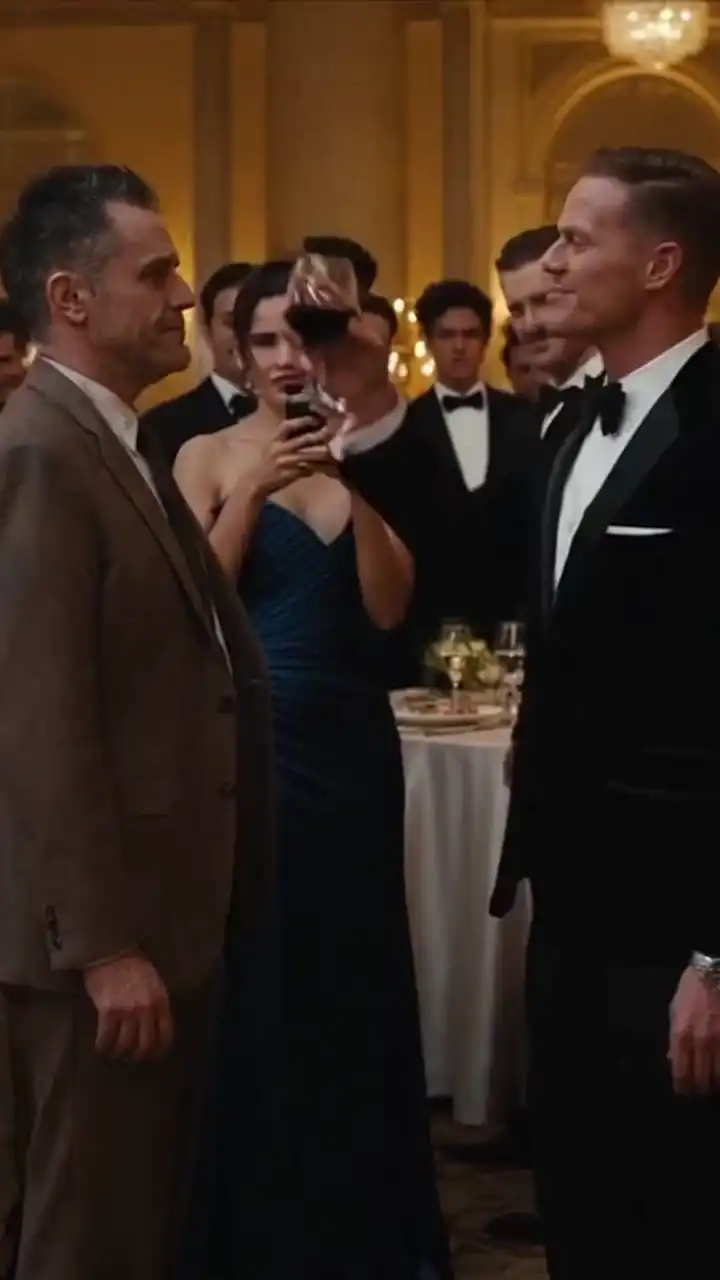
On the far side of the room, Trevor Hale—the one filming on his phone when Grant threw the wine—slowly lowered it. His grin was gone. He slipped the phone behind his back like a schoolboy caught stealing.
Slide twelve appeared.
An email chain.
From Grant’s CFO.
Subject line: RECLASS BEFORE AUDIT.
Below it, Grant’s reply in plain black letters.
Move the farm parcels through the foundation account. No one reads agricultural holdings. Clean it before quarter close.
Someone near the bar inhaled sharply.
Grant took a step toward the stage. “Turn it off.”
I reached into my clutch and pulled out the folded packet I had carried all evening. Thick cream paper. County seal. Blue ribbon. The original deed transfer copies, certified and stamped. I held them up where the front tables could see.
“No,” I said. “Let’s verify.”
His eyes dropped to the documents and narrowed. “What are you doing?”
“The part you never thought I could.”
I walked past him, slow and steady, my heels clicking over marble still stained pink from the wine. The model finally let go of his arm. She looked at my dress, at his face, at the screen, then took one silent step away from him as if fraud might be contagious.
At the edge of the stage stood Daniel Price, one of the event trustees. In Part 1, he had done nothing but look down at his cufflinks while Grant mocked me. Now he swallowed and reached for the packet when I offered it.
His hands shook.
“Read the date,” I said.
He cleared his throat. “Transfer of title… Suffolk County… filed April seventeenth, eight years ago.”
“Read the grantor.”
“Mercer Development Holdings.”
“Read the grantee.”
His voice dropped.
“Blackthorn Agricultural Trust.”
Grant laughed then, but it cracked in the middle. “That trust is dormant.”
I looked at him. “No. It was quiet.”
Daniel turned the page, eyes moving faster now. “Primary controlling signatory…” He stopped.
“Go on,” I said.
He looked up at me, then back down. “Evelyn Mercer.”
The silence that followed was heavier than the first one.
Not because of my married name.
Because everyone in that room knew I had never once sat on a stage, never once chased a camera, never once attached myself to Grant’s spotlight. They had mistaken privacy for dependence. Simplicity for weakness. Silence for ignorance.
Grant’s jaw clenched. “That doesn’t prove anything. She signed what I put in front of her for years.”
“Not this,” I said.
I took the papers back and opened them to the tabbed page. My signature. Not the looping decorative one I used on charity place cards and holiday notes during our marriage, the one he never really looked at. My legal signature. My trust seal. A notarized resolution attached behind it.
“The parcels under your expansion plan,” I said, turning a page so he could see the map outlines and lot numbers, “are not yours. They haven’t been yours in eight years. Your lenders believed you had controlling access to all seven eastern lots. You pledged development rights you no longer owned.”
His forehead shone under the ballroom lights.
“That’s impossible.”
“It’s filed with the county recorder. And with your bank. Your CFO knew. That’s why he asked you to move them through the foundation books and bury the title issue under charitable land use designations.”
Trevor, still holding his phone, whispered, “Oh my God,” though no one had asked him to speak.
Grant turned toward the exits as if someone might appear and save him with a better version of reality.
Instead, two men in dark suits entered from the side hall.
Not dramatic. Not rushed. Just precise.
One was from the firm that managed the trust. The other was a forensic accountant I had retained months ago, after finding the first discrepancy in a donation ledger Grant had left open on a home office screen back when he still assumed I only noticed grocery lists and school calendars.
The accountant handed Daniel a second folder.
Daniel opened it. His face went pale.
“There are nineteen flagged transactions,” he said, almost to himself. “Three of them moved through tonight’s charity allocations.”
A ripple of horror moved through the donors now, because fraud against investors was one thing. Fraud through a charity ballroom full of names engraved on hospital wings was another.
Eleanor Whitcomb stood so abruptly her chair legs scraped. “Grant,” she said, her voice breaking on the second syllable, “please tell me that isn’t my foundation account listed there.”
No one had laughed at me more loudly than she had.
Now she looked at him the way people look at smoke under a locked door.
Grant held up both hands. “You’re all overreacting. These are bookkeeping adjustments. Everyone does this.”
The phrase landed dead.
Daniel looked at the screen again. “There are forged tax signatures here.”
“I did not forge anything.”
The accountant spoke for the first time. “The electronic certificate hashes don’t match the filed returns.”
Grant rounded on him. “Who the hell are you?”
“The man who spent six weeks tracing your shell vendors to a P.O. box in Newark and a condo your girlfriend posts from on social media.”
The model went white.
“What?” she said, turning to Grant. “You said that condo was an investment property.”
This time, when the room looked at her, it wasn’t with envy.
It was with pity.
Grant lunged for the microphone stand near the podium, but the sound cut before he reached it. The AV technician, bless him, had found his backbone. The only voice left in the room was the small, humiliating rustle of paper as Daniel kept turning pages.
Denial had left Grant’s face.
Verification had arrived.
I watched it happen in his eyes as each piece stopped being abstract and became something with a seal, a signature, a routing number, a county filing code. His mouth opened twice before any sound came out.
“You did this,” he said.
“Yes.”
“You set me up.”
“No,” I said softly. “I documented you.”
That was when the horror finally reached him.
Not just that I had evidence.
Not just that the land was gone.
But that every person whose approval he had spent ten years chasing now knew the truth at the exact same moment he did. The donors. The trustees. His golf friends. The younger woman on his arm. The waitress he had snapped at. Every witness he had wanted for my humiliation had become witness to his collapse.
Trevor stepped forward with his phone, face red. “Mrs. Mercer—I mean, Evelyn—I’m sorry. I shouldn’t have recorded any of that.”
“You already did,” I said.
He looked down.
The waitress moved beside me then, finally close enough to offer help without asking permission from a man who no longer had any. “Ma’am,” she whispered, “there’s a private room if you need a moment.”
I smiled at her. “I’m all right.”
Eleanor was crying now, though carefully, as rich women do when they want their mascara to survive. “I laughed,” she said, not quite to me, not quite to herself.
“Yes,” I said.
She had no answer for that.
Grant did what collapsing men do when charm, volume, and money all fail at once. He reached for the oldest weapon left.
“Come on,” he said, voice dropping low, intimate, ugly. “You’re making a scene because you’re bitter. Because I left.”
It almost worked on the people who wanted to be fooled.
Almost.
Then Daniel lifted the final page from the folder and said, in a stunned voice, “There’s an authorization request scheduled for tomorrow morning. He was planning to leverage the eastern parcels as collateral for a bridge loan.”
A bridge loan.
Against land he no longer owned.
Against signatures already under review.
Against a trust that answered to me.
Grant’s shoulders actually sank. Not metaphorically. Not poetically. I watched them drop, as if the strings inside him had been cut one by one. He looked older in that second than he had in the last ten years combined.
“Evelyn,” he said, and now there was no power in my name when he spoke it. Only fear. “We can discuss this privately.”
“We are,” I said.
One of the men in suits stepped forward and quietly informed him that his board had already been contacted and that outside counsel was on the line. Grant stared at him without blinking.
The model picked up her tiny silver purse from the table and walked away without touching him.
His golf buddy—the one who had shouted Upgrade of the century—wouldn’t meet his eyes.
No one rushed to his side.
No one called it a misunderstanding.
I took a final napkin from the table and wiped the last dark streak of wine from my wrist. Then I set the stained linen beside his untouched place card.
“Send my regards to your attorneys,” I said.
I turned to the waitress. “Could you have my car brought around?”
“Yes, ma’am,” she said immediately.
As I walked toward the doors, the ballroom stayed parted for me.
Not out of courtesy.
Out of recognition.
Behind me, Grant started to say my name again, but I kept moving. My heels sounded clean and even against the marble, and by the time the night air touched my skin, the smell of red wine was already fading.
Disclaimer: Mention of any brand or trademark is for identification only and does not imply partnership or endorsement