HE LAUGHED AT MY “BANKRUPTCY” UNTIL THE ENTIRE ROOM WATCHED HIM LOSE EVERYTHING
I lifted the final page so the overhead lights caught the ink.
Not a scan. Not a copy. Wet signature, still slightly indented through the paper.
The logo at the top belonged to Halcyon Systems, Mason’s parent company. The signature at the bottom belonged to Evelyn Shaw, chair of the board, a woman who had not signed anything in public in eleven years unless she intended to bury or bless someone.
A murmur rippled through the ballroom.
Mason’s smile stayed on his face for one beat too long, like his body hadn’t caught up with what his eyes were seeing.
“That’s cute,” he said, too quickly. “You forged a board letter for a dinner party?”
I looked down at him from the stage. “It’s not a board letter.”
I turned the page toward the room and read the title into the microphone.
“Asset Purchase and Reassignment Agreement.”
The words hit harder than shouting ever could.
Someone near the front actually stood up.
Mason’s hand tightened around his champagne glass. “No.”
His voice cracked on that one word.
I flipped to the tabbed page. “Section four. Transfer of all patent claims, source repository rights, customer migration authority, and derivative licensing associated with Project Lattice.”
Another murmur, louder this time.
He had renamed my product Meridian after he stole it. But before he renamed it, before his branding team wrapped it in cobalt blue and investor jargon, it had lived on my laptop under the original name he never bothered to scrub from the internal files.
Project Lattice.
Only a handful of people in that room would know that.
And all of them went pale.
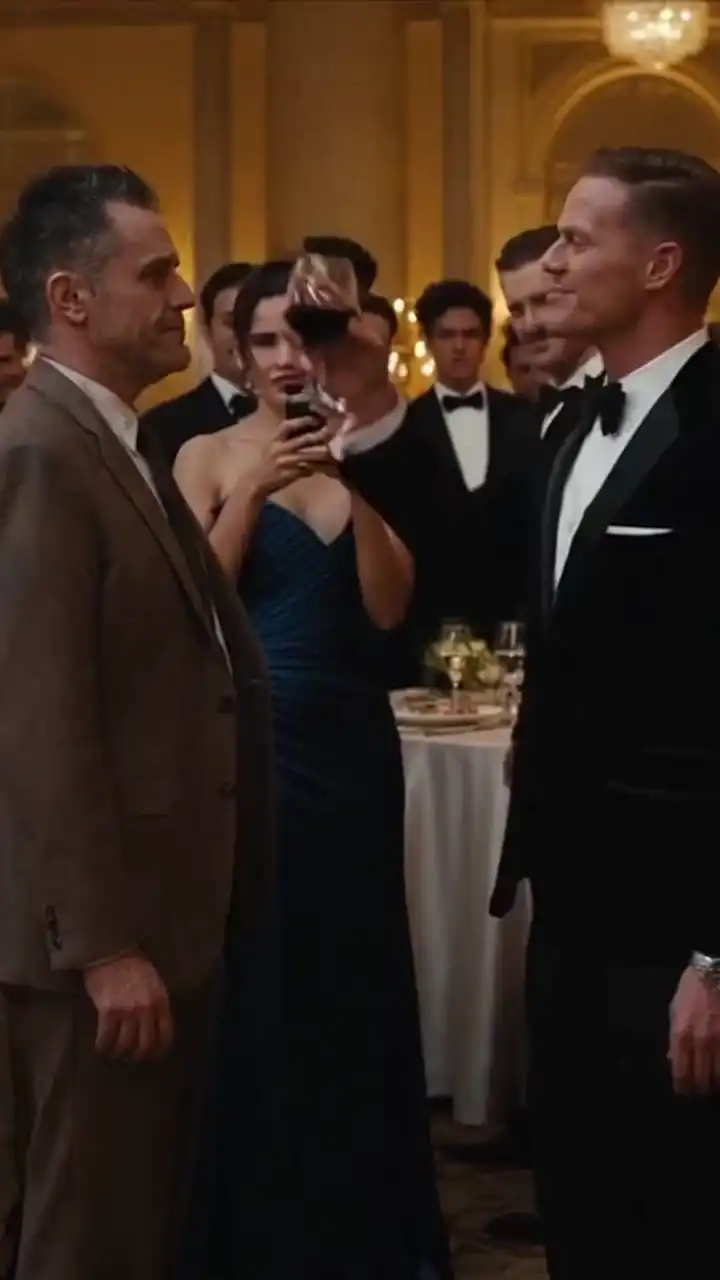
“You’re lying,” Mason said, but now he wasn’t talking to me. He was looking at the front table, where two Halcyon executives had suddenly become fascinated by their water glasses.
I kept my voice even. “The sale executed at 4:12 this afternoon. Delaware filing stamped at 4:43. Wire confirmation cleared at 5:01. Your board authorized the divestiture after outside counsel concluded Meridian’s core architecture was built on misappropriated material traced to my original repository, my investor memos, and my pre-incorporation filings.”
The room was silent enough to hear cutlery settle against china.
He stared at the page, then at me, then back again, like if he moved fast enough the words might rearrange themselves into something survivable.
“That’s impossible,” he said. “Halcyon would never sell Meridian.”
“They didn’t sell Meridian,” I said. “They sold the legal risk attached to keeping it.”
A few people laughed at that.
Not kindly.
This time the sound was aimed in the other direction.
Mason stepped toward the stage. “You were bankrupt.”
“I let that story travel,” I said. “Chapter eleven is public. What isn’t public is who bought the debt.”
His face lost color by degrees.
First disbelief. Then calculation. Then the first thin cut of fear.
One of the venture partners at table six—Daniel Hsu, who had ignored my last six emails and laughed into his napkin when Mason spilled the wine—suddenly sat forward. “Bought the debt?” he repeated.
I looked at him. “Every note. Every distressed claim. Every vendor position worth consolidating.”
Daniel’s eyes widened. He understood numbers before he understood people, and numbers were finally telling him the truth.
I slid another document from the folder.
“This,” I said into the microphone, “is the court-approved restructuring schedule. The shell everyone thought was dying was the acquisition vehicle. Mine.”
Now the room moved all at once.
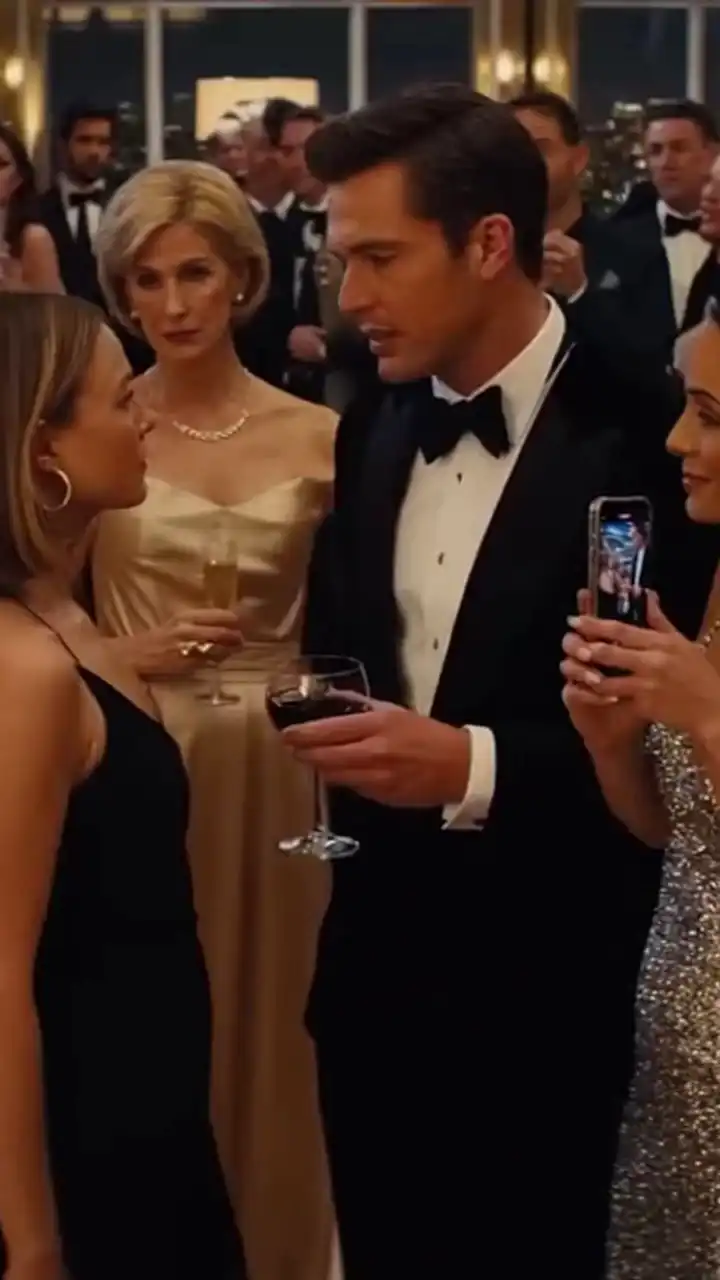
Phones came up.
People who had refused to meet my eyes ten minutes earlier were staring like they might miss history if they blinked.
Mason gave a short, brittle laugh. “Even if that were true, you still don’t control distribution. You don’t control enterprise contracts. You don’t control the team.”
I reached into the folder again and placed three more pages on the lectern in a neat stack.
“Schedule B,” I said. “Forty-two enterprise clients with change-of-control clauses triggered by the transfer. Thirty-one have already countersigned migration notices.”
His expression went blank.
“Schedule C,” I continued. “Escrow release for the engineering retention pool.”
Blank, then worse than blank.
“Schedule D. Employment offers. Sent at 6:10 p.m. Accepted by your lead infrastructure architect, your security chief, and seven of the twelve original engineers who recognized my code the first time they saw it.”
A woman near the back let out an involuntary “Oh my God.”
Mason looked toward his COO’s empty seat.
Empty, because she had left forty minutes earlier after taking a call in the lobby.
Now he knew why.
He climbed the first stair to the stage before security shifted.
“Get down,” he hissed. “You think one stunt fixes your reputation?”
I met him there, not retreating an inch. “It fixes ownership.”
The host, frozen until then, finally found his spine. “Sir—”
Mason ignored him. He was sweating now, a sharp sheen at his temples. “You can’t just walk in here and announce a fantasy. This summit is full of investors. They’ll verify it in two minutes.”
“Yes,” I said. “They will.”
As if on cue, half the room looked down at their phones.
Then the first buzz came.
Then another.
Then a wave of them.
The SEC disclosure had posted. Halcyon’s after-hours statement was live. So was the customer notice. So was the internal memo someone had already forwarded to half the ballroom.
I watched the exact second Mason realized this wasn’t a bluff.
His pupils shifted left to right, reading something on someone else’s screen from too far away, desperate and disbelieving. His mouth opened. Closed. Opened again.
“No,” he said, softer this time. “No, there’s a standstill. There would be a review period.”
“There was,” I said. “During the forty-eight hours your board stopped returning your calls.”
At table three, Lila Grant finally put her phone down.
Lila had filmed me when the wine hit my suit. I’d seen the smirk on her face when she angled for better lighting, already drafting whatever cruel caption she planned to post.
Now her lipstick had drained pale around the edges.
She stood up so abruptly her chair scraped the floor. “I—I didn’t know,” she said, to no one and everyone.
“No,” I said, looking at her once. “You didn’t ask.”
She sat back down like her knees had stopped working.
Then Daniel Hsu rose halfway out of his chair, clutching his phone. “Mason,” he said carefully, “the filing names her as controlling manager of the acquiring entity.”
Not me.
Her.
Not a rumor. Not a ghost in a stained blazer. A legal fact.
Another bystander found his courage too late. Greg Patel, the founder who had laughed the loudest after Mason’s catering joke, cleared his throat and tried on a smile that looked painful. “Listen, maybe we should all take a breath. There’s probably a strategic angle here—maybe a partnership—”
I turned to him.
He stopped speaking mid-sentence.
“Was there a strategic angle when you laughed?” I asked.
Greg dropped his gaze to the tablecloth.
“No,” he muttered.
“Thought so.”
Mason was unraveling faster now, but not all at once. Men like him didn’t collapse cleanly. They fought gravity until it tore something.
“This is theft,” he said, louder, trying to recover the room with force. “You set me up. You manipulated the board.”
I almost smiled. “You mean due diligence found the version history with my timestamps, my prototype demos, and your access credentials?”
His jaw tightened.
I took one step closer, microphone still in my hand, and lowered my voice just enough to make the room lean in.
“You stole my product, raised on my architecture, buried me in legal fees, and waited for me to run out of oxygen. So I learned how oxygen is priced.”
He flinched.
There it was.
Not outrage. Not arrogance. Recognition.
He knew exactly how I had done it. Quietly. Patiently. The way people like him did everything they thought only they were smart enough to do.
Behind him, one of the Halcyon executives finally stood. “Mason,” he said, “I think you should stop speaking.”
Mason turned on him. “You knew?”
The executive didn’t answer right away, which was answer enough.
Evelyn Shaw herself had not come to the dinner, but her deputy had. He adjusted his cuff, looked at the floor, and said, “Counsel advised containment. You were informed there was an issue.”
“I was told there was paperwork.”
“Yes,” I said. “This is the paperwork.”
The ballroom broke into whispers so loud they became their own weather.
Mason looked back at me, and for the first time all night, there was no performance left in him. Just naked horror.
“What happens now?” he asked.
A simple question.
Maybe the first honest one he had ever asked me.
I closed the folder.
“Tonight?” I said. “You go home.”
His throat moved.
“And tomorrow?”
“Tomorrow your access dies at 8:00 a.m. Your board votes on cause. Counsel finishes the referral package. And every investor in this room decides whether they want to explain why they applauded the wrong person.”
Nobody moved.
Nobody defended him.
Daniel Hsu slowly lowered his eyes. Lila deleted something from her phone with trembling fingers. Greg Patel stared into his untouched dessert like it might open and swallow him.
Mason looked around the room he had ruled ten minutes earlier and found no allies left in it.
That was the final state.
Not anger.
Not even humiliation.
Absence.
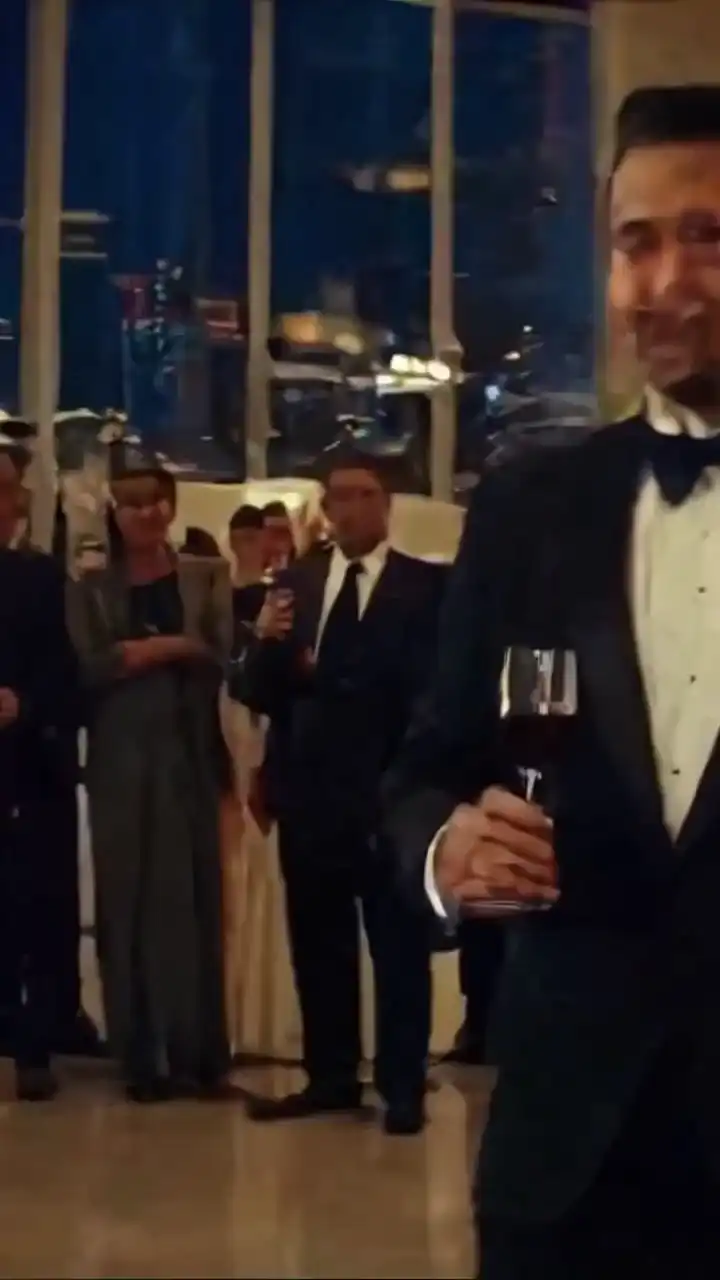
He set his champagne glass down on a passing server’s tray because his hand was shaking too badly to hold it.
“I can fix this,” he said, but the sentence had no home. He wasn’t speaking to me anymore. He was speaking to the air, to the room, to whatever god protects men who think consequences are for other people.
No one answered.
I stepped away from the lectern.
The host, suddenly eager to be on the right side of history, reached for the microphone as if he might say something flattering. I didn’t give him the chance.
I came down from the stage slowly, wine drying stiff against my suit, the black folder light in my hand now that it had done its work.
People parted before me.
Not dramatically.
Just enough.
At the edge of the ballroom, a young server who had watched everything held out a clean linen towel without saying a word. I took it, dabbed once at my sleeve, and thanked him.
Then I walked past Mason.
He didn’t touch me.
Didn’t speak.
Didn’t even look up.
Outside, the night air was cold and smelled like wet pavement and eucalyptus from the hotel drive. My phone buzzed with calls from numbers that had gone silent months ago.
I muted them all.
The elevator doors opened behind me, reflecting the dark stain on my jacket and the city lights beyond the glass.
I kept walking.
By the time the summit lights faded at my back, the answer was no longer a question.
Disclaimer: Mention of any brand or trademark is for identification only and does not imply partnership or endorsement