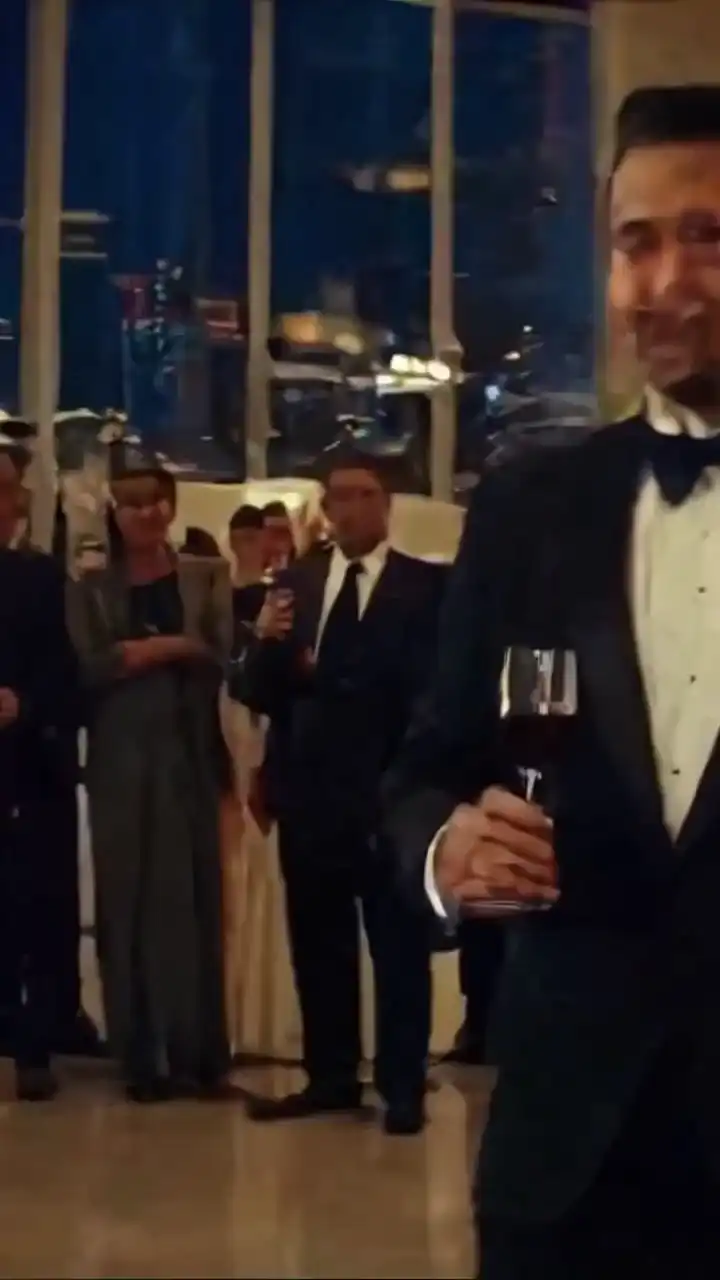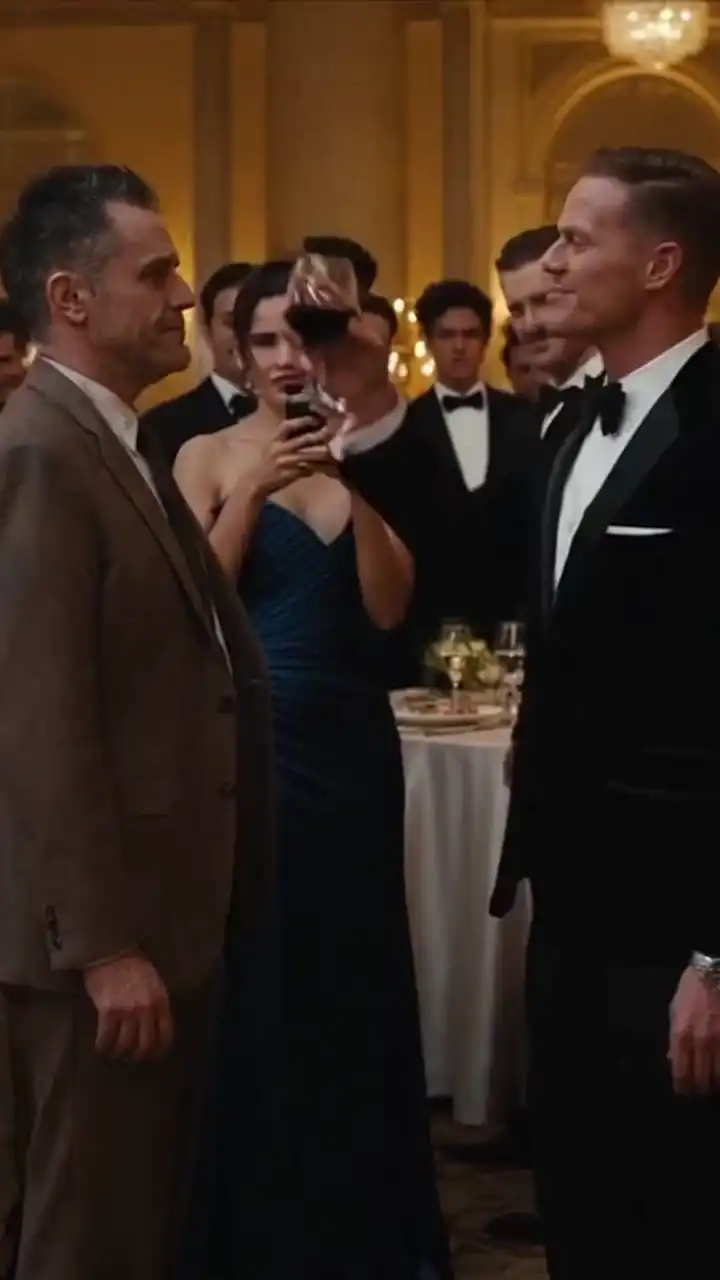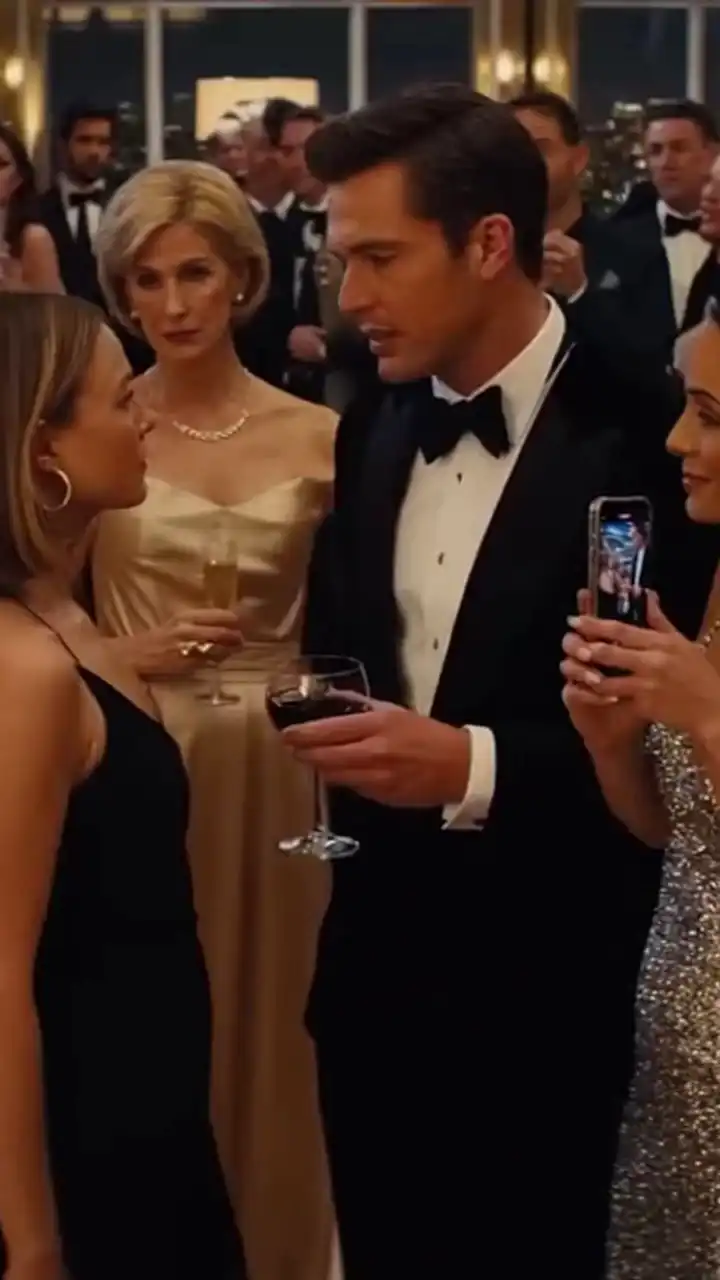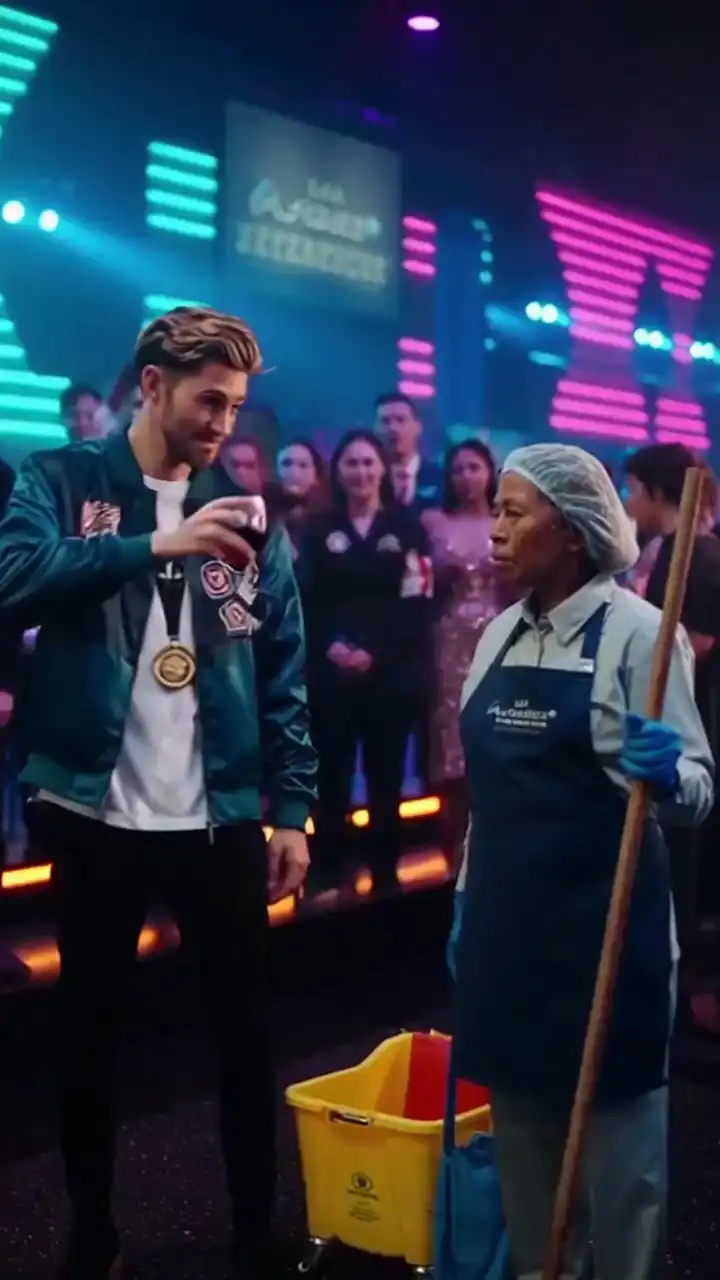
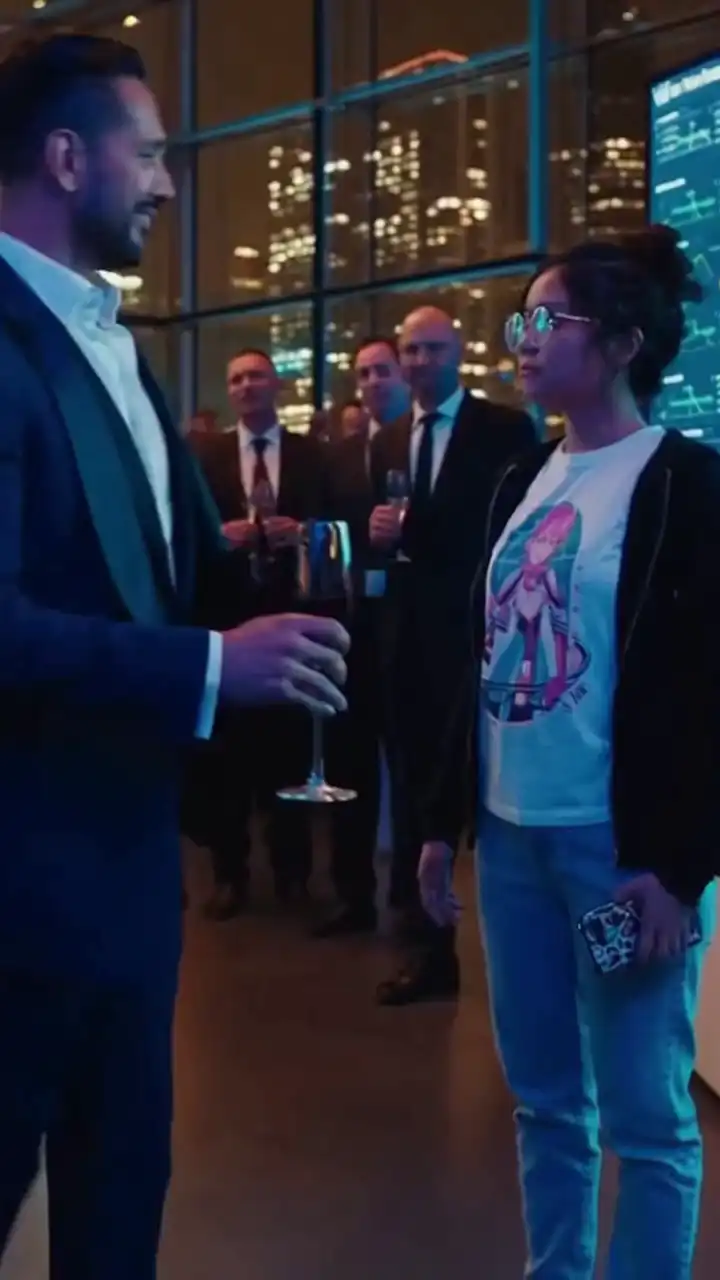
HE POURED WINE ON THE WRONG ENGINEER—THEN WATCHED HIS $600 MILLION EMPIRE FREEZE IN REAL TIME
The dashboard behind him flickered once.
Then every live metric on the giant LED wall flattened into gray bars.
Active deployments: paused.
Regional nodes: disconnected.
Prediction engine: standby.
For one strange second, the whole reception went silent except for the soft clink of glass and the low, confused hum of expensive servers being discussed by people who had never touched one.
Brandon turned first.
His face still held that smug little smile, but it had started to crack at the edges.
“What did you do?”
I slid my phone back into my palm and looked at him, not the screen. “I sent a maintainer-level compliance lock.”
A laugh escaped one of the executives beside him, too fast and too loud. “That’s not a thing.”
“It is,” I said. “When the original licensed architecture still contains the author key.”
The executive stopped laughing.
Onstage, the polished product demo froze mid-animation. A bright blue interface that had been showing real-time optimization across freight, energy, and logistics networks suddenly went black, then came back with a plain text banner.
UNVERIFIED COMMERCIAL FORK. MAINTAINER REVIEW REQUIRED. WRITE ACCESS REVOKED.
A ripple moved through the room.
Investors who had been pretending not to stare openly stared now. Phones came up higher. The laughter died so quickly it was almost embarrassing.
Brandon looked at the screen, then at me, then back again like his brain refused to put the pieces together in the right order.
“That’s fake,” he said.
His voice was lower now.
Not powerful. Tight.
“It’s mirrored from your production admin layer,” I said. “You left external verification ports active. Which means your expo dashboard is talking to your real deployment environment. Which means everybody in this room is watching your company fail a license integrity check live.”
The security guard still had a hand half-raised toward me. He slowly lowered it.
“Sir?” he asked Brandon.
Brandon ignored him. “No. No, that code was rebuilt. We bought assets. We had counsel review everything.”
“You bought wrappers,” I said. “You did not buy my core.”
I stepped around the drip of wine at my feet and raised my own phone, not to threaten him, just to show him the repository page already open on the screen. Commit history. Author signatures. Date stamps.
My name.
His eyes dropped to it for half a second, then snapped away.
“Anybody can fake screenshots.”
“Good thing I didn’t bring screenshots.”
I touched the screen and opened the archived public repository mirror, then the original license file. Not vague language. Not internet drama. A plain block of text under my name with commercial restrictions, attribution requirements, derivative-use conditions, and one ugly little clause Brandon had clearly never believed anyone would use.
Remote suspension rights upon concealed enterprise deployment.
The date sat there in hard black type from seven years earlier.
Months before his company existed.
Months before his CTO, his “internal innovation sprint,” his first seed round, his first glossy interview where he talked about building the future from nothing.
He stared at the date.
I watched the denial hit first.
He shook his head once. “This doesn’t mean anything. Open source is public.”
“Public doesn’t mean free for fraud.”
I enlarged the next page: the maintainer registration, the cryptographic key file, and the original dependency map. There it was—the same architecture tree now mirrored in the frozen conference display behind him. Same branch logic. Same failover naming convention. Same ridiculous internal shorthand I had written at twenty-four in a tiny Oakland apartment while eating instant ramen and praying my laptop fan wouldn’t die.
Brandon’s chief legal officer, a woman in a cream suit who had laughed when he mocked my shirt, stepped forward so fast she nearly slipped.
“Let me see that.”
I let her.
Her eyes moved left to right. Then back again, slower this time.
She looked up at the giant screen. “Brandon… why is the node structure identical?”
He answered too quickly. “Because efficient systems converge.”
“No,” I said. “Because your engineers copied the package, changed the skin, and forgot the spine.”
A man near the champagne tower—the same investor who had smirked when security grabbed for me—pulled his phone from filming mode and walked closer. “Are you saying this entire platform is built on unlicensed code?”
“I’m saying his company’s core orchestration layer is a concealed commercial fork of my licensed framework,” I said. “And I just triggered the review protocol attached to the original maintainer key he never removed.”
The investor looked at Brandon. “Is that true?”
Brandon’s jaw flexed. “It’s a nuisance attack. That’s all this is.”
And then his CTO, who had been standing near the stage pretending to work his way through a tablet, went pale.
I recognized him.
Evan.
He was the one who had emailed me five years ago asking “hypothetical” questions about scaling my framework for enterprise logistics. He’d signed the message with a fake startup name. I had answered exactly one question before I realized what he was fishing for and cut him off.
Now he wouldn’t meet my eyes.
“Evan,” Brandon snapped. “Say something.”
Evan swallowed. “The… the old base layer may still be in portions of prod.”
“Portions?” the legal officer repeated.
Nobody in the room moved.
Evan looked like a man trying to decide whether drowning quietly was better than breathing. “The original timeline was aggressive. We planned to replace the inherited modules after Series A. Then clients scaled faster than expected. The dependencies got… embedded.”
“Embedded,” I repeated softly.
Brandon rounded on him. “You told me it was clean.”
Evan’s voice broke. “I told you it was manageable.”
That was verification.
You could feel the room shift when people stopped wondering if I was bluffing and started calculating what this would cost.
One of the women who had laughed at my shirt—a founder from another booth, all white teeth and metallic heels—lowered her phone and actually took a step back from Brandon like fraud might stain fabric worse than wine.
Another bystander, a young reporter with a press badge who had filmed the spill without saying a word, stared at me for a second, then turned his camera fully toward the screen. His voice came out small. “Can you state your name for the record?”
I gave it.
He repeated it like he wanted to make sure he never forgot.
The legal officer handed my phone back with both hands.
That, more than anything, made Brandon panic.
“Do not validate this publicly,” he hissed at her.
She ignored him and faced me. “If what you’re alleging is accurate, this company may be in material breach of multiple disclosures.”
“Not alleging,” I said. “Showing.”
I opened one last file.
The original maintainer console.
Minimal design. No branding. No polished gradients. Just commands and logs and a green key status line that still recognized me.
AUTHORIZED MAINTAINER: ACTIVE.
Even Brandon understood that one.
His face changed.
Not all at once.
First came confusion, because rich men like him are trained to believe every locked door is decorative.
Then came arithmetic. The cost of frozen enterprise contracts. The investors in the room. The regulators. The due diligence reviews. The possibility that every valuation headline attached to his name had been inflated by code he did not own.
Then, finally, horror.
Real horror is quiet.
He took one step toward me and stopped. “Turn it back on.”
“No.”
“You’re damaging my company.”
“You built your company inside my license and hid the address.”
“I can pay you.”
That got a reaction from the room. Not loud. Just a collective intake of breath at how nakedly stupid the sentence was.
I almost felt sorry for him then.
Almost.
“You had years to do this legally,” I said. “You chose humiliation because you thought I had no leverage.”
He lowered his voice, trying to drag us into some private little corridor where power still belonged to him. “Name a number.”
I looked at the wine spreading cold across my shirt, then at the giant screen still displaying the compliance lock.
“No.”
The cream-suited lawyer turned to him. “Brandon, stop talking.”
“Get this handled,” he snapped.
She didn’t move.
Neither did anyone else.
The security guard, the same one who had reached for me, shifted his weight and said, very carefully, “Ma’am, do you need assistance?”
The room heard it.
Ma’am.
Not her.
Not remove her.
Not take her phone.
I held his gaze for a second. “No. I’m fine.”
The investor by the champagne tower cleared his throat. “We’ll need an immediate emergency review.”
The reporter was already speaking into his microphone. “Live at the Horizon Expo, where Synaptech’s flagship system has just been publicly flagged over an apparent ownership and licensing dispute—”
Brandon lunged toward the stage manager. “Cut the feed!”
“It’s mirrored to press overflow,” she said, white-faced.
The woman in metallic heels who had mocked me earlier stepped near enough to whisper, “I’m sorry about before.”
I looked at her until she dropped her eyes.
The young reporter did not apologize. He did something better. He kept filming Brandon.
Across the room, people were pulling up term sheets, calling assistants, texting lawyers. One investor actually set his untouched champagne flute down on a tray like bad news had suddenly made him sober.
Brandon stood in the center of all of it, still expensive, still polished, still wearing the face he had built for magazine covers. But now everyone could see the seams.
He tried one last time. “This can be settled.”
“It will be,” I said.
I took my stained jacket from the back of a chair and folded it over my arm. Then I walked past him toward the exit, my phone warm in my hand, the maintainer key still active, the room behind me collapsing into the sound of money discovering it had trusted the wrong man.
Nobody blocked my way.
Nobody touched me.
At the glass doors, I glanced once at my reflection—wine on cotton, code in my pocket, and not one thing left to prove.
Then I stepped into the cold San Francisco night and let them keep the wreckage.
Disclaimer: Mention of any brand or trademark is for identification only and does not imply partnership or endorsement