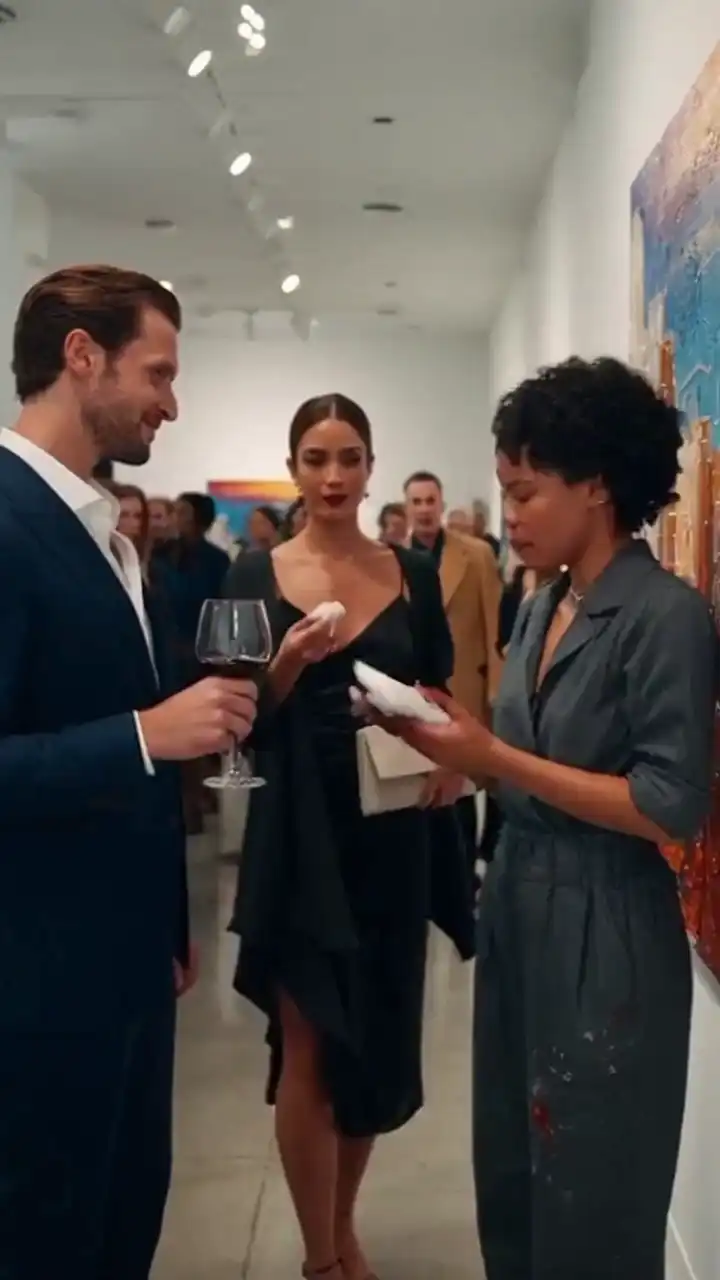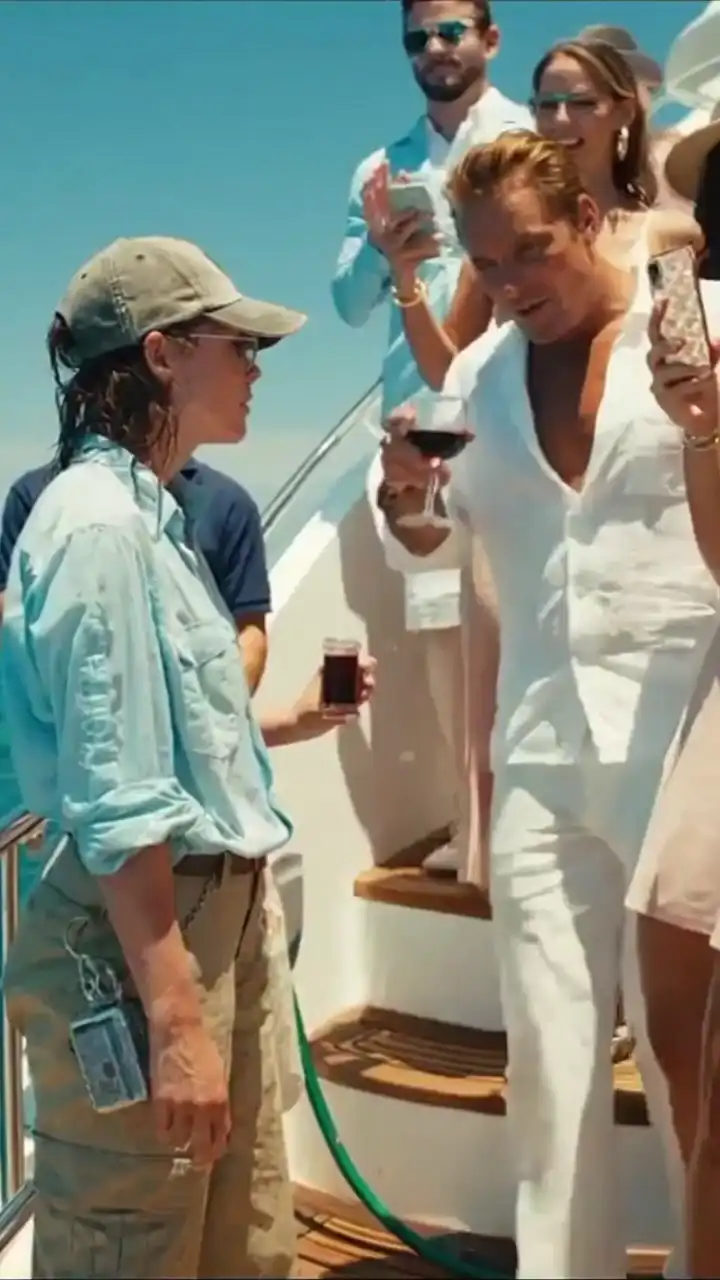
HE HUMILIATED THE WOMAN HE STOLE FROM—THEN HER LAST BUILD NOTE TOOK HIS ENTIRE EMPIRE APART
No one moved when the countdown hit 00:09.
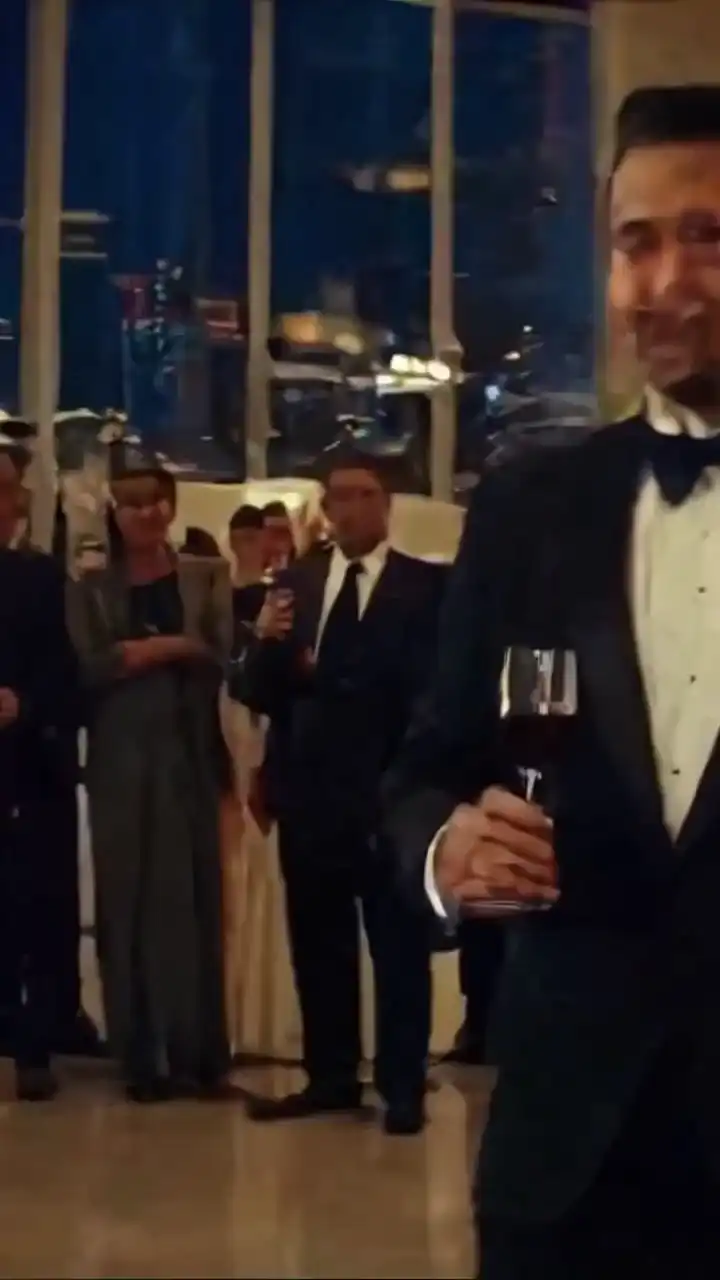
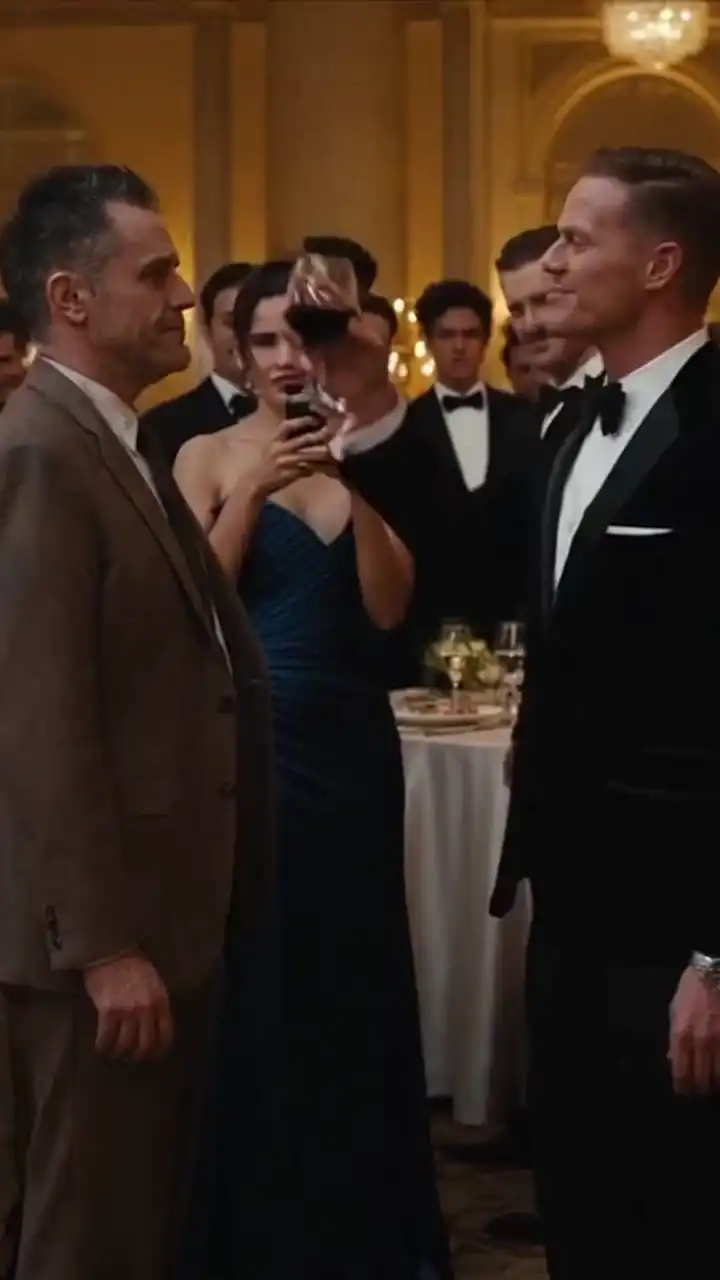
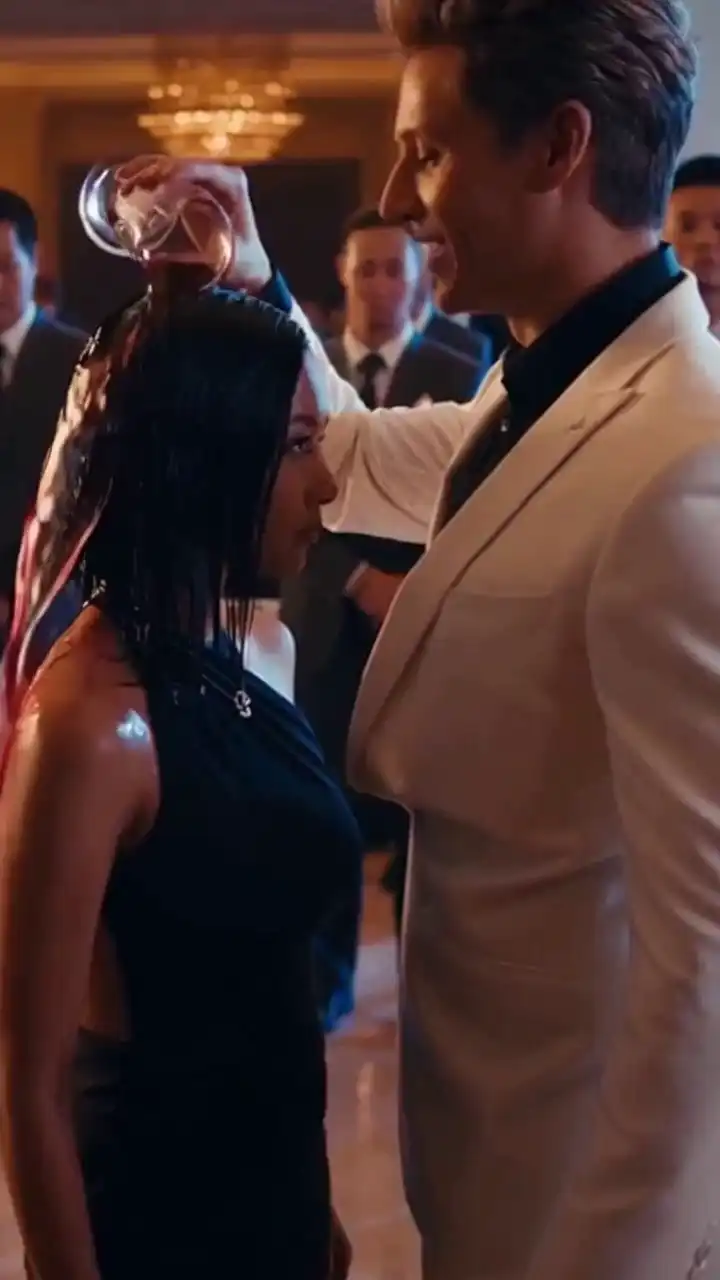
The room had gone so quiet I could hear wine dripping from the ends of my hair onto the marble. Brandon was still holding his glass, but his hand had started to shake. Not enough for the cameras to miss it. Just enough for me to see.
“Turn it off,” he snapped.
The giant screen reflected his face back at him in hard blue light. 00:08.
One of his lawyers lunged for the AV booth near the stage. The technician there didn’t even touch the console. He just stared at the screen like a man watching an incoming train.
“I said turn it off!”
00:07.
I looked at Brandon, then at the folder name glowing above all of us.
“You can’t,” I said.
My voice wasn’t loud. It didn’t need to be.
“The trigger is server-side. Redundant mirrors. Twelve regions. If one node fails, the others continue.” I wiped my thumb across my phone and unlocked the final log. “That was in the last build note you signed without reading.”
A nervous laugh escaped somebody near the champagne tower, the kind people make when they think denial might still save them.
Then the screen opened.
Inside the folder were seven files.
A source archive.
A commit history export.
Contract scans.
Voice memos.
A project timeline.
Revenue-routing spreadsheets.
And one video labeled: TOKYO_FAILSAFE_IF_NEEDED.
Brandon’s expression changed for the first time. Not anger. Calculation.
“Fake,” he said immediately. “She’s having an episode.”
There it was. The word he’d been using for two years whenever I objected to anything.
Episode.
As if grief made me incompetent. As if depression erased timestamps.
Several people in the crowd shifted at that. Not because they felt sorry for me. Because now he was asking them to deny what they were seeing in real time.
The first file opened itself.
A split-screen filled the display. On the left: my design document from thirty-two months ago, titled MOTH LOOP: MEMORY-RESPONSIVE COMPANION AI. On the right: the game’s final flagship mechanic, shown in Brandon’s keynote six months later under a different name.
Every paragraph matched.
Same conditional branches.
Same emotional response trees.
Same phrasing mistake in section four where I had typed “comfort protocol” as “comort protocol” at 3:14 a.m. after forty hours awake.
The typo was still there.
An audible murmur moved through the hall.
Brandon laughed too fast. “Design drafts don’t prove ownership. Teams iterate. Everybody knows that.”
“Open the second file,” I said.
The junior engineer who had recognized the moth—Kenji, twenty-four, always too honest for executive rooms—was standing near the edge of the crowd with his badge still around his neck. He looked at Brandon. Then at me. Then back at the screen.
His face had gone pale.
He stepped toward the stage console and tapped.
The commit history appeared in brutal, boring detail.
My private dev branch.
My employee ID.
Date stamps.
Night after night after night.
Core empathy engine architecture uploaded from my workstation. Memory garden mechanics uploaded from my workstation. Adaptive grief loop uploaded from my workstation. Brandon’s account appearing later, not as creator, but as approver. Comments from him reduced to things like make it prettier and can we brand this better.
Someone near the front whispered, “Oh my God.”
One of the investors, a woman in a silver suit who had ignored me three separate times that year, took out her reading glasses with visibly trembling fingers.
Brandon turned toward his legal team. “Say something.”
His senior counsel, Mark Feld, had gone gray around the mouth. “We need this feed cut globally.”
“It’s already mirrored to players,” I said. “Every headset loading the Easter egg has the package. They’re seeing the same files you are.”
As if to prove it, the side monitor lit with a live player count.
102,441,889 active views.
The number kept climbing.
For the first time all night, Brandon looked small.
He reached for the only thing he had left. Me.
“She had access,” he said, louder now, turning to the cameras. “She could have fabricated all of this after leaving the studio. She was unstable. She disappeared for weeks. We covered for her.”
Covered.
My chest tightened once, then settled.
I lifted my phone and hit play on the voice memo.
His voice flooded the hall.
Not from tonight. From eighteen months ago in his office.
“Take Emma’s name off the pitch deck,” recorded Brandon said, casual as weather. “She builds weird when she’s sad, but investors trust me. Once launch money clears, legal can bury the attribution issue.”
The file ended.
No one laughed this time.
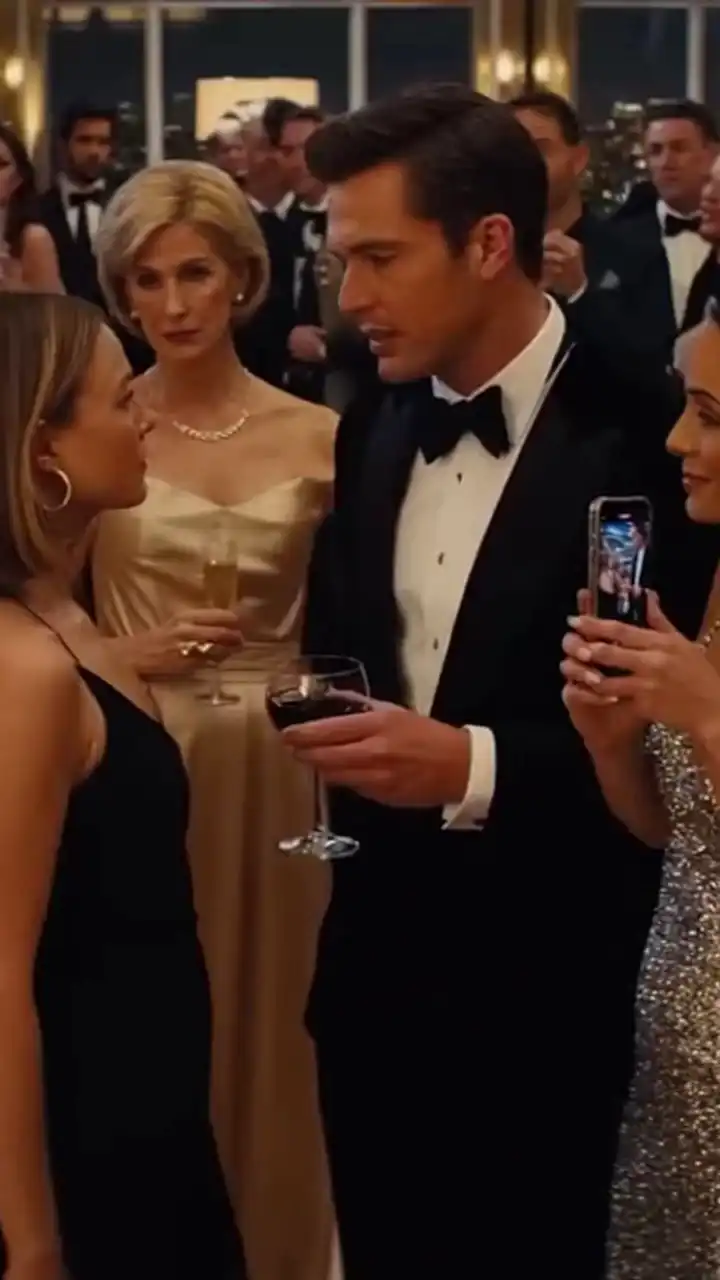
Behind him, one of the influencers who had filmed me with her mouth open in delighted horror slowly lowered her phone. I recognized her: Talia Voss, eight million followers, glittering silver gown, the woman who had posted reaction clips every time Brandon mocked someone onstage because cruelty paid well online.
Now her face was bloodless.
She looked at her livestream screen, then at me, and whispered, “I’m still live.”
“Yes,” I said.
Kenji opened the next file without being asked.
Contract scans.
My original consulting agreement before Brandon had “restructured” me into salaried obscurity. Schedule C highlighted in yellow. Creator-retention clause. Any proprietary narrative system developed prior to corporate merger remained the sole intellectual property of Emma Carter unless separately purchased in writing.
No purchase existed.
There was, however, a later amendment bearing a digital signature timestamped on a day I was in a psychiatric treatment program and without access to any company device.
The signature metadata was wrong.
Different IP.
Executive terminal.
Assistant override credentials.
The silver-suited investor took one slow breath and said, “That’s fraud.”
Mark Feld closed his eyes.
Brandon heard it too. “No, no, this is interpretation. This is contract noise. We settle this privately.”
“Privately?” Talia said, before she could stop herself.
He spun toward her. “Put the phone down.”
She didn’t.
Across the room, another bystander finally broke—Derek Shaw, lead marketing producer, the one who had chuckled when the wine hit my hair because he always laughed half a second after powerful men did. He stepped backward like the floor had become unsafe.
“I told you not to do it at the gala,” he muttered.
Brandon stared at him. “What?”
Derek swallowed hard. “I said humiliating her on camera was reckless.”
The room reacted to that one line the way a forest reacts to a spark.
Because silence had cracked.
And once it cracked, everyone heard what they had been standing inside.
I nodded toward the video file.
Kenji opened it.
The footage was from my apartment, recorded earlier that morning. I was wearing the same black dress, dry then, my hair pinned up, my face calm in the flat winter light.
“If you’re seeing this,” the version of me on-screen said, “Brandon chose spectacle over restraint.”
No one in the gala hall breathed.
“I built a failsafe after the second time legal threatened me. Not to destroy the game. I would never punish the players for what executives did. The Easter egg contains proof, mirrored archives, and a rights transfer protocol. If activated, all revenue from the Moth Loop expansion and all derivative systems routes into escrow pending judicial review.”
The revenue spreadsheet opened beside the video.
Projected hold: $487,000,000.
Three upcoming licensing deals: frozen.
Merchandise royalty pipeline: frozen.
Mobile adaptation: frozen.
Streaming series option: frozen.
Brandon made a sound then. Not a word. Something rawer. The noise of a man hearing machinery stop around him.
“That’s impossible,” he said.
“It’s not,” Mark Feld replied quietly.
That shut the room colder than any shout could have.
Brandon turned on him like a cornered animal. “You said she had nothing.”
Mark didn’t answer for a beat. “I said she had no visible leverage.”
I almost smiled at that. Lawyers always believed power only existed when documented in rooms they controlled.
The side monitor changed again. Player comments were now flooding in faster than the system could sort them.
IS THIS REAL
SHE MADE THE MOTH?
WE WANT EMMA’S VERSION
PAY HER
The silver-suited investor stepped away from Brandon as if his tuxedo had caught fire. “Our fund is suspending all support pending independent review.”
Another followed. Then another.
Talia turned her camera fully toward him. “Did you steal the game?”
“Don’t do this,” he hissed.
“Did you?”
He looked around for rescue and found only arithmetic. Lawyers calculating distance. Investors calculating exposure. Staff calculating whether deleting old messages would help. Derek calculating whether cowardice had an expiration date.
Then came the last file.
Project timeline.
A simple bar showing the three years everyone had pretended to misunderstand.
My mother’s death.
My leave request denied.
My inpatient treatment.
My return.
My systems implemented.
Brandon’s keynote.
My credits reduced.
The legal threats.
Tonight.
No melodrama. Just dates.
Facts can be crueler than revenge when they refuse to blink.
Brandon’s shoulders sagged by an inch. Then another.
When he spoke again, the grand director voice was gone. “Emma,” he said, finally using my name like it belonged to a person, not a resource. “We can fix this.”
I met his eyes.
There was the denial, gone.
The verification, completed.
The horror, fully arrived.
Now came the bargain.
“You already chose the version of this story you wanted,” I said. “You chose it in public.”
His lips parted, but nothing came out.
A security team had appeared at the edges of the hall. Not his. Venue security. Compliance officers with earpieces and hard expressions. Someone from the publisher’s board was speaking urgently into a phone. Kenji was still at the console, hands shaking, but he didn’t step away.
Neither did Talia.
Neither did Derek, though he looked sick.
Interesting, what people find in themselves only after it costs nothing to be brave.
I slipped my phone into my clutch.
Wine had dried tacky against the back of my neck. My dress clung cold against my skin. Somewhere outside, traffic hummed beyond the glass, indifferent and steady.
As I walked past Brandon, he reached out once, not to grab me now, but almost pleading.
“Emma.”
I stopped just long enough to turn my head.
He looked older than he had ten minutes earlier. Not ruined yet. Ruin takes paperwork. Hearings. Headlines. Discovery. Depositions. Long mornings under fluorescent light. But the first true piece of it had landed.
“I know,” I said.
Then I kept walking, my heels clicking softly across the marble, while behind me the empire built on my silence began learning how expensive my voice had always been.
Disclaimer: Mention of any brand or trademark is for identification only and does not imply partnership or endorsement