
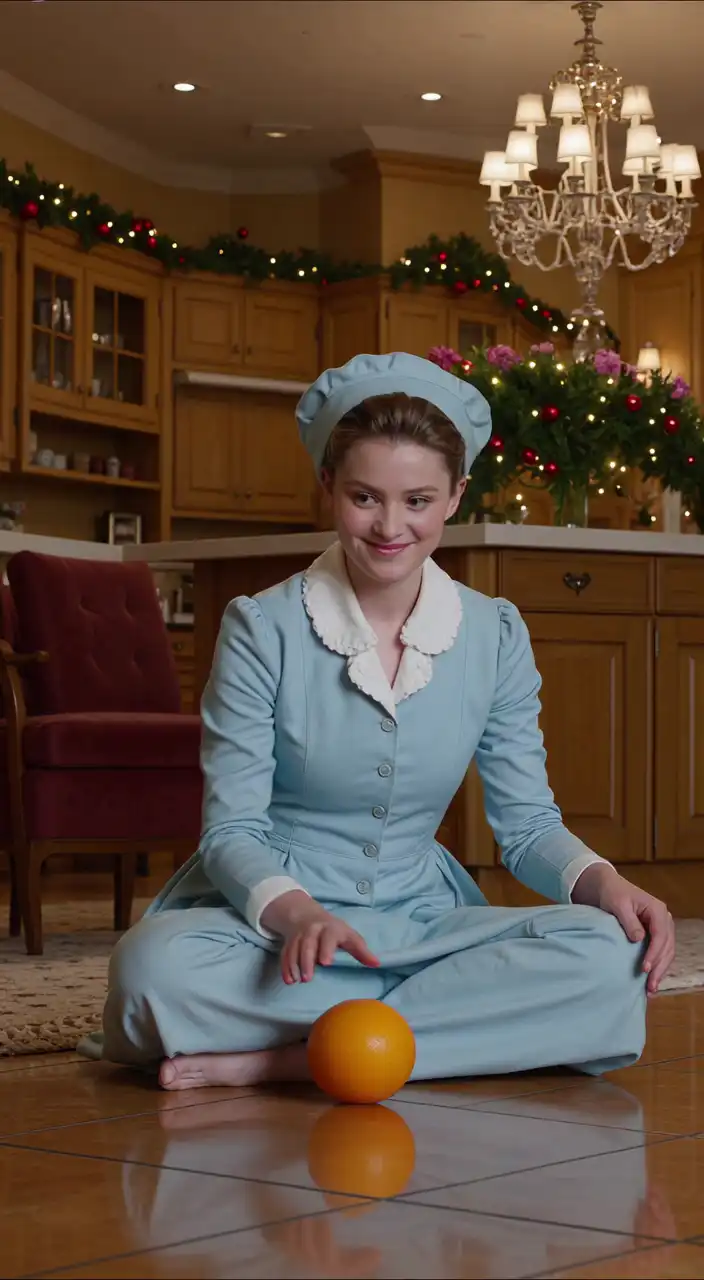
CHRISTMAS TIDE AT HARBOR POINT
The beach house at Harbor Point, Oregon, looked like something from a magazine cover. White lights wrapped around the railings facing the winter-gray ocean. Evergreen garlands draped across the wide windows. Silver ornaments filled crystal bowls on side tables. In the soaring entry hall, a twelve-foot Christmas tree glittered under a chandelier imported from Venice, one of a hundred expensive things Rhett Calloway had once bought because he could.
Tonight, every light in the mansion only made the silence feel sharper.
A chef had prepared dinner no one touched. A fire burned in the stone hearth of the great room, yet the house still felt cold. Carols drifted low through hidden speakers until Rhett snapped at someone to turn them off. The sudden quiet rang in his ears.
He stood by the window in a dark sweater and dress pants, one hand in his pocket, staring out at the black stretch of ocean. Beyond the glass, wind bent the dune grass and pushed spray high against the rocks below the terrace. Inside, Christmas glowed. Outside, winter swallowed everything.
On the mantel sat framed photographs from another life.
There was Maren laughing on this same beach, her dark hair whipped across her face, one hand pressed against her pregnant belly. There was Maren in a hospital bed, pale but smiling, holding their newborn son. There was one final picture of all three of them together, taken two days before her body failed from complications no amount of money, influence, or private specialists could undo.
Rhett picked up the frame and stared at it until his vision blurred.
Behind him, the house manager, Elaine Mercer, cleared her throat softly. “Mr. Calloway?”
He set the frame down too quickly. “What is it?”
Elaine hesitated. “Jory woke up again.”
Rhett closed his eyes. “How long has he been crying?”
“Twenty minutes. Mrs. Dobbins tried. So did Mateo. He won’t let either of them near him.”
Of course he wouldn’t.
Rhett ran a hand over his face and headed upstairs. The polished hallways reflected the tree lights from below. Every room was perfect, arranged, expensive. Every room reminded him there should have been a woman in them, barefoot and laughing and alive.
At the end of the hall, the nursery door was cracked open. The sound inside wasn’t exactly crying. It was smaller, more painful than that. Thin gasping sobs, broken by frightened little whimpers.
Jory sat curled in the far corner of his bed, knees tucked to his chest under a twisted blanket. He was three years old, all soft blond hair and pale skin and enormous green eyes that looked even larger when fear hollowed them out. Moonlight cut across his face. A stuffed seal lay abandoned near his feet.
Rhett moved slowly. “Hey, buddy.”
Jory flinched.
The sound nearly broke him.
“It’s Dad,” Rhett said quietly. “You’re okay. You’re safe.”
Jory stared past him at the wall. His tiny chest rose and fell too fast. When Rhett stepped closer, the boy let out a panicked cry and pressed himself harder into the corner, as if even being approached was its own threat.
“Jory.” Rhett knelt beside the bed. “Look at me. Come on. Please.”
No answer. No eye contact. Just trembling.
This was the part no one printed in business magazines. Not the billion-dollar acquisitions, not the private equity dinners, not the glossy interviews calling him a visionary developer reshaping the Pacific coast. The real truth was a man on his knees in his son’s room, whispering bargains into the dark to a child who lived inside fear.
Rhett reached for the blanket and stopped when Jory gave a strangled little sound.
“Okay,” he said hoarsely. “Okay. I won’t.”
He sat back on his heels.
From the doorway, Elaine said, “Would you like me to call Dr. Phelps?”
“At midnight on Christmas Eve?” Rhett’s laugh was bitter. “What’s he going to do, prescribe another routine chart?”
Elaine said nothing.
Rhett stayed there until Jory’s sobs dwindled into shivering breaths. He didn’t dare touch him. He didn’t know if speaking helped or made it worse. So he sat on the floor and kept his voice low.
“The tree downstairs is ridiculous,” he murmured. “You’d hate it. Too shiny. The star’s crooked. I told them not to make it so big.” His throat tightened. “Your mom would’ve fixed it.”
At that, Jory’s lashes fluttered. Just once.
Rhett swallowed hard.
Jory had been afraid of everything for almost two years. Sudden sounds. New people. Doors closing. The hum of the blender. The ocean at night. A dropped spoon. The dark. Sleep most of all. The specialists called it emotional trauma linked to early maternal loss, disrupted attachment, prolonged anxiety responses. Rhett called it hell.
By day, Jory wandered his bright nursery and adjoining playroom without really playing. Toys lined custom shelves untouched: wooden trains, plush animals, sensory blocks, imported puzzles, hand-painted sailboats from Maine. He did not throw tantrums in the ordinary way. He withdrew. He froze. He startled. He watched the world as if it might hurt him at any second.
At meals, he picked at crackers and fruit if someone left them near him and backed away. He almost never spoke. Sometimes he whispered one word in his sleep—“Mama”—and woke screaming.
Rhett had tried everything money could buy. Child psychologists from Portland. Trauma specialists from Seattle. a sleep consultant flown in from Boston. Music therapy. play therapy. sensory protocols. routines typed, printed, laminated, and clipped to every staff station in the house. Nannies with references from celebrities. Older women with degrees. Younger women with endless cheerful energy. Quiet women. Structured women. Experienced women.
Most lasted a week.
The last one had lasted three days before announcing through tears that the child needed “more professional support than in-home care can offer.”
What Jory needed was his mother.
And because Maren was gone, what Jory had was a father who could negotiate ten-figure land deals before lunch but could not get his own son to let him tuck him in.
When the trembling in the bed eased into exhausted stillness, Rhett rose carefully. Jory’s eyes had closed, but his fists were still clenched.
Rhett stood there for a long time, looking at him.
“So small,” he whispered.
He walked out into the hallway and shut the door almost all the way. On the landing, the glow of the tree below reached up toward him. Christmas. Another holiday dressed in beauty and emptied of joy.
Elaine was waiting.
“Three agencies sent candidates this month,” she said gently. “And two have already refused when they heard the details.”
Rhett leaned against the wall. “Then stop trying.”
“Sir—”
“I mean it.” He looked toward the nursery door. “Maybe everyone else is right. Maybe this house is the problem. Maybe I’m the problem.”
Elaine’s expression softened. “You love him.”
“That isn’t helping him.”
“No,” she said quietly. “But giving up won’t either.”
Rhett let out a rough breath. Downstairs, the Christmas lights kept shining for no one.
At last he said, “One more try.”
Three days after Christmas, a cold rain swept across Harbor Point and rattled the windows of the beach house. Rhett had spent the morning on calls with investors in San Francisco and attorneys in Chicago, speaking about zoning variances and coastal easements while half his mind stayed upstairs with his son.
By noon, he was in the rear service wing reviewing household staffing with Elaine at the long utility table. They were short one seasonal housekeeper after the holidays, and Elaine had arranged quick interviews with local applicants.
Rhett barely listened.
The first two candidates were competent and forgettable. Then the third walked in wearing a thrift-store navy coat, damp curls, and shoes that had seen better years.
She could not have been older than twenty-three.
“Mr. Calloway, Ms. Mercer,” she said, a little breathless from the rain. “I’m Tessa Whitmore. Sorry, the bus from Seabrook was late.”
Rhett looked up from the file in front of him. She was beautiful in the unplanned way some people are—clear brown eyes, open face, no polished performance to her. Young, certainly too young for the burden of this house. But she stood straight, as if being intimidated had never really taken.
Elaine glanced at the application. “You’re applying for the temporary housekeeping position.”
“Yes, ma’am.”
Rhett almost dismissed her then. He needed experience, credentials, someone prepared for trauma care, not a girl looking for cleaning work in a mansion.
But Tessa kept speaking.
“I’ve done housekeeping at an inn in Seabrook, and I help my aunt with her daycare sometimes. Mostly babies and toddlers.” She smiled awkwardly. “I know that’s not on the application because this wasn’t for childcare, but I thought I should say it.”
Rhett’s attention sharpened despite himself. “You help at a daycare?”
“Whenever they’re short-handed. I’m good with little kids.”
Many people claimed that. Most had no idea what it meant.
Before he could ask anything else, a sound carried down the back hallway. A sharp crash. Then the unmistakable cry of a frightened child.
Rhett was already moving.
He reached the breakfast room to find shattered glass on the floor and one of the maids frozen beside the table. Jory stood near the doorway in sock feet, his whole body rigid, green eyes huge with terror. A juice glass had slipped from the maid’s tray. The noise had done the rest.
“Don’t move,” Rhett said to the maid.
Jory made a small choking sound and backed into the wall.
Rhett’s stomach dropped. “Buddy, it’s okay. Nobody’s hurt.”
Jory covered his ears.
Then someone behind Rhett spoke very softly.
“That was a mean sound, huh?”
Tessa.
Rhett turned sharply, ready to stop her, but she wasn’t advancing. She had crouched several feet away from Jory, lowering herself until she was almost sitting on the floor, hands loose in her lap.
“You don’t know me,” she said to the boy. “So I won’t come closer.”
Jory’s breathing hitched.
Tessa glanced at the broken glass, then at the window where rain streaked down the panes. “Sometimes cups get slippery when the weather is grumpy.”
The maid looked offended. Rhett looked incredulous.
Jory’s eyes flicked, just once, toward Tessa.
It was the first sign of curiosity Rhett had seen all week.
Tessa noticed but didn’t pounce on it. She shifted to sit cross-legged on the floor. “I hate loud surprises too,” she said. “One time at daycare, a balloon popped right next to my ear and I nearly jumped into a toy bin.”
Silence.
Rain tapped the windows. No one moved.
Then Tessa did something stranger. She looked not at Jory, but slightly past him, and began to hum under her breath—low, simple, not quite a song, more like a steady line of sound. Not for performance. For rhythm.
Jory’s shoulders remained tense, but his breathing changed. Not calm. Less jagged.
Rhett stared.
After a full minute, Tessa said, “I’m gonna stay right here until the room feels friendly again.”
Elaine, who had followed them in, mouthed to Rhett, Let her.
They waited while the maid cleaned the glass in slow, careful movements. Through it all, Tessa stayed on the floor, humming only when Jory’s breath quickened, falling silent when he settled.
When the last shard was gone, Jory was still pressed to the wall. But he was no longer crying.
Tessa smiled faintly. “There. The bad sound is over.”
Jory blinked at her.
Rhett had sat in boardrooms across from men whose smallest expressions shifted markets, and he knew the difference between noise and meaning. That blink meant something.
Later, in the study overlooking the sea, he said bluntly, “You applied to clean guest rooms.”
Tessa sat on the edge of a leather chair, coat folded in her lap. “Yes, sir.”
“And yet you inserted yourself into a childcare situation.”
“I’m sorry if that was out of line.”
“It was.”
She nodded. “Okay.”
Her lack of defensiveness irritated him more than excuses would have. “You have no formal training.”
“No.”
“No trauma certification.”
“No.”
“No background in high-needs private placements.”
Her mouth twitched. “That sounds very expensive.”
He did not smile. “It is.”
Tessa met his stare. “Do those people help him?”
The room went still.
Rhett said, “That is not your concern.”
“Maybe not,” she said gently. “But he looked like he was drowning, and nobody was talking to him like he was three.”
Rhett leaned back, cold anger mixing with exhaustion. “You know him after thirty seconds?”
“No.” Her voice stayed calm. “I know scared children. They don’t need a lecture while they’re frightened. They need someone to help their body feel safe enough to come back.”
Rhett was silent.
Elaine, standing near the shelves, said, “Mr. Calloway, perhaps a trial period—”
He cut her off. “She came for a housekeeping job.”
Tessa rose, thinking she was dismissed. “That’s all right. I understand.”
From upstairs came a faint sound over the intercom monitor on Elaine’s belt—a whimper, then another.
Without thinking, Tessa turned toward it.
That instinct, more than anything, made Rhett pause.
“Wait,” he said.
She stopped.
He hated how desperate he sounded even to himself. “One week.”
Tessa blinked. “As housekeeper?”
“As nanny.” He said the word like it offended him. “Temporary. Supervised. If this turns into another disaster, you’re done.”
Her expression changed, not into triumph but into something steadier. Resolve.
“One week,” she said.
That afternoon, Tessa entered Jory’s playroom for the first time.
She didn’t reach for him. Didn’t ask for a smile. Didn’t shake toys in his face or fill the silence with forced cheer. She sat on the rug near the window and noticed things aloud to no one in particular.
“The ocean’s rough today.”
Jory sat near the bookshelf, clutching the stuffed seal.
“That blue block looks lonely under the chair.”
No response.
“Your seal seems smart. He probably knows all the good hiding spots.”
A tiny shift. Jory’s fingers tightened in the fur.
Tessa stayed where she was.
Minutes passed. The whole room held its breath.
Then Jory looked at her. Only for a second. But directly.
Tessa smiled as if he had handed her a treasure.
“Hi,” she whispered.
Rhett, watching unseen from the cracked doorway, told himself it meant nothing.
But for the first time in months, hope moved—small and dangerous—through the house.
Tessa did not try to pull Jory out of fear by force. She went into it with him and waited there until he found his way back.
On her first full morning, she discovered that Jory hated transitions most of all. The shift from bed to breakfast, from playroom to bath, from daylight to evening—each one could send his small body into alarm. Instead of carrying him into the next thing while he stiffened and whimpered, Tessa began sitting with him before each change, creating a rhythm he could depend on.
She tapped two fingers softly on the rug. Pause. Tap, tap. Pause.
“If we go to breakfast after three taps,” she said one day, keeping her voice light, “then your seal gets to come too.”
Jory stared at the rug. She tapped again, gentle and even.
When he did not move, she didn’t insist. She simply kept time. Sometimes she hummed with it, low enough that the sound felt more like warmth than music.
By the third day, when she tapped the rug before lunch, Jory’s eyes flickered toward her hand.
“That’s right,” she whispered. “You know this part.”
He did not speak, but he did not panic either.
At naptime, when the wind howled off the
Disclaimer: Mention of any brand or trademark is for identification only and does not imply partnership or endorsement