
THEY LEFT A WOMAN IN THE SNOW AND CALLED IT DRAMA
Denise answered too quickly.
“Probably in the truck.”
But the truck was parked outside. Carter had come in ten minutes earlier. If Martha’s phone had been “accidentally” left there, anybody decent would have brought it in the second they realized.
Eli noticed that. So did everybody else.
Carter tried to grab control back. “This is getting twisted. Martha knows how to push people.”
Martha sat stiff in the chair, wet pant legs still clinging to her skin. “Martha knows when property starts disappearing before a hearing.”
That hit harder than shouting would have.
Denise’s mouth tightened. “Here we go.”
No, this was not “here we go.” This was truth returning.
For months, Denise had been telling relatives that Martha was confused, emotional, dependent, too unstable to be trusted with estate decisions. Carter backed every word. They framed Martha as a burden so thoroughly that any protest from Martha sounded, to some people, like proof.
That was the plan. Ruin Martha’s credibility before anyone asked why Harold’s watch was missing, why files from the office had been moved, and why one key document kept “turning up later” whenever lawyers requested it.
Then Eli spoke.
“I saw Denise with Martha’s phone.”
Every head turned.
Denise snapped, “No, you didn’t.”
Eli didn’t back down. “At the gas station. Before the road. Denise had Martha’s phone in her coat pocket.”
The room shifted.
Aunt Rose finally stopped wiping the counter. Martha’s brother took one step closer. Carter looked at Denise, not the family, and that told its own story.
Denise tried a new angle. “Martha gave it to me because she was upset.”
Martha said, “Then why didn’t Denise return it when Martha was in the snow?”
Silence again.
Carter started getting louder, because loud was all he had left. “Nobody left Martha in the snow. It was two minutes.”
Eli shook his head. “The mail carrier took pictures.”
That landed like a dropped plate.
Pictures.
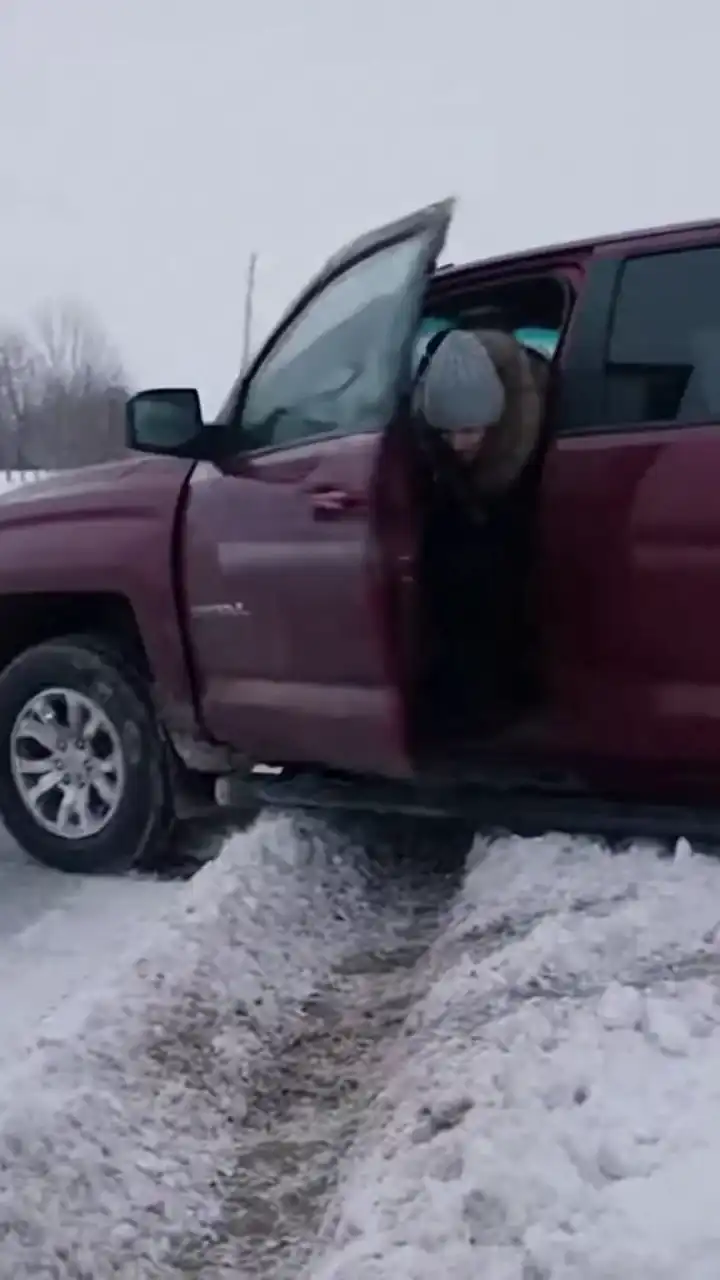
The carrier had photographed the roadside before helping, worried there might be a legal issue. In those photos, Martha was down on one knee in slush, one hand braced on ice, no wheelchair beside her, no phone in sight. The truck was farther down the shoulder, moving away.
Not waiting. Leaving.
And the county deputy who responded had already asked for statements.
Now Denise looked pale.
Martha’s brother pulled out his own phone. “The deputy called while we were driving here. He also asked about the wheelchair.”
Carter muttered, “This is ridiculous.”
But it was no longer family gossip. It was evidence. Witness. Timeline. Intent.
Then came the object that broke the whole thing open.
Aunt Rose, quiet all evening, looked at Denise’s oversized tote bag near the pantry and said, “Open it.”
Denise froze.
“Open it,” Rose said again.
Denise refused. Carter stepped in. “Nobody gets to search anybody’s bag.”
But the refusal did more damage than the bag itself could have done.
Rose walked over, unzipped it herself, and there it was.
Martha’s phone.
Not in the truck. Not dropped. Not lost in confusion.
In Denise’s bag.
Under a folder marked ESTATE.
That was the withheld object. That was intent sitting in plain sight.
Nobody in that kitchen needed another explanation after that.
The burden framing collapsed all at once. Every speech about Martha being dramatic, unstable, needy, manipulative—gone. Denise had kept the phone. Carter had taken the wheelchair. They had left a woman who could not stand or move independently on a snowy roadside and then rushed home to call her attention-seeking.
Truth returned ugly, but clean.
Denise started crying the second she realized tears would not save her. Carter swore at Eli, at Rose, at everybody. Martha’s brother called the deputy back on speaker. Aunt Rose sat down like her legs gave out. Someone in the next room whispered, “They really thought family would cover this.”
That was exactly what Denise and Carter had counted on.
Family silence. Inheritance tension. Old fear. Smoothing it over.
Instead, the fallout started right there in the kitchen.
The deputy came. Statements were taken. The photos were forwarded. The lawyer handling Harold’s estate was notified that same night. Denise and Carter were cut out of the family meeting until the investigation was sorted. The court moved faster once the story matched the evidence. Questions about missing items stopped sounding petty and started sounding criminal.
And Martha, the woman they tried to make unbelievable, became the only person in the room who had told the truth from the start.
By the next week, nobody was calling Martha dramatic anymore.
They were calling Denise and Carter what they were:
People who left a disabled woman in the snow, stole her way to call for help, and lied to her face in a family kitchen because they thought she was too easy to erase.
They were wrong.
Disclaimer: Mention of any brand or trademark is for identification only and does not imply partnership or endorsement